Newsletter #432
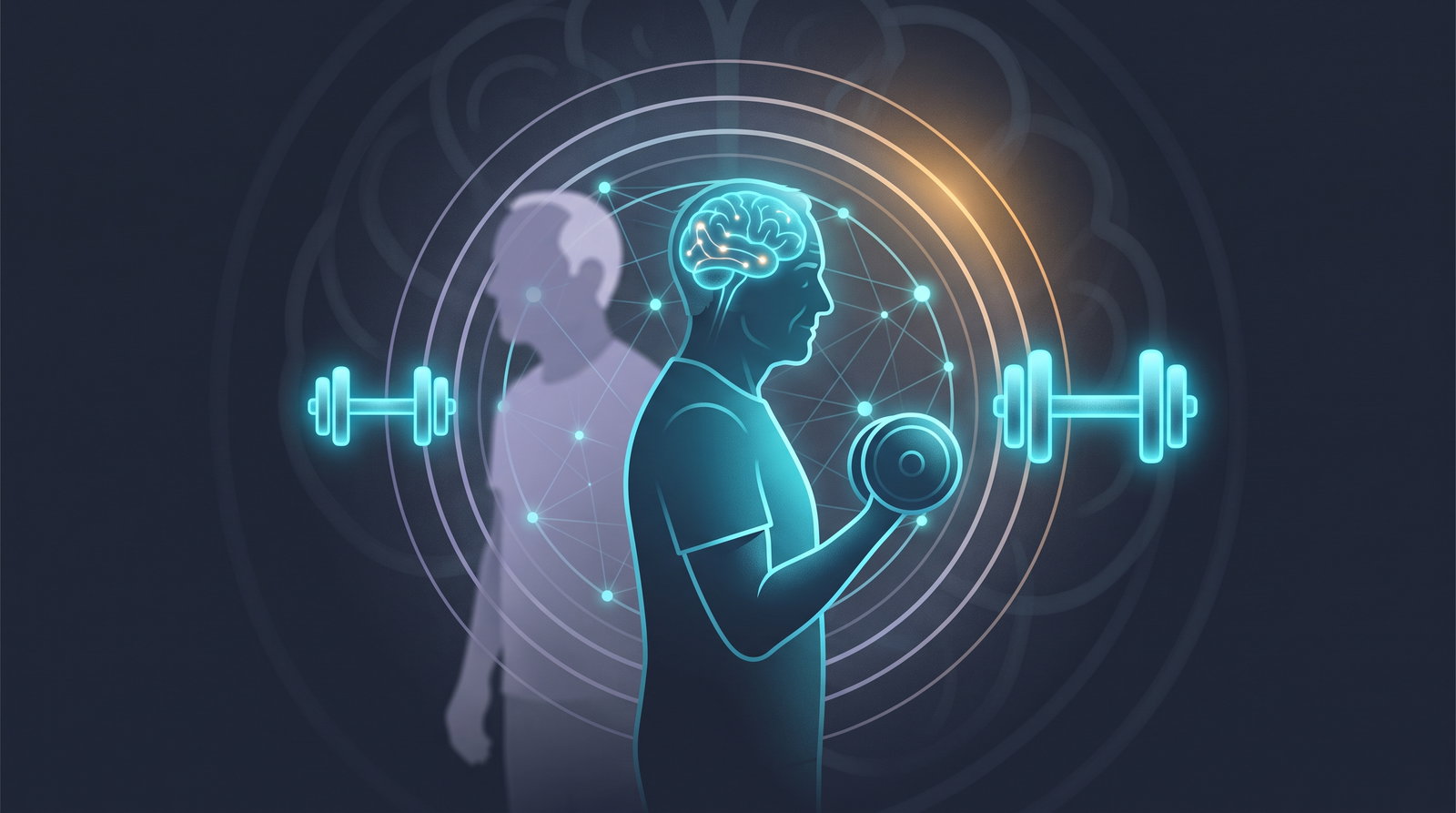
A year of resistance training made older adults' brains look younger. Researchers scanned people in their sixties, then ran the scans through a machine-learning brain clock that estimates biological brain age. The people who trained came out younger than their birthdays. The people who sat still did not. This is one of the first randomized trials to test lifting against a whole-brain aging clock, and the effect was large enough to hold a full year after the training stopped.
Become a humanOS Member. Get the courses, tools, and guides that turn research like this into daily practice.
Join humanOS and put the science to work.
Review Your Learnings: Newsletter Summaries ✨
Randomized controlled trial of resistance exercise and brain aging clocks
Strength training turned back the brain clock
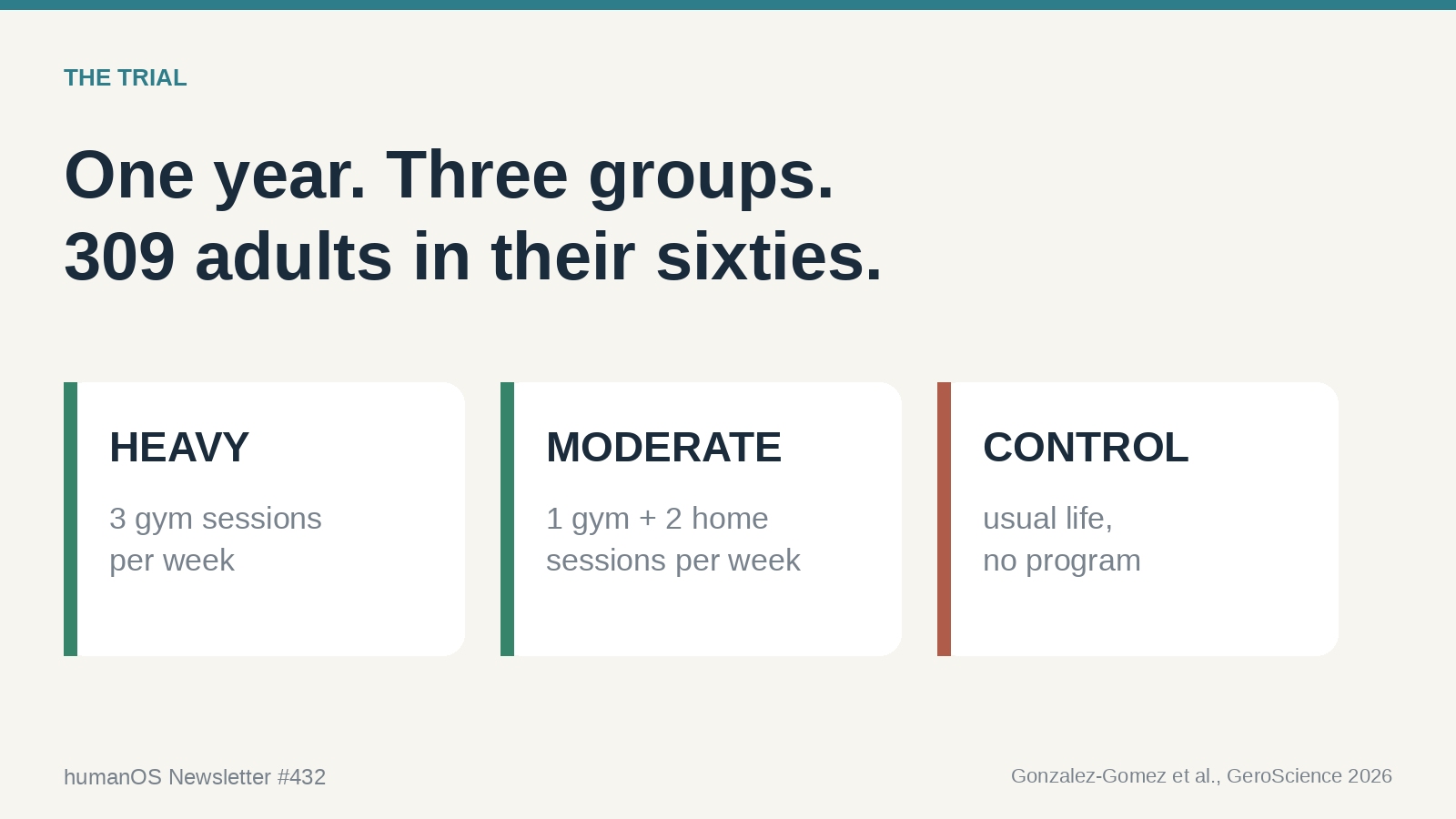
Both training groups aged more slowly in the brain. Researchers followed 309 adults in their sixties from the LISA trial. Everyone was randomized to one of three arms. One group lifted heavy three times a week. One did moderate training, part in a gym and part at home. The third kept living as usual. Everyone had resting brain scans at the start, at one year, and the again at year two.
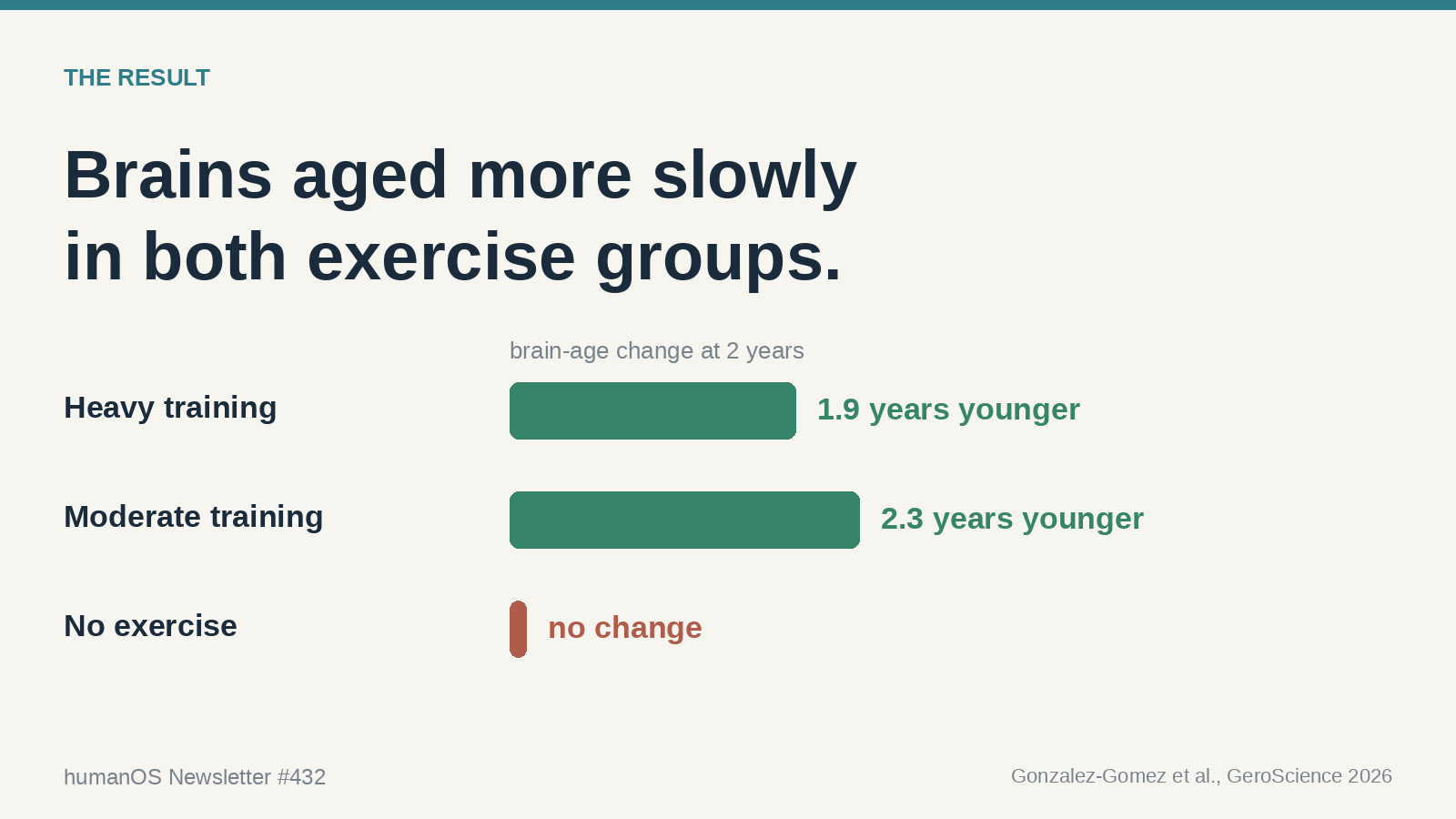
The brain clock did the measuring. It was trained on thousands of other adults' scans, so it never saw the trial data. It read each person's brain connectivity and estimated the brain's age. Both exercise groups looked younger after a year. The non-exercise group did not improve.
The whole brain changed, not one region
The benefit was global. The team checked whether the effect lived in a single network, the default mode network, the motor system, or the cerebellum. It did not. Restrict the clock to any one network and the effect vanishes. Slower brain aging only showed up when the whole brain was read together.
Except for one area. The heavy lifters showed stronger connectivity in the prefrontal cortex, the region behind attention, planning, and working memory. The pattern fits a simple picture. Exercise reorganizes the brain broadly, and that broad change surfaces most visibly at the front.
Moderate Training Was Enough
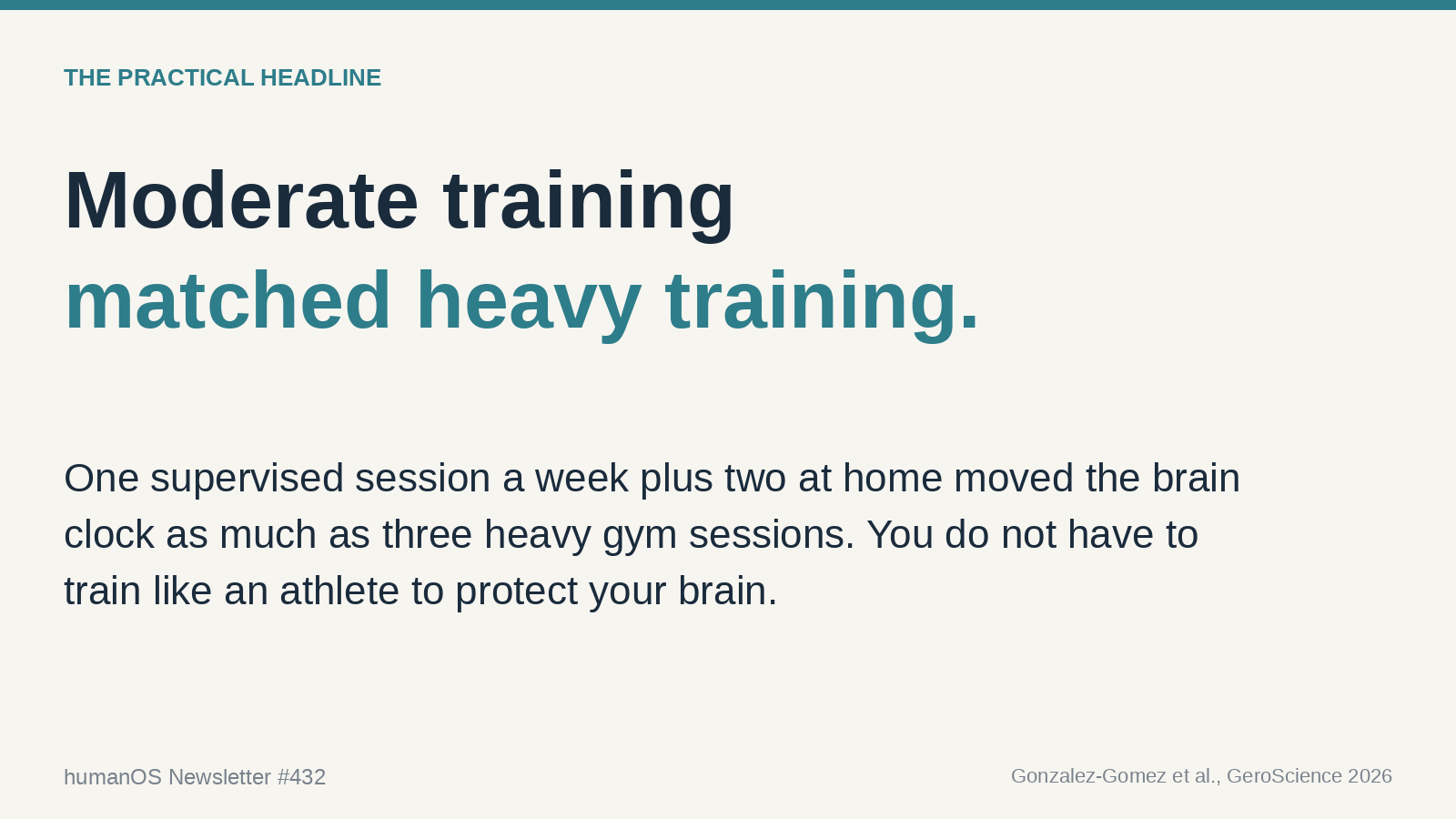
Moderate training matched heavy training. This is the practical headline. The lighter program, one supervised session a week plus two at home, moved the brain clock as much as three heavy gym sessions did. You do not have to train like an athlete to protect your brain.
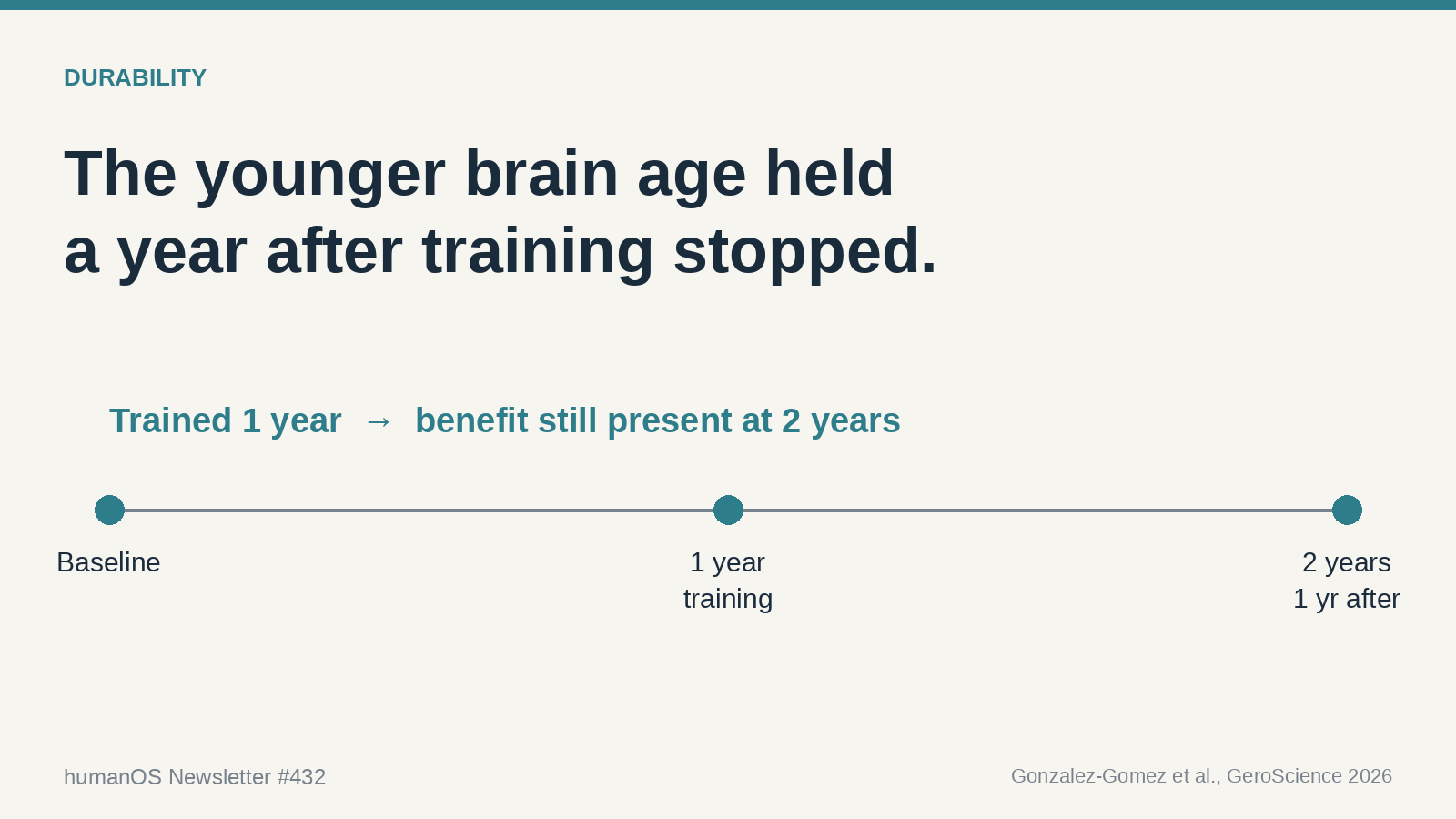
And the benefit did not fade when the program ended. A year after training stopped, both groups still held their younger brain age.
It makes me more deliberate about protecting that habit as I age, while also lowering the bar in a helpful way. Consistent, moderate effort counts. That’s the key takeaway from this paper and one I’ll keep in mind - moderate but consistent effort counts.
Summary
Gonzalez-Gomez and colleagues analyzed 309 older adults (aged 62 to 70) from the LISA randomized controlled trial. Participants were assigned to heavy resistance training (three supervised sessions weekly), moderate-intensity training (one supervised plus two home sessions), or a non-exercise control. Resting-state fMRI was collected at baseline, one year, and two years. Brain age was estimated with LightGBM brain clock models trained on an independent sample of 2,433 adults using 6,670 connectivity features. Both exercise groups reduced their brain age gap. Heavy training fell 1.42 years at one year and 1.85 years at two years. Moderate training fell 1.39 years and 2.26 years. The control group showed no significant change. Effects appeared only at the whole-brain level, not within isolated networks. Heavy training also increased prefrontal functional connectivity. Leg-strength gains tracked brain-age reduction in the moderate group only (r = −0.21).
Other Research
Aerobic exercise and the hippocampus. Earlier work tied aerobic training to a larger hippocampus and better memory in older adults. That research measured single regions. This trial measured the whole brain.
Muscle strength as a brain marker. Physical fitness has been linked to a younger-looking brain in observational studies. Here the link held inside a randomized design, though the strength-to-brain correlation was modest.
Brain clocks as biomarkers. Brain age models are being used to track how lifestyle shifts aging. This trial shows they are sensitive enough to register a one-year exercise program.
Together these lines point one way. Exercise protects the aging brain through broad, distributed change, and modern models can now measure it.
Frequently Asked Questions
Does lifting weights slow brain aging?
Yes. In this randomized trial, older adults who did resistance training for a year showed slower brain aging on an fMRI-based brain clock. Non-exercisers did not.
How much resistance training do you need for brain benefits?
Less than you might think. Moderate training worked as well as heavy. One supervised session a week plus two at home matched three heavy gym sessions.
What is a brain age gap?
A brain clock is a machine-learning model that estimates the brain's biological age from imaging. The brain age gap is the difference between that estimate and your actual age. A younger estimate is better.
Do the brain benefits last?
In this trial the younger brain age held a full year after the training program ended.
Random Trivia and Weird News
Muscles talk to the brain
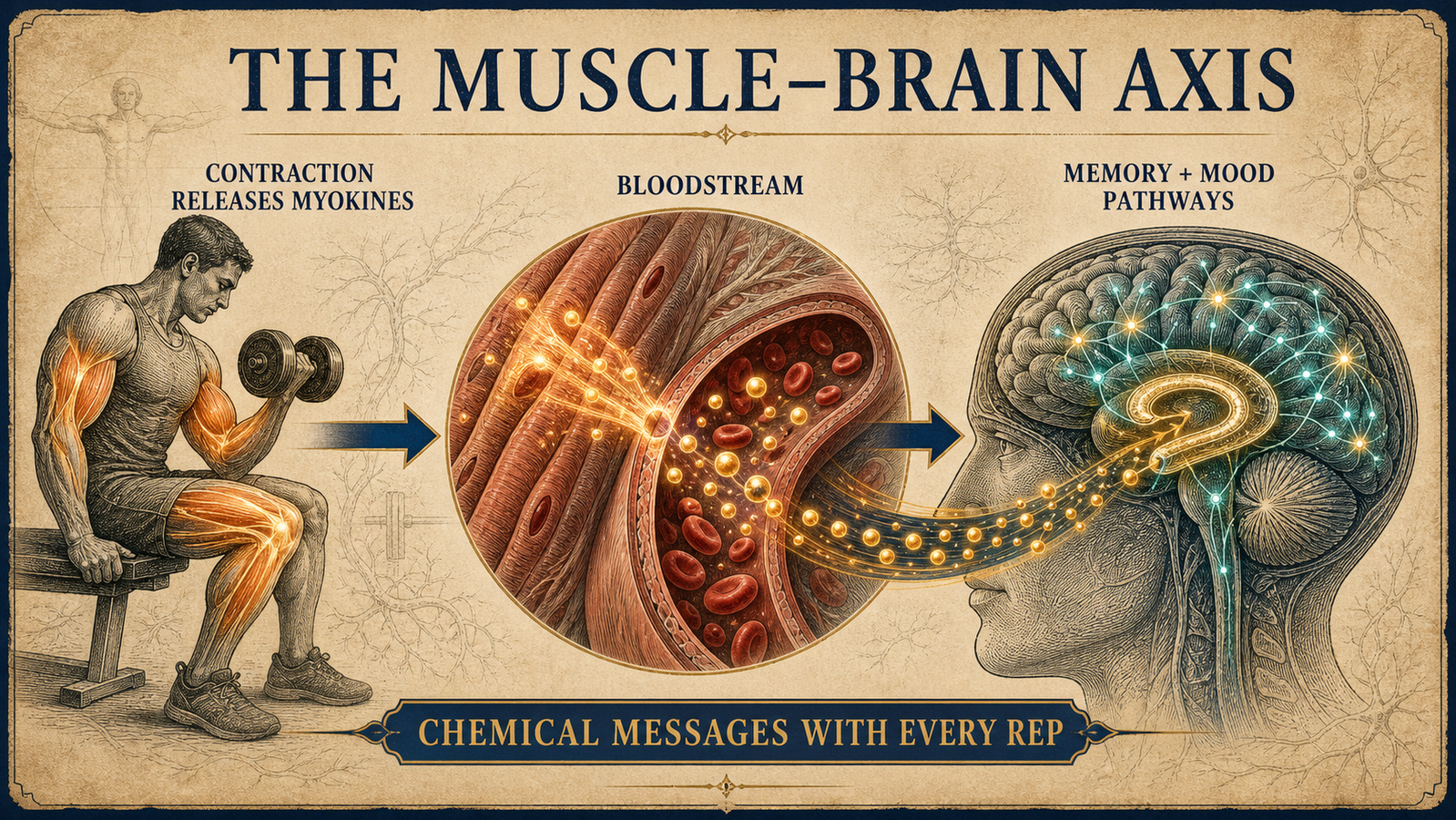
Skeletal muscle is not just for movement. When it contracts, it releases signaling molecules called myokines into the bloodstream. Some cross into the brain and act on the same growth pathways that support memory and mood. This is part of why strength training shows up in brain research at all. The working muscle behaves like an endocrine organ, sending chemical messages with every rep. Scientists call this the muscle-brain axis, and it is one of the faster-growing areas in exercise science.
Grip strength predicts lifespan.
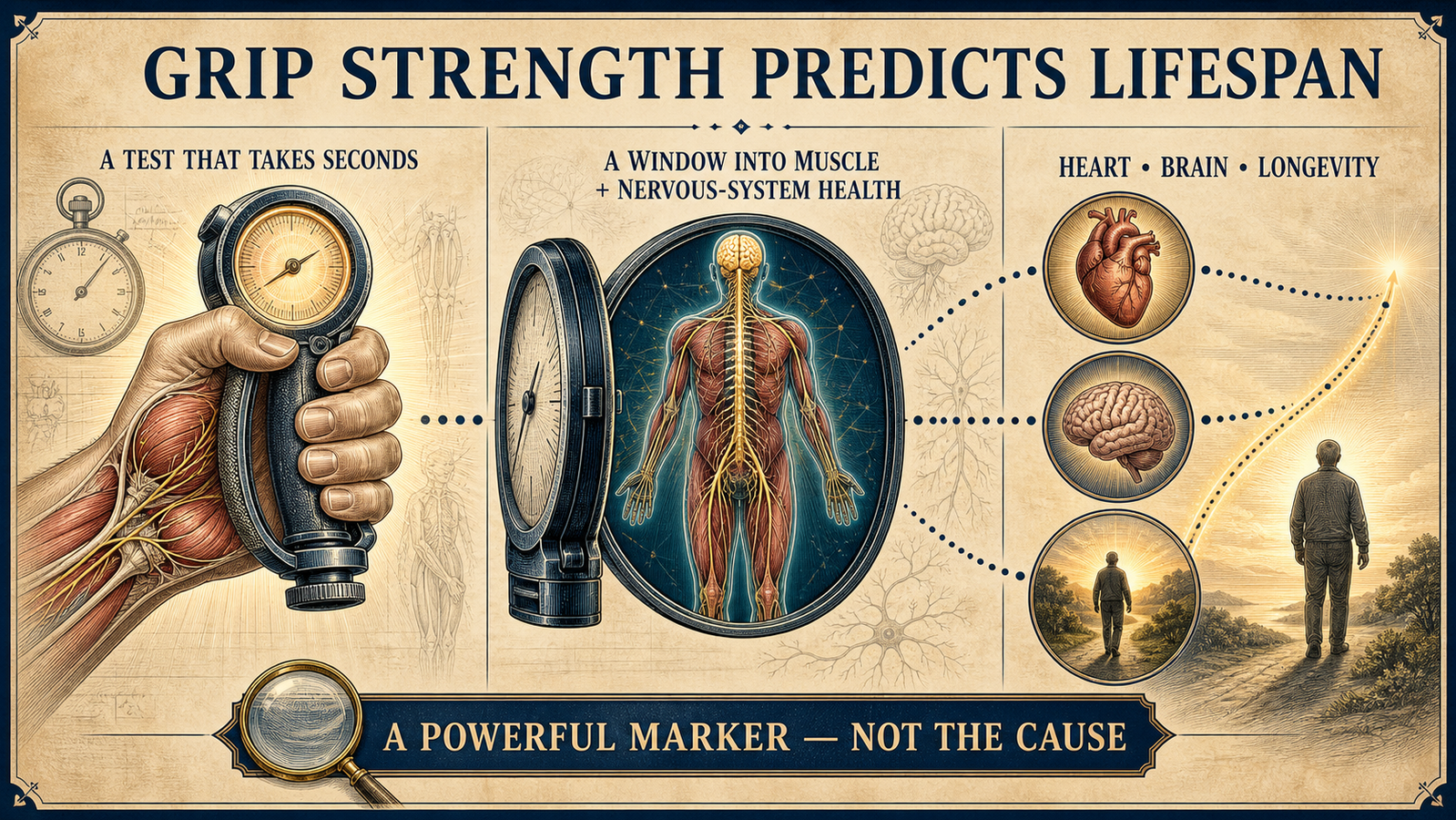
Grip strength is one of the simplest measures in medicine and one of the most predictive. Large studies link a weaker grip to higher risk of heart disease, cognitive decline, and earlier death, sometimes more strongly than blood pressure. The grip itself is not the cause. It is a window into total-body muscle and nervous-system health. A hand dynamometer costs little and takes seconds, which is why researchers reach for it as a quick proxy for how well someone is aging.
Products We Love
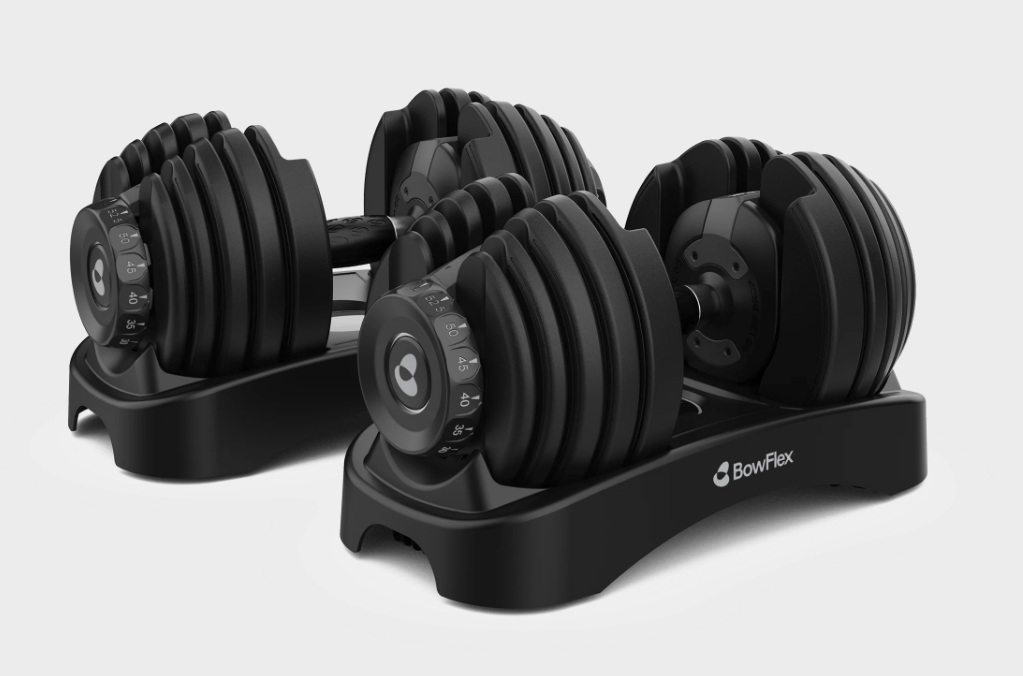
Bowflex SelectTech 552 Adjustable Dumbbells
Home training is where this study's moderate group did much of its work, and adjustable dumbbells make that realistic. The Bowflex SelectTech 552 replaces fifteen pairs of dumbbells with two, dialing from 5 to 52.5 pounds with a turn of the handle. That range covers most people's pressing, rowing, and carrying for years. They take up the footprint of a single pair and let you add load without buying more equipment. If you want to strength train at home without filling a room, this is where I would start. I have used something similar for years and reach for them regularly.
humanOS Catalog Feature of the Week
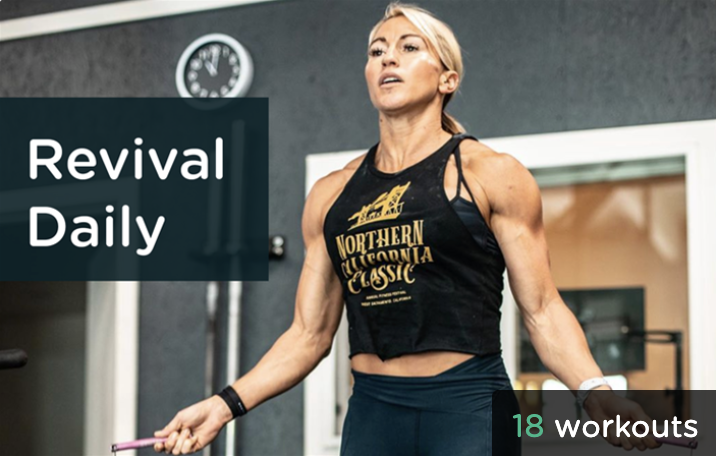
The Revival Daily Workout Program
What if the hardest part of strength training is just deciding what to do each day? The Revival Daily Workout Program removes that friction. It delivers short, video image (GIF)-led sessions that blend traditional strength work with functional movement, built to grow strength and mobility together. Sessions run twenty minutes or less including warm up, which fits the moderate-dose pattern this week's study found so effective. You follow along and never worry about needing to design a program or workout yourself. It is a practical daily solution for anyone who wants the brain and body benefits of resistance training without the planning.
Become a humanOS Member. Turn insights like this into a routine that sticks. Members get the workout programs, courses, and tools that make consistent training simple. Join humanOS.
Wishing you the best,