
Newsletter #434
Traditional-living populations tend to have better heart and metabolic health than people in cities, and a new study says physical activity explains only a small slice of that gap. Researchers put research-grade accelerometers on more than a thousand Orang Asli adults in Peninsular Malaysia. That population is unusual because it now spans nearly the full range of human lifestyles, from semi-nomadic foraging villages deep in the rainforest to families living fully inside the urban market economy. Movement fell as lifestyles urbanized. Health worsened along the same gradient. But the two turned out to be only loosely coupled. So how much does activity actually carry, and what is doing the rest of the work?
Become a Member. Get the science-backed programs, courses, and tools that make healthy living automatic.
Join humanOS and turn what you read here into daily habits that stick.
Review Your Learnings: Newsletter Summaries ✨
Physical activity and cardiometabolic health across an extreme lifestyle gradient
How much does activity drop with urban life?
Activity falls steeply as lifestyles urbanize, and the largest losses are in easy movement rather than hard training.
Physical activity here means objectively measured movement. Participants wore research-grade accelerometers on the wrist for about a week, so nobody was estimating their own exercise habits.
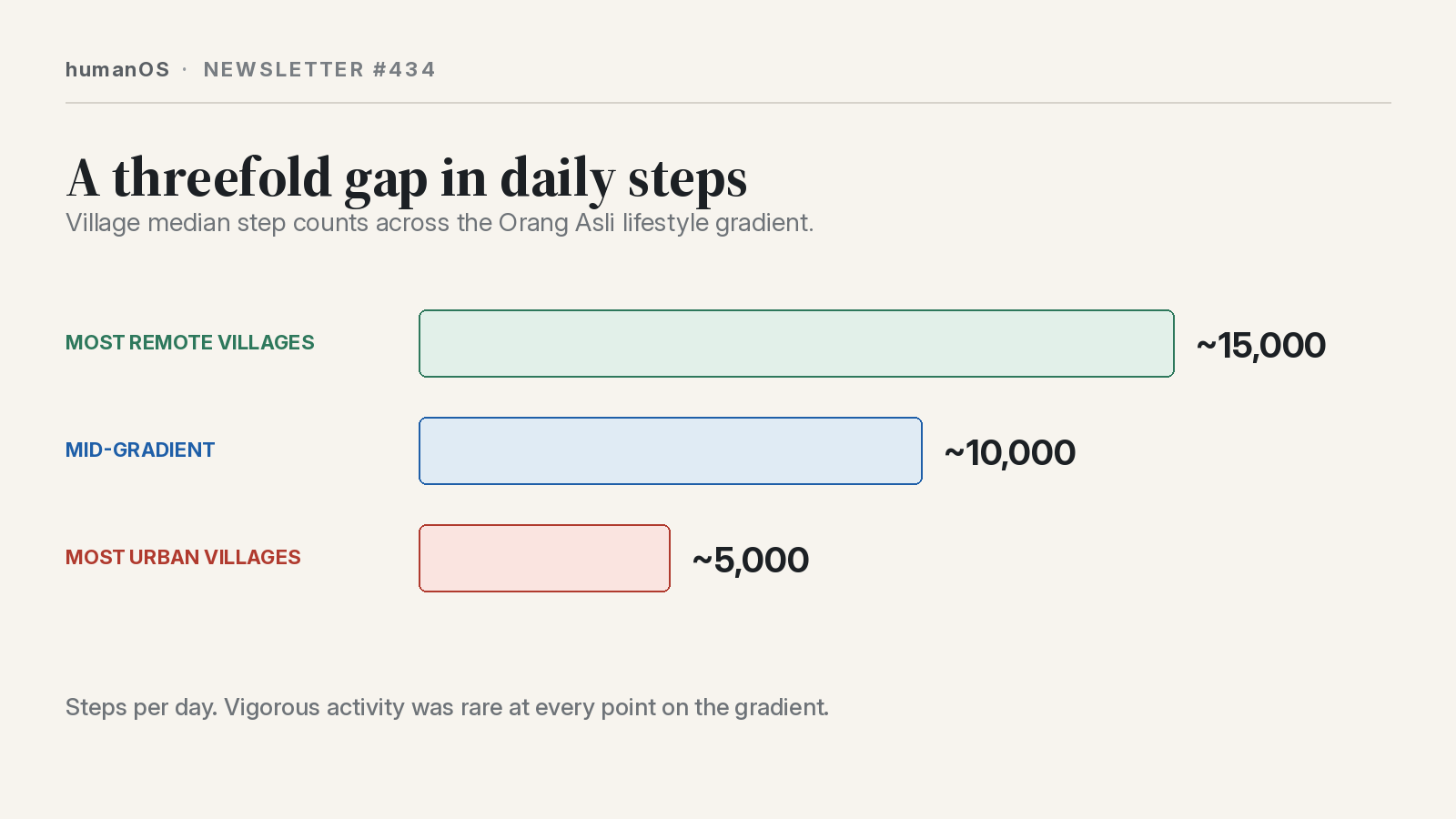
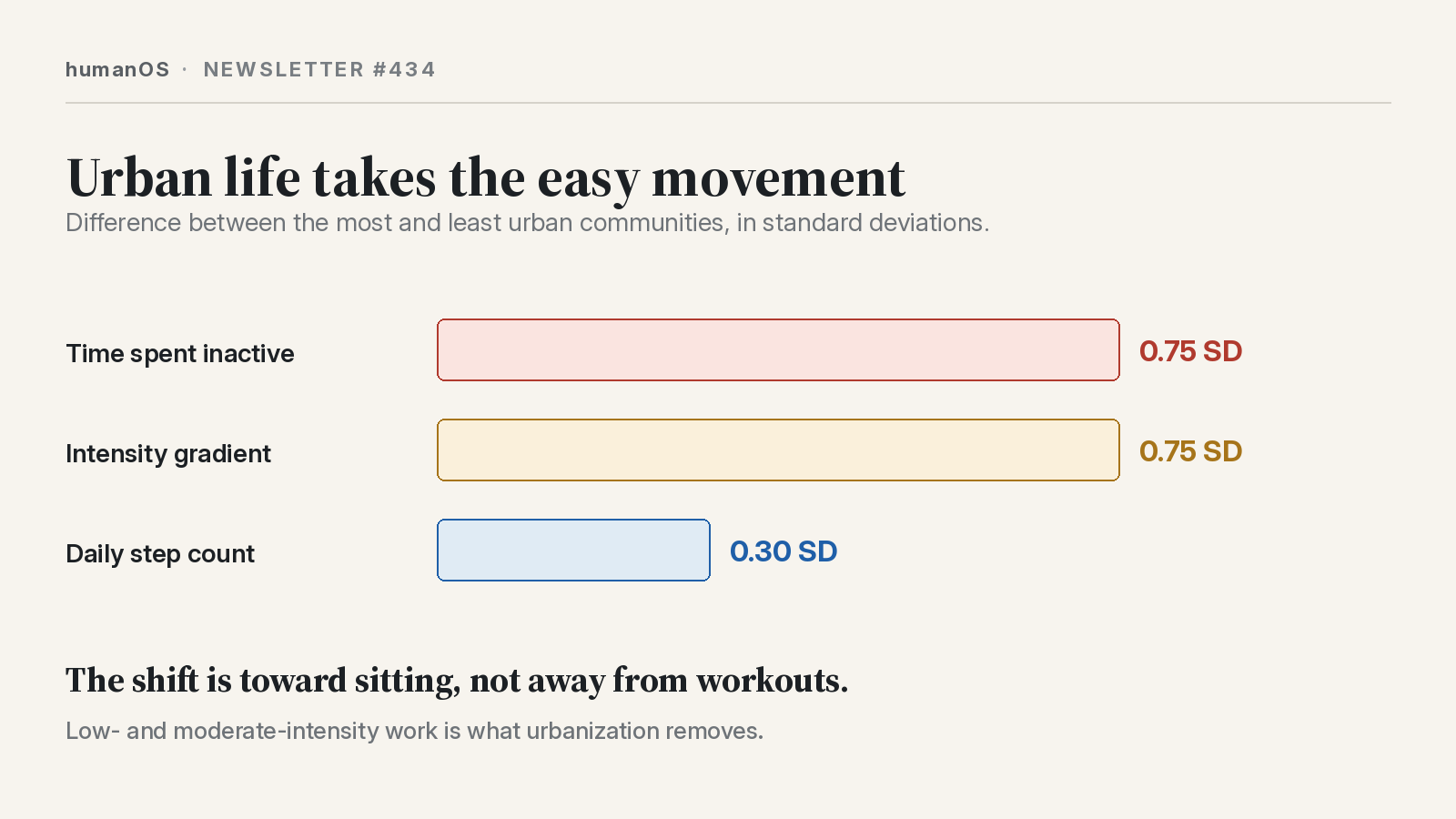
Step counts in the most urban villages were a fraction of those in the most remote ones. The researchers also tracked two other dimensions, time spent inactive and a measure of how much of the day is spent at higher intensities. Both of those shifted more sharply across the gradient than step counts did.
That pattern says something specific about what urban life removes. It is not that people stop doing hard workouts. Subsistence life runs on walking long distances, carrying loads, processing food, and farm labor, all of it low to moderate in intensity and spread across the whole day. Wage work and motorized transport replace that with sitting.
Vigorous activity was rare everywhere in this study, including the most traditional communities. Whatever health benefit showed up came from ordinary movement rather than from anything resembling structured low-intensity training.
Why does activity fall off a cliff after 50?
Movement declines with age in every human population, but how steeply it declines appears to depend on where you live.
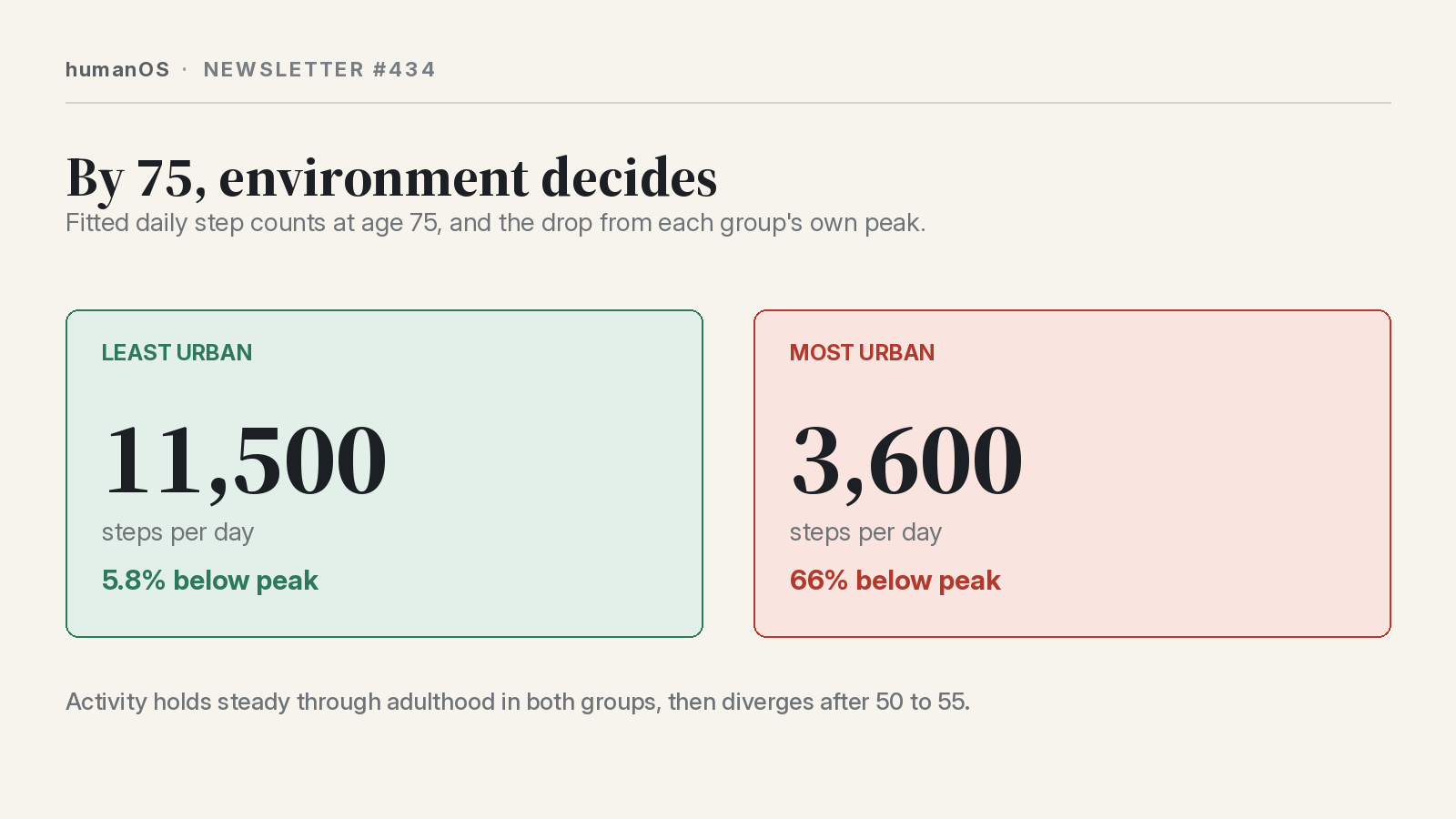
Through early and middle adulthood, activity held roughly steady across the entire lifestyle gradient. Somewhere in the mid-fifties it started to fall. That much is universal and expected.
What was not expected is how differently the fall played out. In the most urban communities the decline was severe, steep enough that older adults were moving a small fraction of what they had at their peak. In the most traditional communities it was barely detectable. Older adults there were still moving nearly as much as they had at forty.
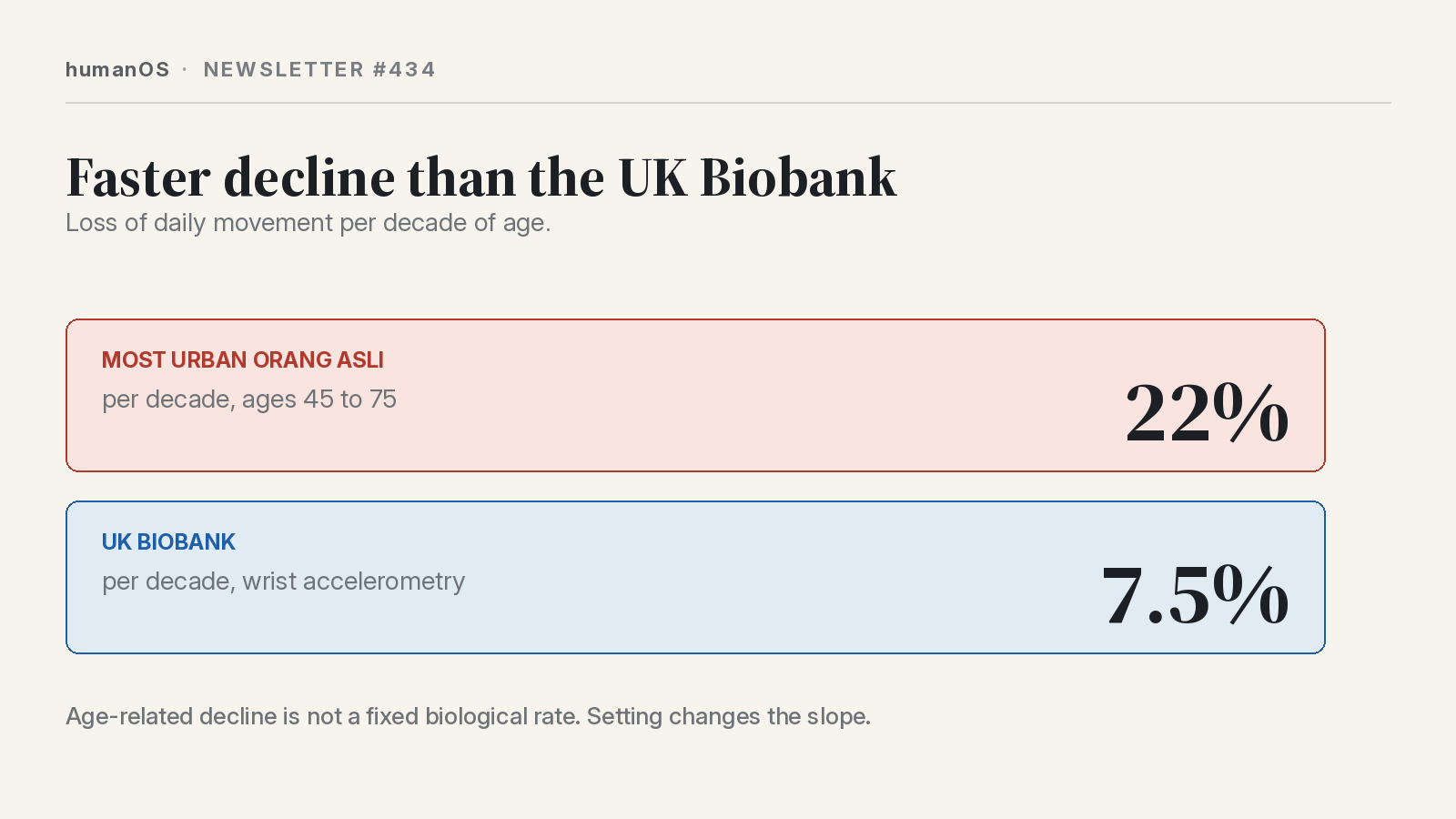
The urban decline per decade was also steeper than the figure measured in the largest accelerometer study of a wealthy country to date. Read that carefully. A rural-to-urban Indigenous population in Malaysia is losing movement with age faster than middle-aged Britons.
This reframes what we call age-related decline. Some of it is biology. A large share of it looks like the environment deciding for you.
Movement Is Not The Whole Story
Physical activity explained only a small fraction of the health gap between traditional and urban living.
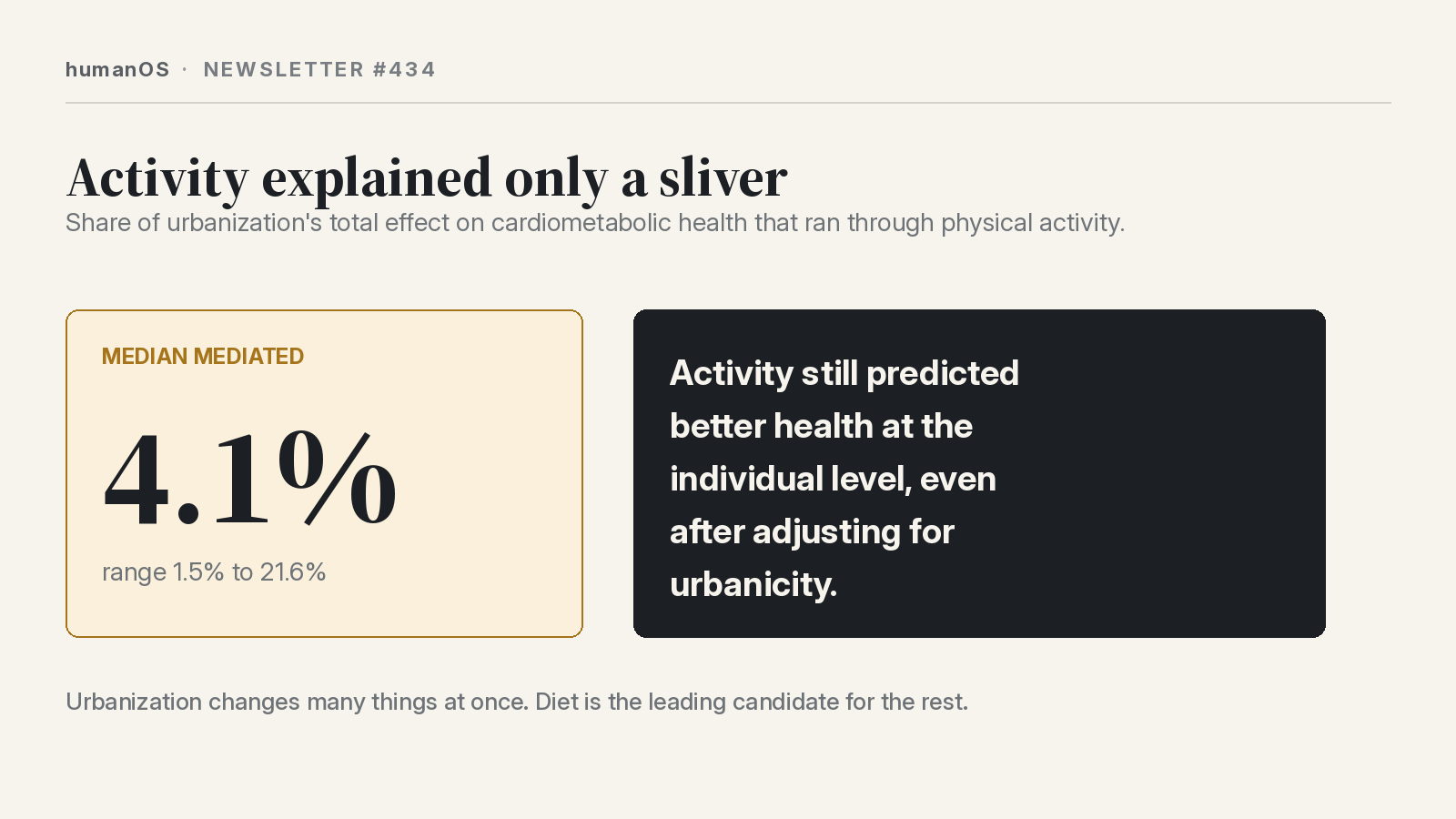
The researchers ran a mediation analysis, which asks how much of urbanization's effect on health travels through one specific channel. Activity was a real channel. It was also a narrow one, accounting for a low single-digit share of the total effect across most outcomes. Time spent inactive was the strongest of the three activity measures, and still modest.
This is not a result that says movement does not matter. At the individual level, more activity still predicted better cardiometabolic health, and it held up after accounting for how urban someone's community was. Activity is doing real work. It is just not doing most of the work in this particular comparison.
The likely candidate for the rest is food. The authors describe traditional foods being replaced over roughly the last decade by store-bought rice, ultra-processed packaged goods, and sweetened drinks, along with more added sugar, salt, and oil. Diet was not measured precisely enough here to test directly, which is the study's most important gap.
Two other limits worth your consideration. This is a snapshot in time, so the direction of causation is not settled. People in worse health may simply move less. And these communities sit only in the lower half of the global sedentary range. Nobody in this study has a desk job, which means the urban end of this gradient is still more active than many readers of this newsletter.
I’ve personally maintained over 10,000+ steps per day (average) for 17 years - since Fitbit launched it’s very first step counter, and I started tracking my daily steps. This doesn’t always mean long walks. Sometimes I achieve my daily step goal without leaving the house. When I get a phone call, I stand up and pace. Other times, I get several short walks into my day. Other times, yes, I do get a long walk to achieve my goal. But the most improtant part to convey is that walking doesn’t feel like homework. It’s something I look forward to. It’s a major part of my daily mental health routine. It’ just nice to get out and stretch my legs as they say. I plan to keep this health behavior going as long as I can.
Summary
Kraft and colleagues measured physical activity with wrist-worn Axivity AX3 accelerometers in 1,075 Orang Asli adults across 34 villages in Peninsular Malaysia (ages 18–91, 63.6% female, 5,892 valid activity days), alongside 16 cardiometabolic measures. Village median step counts ranged from roughly 15,000 per day in the most remote communities to roughly 5,000 in the most urban. Differences between gradient extremes reached about 0.75 SD for intensity gradient and inactive time, and 0.3 SD for daily steps. Urbanicity predicted worse weight, body fat, waist circumference, waist:hip ratio, BMI, body roundness index, total cholesterol, LDL, HDL, triglycerides, systolic blood pressure, obesity, hypertension, pre-diabetes and diabetes. Activity independently predicted better values on many of the same measures. Age-related decline began near 50 to 55 years. By age 75, fitted step counts were about 3,600 per day in the most urban settings (66% below peak) versus about 11,500 in the least urban (5.8% below peak), a per-decade urban decline of roughly 22% from ages 45 to 75 against 7.5% in UK Biobank. Mediation analysis attributed a median of only 4.1% of urbanicity's total health effect to physical activity (range 1.5% to 21.6%).
Common Questions
How many steps per day did the most traditional communities take?
Village medians reached roughly 15,000 steps per day in the most remote Orang Asli communities, compared with roughly 5,000 in the most urban ones.
Does this mean exercise does not prevent cardiometabolic disease?
No. Physical activity independently predicted better body composition, blood lipids, blood pressure, and diabetes status in this study. It simply did not explain most of the difference between traditional and urban lifestyles.
At what age does physical activity start to decline?
In this population, activity was roughly flat through adulthood and began a rapid decline around 50 to 55 years of age. How steep that decline was depended heavily on how urban the person's community was.
Is walking enough, or do you need vigorous exercise?
Vigorous activity was rare across this entire population, so the cardiometabolic benefits observed came from light and moderate movement. That supports walking and daily physical work as meaningful, and it does not rule out additional benefit from higher intensity.
What probably explains the rest of the health gap?
The authors point to diet. Traditional foods have been rapidly replaced by store-bought rice, ultra-processed packaged foods, and sweetened drinks in many Orang Asli communities.
Random Trivia and Weird News
10,000 Steps Came From Marketing
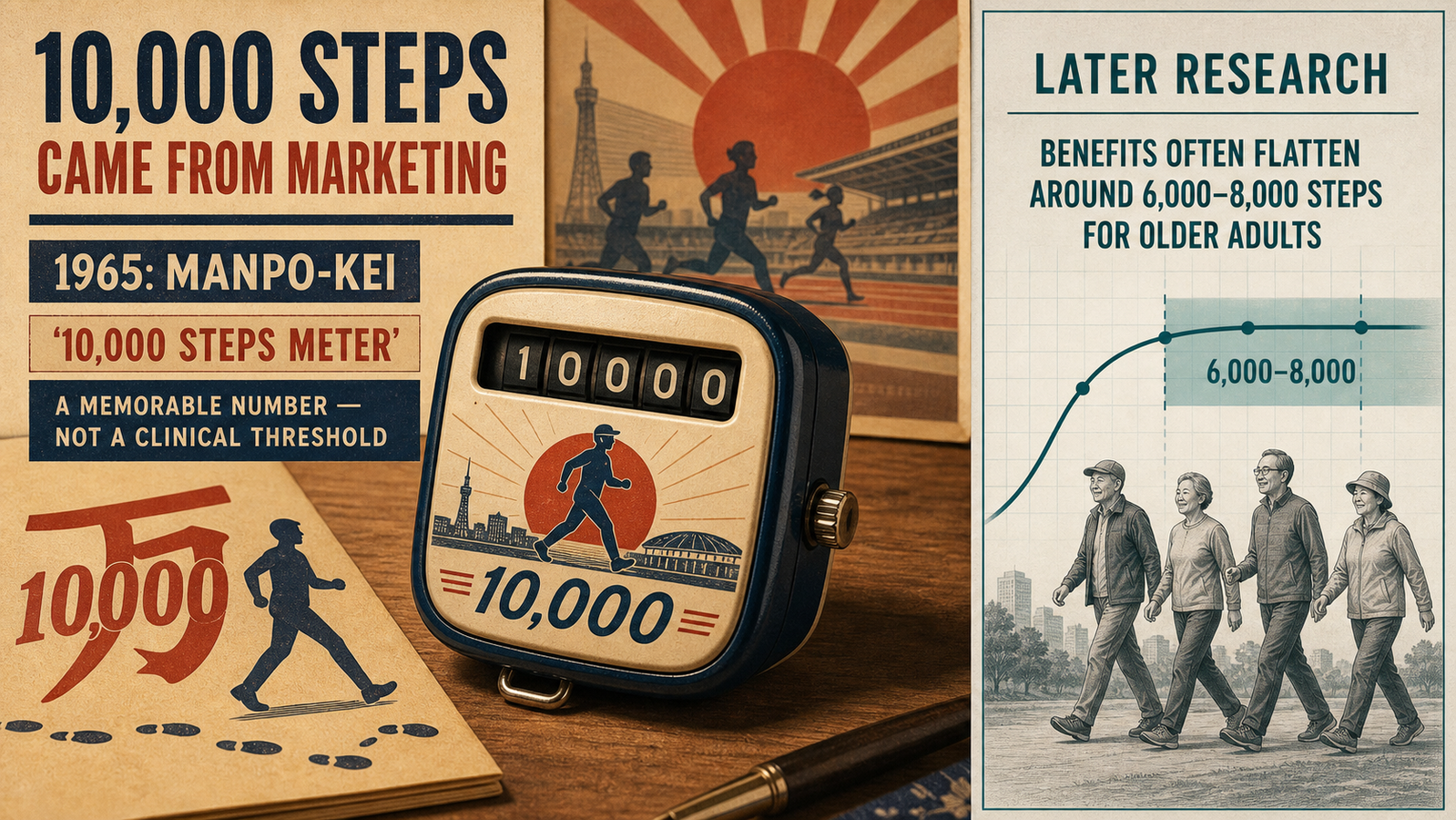
The 10,000-step target was never a clinical finding. It came from a 1965 Japanese pedometer called the Manpo-kei, which translates roughly to "10,000 steps meter," sold into the fitness enthusiasm that followed the 1964 Tokyo Olympics. The number was picked partly because the Japanese character for 10,000 looks like a walking figure. Research since then finds mortality benefits flattening well below that, often somewhere between 6,000 and 8,000 steps a day for older adults.
Hunter-Gatherers Sit As Much As Us
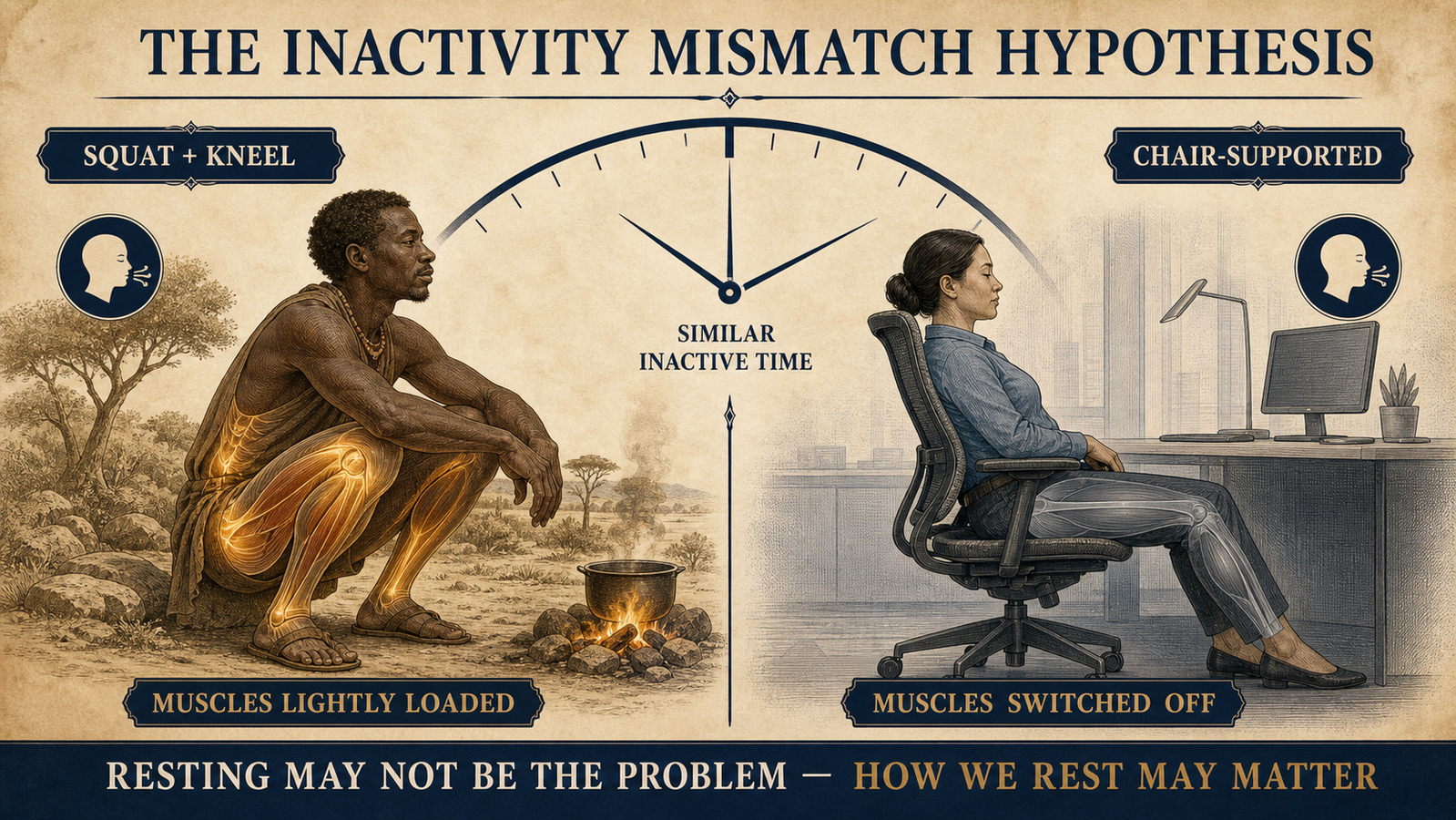
Hadza foragers in Tanzania spend about as many waking hours inactive as office workers in wealthy countries, close to nine or ten hours a day. The difference is posture. They squat and kneel rather than sit in chairs, and those positions keep leg muscles lightly loaded the entire time. Researchers call this the inactivity mismatch hypothesis. Resting is not the problem. Resting with the muscles switched off may be the problem.
Da Vinci Sketched A Pedometer
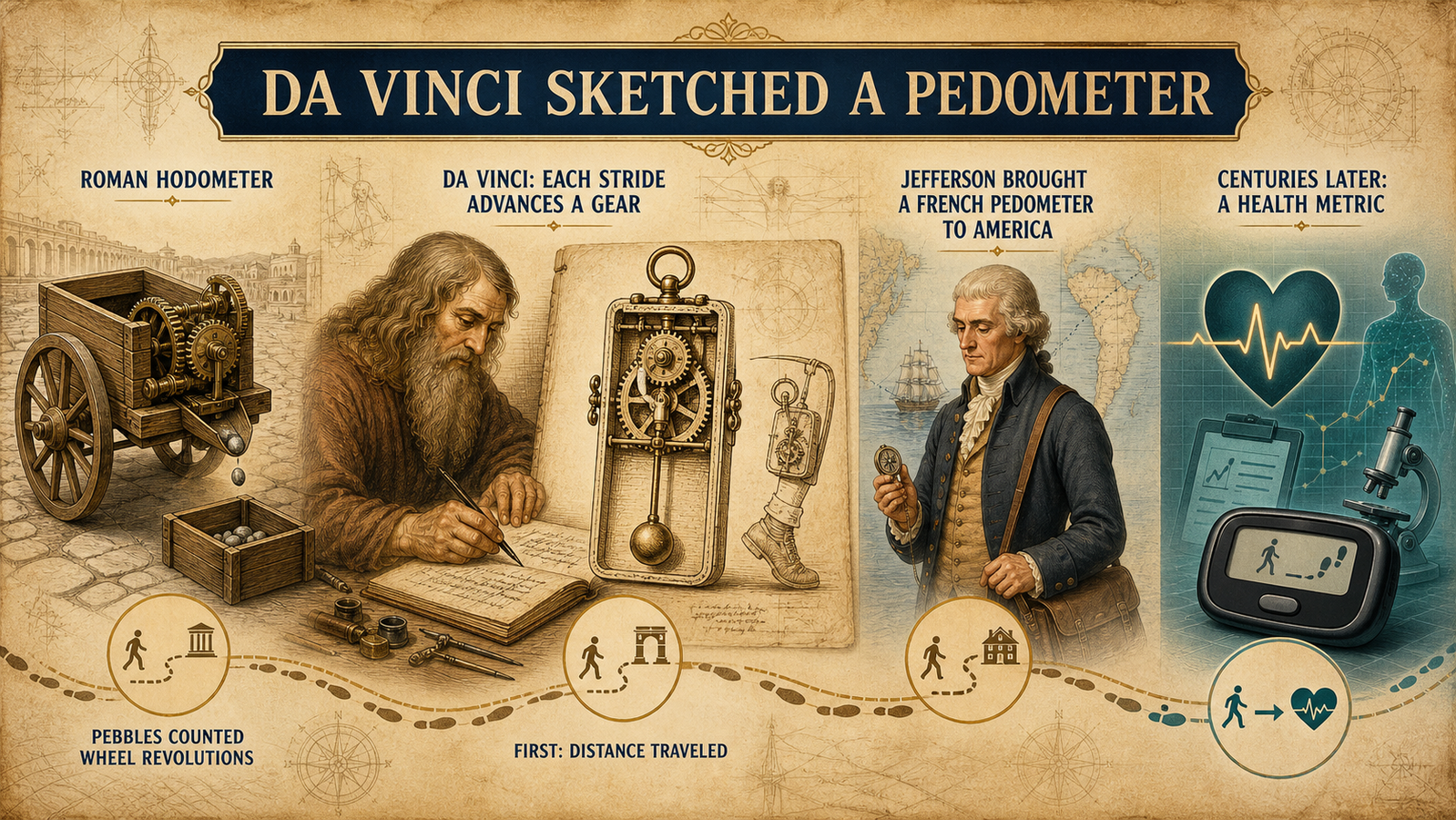
Step counting is old. Roman engineers described a cart-mounted hodometer that dropped a pebble into a box with each wheel revolution. Leonardo da Vinci sketched a pendulum device meant to advance a gear with every stride. Thomas Jefferson carried a French pedometer back to America and helped popularize it among the curious. Every one of these was built to measure distance traveled. Turning the step count into a health metric took another two centuries.
Products We Love
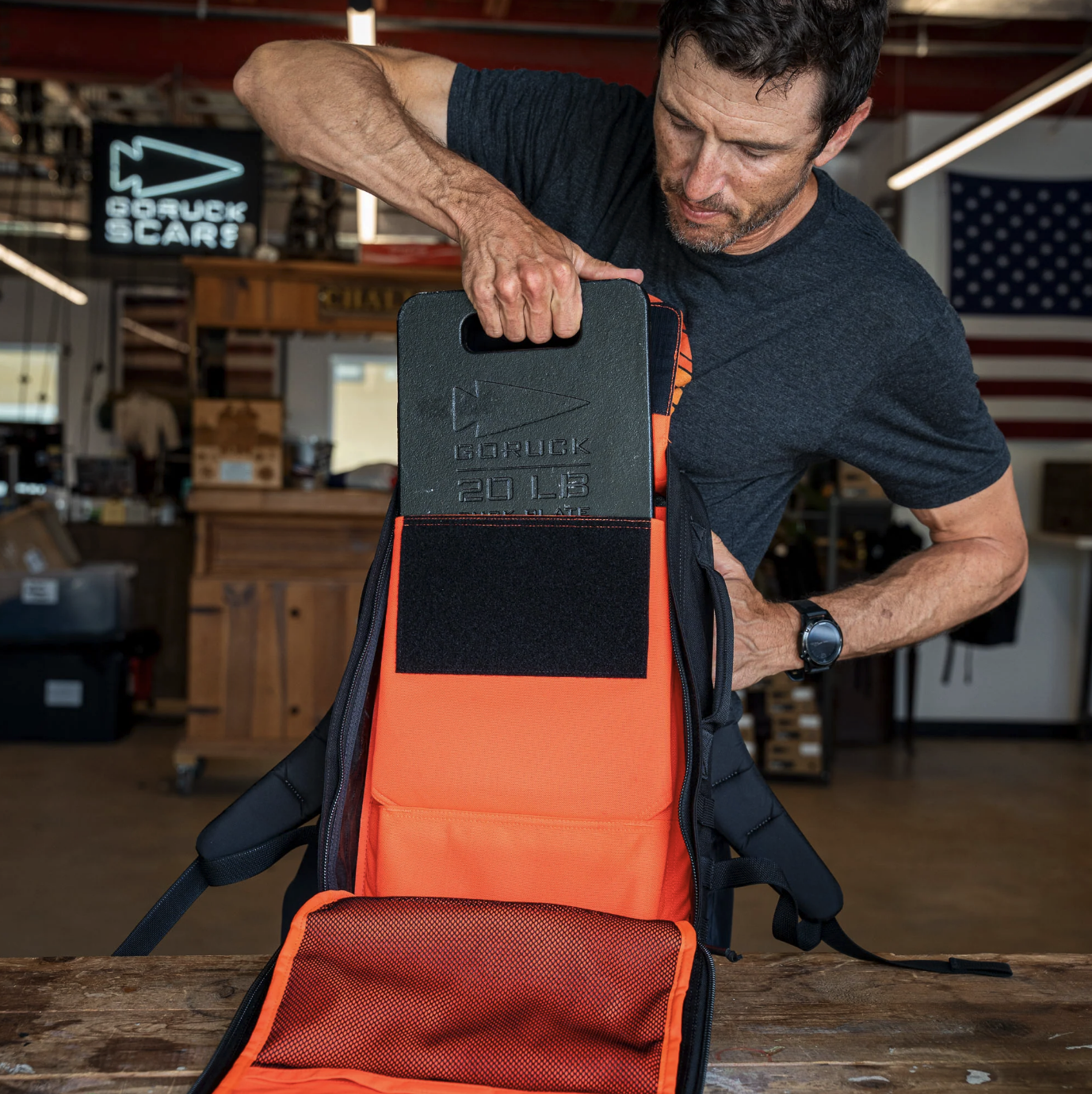
GORUCK Rucker
This week's paper makes a plain case for low-intensity work that lasts all day, and rucking is the closest thing modern life has to it. The Rucker is a purpose-built training pack with a flat internal pocket that holds a weight plate tight against your spine, so the load does not shift while you walk. The build is heavy-duty and the shoulder straps are wide enough to carry real weight for an hour without hot spots. I keep mine loaded and sitting by the door, which is the whole trick. A walk becomes training without changing anything about the walk.
humanOS Catalog Feature of the Week

InTUNE Training
What if you never had to find a workout window again? InTUNE stands for integrative and opportunistic training, and it treats the whole day as the session rather than one block you have to protect. There are 106 workouts in the program, each about seven minutes, built from bodyweight movements that need no equipment, with a GIF demonstration for every exercise. You can run one straight through or scatter it into exercise snacks around your morning routine, your work breaks, and your meals. I built this during my PhD when I had no time to train, and I still use it. It is the closest thing I know to how our ancestors actually moved.
Example Workout
Complete these reps before day’s end…
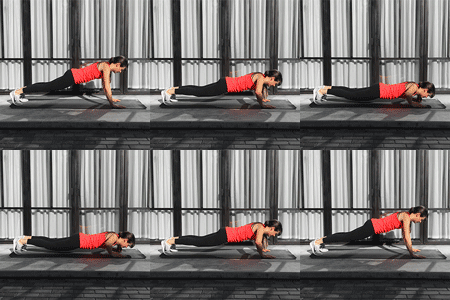
Push Ups:
30 reps
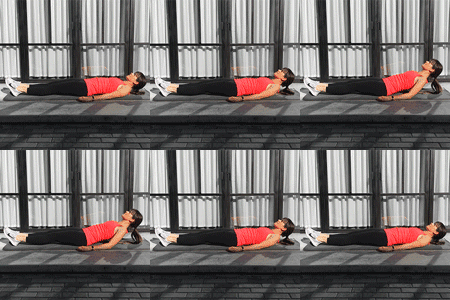
Back Push Ups:
40 reps
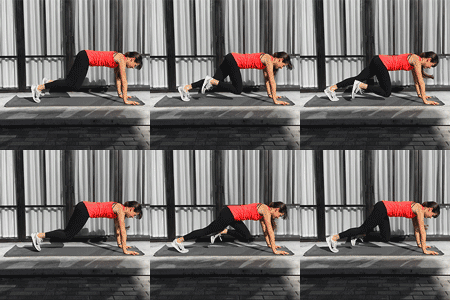
Mountain Climbers:
80 reps
Modify any exercise as needed to suit you. If you can’t do a full push up, no problem. Do them from your knees, a counter, or a wall. Also, you don’t need to do all the exercises at once. You can do a few reps here, a few reps there across your day. Just aim to complete all the reps by the end of the day. I often spread my total reps across my day. In other words, I mix the physical work into my work day.
Become a Member. Everything you learn here works better as a system. Join humanOS for the courses, tools, and coaching that turn good science into daily practice.
Wishing you the best,