Newsletter #441
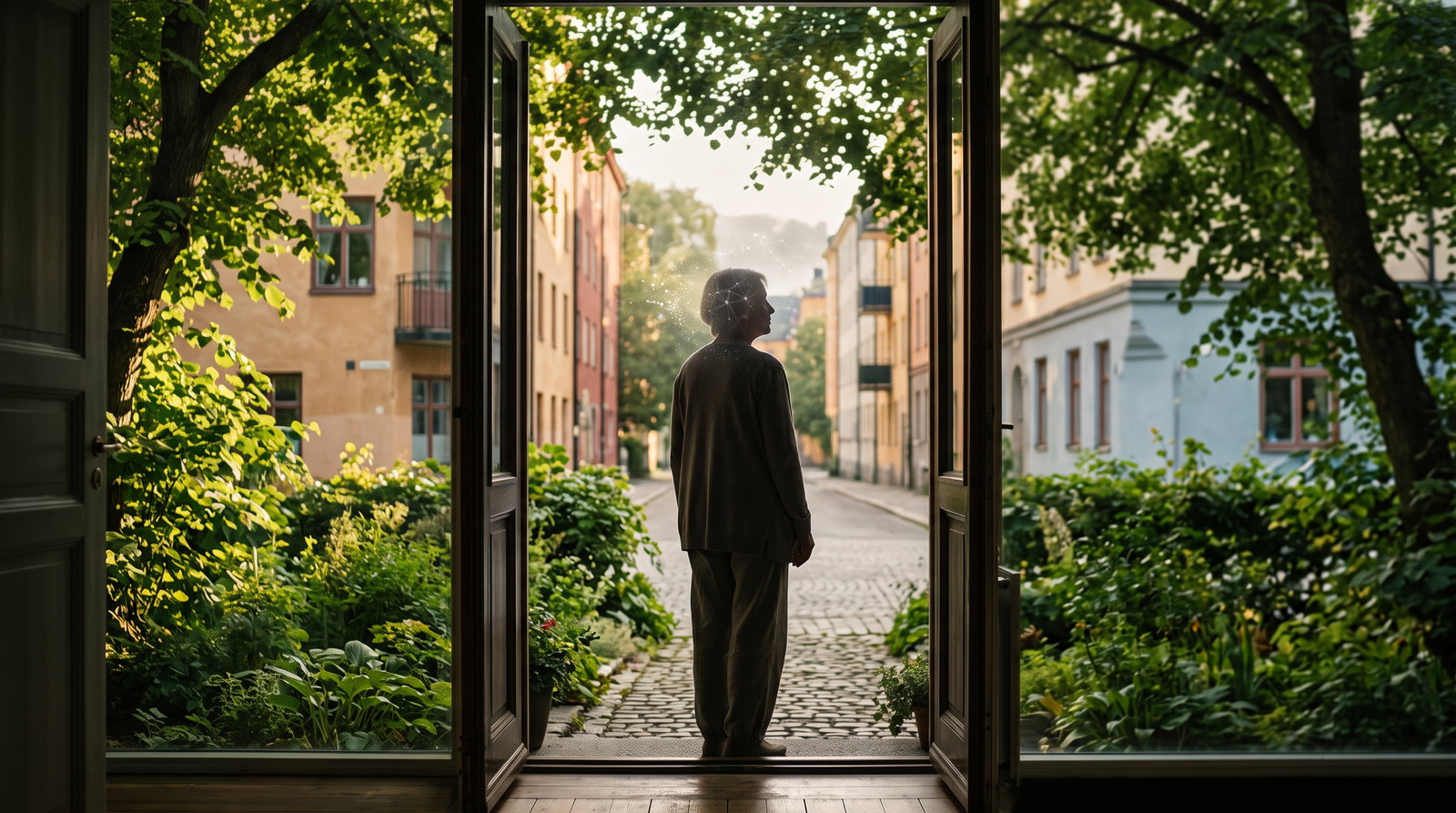
Living near greenery may help protect your brain, and the green right outside your door seems to matter most. That's the takeaway from a new 16-year study of almost 3,000 older adults in Stockholm, published in Alzheimer's & Dementia. People with more trees, grass, and plants within about a one-minute walk of home were less likely to develop dementia. Green space farther away showed little effect. The link held even after accounting for air pollution and traffic noise. And it was strongest in women. Let's take a closer look.
If these newsletters are a regular part of how you stay informed on health and longevity, consider supporting the work with a Pro membership. $19.99 per quarter, about $1.67 per issue, less than a coffee tip.
Join here: Become a Member
Review Your Learnings: Newsletter Summaries ✨
Precision Residential Greenspace, Urban Environmental Exposures, and Incident Dementia Among Older Adults in Sweden: A 16-Year Cohort Study
What did the Stockholm study measure?
This study measured the greenery around each person's own front door. Most earlier studies did not.
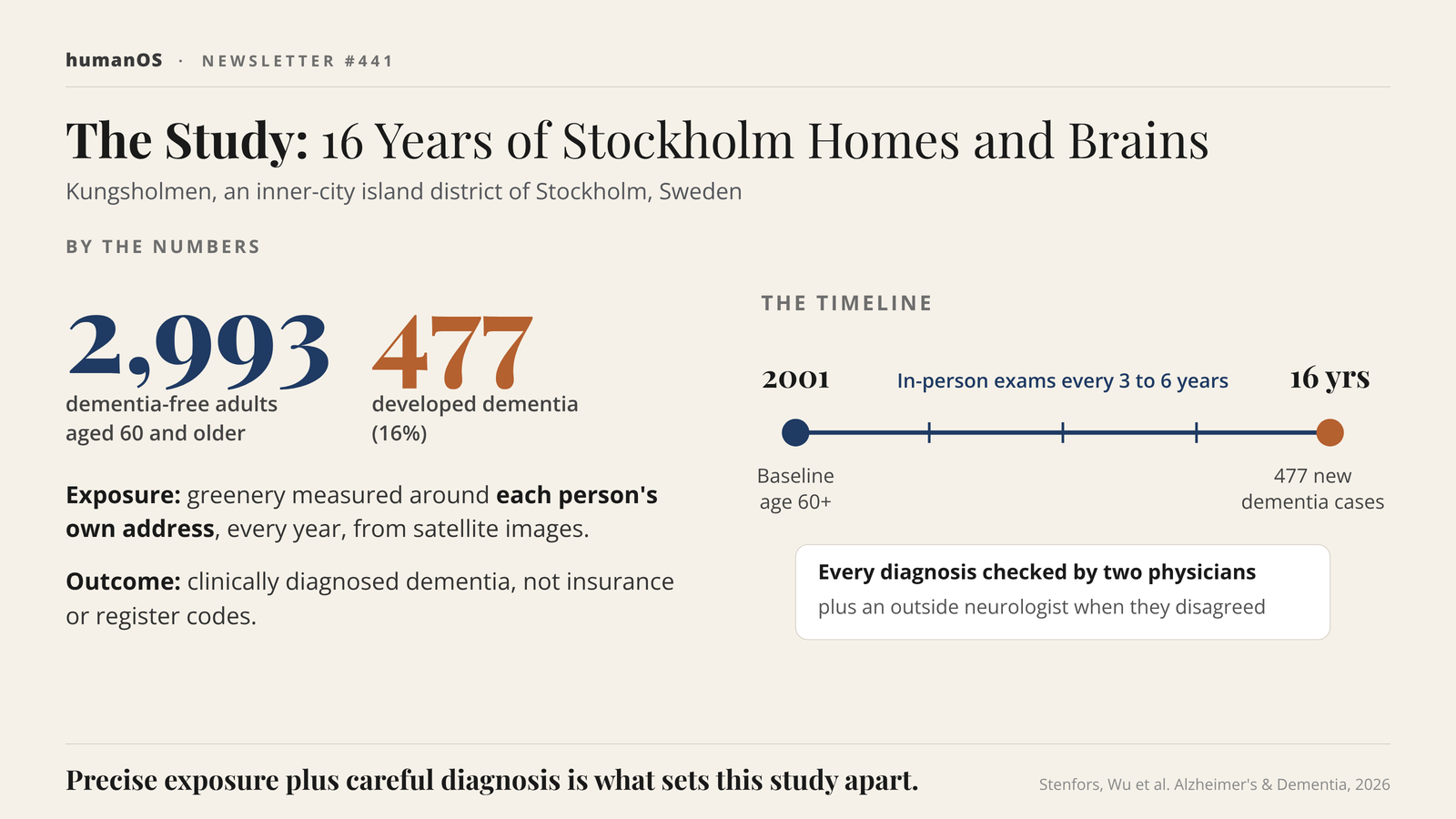
Researchers followed 2,993 adults aged 60 and older living in Kungsholmen, a dense inner-city district of Stockholm. All were free of dementia when the study began in the early 2000s. They are part of the Swedish National Study on Aging and Care in Kungsholmen (SNAC-K), and they were examined in person every three to six years for up to 16 years. Over that time, 477 people developed dementia. Each diagnosis was made by a physician, checked by a second one, and settled by an outside neurologist when the two disagreed.
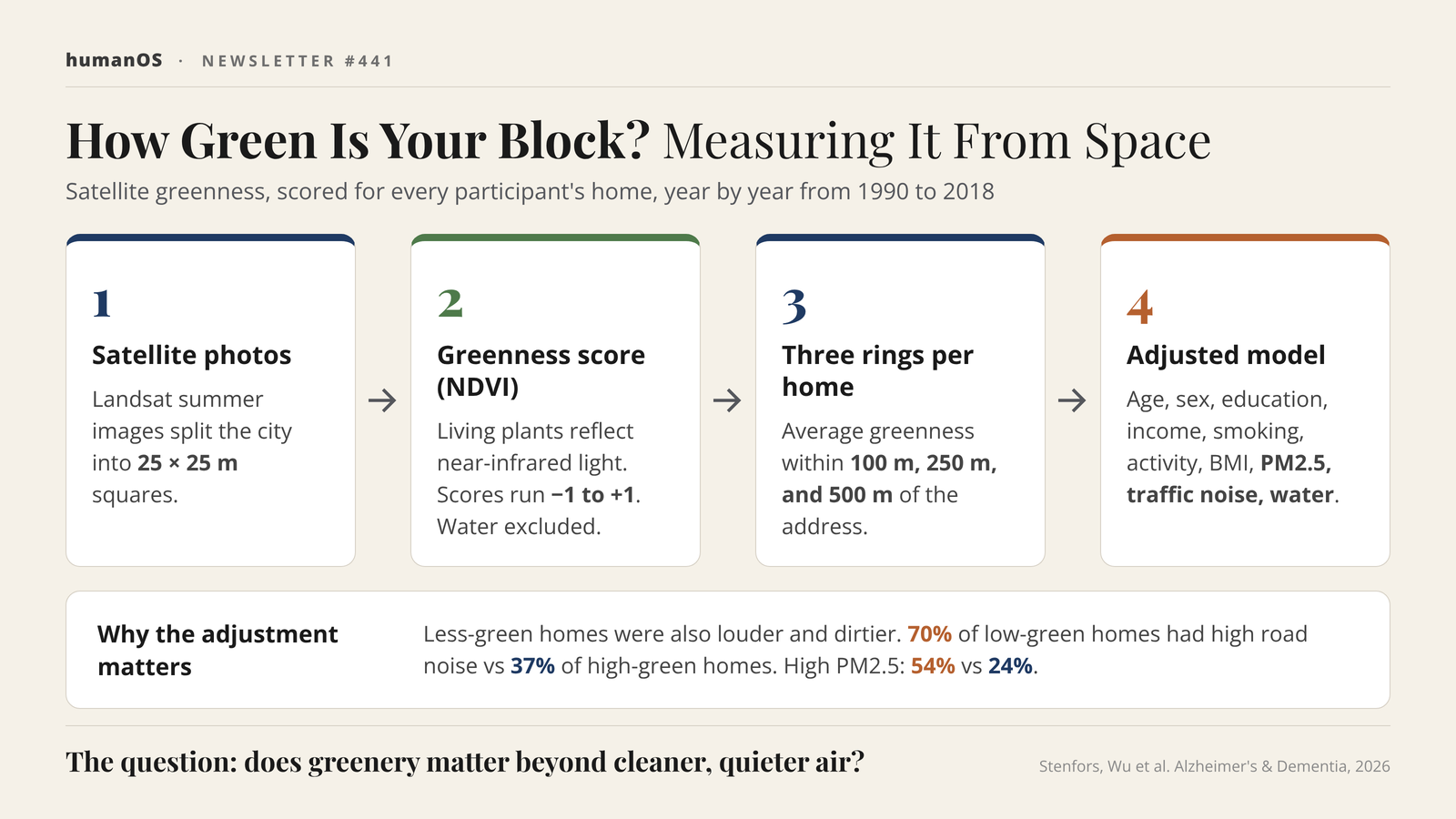
To score greenery, the team used satellite images. The normalized difference vegetation index (NDVI) is a satellite measure of how much living plant cover is in an area. Healthy leaves absorb red light and reflect near-infrared light, so greener ground gets a higher score.
The researchers scored each home every year from 1990 to 2018 at three distances.
- Within 100 meters, about a one-minute walk.
- Within 250 meters.
- Within 500 meters, roughly the surrounding neighborhood.
Because they had each person's address history, they could follow people who moved. That precision matters. Earlier studies on green space and dementia often used zip code or neighborhood averages, and their results were mixed. A neighborhood score can't tell the difference between a street lined with trees and a street lined with parked cars.
Does living near green space lower dementia risk?
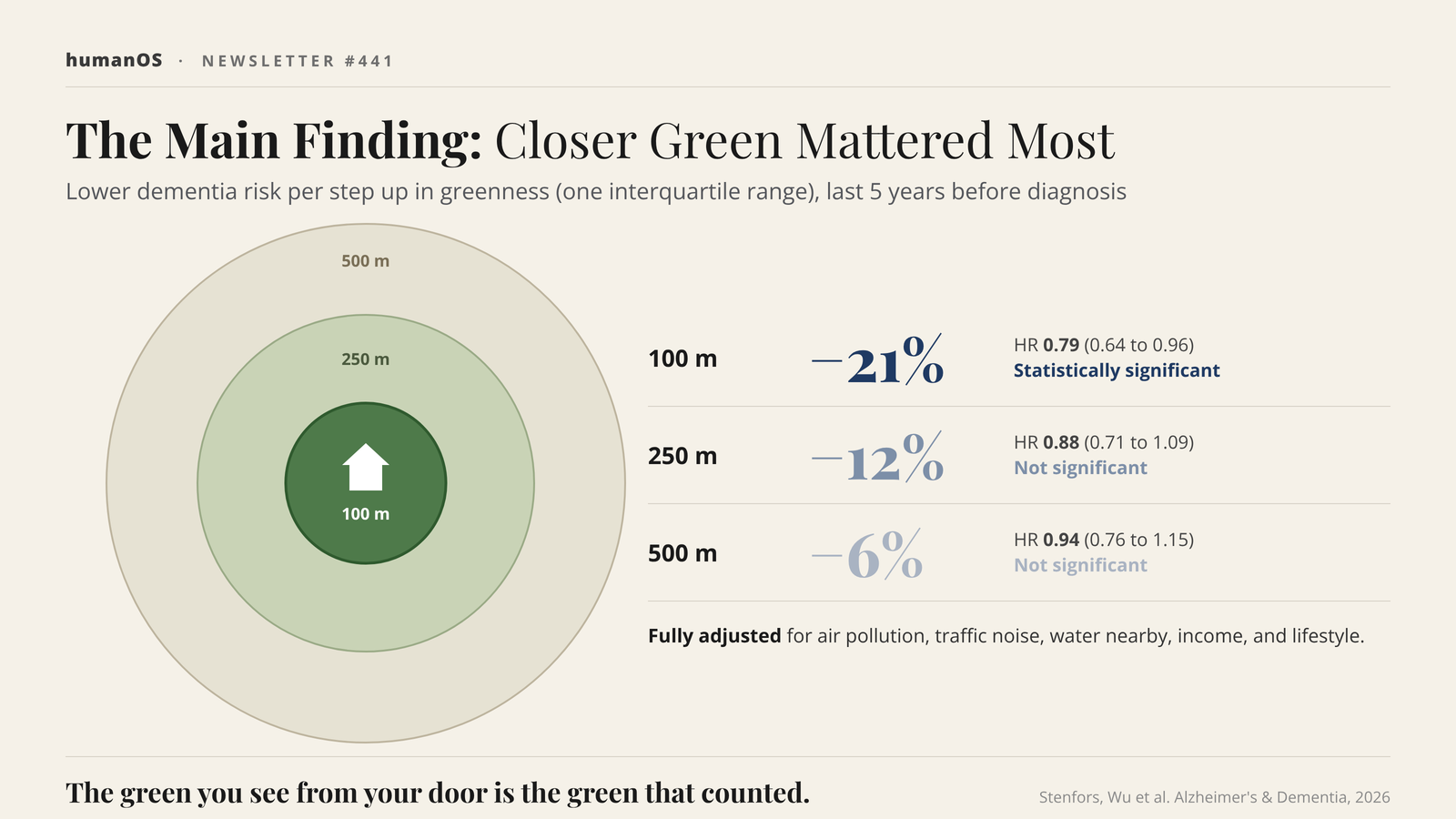
In this study, yes, but only when the green was close. People with more greenery within 100 meters of home had a lower risk of dementia over the following years. Moving one standard step up in greenness, roughly the gap between a less green and a more green address in the study, was linked to about a 20 percent lower risk.
The link faded with distance.
Greenery measured within | Change in dementia risk | Clear result? |
100 meters of home | About 21% lower | Yes |
250 meters of home | About 12% lower | No |
500 meters of home | About 6% lower | No |
Timing mattered too. Greenery in the five years before diagnosis showed a stronger link than greenery from five to ten years earlier.
Greener homes in Stockholm also tended to be quieter and have cleaner air. That raises a fair question. Is it the trees, or just less traffic? The researchers accounted for fine-particle air pollution, road noise, and nearby water. They also adjusted for age, sex, education, income, smoking, physical activity, body weight, and medications. The link with nearby greenery held. It also held when they excluded people who moved and when they corrected for people who dropped out.
This builds on what we covered about how air pollution reaches the brain. Green space and clean air often travel together. This study suggests greenery carries a benefit of its own.
Who benefited most?
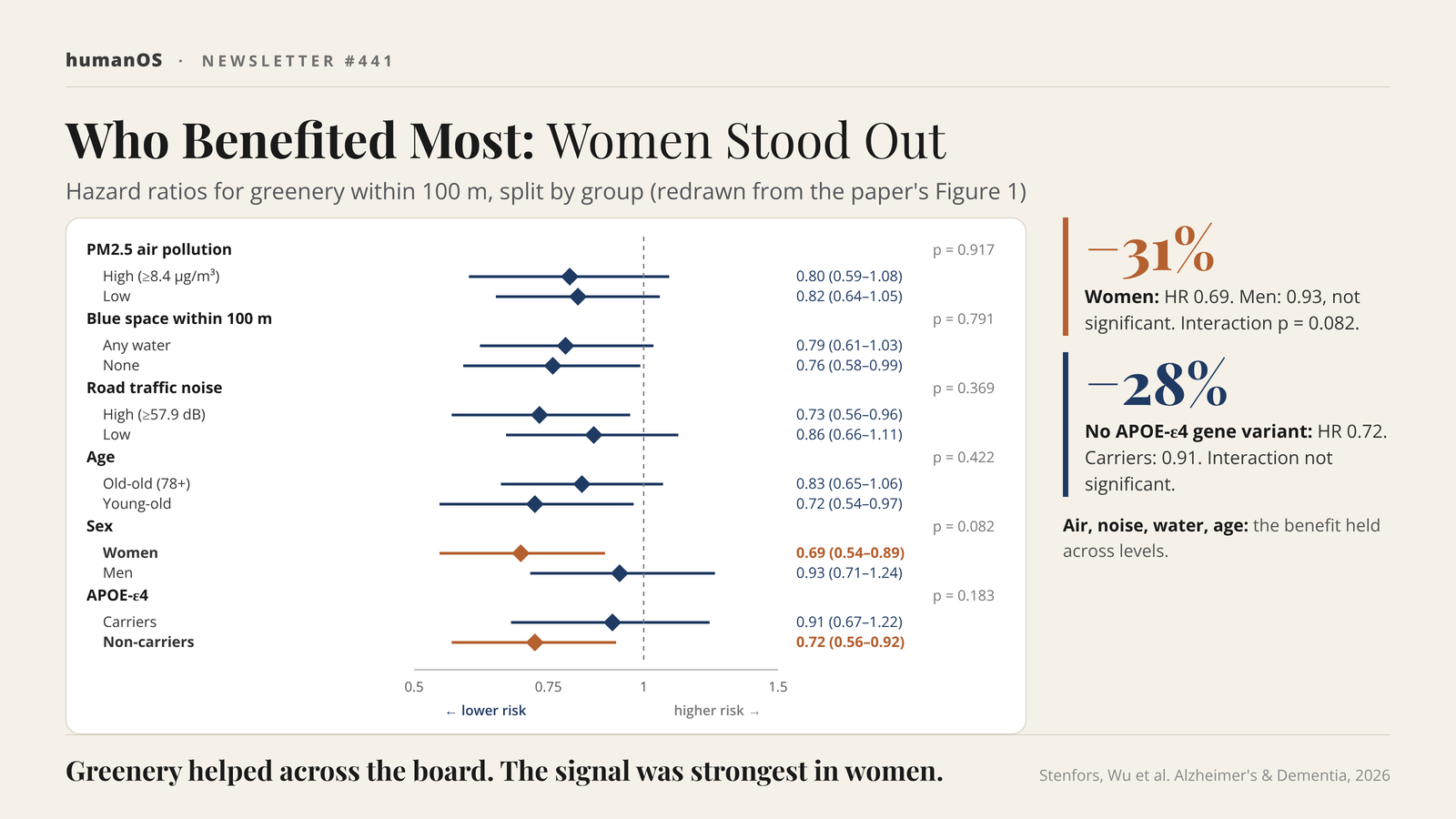
Women showed the clearest benefit. Among women, more nearby greenery was linked to about 30 percent lower dementia risk. Among men, there was no clear link. Earlier studies have seen a similar sex difference, but the reason isn't clear yet.
A similar pattern showed up for genetics. APOE-ε4 is a common gene variant and the strongest known genetic risk factor for late-onset Alzheimer's disease. People without it showed a stronger link between greenery and lower risk. People who carry it showed a weaker one. That difference was not statistically firm, so it's a lead rather than a conclusion.
The benefit did not depend on air pollution levels, road noise, nearby water, or age group.
Nearby Nature Is a Brain Health Input
The trees on your street may be part of your brain health. The authors point to three likely routes.
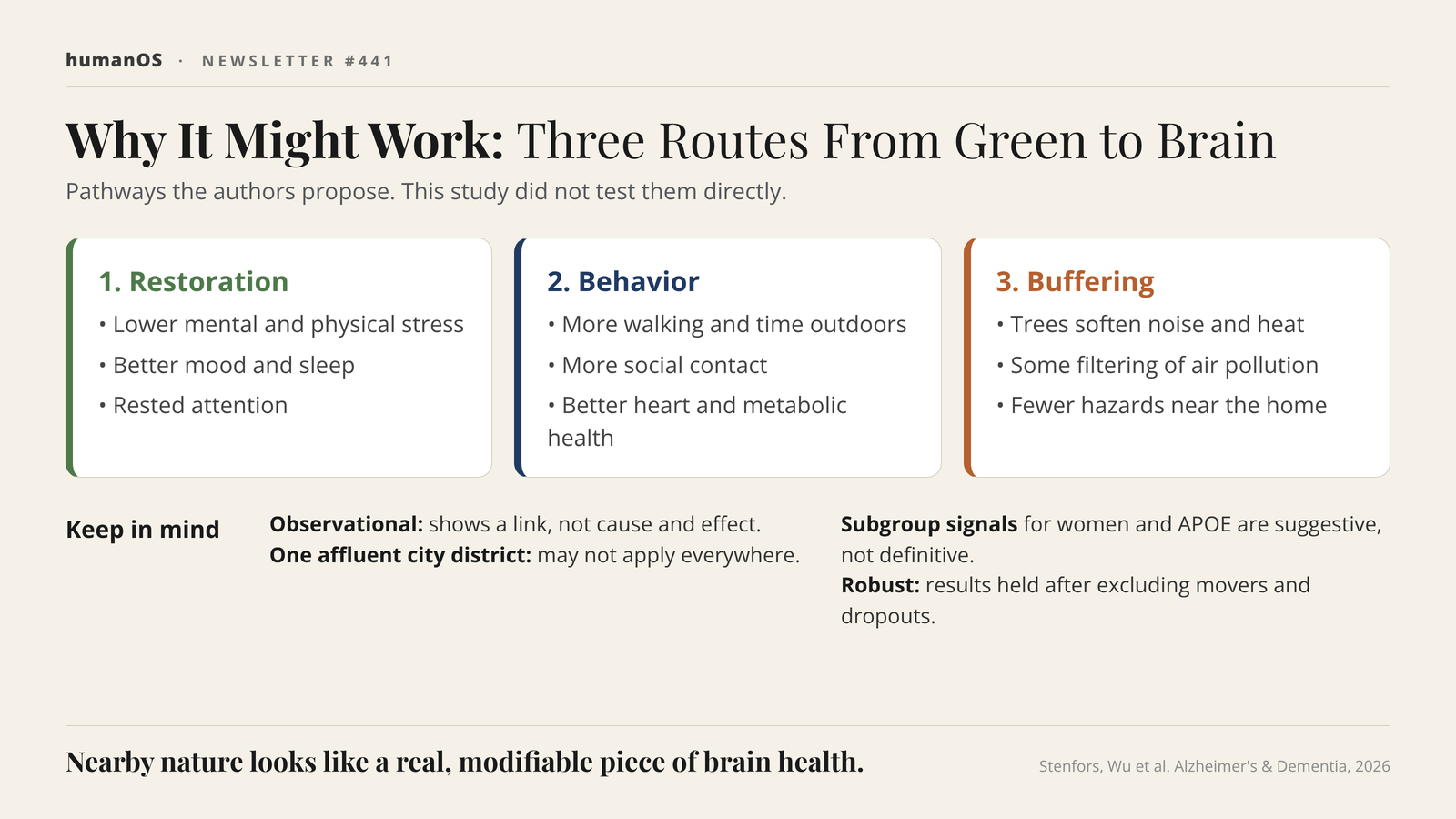
- Restoration. Green views lower mental and physical stress and support mood and sleep.
- Behavior. Greener streets invite walking, time outdoors, and contact with neighbors.
- Buffering. Plants soften noise and heat and can filter some air pollution.
Chronic stress, poor sleep, inactivity, and loneliness each raise dementia risk. Greenery near home may chip away at several of them at once.
There are limits. This is an observational study, so it shows a link, not cause and effect. The participants lived in one fairly affluent part of Stockholm, so the results may not apply everywhere. And people who choose greener homes may differ in ways the researchers couldn't measure.
Still, the finding fits a broader principle. Your environment is a daily health input. What you see and pass every day adds up over years. A street tree, a window box, a balcony garden, or a walk to the store that passes a park all count as exposure. For cities, the message is to plant and protect greenery on residential streets, close to where people live.
This study didn’t test what happens when people seek out green space on purpose. Still, if you don’t have much greenery near home, it makes sense to go find some on a regular basis. Make a park, a tree-lined route, or a nearby trail part of your week. Time in green settings can lower stress, get you moving, help you sleep, and put you around other people. Those are the same pathways that may explain the link in this study, and you can get them without moving house.
Common Questions
What is green space?
Green space is any area covered by living vegetation, including parks, street trees, gardens, lawns, and forests. Researchers often measure it from satellite images.
What is NDVI?
NDVI, or normalized difference vegetation index, is a satellite measure of plant cover. Healthy plants absorb red light and reflect near-infrared light, so the index rises with more green foliage. It runs from minus one to plus one.
Does living near a park lower dementia risk?
Studies suggest people with more greenery near home have lower dementia risk, but the evidence is observational. In this Swedish study, greenery within 100 meters of home mattered most, and parks farther away showed little effect.
Why might green space help the brain?
The likely routes are lower stress, better sleep and mood, more walking and social contact, and protection from noise, heat, and air pollution.
What is APOE-ε4?
APOE-ε4 is a common variant of the APOE gene and the strongest known genetic risk factor for late-onset Alzheimer's disease. About one in four people in this study carried it.
Summary: Stenfors, Wu et al. (2026) followed 2,993 dementia-free adults aged 60+ in the Swedish National Study on Aging and Care in Kungsholmen (SNAC-K) for up to 16 years (mean 9.7). 477 (16%) developed clinically diagnosed dementia (DSM-IV-TR). Greenspace was measured as summer Landsat NDVI (25 × 25 m pixels) within 100, 250, and 500 m buffers around each residential address, 1990 to 2018. In fully adjusted Cox models (SES, education, lifestyle, BMI, medications, neighborhood income, PM2.5, road traffic noise, blue space), each IQR increase (0.18) in 5-year mean NDVI within 100 m was linked to lower dementia hazard (HR 0.79, 95% CI 0.64 to 0.96). Associations weakened at 250 m (HR 0.88) and 500 m (HR 0.94) and for the 5- to 10-year window (HR 0.86). Effects were stronger in women (HR 0.69, 95% CI 0.54 to 0.89) than men (HR 0.93; p-interaction 0.082) and in APOE-ε4 non-carriers (HR 0.72) than carriers (HR 0.91; p-interaction 0.183). Air pollution, noise, blue space, and age did not modify results. Findings held after excluding movers and weighting for dropout.
Random Trivia & Weird News
A Window View That Sped Recovery
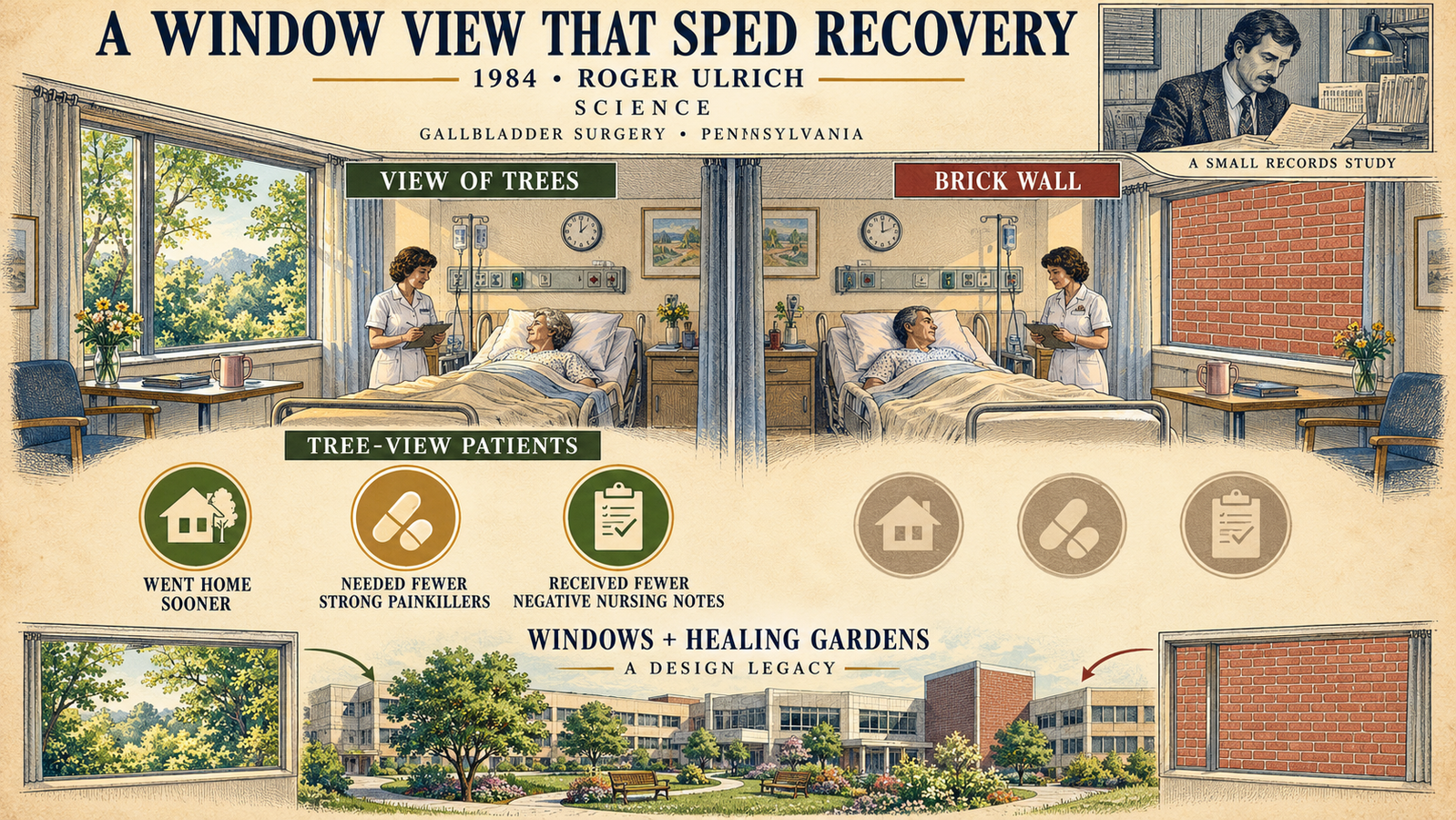
In 1984, Roger Ulrich published a small study in Science that changed how hospitals are built. He reviewed records of patients recovering from gallbladder surgery at a Pennsylvania hospital. Some rooms looked out on a stand of trees. Others faced a brick wall. Patients with the tree view went home sooner, needed fewer strong painkillers, and drew fewer negative notes from nurses. Hospitals now use findings like these to plan their windows and healing gardens.
Ten Trees, Seven Years Younger
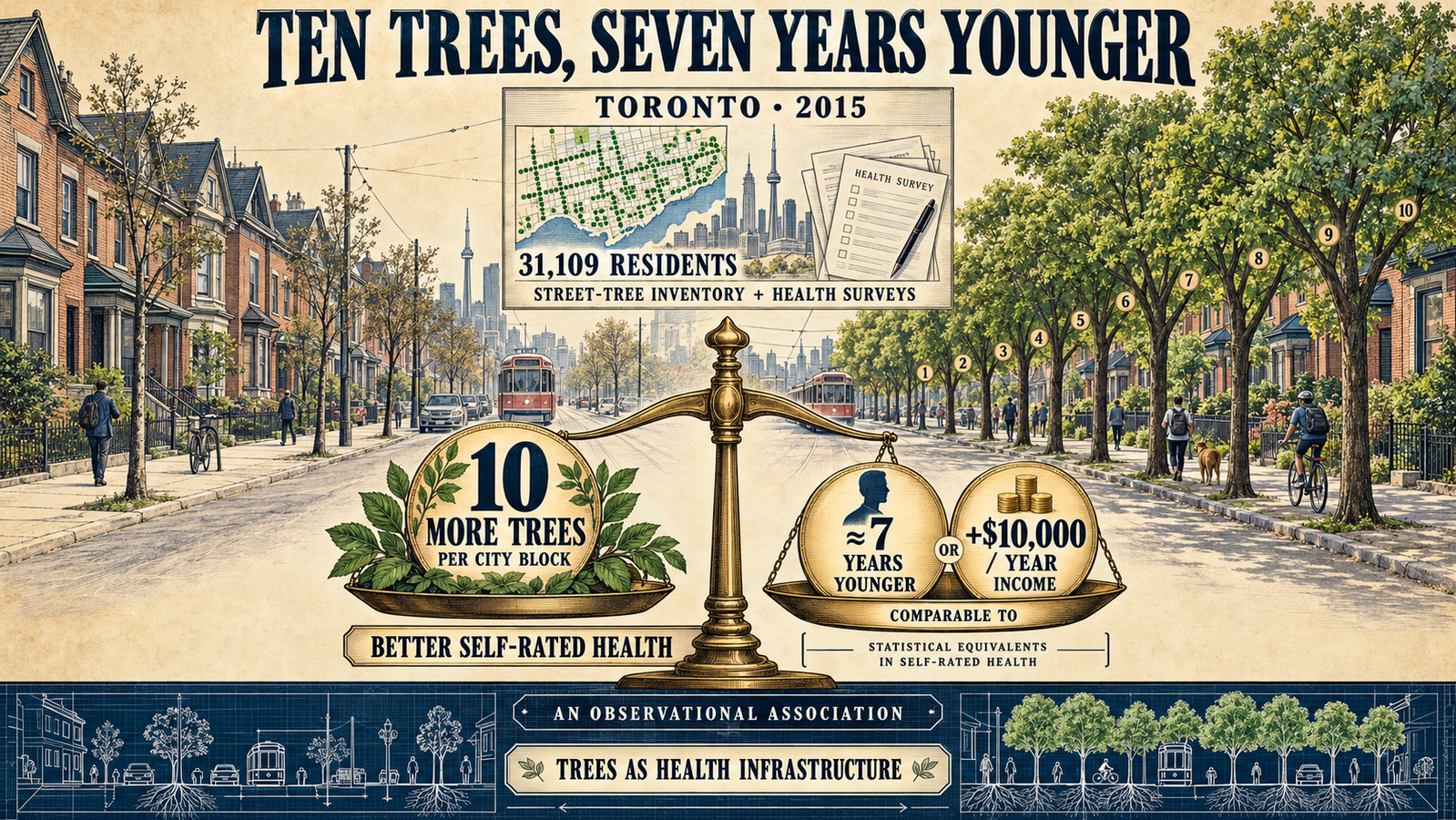
In 2015, researchers in Toronto matched the city's inventory of street trees with health surveys from more than 30,000 residents. Having 10 more trees on a city block was linked to people rating their health as if they were about seven years younger. To get the same boost from money, a household would need roughly $10,000 more in yearly income. Trees, it turns out, may be one of the cheapest health upgrades a city can buy.
When the Ash Trees Died
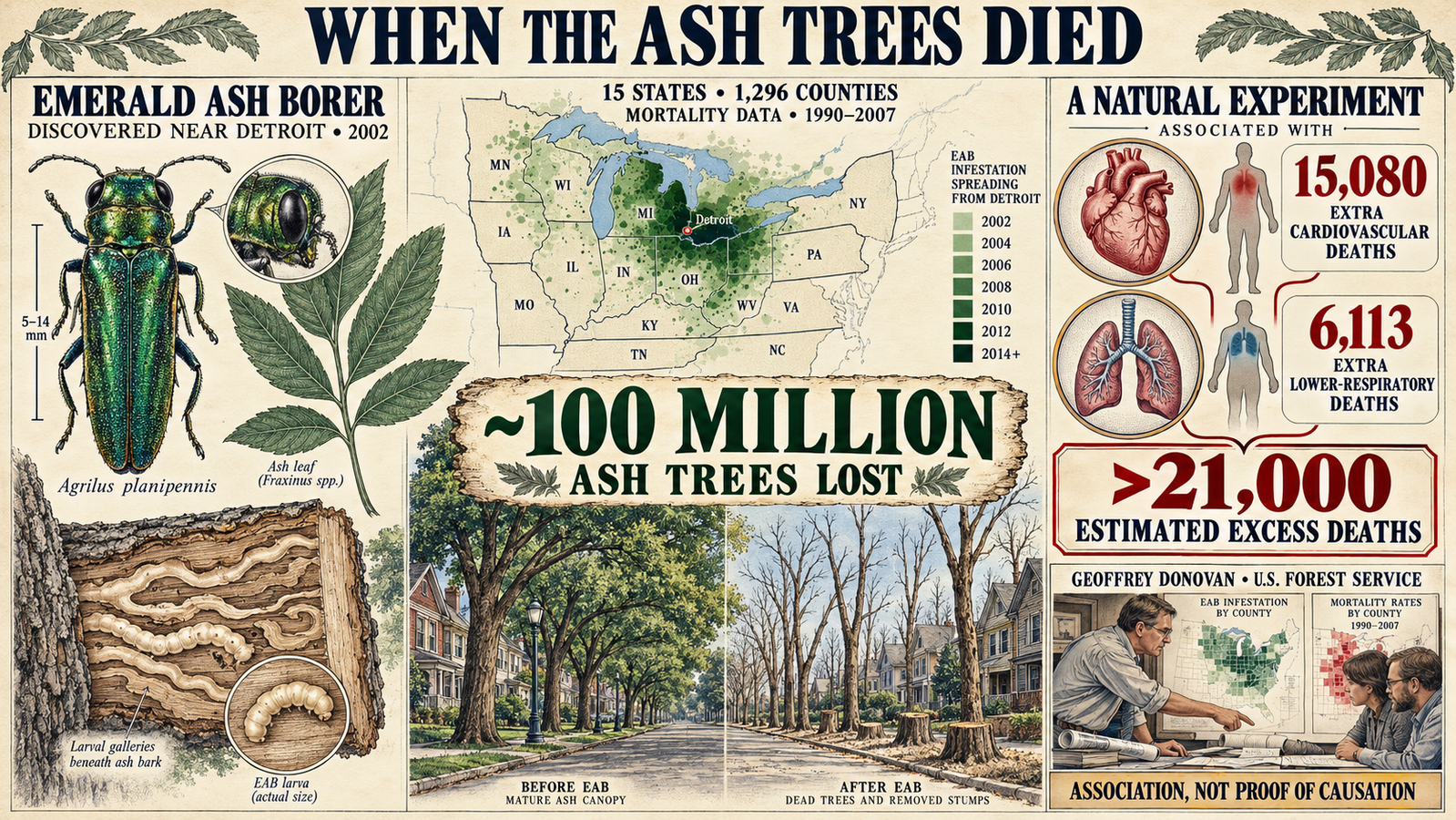
The emerald ash borer, a beetle from Asia, was discovered near Detroit in 2002. Over the following years, it killed about 100 million ash trees across the eastern United States. Forest Service researchers led by Geoffrey Donovan saw a natural experiment. Across 15 states, counties hit by the beetle saw more deaths from heart and lung disease. They estimated more than 21,000 extra deaths linked to the tree loss between 2002 and 2007.
Barcelona's Green Superblocks
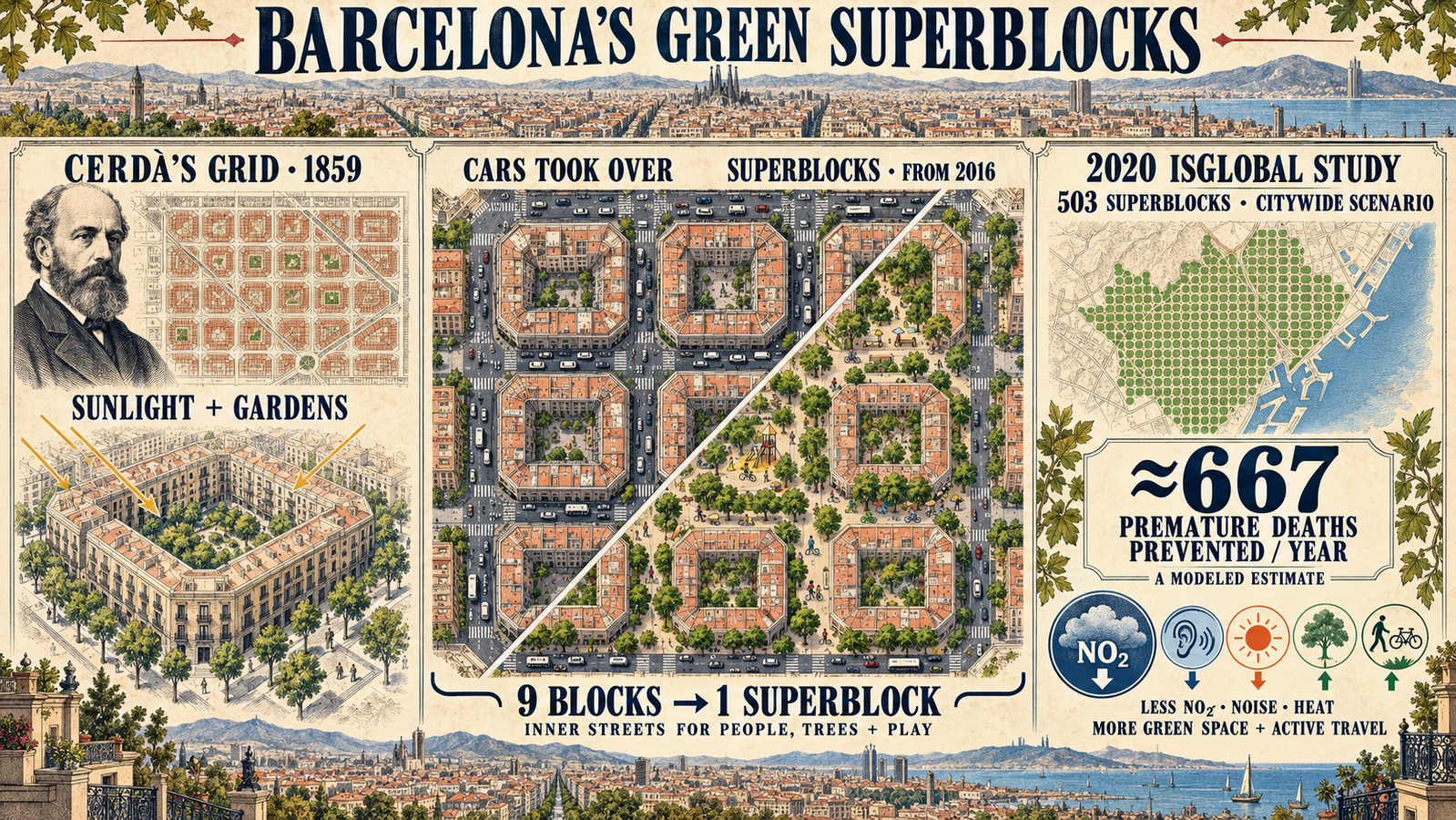
Barcelona's famous grid was designed in 1859 by Ildefons Cerdà, who wanted sunlight and gardens inside every block. Cars took over instead. In 2016, the city began building superblocks, grouping nine blocks together and turning the inner streets over to people, trees, and play areas. A 2020 study from ISGlobal estimated that the full plan of 503 superblocks could prevent about 667 premature deaths a year, mostly by cutting air pollution, noise, and heat.
Products We Love
Merlin Bird ID by the Cornell Lab of Ornithology
Want a reason to pay attention to the green right outside your door? Merlin is a free app from the Cornell Lab of Ornithology. Hold up your phone and it identifies the birds singing around you in real time. It can also work from a photo or from a few quick questions about size, color, and behavior. Download your region's pack and it works offline. A walk around the block becomes a small treasure hunt, and you start to notice how much life one street tree holds.
humanOS Catalog Feature of the Week
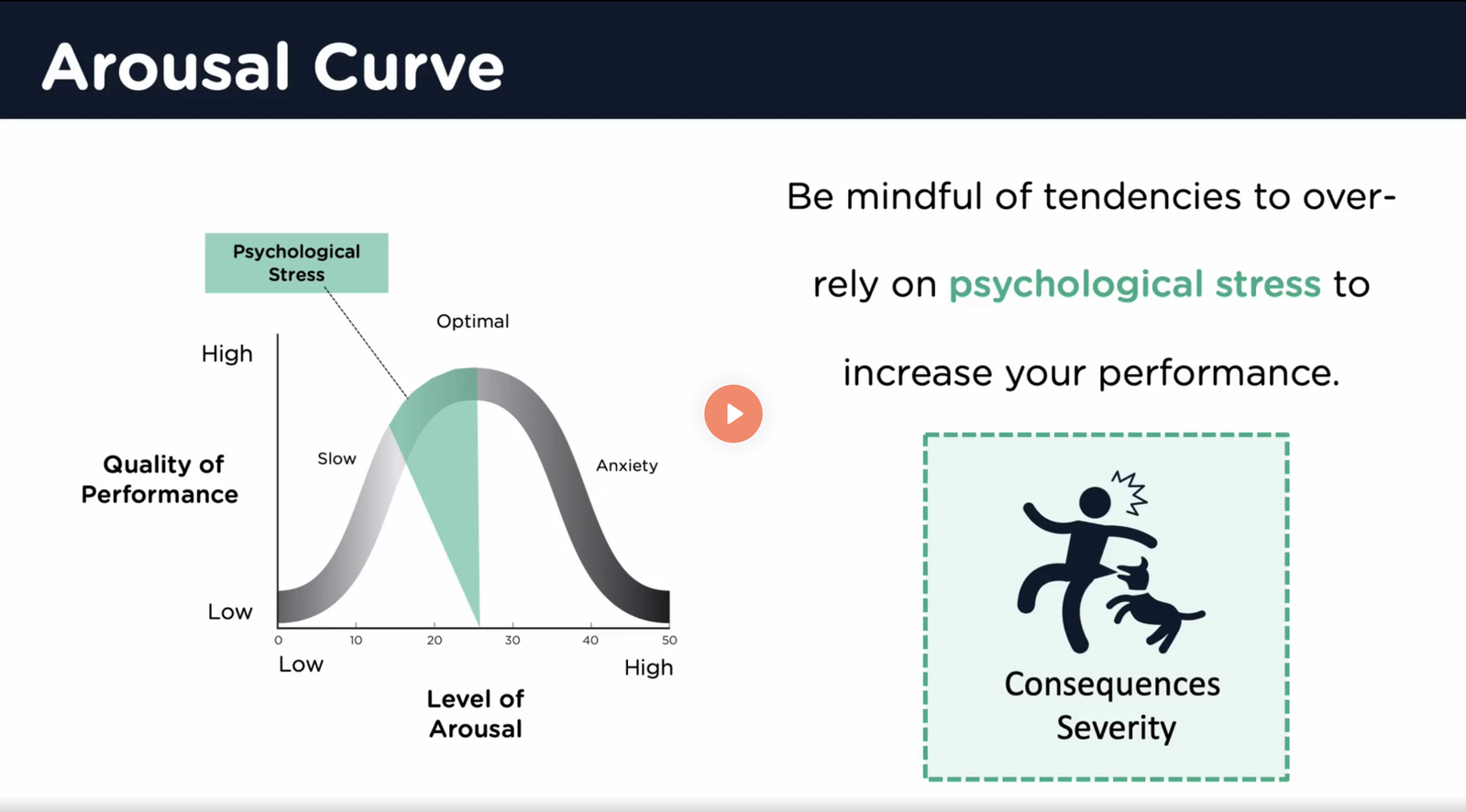
Stress and Cognition
Can stress make you sharper and duller at the same time? This lesson from the Daily Performance and Stress course explains why a modest dose of stress hormones helps you think, while too much for too long does the opposite. It walks through the classic arousal and performance curve and a study linking high cortisol to poor thinking. Then it shows how the hippocampus, the brain's memory center, carries two kinds of stress hormone receptors. One helps neurons connect. The other, under chronic stress, weakens those connections over time.
Enjoying these? A Pro membership keeps the newsletter going and unlocks the full humanOS library of courses, guides and protocols. $19.99 per quarter.
Join here: Become a Member
Wishing you the best,