
Newsletter #425
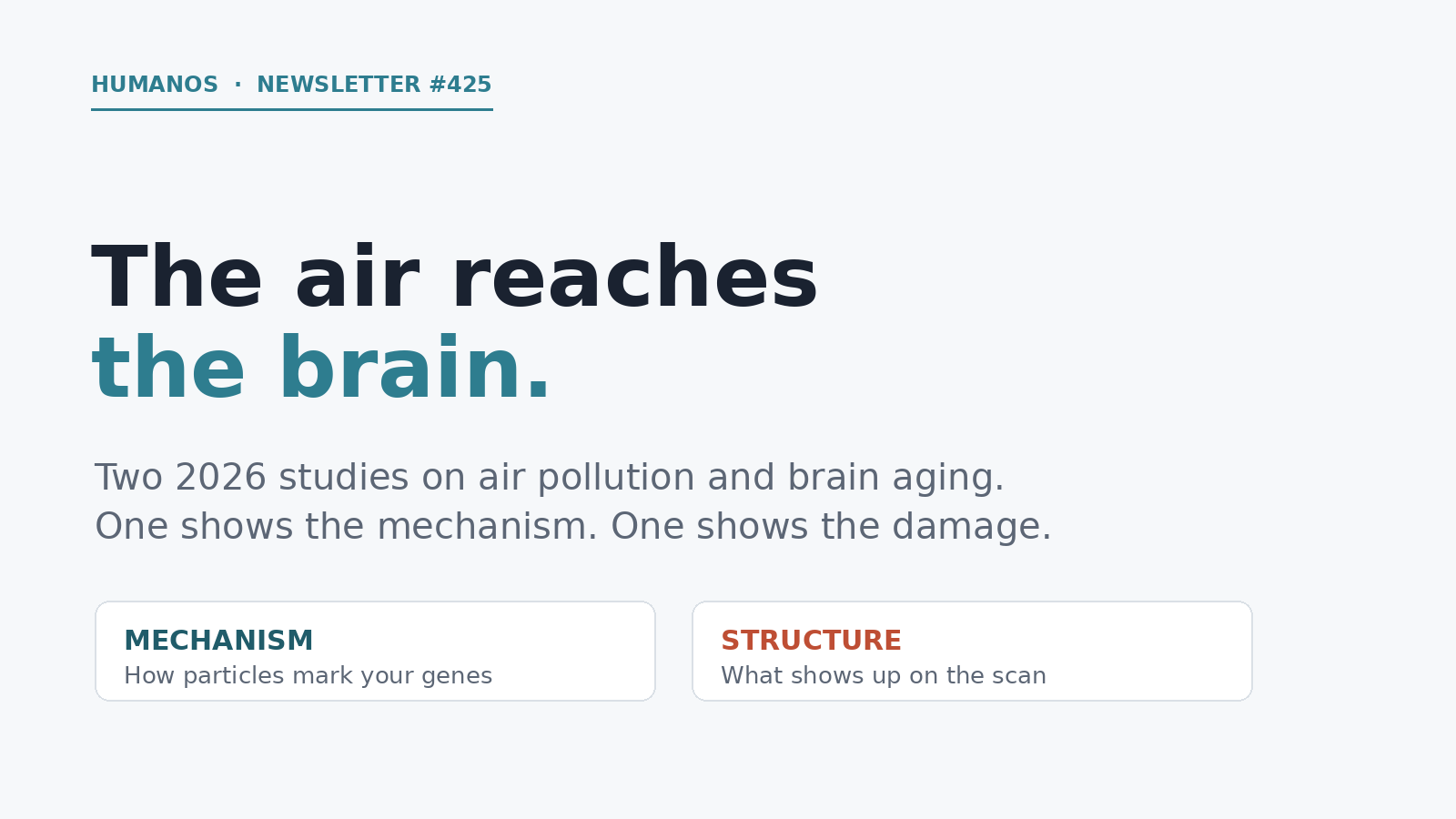
It’s easy to link air pollution to the lungs and heart. You breathe dirty air, your airways react, your cardiovascular risk creeps up. That framing is real, but it may be incomplete. Two studies published this spring, one from Canada and one from China, asked another question. Does air pollution reach the brain, and if it does, does it cause damage and if so, how?
Become a humanOS Member. Turn research like this into daily practice with our how-to guides, courses, and member tools. Join here ✨
Review Your Learnings: Newsletter Summaries ✨
When the Air You Breathe Shows Up on a Brain Scan
What the scan revealed
The Canadian study drew on nearly 7,000 middle-aged adults who had brain imaging (MRI) as part of a national heart and brain cohort. Researchers estimated each person's exposure to two common pollutants over the five years before they enrolled. Fine particulate matter (PM2.5) is the soot and combustion dust small enough to slip deep into the body. Nitrogen dioxide (NO2) is a traffic-related gas that tends to spike near busy roads.
People who had been breathing more polluted air scored lower on standard cognitive tests, both a general screen (the MoCA - remember we discussed this test recently in our newsletter on milk fat globule proteins) and a timed processing-speed task. The link held even after accounting for blood pressure, cholesterol, diabetes, and the other usual cardiovascular suspects. So this was not simply pollution harming the heart and the brain following along.
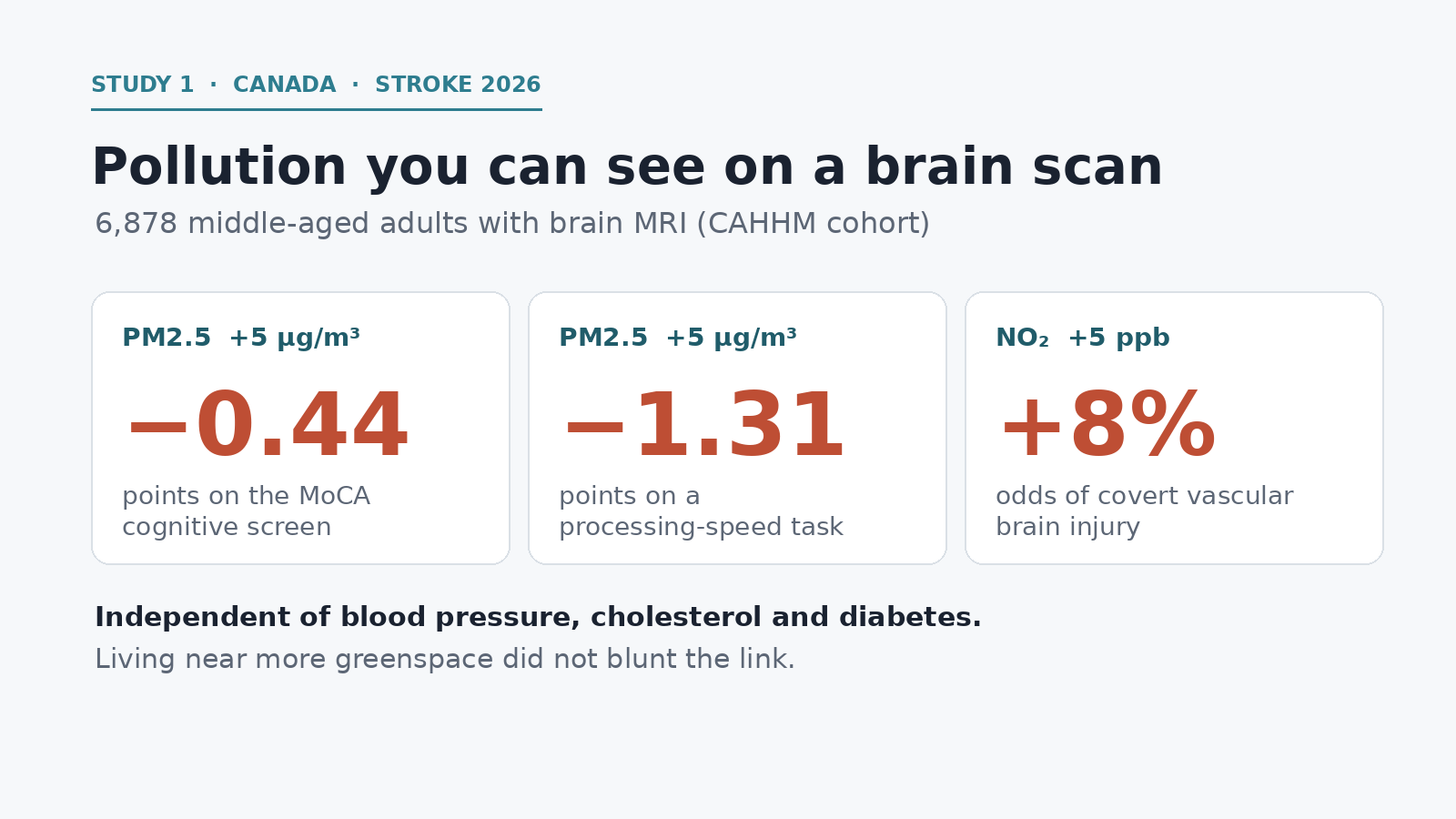
The scans added something beyond test scores. Higher exposure to the traffic gas was associated with greater odds of covert vascular brain injury, the small silent lesions that accumulate quietly and are linked to later cognitive decline. This is structural damage you can see on an image, not just a few points lost on a test. And living near more greenspace, which often helps, did not blunt the association here. The signal pointed back to the air itself.
How the air reaches your genes
The second study, of more than 1,700 older adults, went after the mechanism. How would a particle in the air translate into a change inside a neuron? The researchers measured DNA methylation, the chemical tags that sit on top of genes and turn their activity up or down without altering the underlying code.
A short stretch of higher PM2.5 exposure, averaged over the prior month, tracked with lower scores on a standard cognitive screen (the MMSE). When they looked at the methylation data, fine particle exposure had left its marks across dozens of sites. One of those sites sat on a circadian rhythm gene, part of the molecular clock that keeps your biology on a daily schedule. That single mark statistically accounted for a meaningful slice of the link between dirty air and lower cognition.
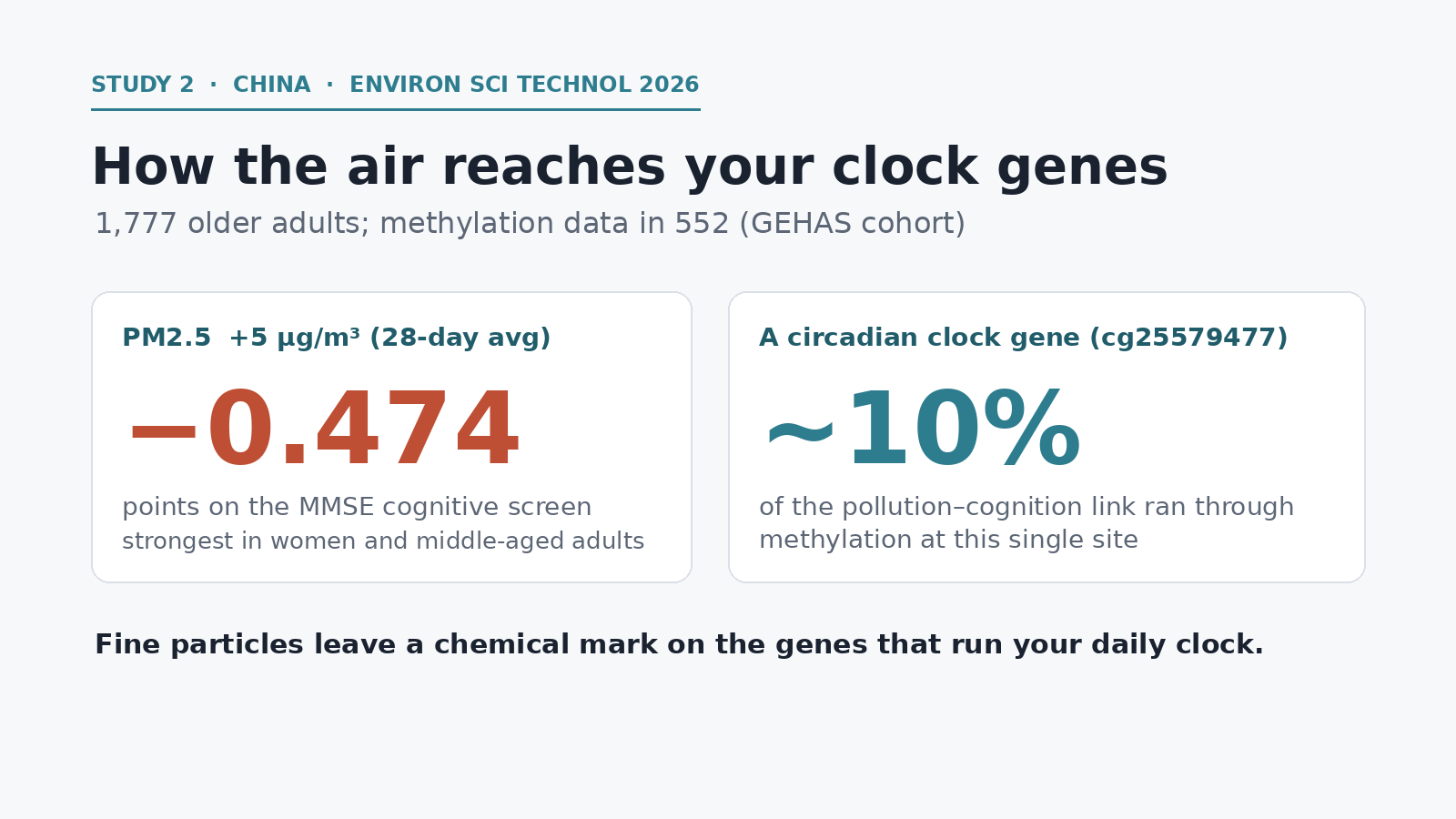
This is the bridge between the two studies. We have spent years talking about how light at the wrong time corrupts the circadian clock. This data suggests the particles in your air can reach the clock genes themselves and chemically tag them. Pollution joins late-night light and irregular schedules on the list of things that disturb your internal timing.
Clean Air Is A Brain Intervention
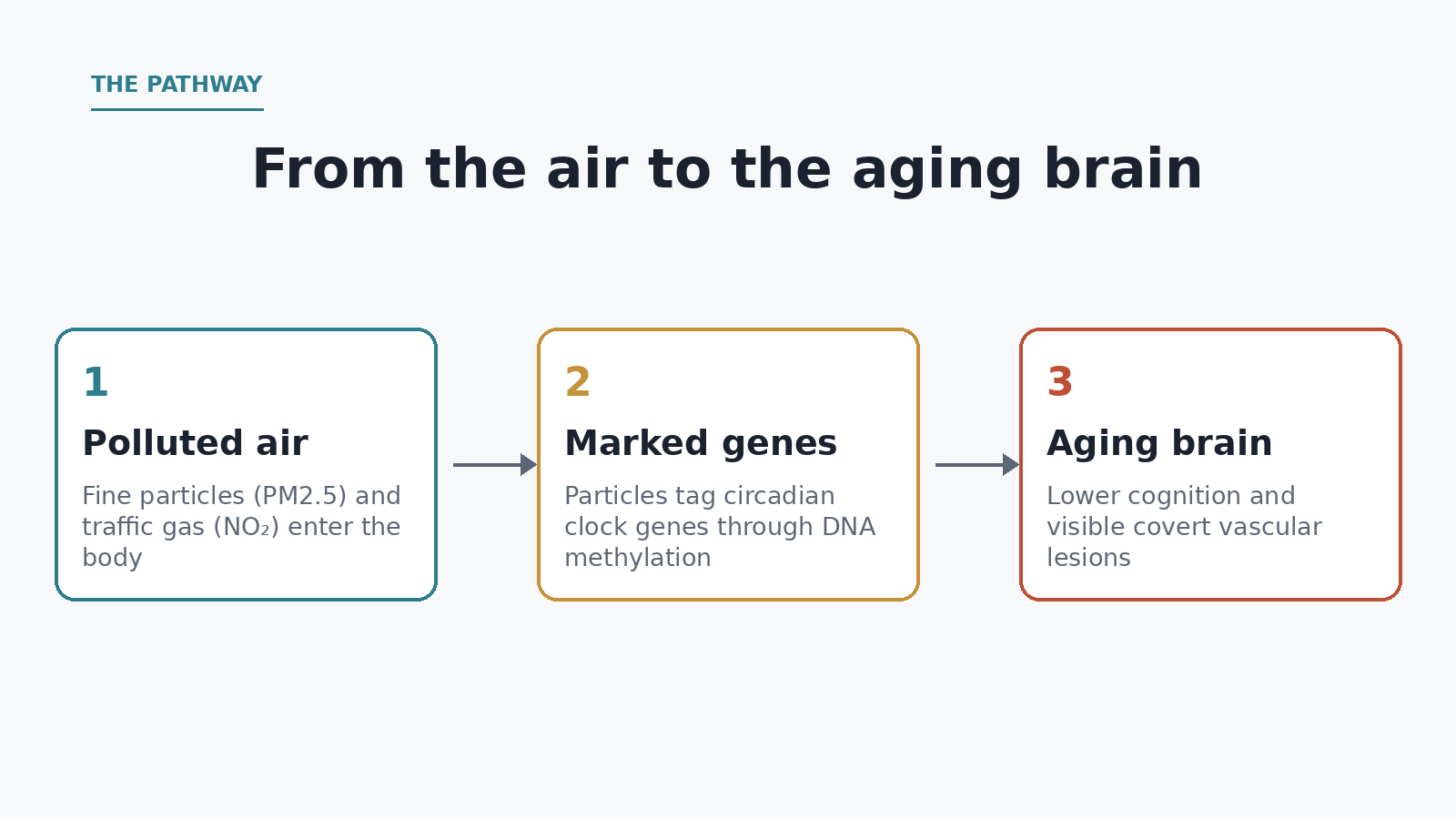
Put the two studies together and a fuller picture emerges. One shows the visible result, lower cognition and small lesions on a brain scan. The other shows a plausible route, fine particles tagging the genes that run your daily clock. Neither study proves cause on its own. Both are observational, and the Canadian one is a single snapshot in time. But together they move air quality from a respiratory concern to a brain-aging concern.
The practical response is encouraging, because indoor air is something you can change. A few moves worth considering.
- Track your local air quality index and treat red-AQI days like weather you plan around.
- Run HEPA filtration in the rooms where you spend the most time, especially the bedroom.
- Upgrade your home HVAC filter to a higher grade, and consider a mask outdoors on the worst days.
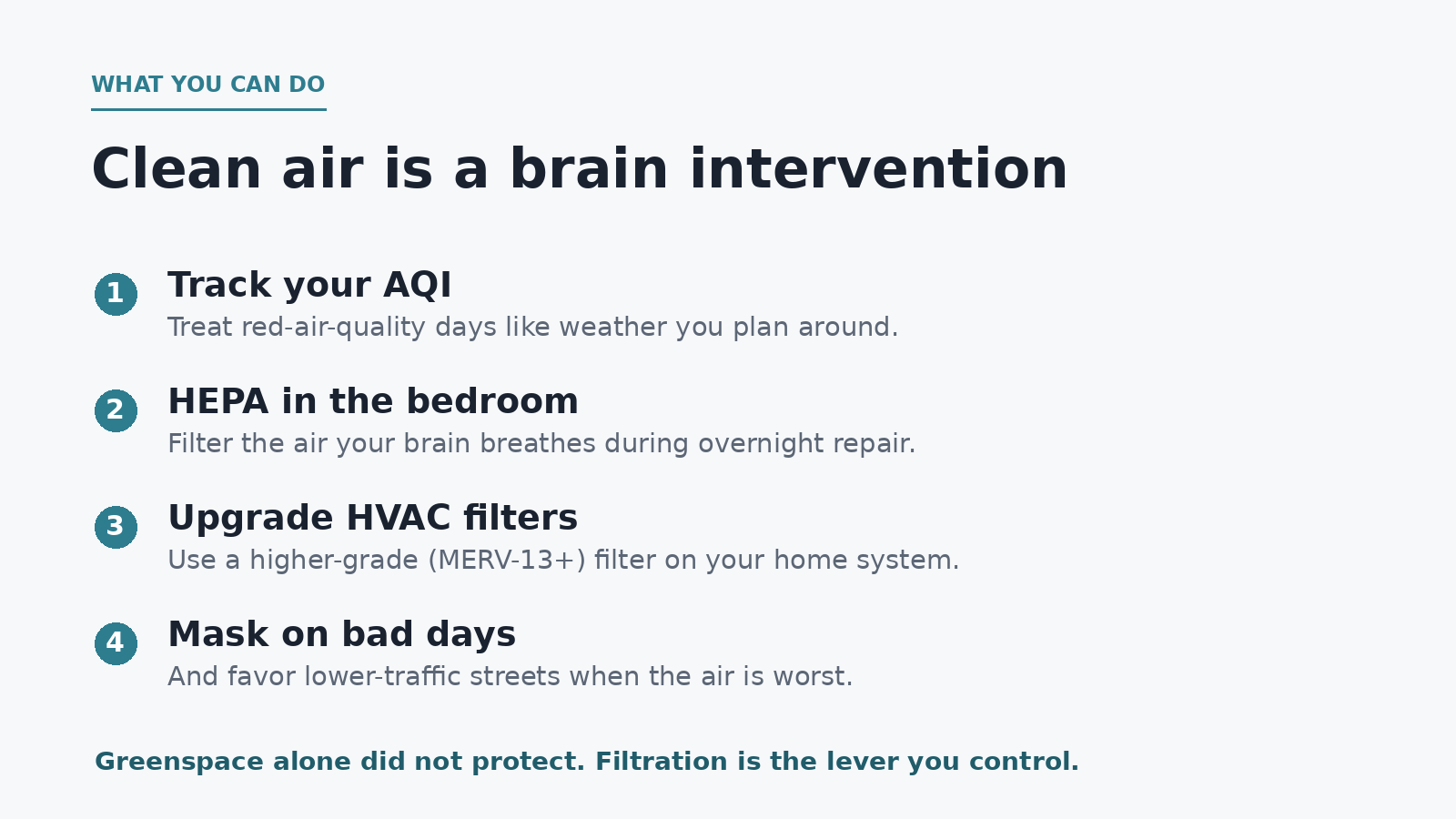
The bedroom point matters more than it first appears. Much of the body's overnight repair, including the maintenance of those methylation patterns, happens while you sleep. Cleaning the air your brain breathes for those eight hours is not just about easier breathing. If this research holds, it is about protecting your clock.
I added a bedroom air purifier to my own setup years ago, after working on our How-to Guide on Indoor Air Quality (see below) and check the AQI each day just like I do the weather forecast. It is a small, cheap hedge against a risk I had been quietly ignoring.
For most of us, air is the one exposure we never opt into. We choose our food and our workouts. We mostly inherit our air from where we happen to live and work. That makes the indoor environment, the one space we control, worth taking seriously as part of a long-term brain-health strategy.
Summary: Two 2026 studies link air pollution to brain aging. In the Canadian CAHHM cohort (6,878 adults, mean age 57.6, with MRI), each 5 µg/m³ higher PM2.5 over 5 years was associated with a 0.44-point lower MoCA (95% CI −0.62 to −0.25) and a 1.31-point lower Digit Symbol score. Each 5 ppb higher NO2 tracked with 8% higher odds of covert vascular brain injury (OR 1.08, 95% CI 1.00–1.17), independent of cardiovascular risk factors. Greenspace did not attenuate the link. In the Chinese GEHAS cohort (1,777 adults, 3,554 observations), a 5 µg/m³ rise in 28-day PM2.5 lowered MMSE by 0.474 points (95% CI −0.618 to −0.329), stronger in women and middle-aged adults. Among 552 with methylation data, the CpG site cg25579477 on a circadian rhythm gene mediated about 10% of the PM2.5–cognition association. Both studies are observational. Indoor air filtration is a plausible, modifiable intervention.
Random Trivia & Weird News
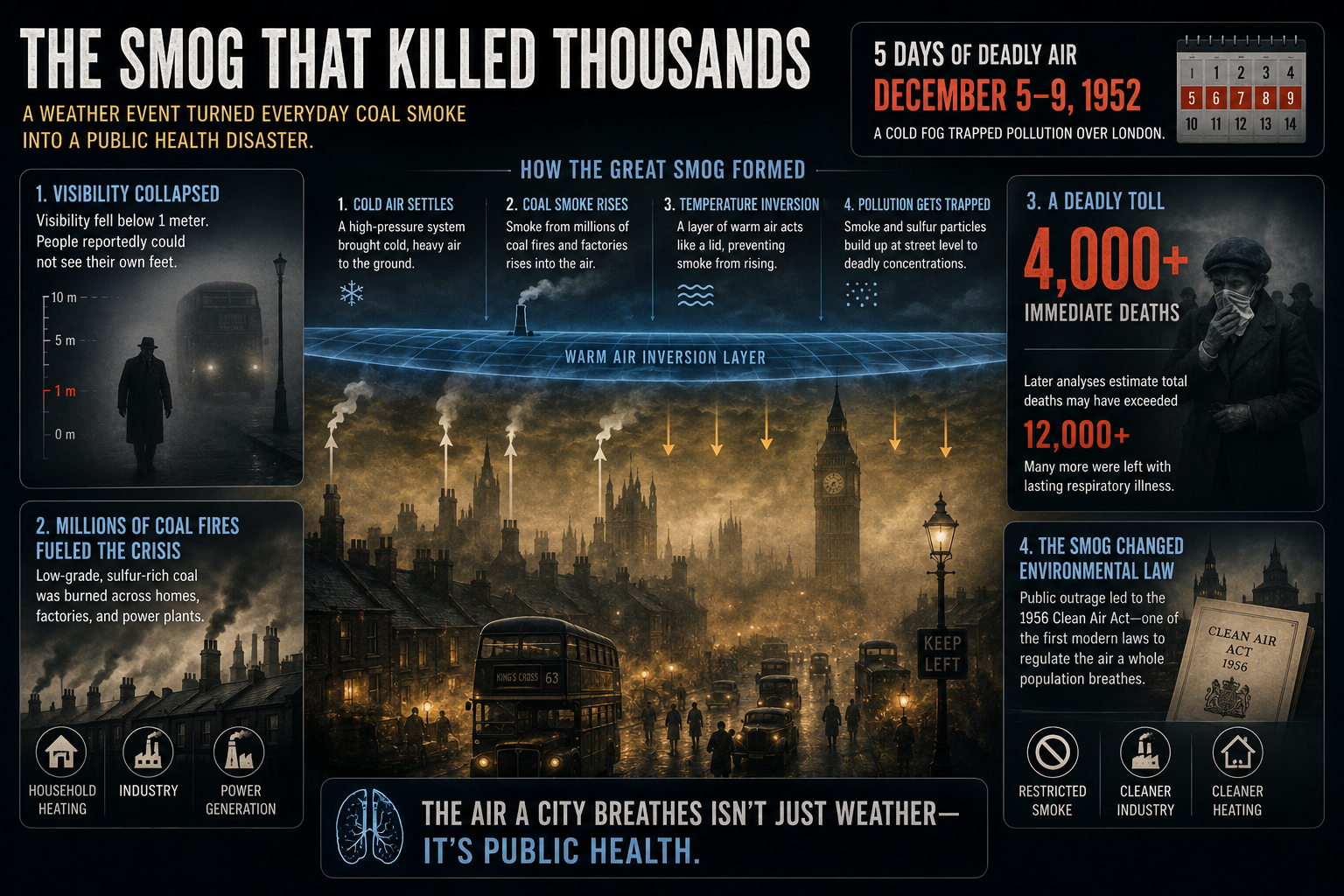
The Smog That Killed Thousands
In December 1952, a cold fog settled over London and trapped coal smoke against the ground for five days. Visibility dropped so low that people reportedly could not see their own feet. The Great Smog killed an estimated 4,000 people at the time, with later estimates running far higher. It was shocking enough to push Britain to pass its Clean Air Act, one of the first modern laws to regulate the air a whole population breathes.
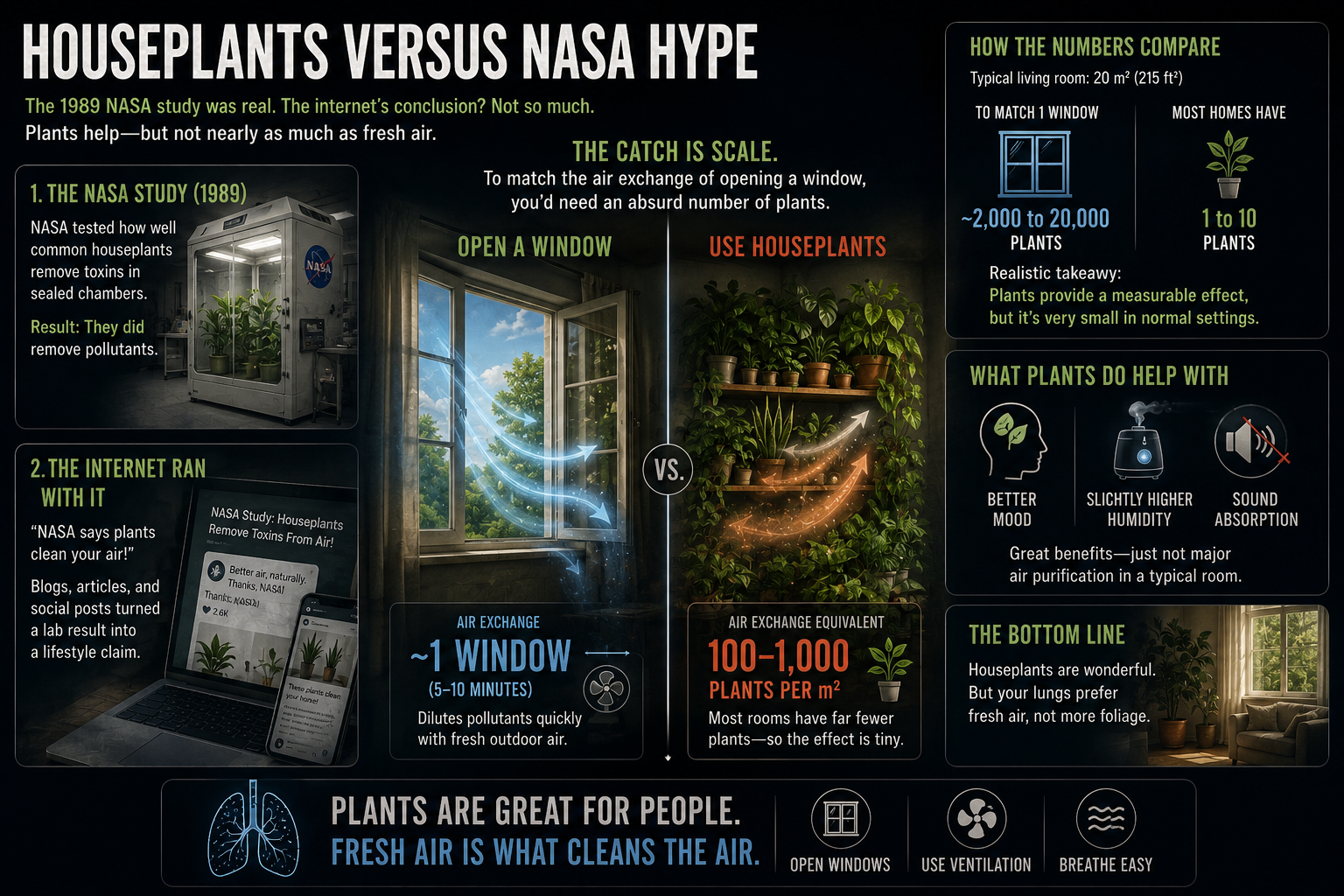
Houseplants Versus NASA Hype
A famous 1989 NASA study found that houseplants could scrub toxins from sealed air, and the internet ran with it for decades. The catch is scale. Later analyses calculated you would need something like 100 to 1,000 plants per square meter to match the air exchange of simply opening a window. Plants are wonderful for mood and a little humidity, but as air purifiers in a normal room they are mostly decorative.
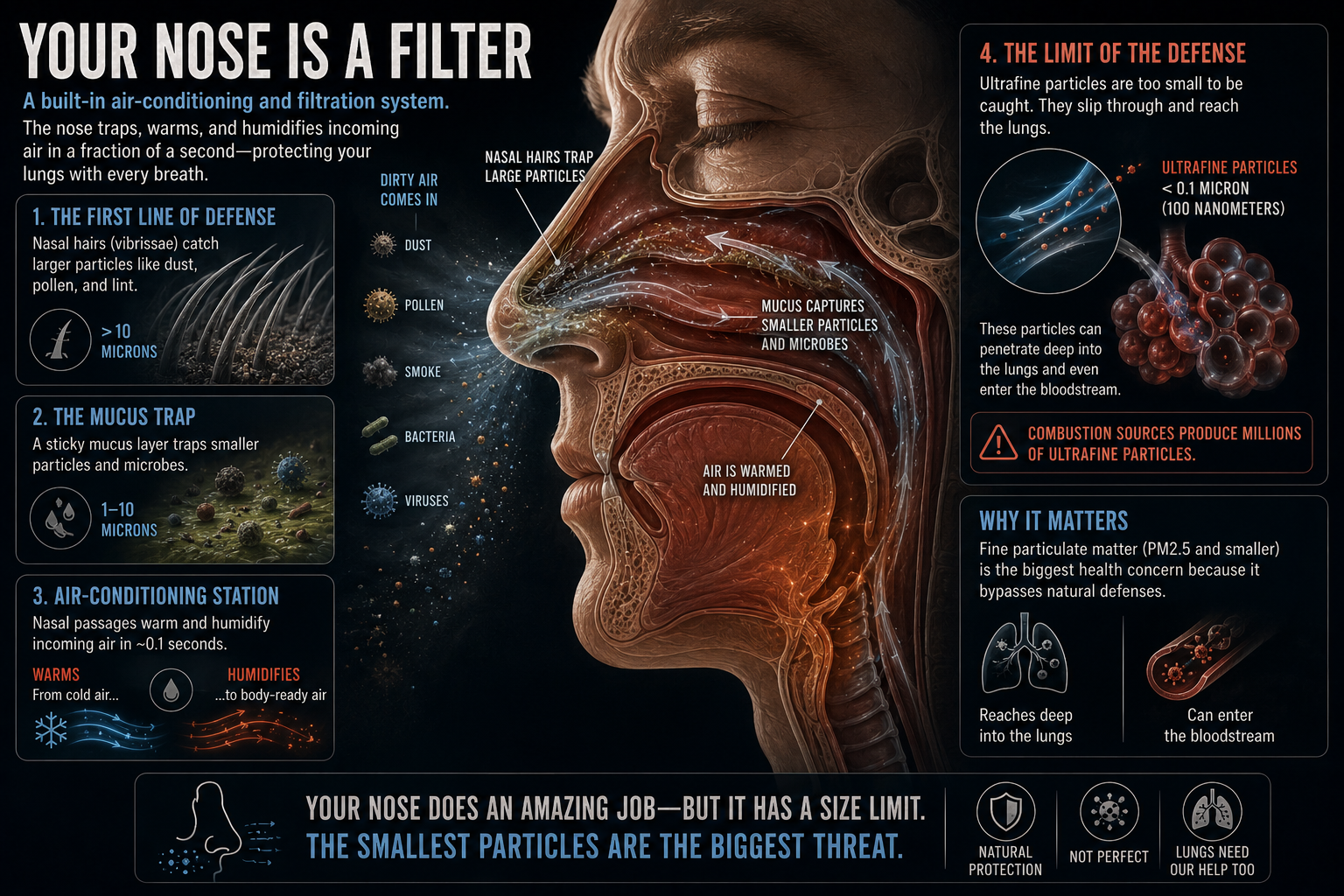
Your Nose Is A Filter
The human nose is a surprisingly good air-conditioning and filtration system. Tiny hairs and a sticky mucus layer trap larger particles before they reach the lungs, and the nasal passages warm and humidify incoming air within a fraction of a second. The problem is that the smallest and most dangerous particles, the ultrafine ones from combustion, sail right past these defenses. That is exactly why fine particulate matter is the fraction researchers worry about most.
Podcasts We Loved This Week
- Dr. Marie-Pierre St-Onge: Eating for Better Sleep & Foods that Improve Metabolic Health via Huberman Lab
- Andrew Huberman: Essentials: Sleep Toolkit for Optimizing Sleep & Sleep-Wake Timing via Huberman Lab
Products We Love
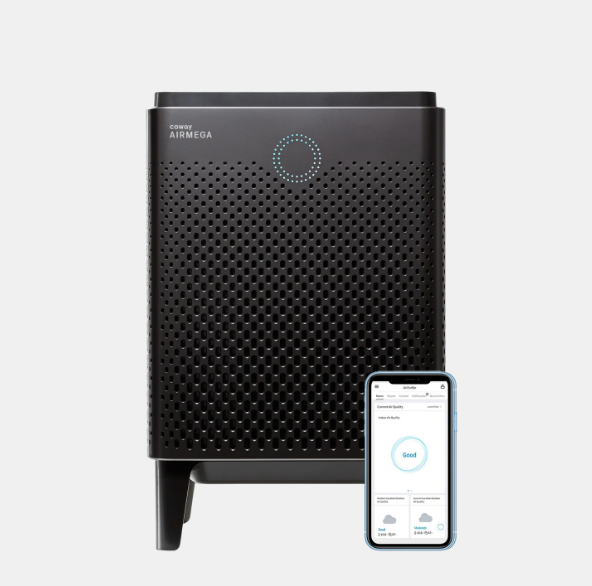
Coway Airmega 400S Smart Air Purifier
This is the purifier I keep coming back to recommending. It uses a true HEPA filter plus an activated carbon layer, so it pulls down both fine particles and odors, and it covers a large bedroom or open living space without sounding like a jet engine. The part I like most is the real-time air quality readout. A ring on the front shifts color as the air changes, which turns an invisible problem into something you can actually watch and respond to. In sleep mode it dims and quiets down for overnight running, which, after reading this week's research, is exactly when I want it working. It is a simple, set-and-forget piece of hardware that does one job well.
humanOS Catalog Feature of the Week
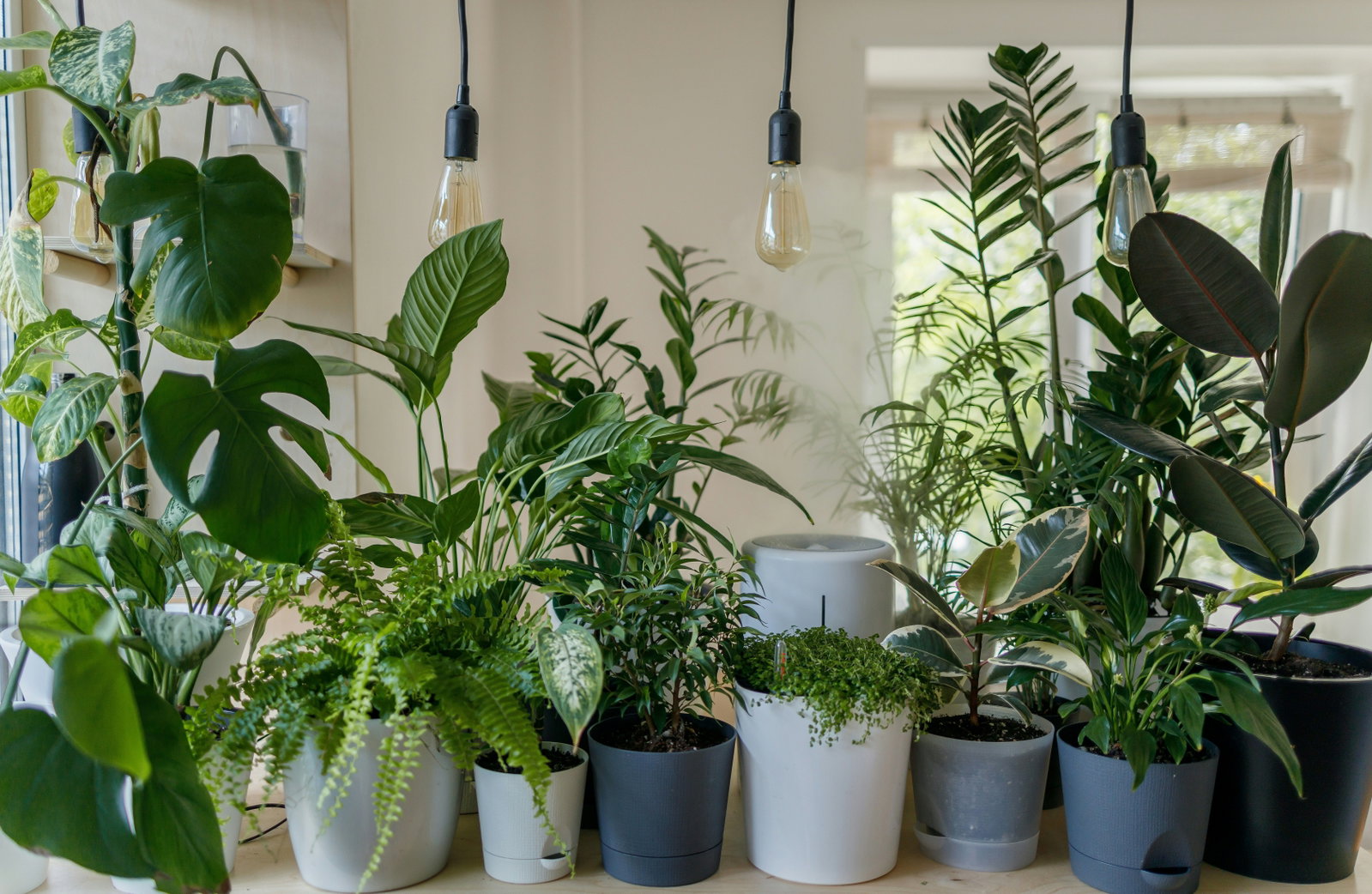
Indoor Air Quality
What is the air in your own home actually doing to you? Most of us spend the majority of our lives indoors, yet we rarely measure the one thing we are constantly breathing. This humanOS how-to guide walks through how to assess your indoor air, what an air quality monitor can tell you about particulate matter, humidity, and common chemical pollutants, and the practical steps that move the needle, from filtration to ventilation to the small daily habits that quietly add up. After this week's research on air and the brain, it is a timely place to start taking your own indoor environment seriously.
Become a humanOS Member. Get the full library of guides, courses, and tools to put this science to work. Join here ✨
Wishing you the best,