Newsletter #422
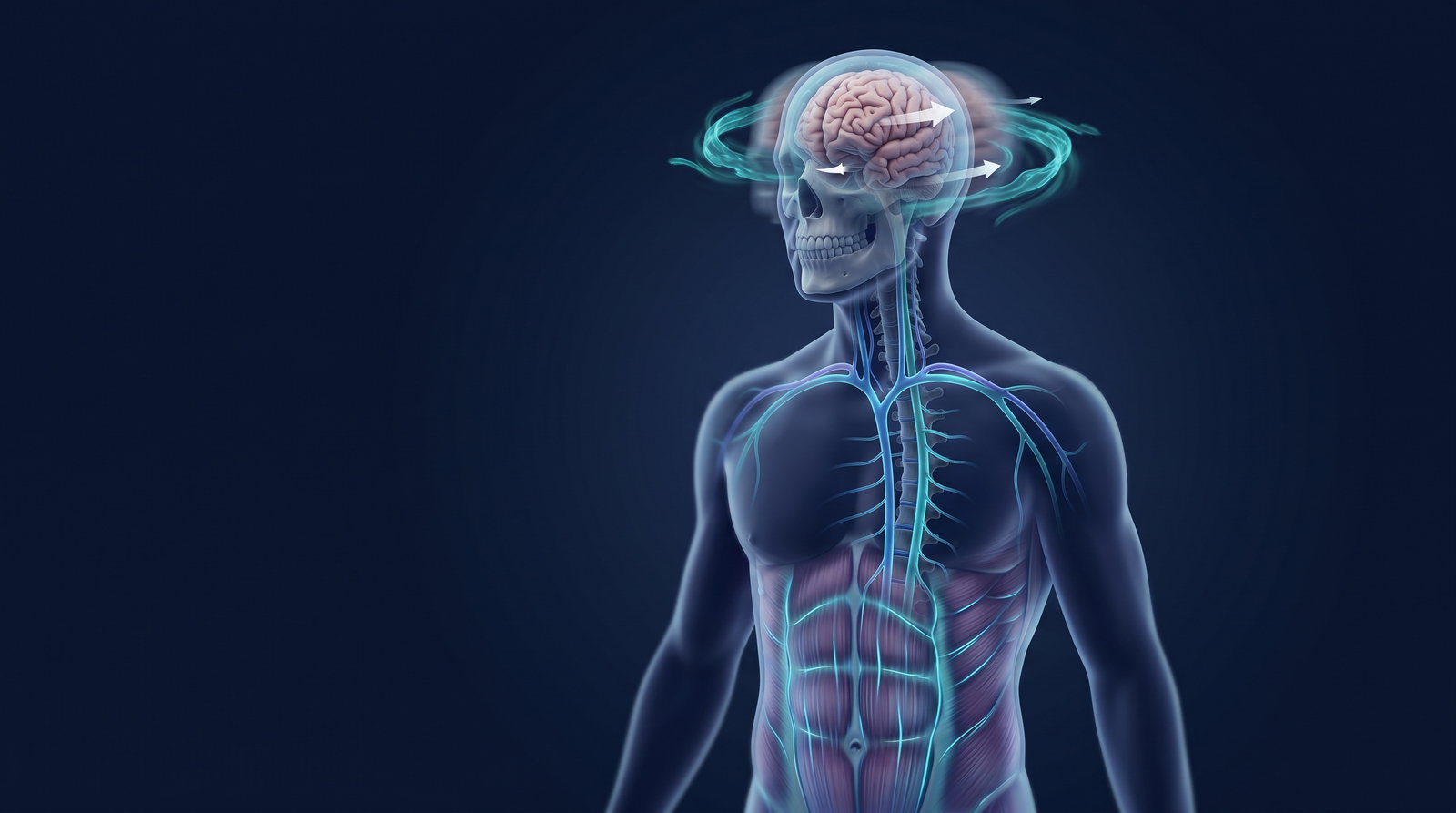
Most of us think of the brain as floating quietly inside the skull. Protected. Stable. Largely isolated from the rest of the body. A new paper in Nature Neuroscience challenges that view. It turns out the brain physically moves inside the skull every time we walk, stand, jump, or even brace our core. The brain isn’t just passively along for the ride. It’s constantly responding to the forces generated by movement.
So what’s driving that motion? And why would the brain move at all?
Become a Member of humanOS
Get full access to the courses, how-to guides, podcasts, and recipe packs that translate the latest science into practical, daily tools for your healthspan.
Review Your Learnings: Newsletter Summaries ✨
Brain motion is driven by mechanical coupling with the abdomen
For a long time, anatomists have known the brain isn't perfectly still. Cardiac pulsations make the brain pulse a little bit too. Breathing rocks it gently. But these were thought to be the main forces at work, all of them small but regular. The brain's contents were considered mechanically isolated from the rest of the body, protected behind the bony cage of the skull and vertebrae.
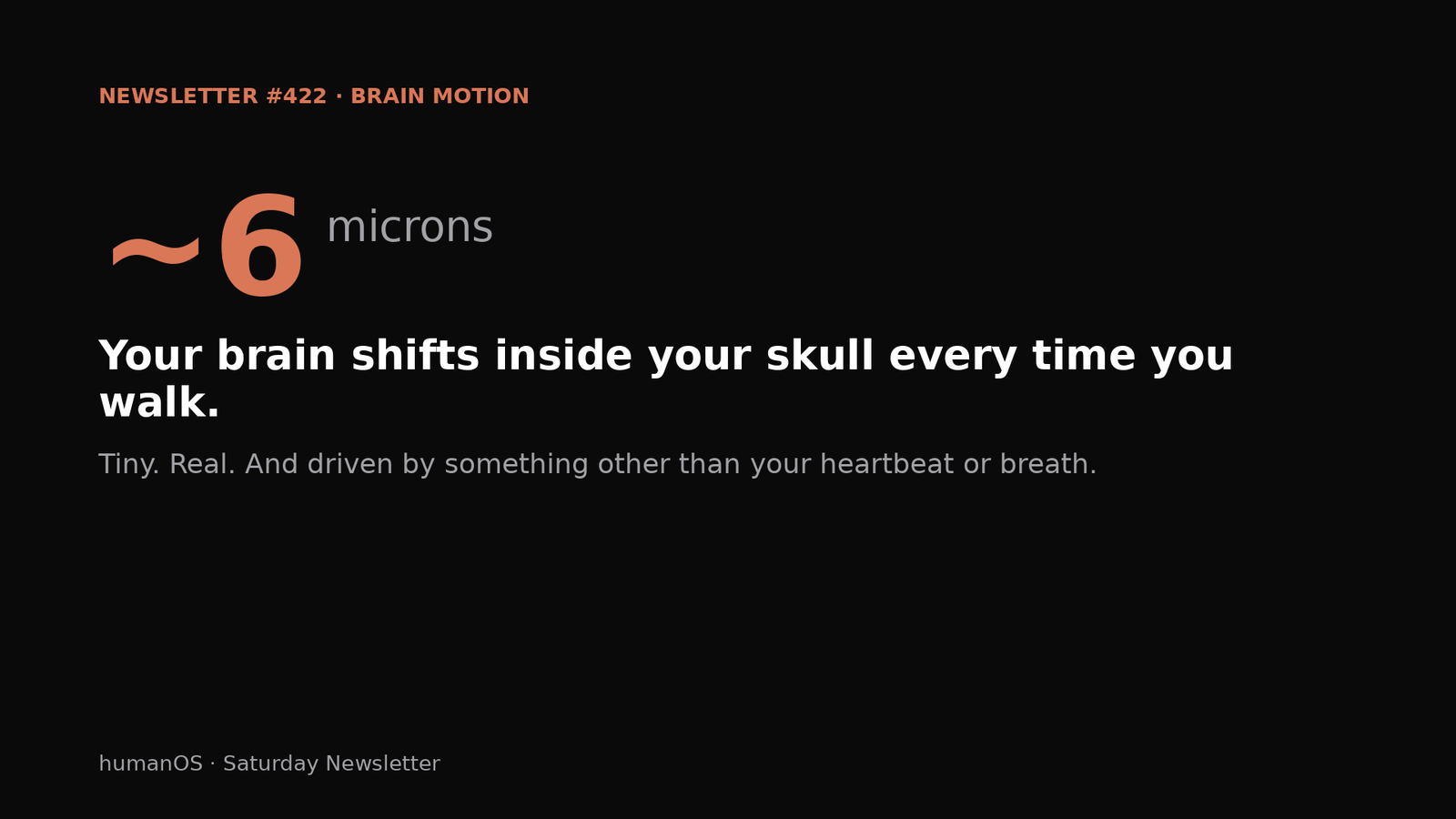
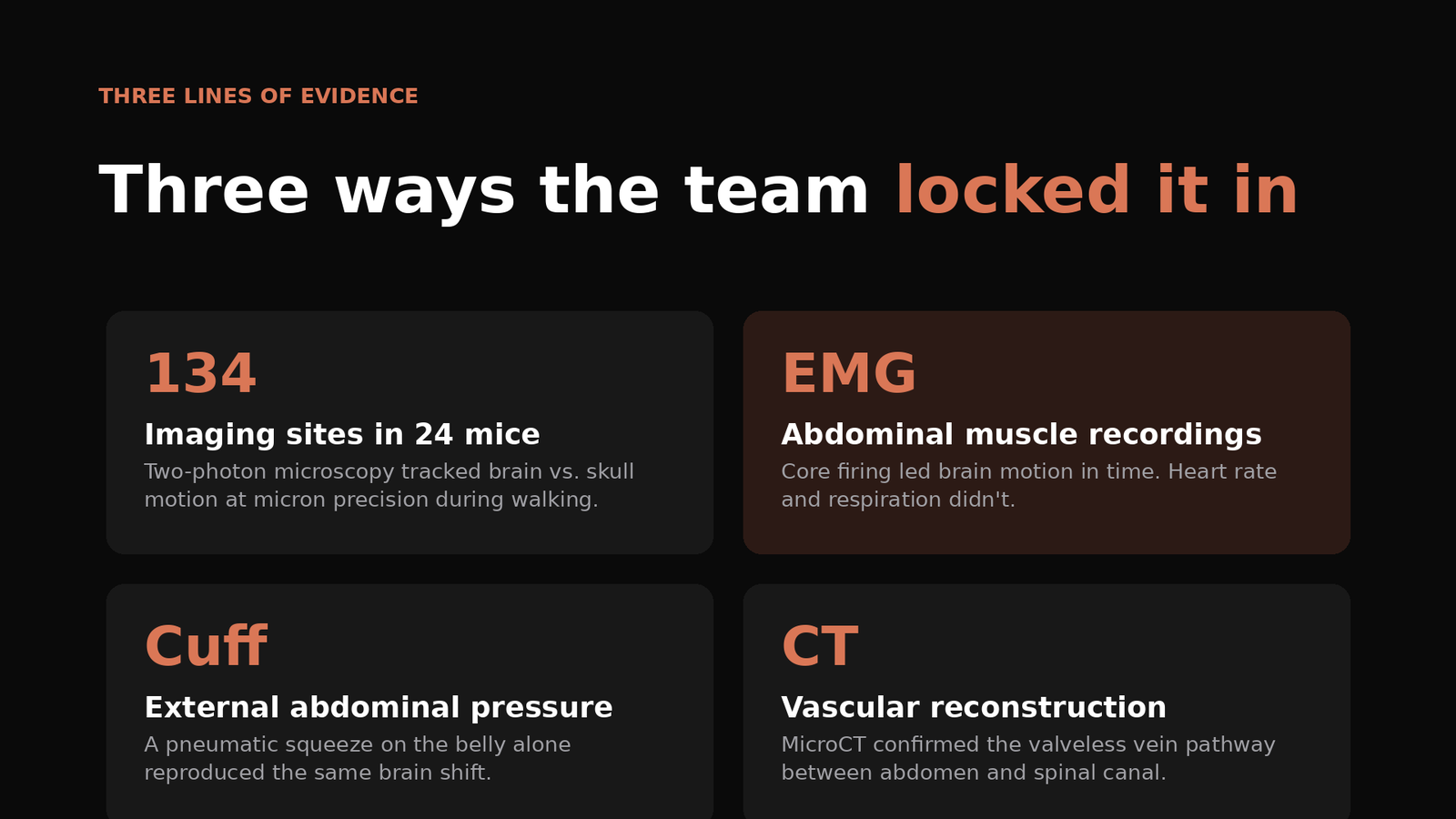
A team led by Patrick Drew at Penn State decided to test that assumption directly. Using high-speed two-photon microscopy in awake mice running on a treadmill, they watched the brain move relative to the skull in real time. The shifts were small, just a few microns, but they were consistent, directional, and easy to predict.
The brain moves with the body, not the breath
When the mice walked, their brains slid forward and outward inside their skulls, then returned to baseline when they stopped. The motion wasn't tied to heart rate. It wasn't tied to breathing. It tracked locomotion itself. The brain often started moving slightly before the legs did.
If movement caused the brain to shift, the brain shouldn't move first. Something else was preparing the body to move, and that same thing seemed to be moving the brain. The researchers suspected the abdominal muscles. Animals and people tense their core before they take a step, partly to stabilize the spine. Could that core engagement be reaching all the way up to the brain?
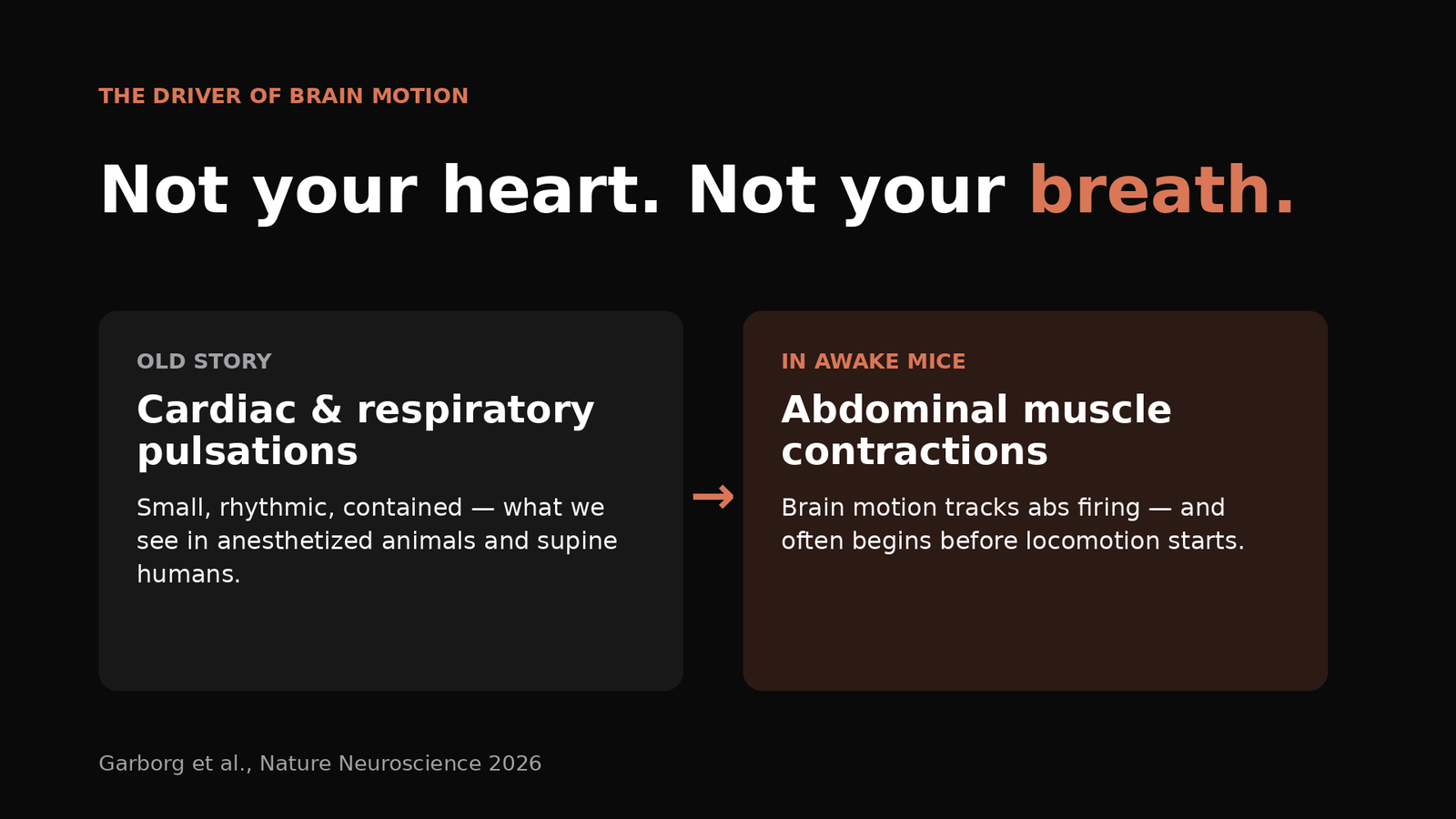
They placed sensors on the abdominal muscles and watched. Every time the abdominal muscles fired, the brain moved with them. The relationship held during walking, during deep breathing under anesthesia, and during random spontaneous core contractions when the animal wasn't moving at all. The abdomen, not the legs, was the prime mover.
A hydraulic line you didn't know you had
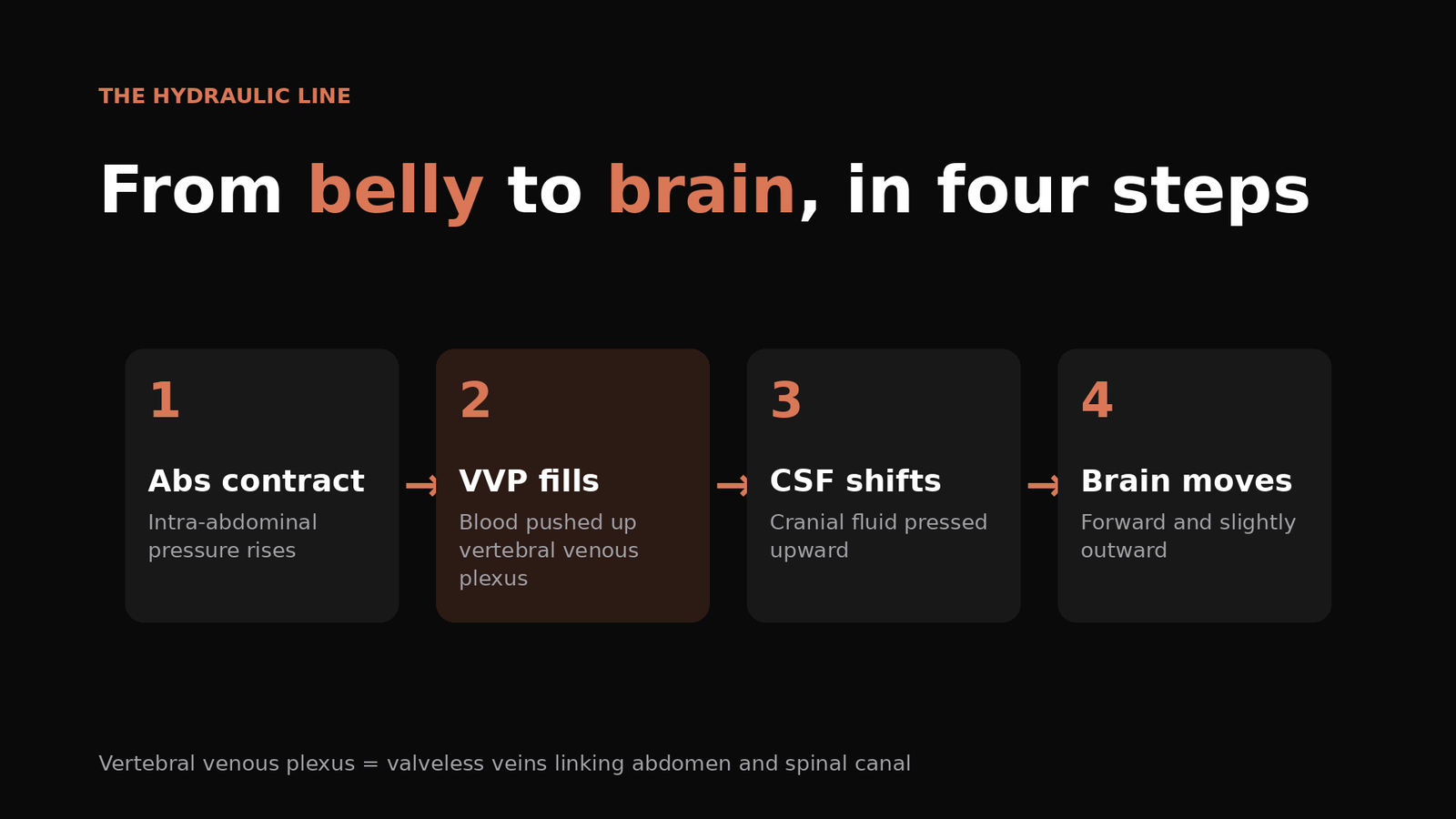
How does a contraction in the belly reach the brain? The answer is a piece of anatomy that's been known for decades but rarely thought about, the vertebral venous plexus. This is a network of valveless veins that runs along the spinal column and connects directly to veins in the abdominal cavity through small openings in the lumbar vertebrae.
Because the veins lack valves, fluid can flow either direction. When the core contracts and pressure rises in the abdomen, blood is pushed up into the spinal canal. That extra volume in an enclosed bony space presses on the dural sac surrounding the spinal cord, which in turn pushes cerebrospinal fluid (CSF) upward toward the skull. The result is a pressure wave that lifts and shifts the brain.
To confirm this, the team built a small inflatable cuff and gently squeezed the abdomen of lightly anesthetized mice. No walking, no muscle activation, just external pressure. The brain moved exactly as it had during voluntary movement. Pressure on the belly was, on its own, enough to move the brain inside the skull.
A Daytime Counterpart to Sleep
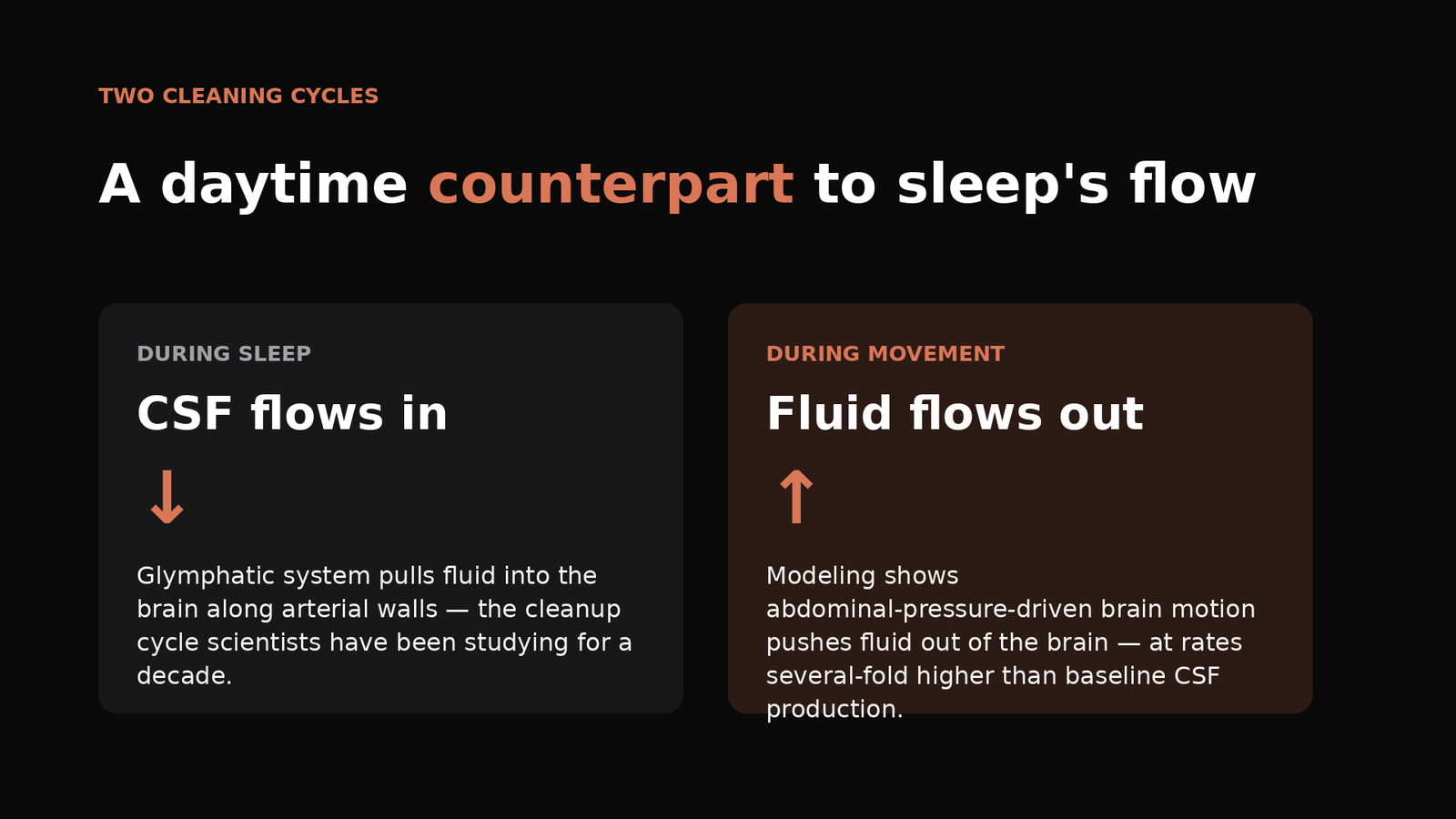
The implications come from the fluid that's being pushed around. The brain has no lymphatic system in the conventional sense. It relies on the glymphatic system, a network of channels alongside blood vessels, to wash metabolic waste out of brain tissue. During sleep, that flow runs into the brain, carrying CSF along arterial walls and out through the venous side. It's one of the cleanup mechanisms that makes deep sleep so important.
When the team built a computational model of the brain's mechanical environment and simulated abdominal compressions, the result was clear. The fluid flow generated by the squeeze ran in the opposite direction of glymphatic sleep flow. Rather than pulling fluid into the brain, it pushed fluid out, across the surface and down into the subarachnoid space. The volumes involved were larger than the brain's normal CSF production rate.
In other words, daytime movement may be doing a different kind of cleaning than sleep. Sleep flushes new fluid in. Movement may help flush old fluid out. They're complementary halves of the same loop.
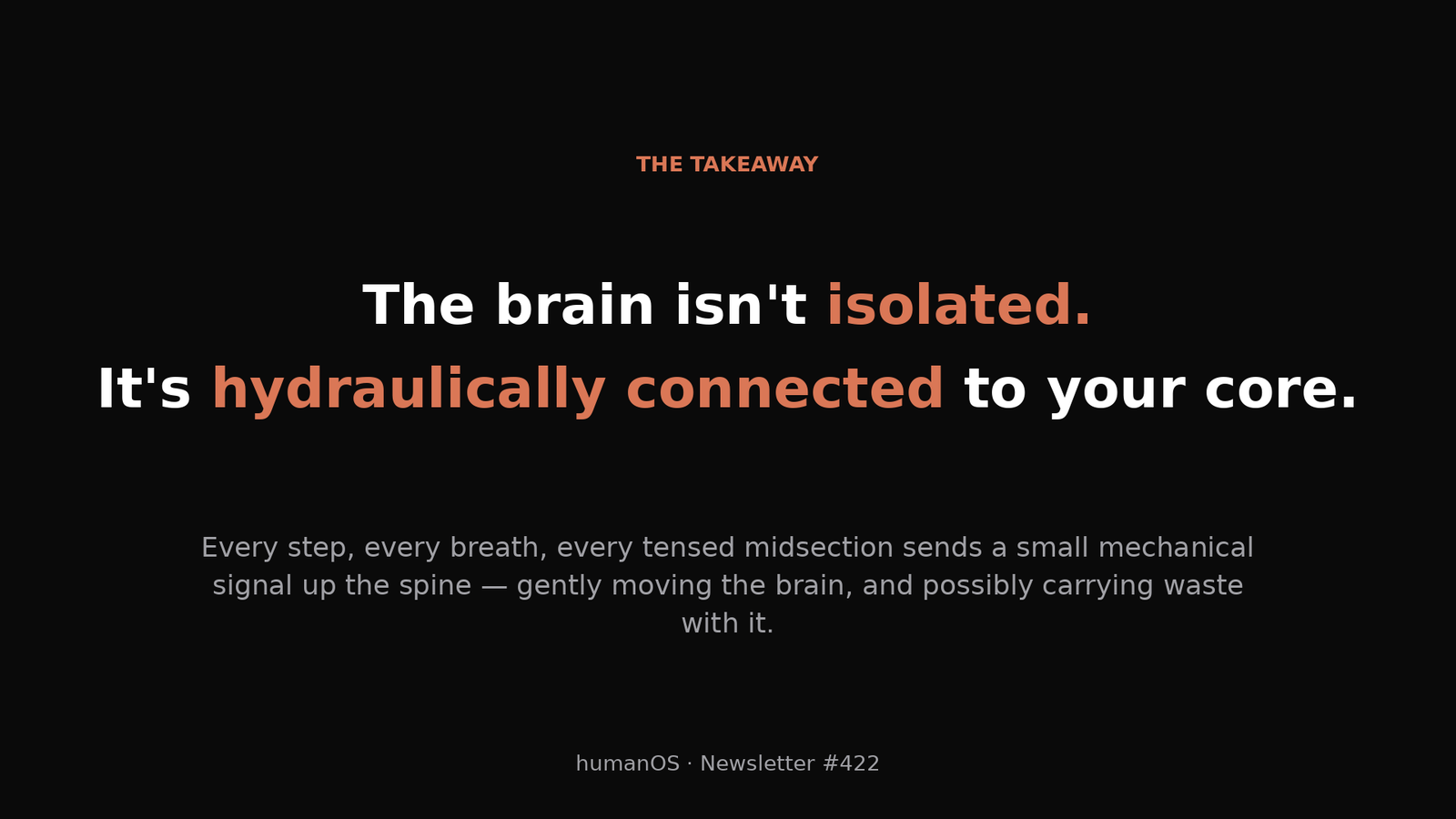
This study reframes a few things at once. The brain isn't quite as isolated as the textbook makes it sound. There's a literal, mechanical line from the core to the cranium, mediated by an old piece of vascular plumbing most of us have never heard of. Abdominal pressure, posture, and core engagement could be quietly contributing to brain fluid dynamics in ways we haven't fully appreciated. Even the simple act of walking with a strong midsection might play a part.
It also makes new sense of a few longstanding observations. People who are chronically obese show elevated abdominal pressure and well-documented declines in cognitive function over time. The authors suggest that constant high pressure could remodel or overwhelm this system, blunting the normal coupling. Pregnancy, severe constipation, and prolonged sitting all change abdominal pressure too. Each of those has been linked, in different ways, to subtle shifts in brain physiology.
None of this tells you to start doing crunches for cognition. The study is in mice, the effects are measured in microns, and there's no clinical intervention here yet. But the bigger point holds. The body is more deeply integrated with the brain than the bone-and-skull story implies. Your gut and your brain may be in conversation through a hydraulic channel as much as through the vagus nerve.
For me, this is one more reason to break up long stretches of sitting and to treat daytime movement as part of how I care for my brain, not just my body. The next time I stand up from my chair and feel that small reset, I'll picture the fluid moving, the brain nudged gently forward, and a little waste going along for the ride.
Side note: I developed InTUNE training about a decade ago. It’s a daily workout program with over 100 workouts total. Each workout is about the work volume of the 7 minute work (if you’re familiar with that).
InTUNE stands for Integrative and Opportunistic movement. That means, you mix your workout reps into your day so that you day has more movement in it. Today’s study is another indication that a workout program like InTUNE is beneficial.
Read more about InTUNE Training here.
Summary
In a Nature Neuroscience study, Garborg and colleagues used high-speed two-photon microscopy in 24 awake head-fixed mice on a spherical treadmill to quantify motion of the dorsal cortex relative to the skull at 134 imaging sites across 316 trials. Brain motion was primarily rostral and lateral, on the order of 1–6 µm, and was strongly correlated with locomotion (cross-correlation peaks ~0.7) but not with respiration or cardiac cycle in awake animals. Brain motion frequently preceded locomotion onset, ruling out vasodilation (which lags locomotion by ~1 s) and postural change as drivers. EMG of the external oblique, internal oblique, and transversus abdominis muscles showed abdominal contractions consistently led brain motion (negative cross-correlation lags). MicroCT reconstructions confirmed the vertebral venous plexus (VVP) — valveless veins entering the lumbar and sacral vertebrae through small ventral foramina — provides a hydraulic link between abdominal cavity and spinal canal. External pneumatic compression of the abdomen (without locomotion) reproduced the same rostro-lateral brain motion. A finite-element poroelastic model with simplified geometry showed an abdominal squeeze pulse generates intracranial pressure changes (~5–25 mm Hg) consistent with experimental observations and drives net fluid flow out of the brain into the subarachnoid space at rates several-fold higher than baseline CSF production (~1 nL/s) — opposite the direction of sleep-state glymphatic flow. The findings suggest abdominal pressure–driven brain motion is a major, previously underappreciated driver of awake-state CSF dynamics, with potential implications for cognitive effects of obesity, intracranial hypertension, Chiari malformations, and waste clearance.
Random Trivia & Weird News
The Valsalva Maneuver
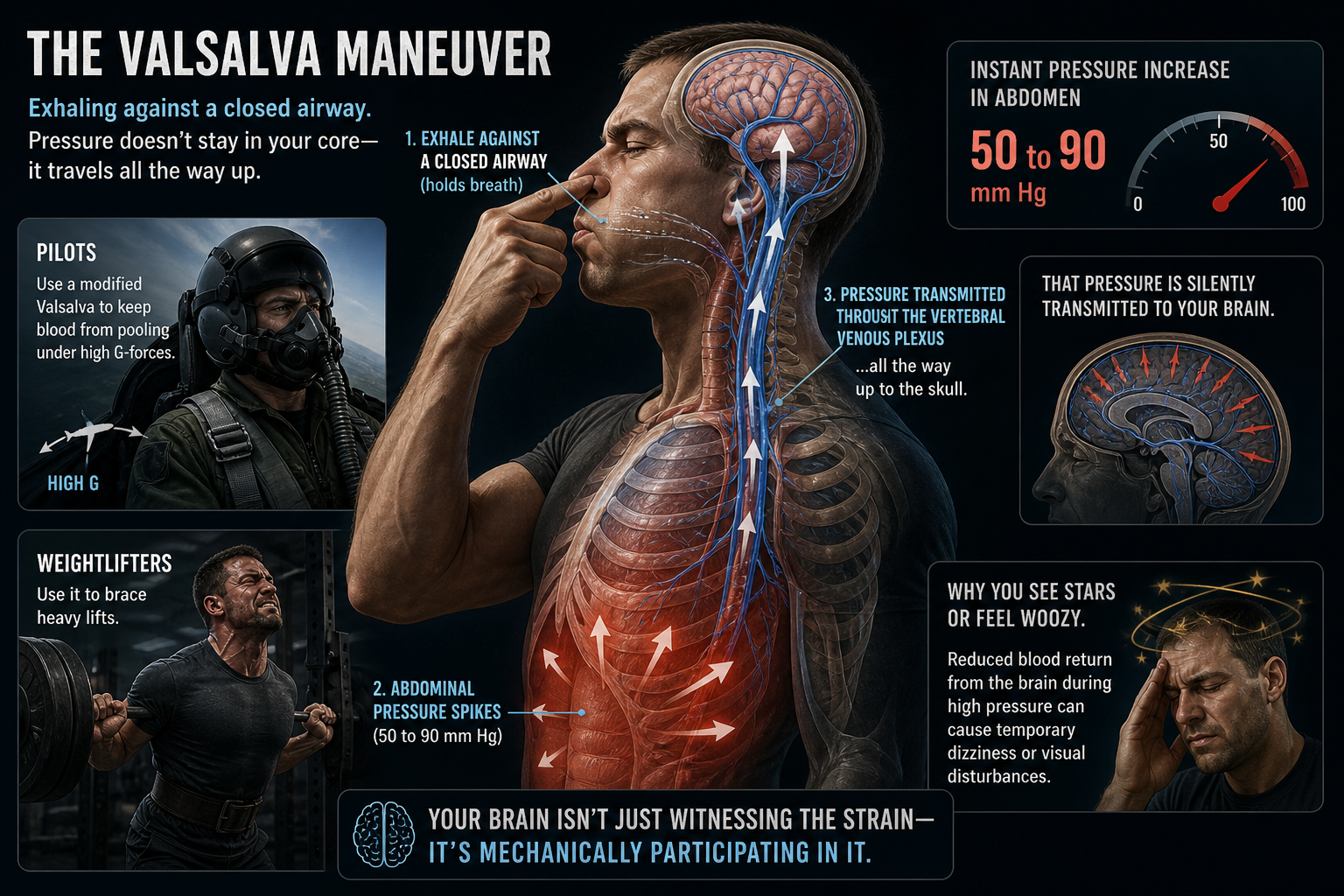
Named after a 17th-century anatomist who used it to clear ear infections, the Valsalva maneuver, exhaling against a closed airway, instantly raises abdominal pressure by 50 to 90 mm Hg. Pilots use a modified version to keep blood from pooling under high G-forces. Weightlifters use it to brace heavy lifts. And every time you do, your vertebral venous plexus is silently transmitting that pressure all the way up to your skull. It's why some people see stars or feel woozy after holding their breath through a heavy set. Your brain isn't just witnessing the strain. It's mechanically participating in it.
Your Brain Is the Densest Organ Per Calorie
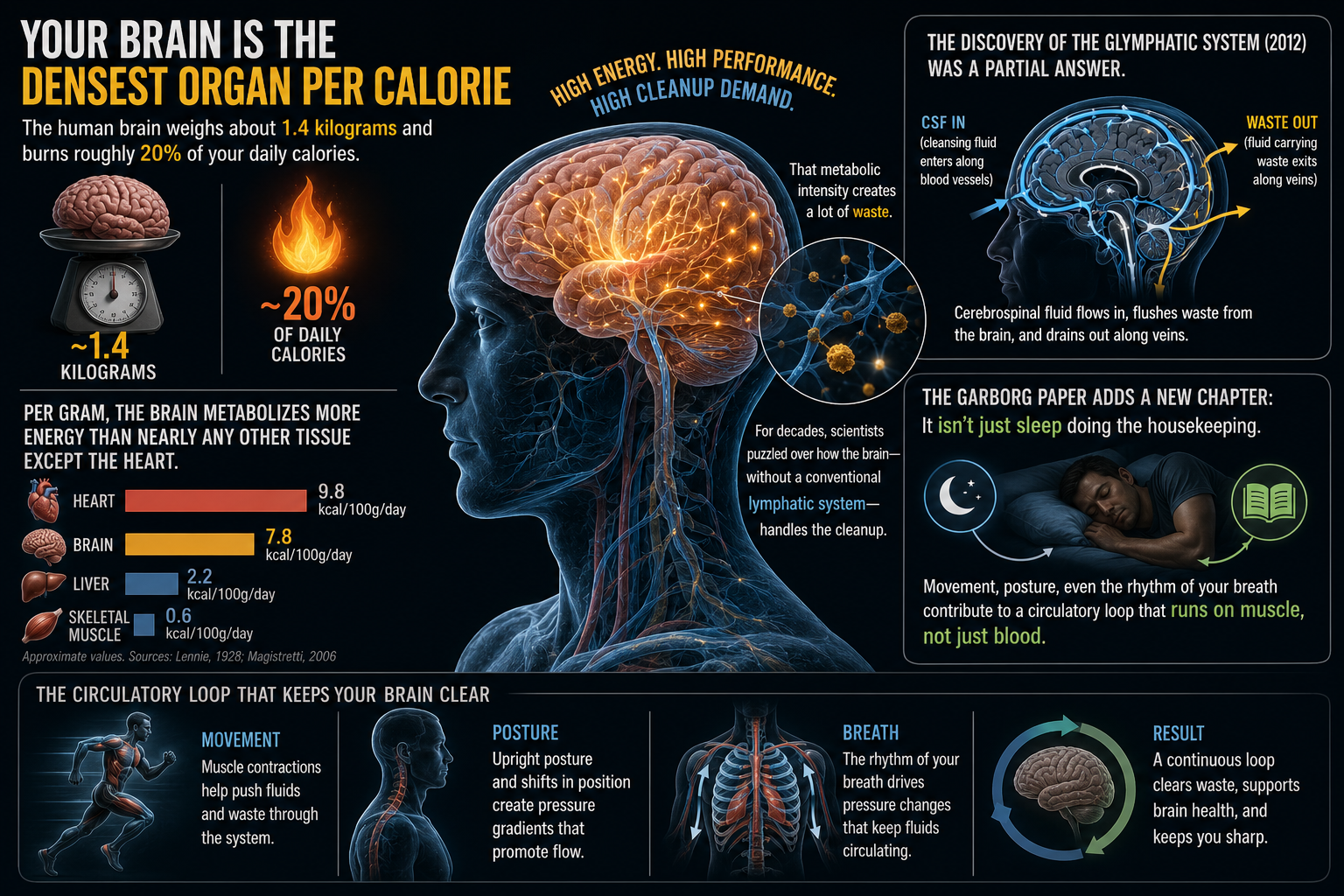
The human brain weighs about 1.4 kilograms and burns roughly 20% of your daily calories. Per gram, it metabolizes more energy than nearly any other tissue except the heart. That metabolic intensity creates a lot of waste, and for decades scientists puzzled over how the brain, without a conventional lymphatic system, handles the cleanup. The discovery of the glymphatic system in 2012 was a partial answer. The Garborg paper adds a new chapter. It isn't just sleep doing the housekeeping. Movement, posture, even the rhythm of your breath contribute to a circulatory loop that runs on muscle, not just blood.
Podcasts We Loved This Week
- Dr. Tommy Wood: Tommy Wood and his new book bust the belief that the adult brain is fixed via STEM-Talk
- Andrew Huberman: Improve Your Lymphatic System for Overall Health & Appearance via Huberman Lab
Products We Love
Qualia Mind
For almost a decade, Qualia Mind has been part of my routine for supporting better brain performance. It’s designed to nourish brain health while helping support the mental side of high performance, from focus and concentration to motivation, productivity, and mental clarity.* What I appreciate most is that it’s not just about feeling stimulated for a few hours. It’s built around supporting long term brain function and cognitive resilience. Hundreds of thousands of people have used Qualia Mind as part of their work, training, and creative routines, and for many, it becomes one of those foundational habits that helps them consistently think, work, and feel better throughout the day.
humanOS Catalog Feature of the Week
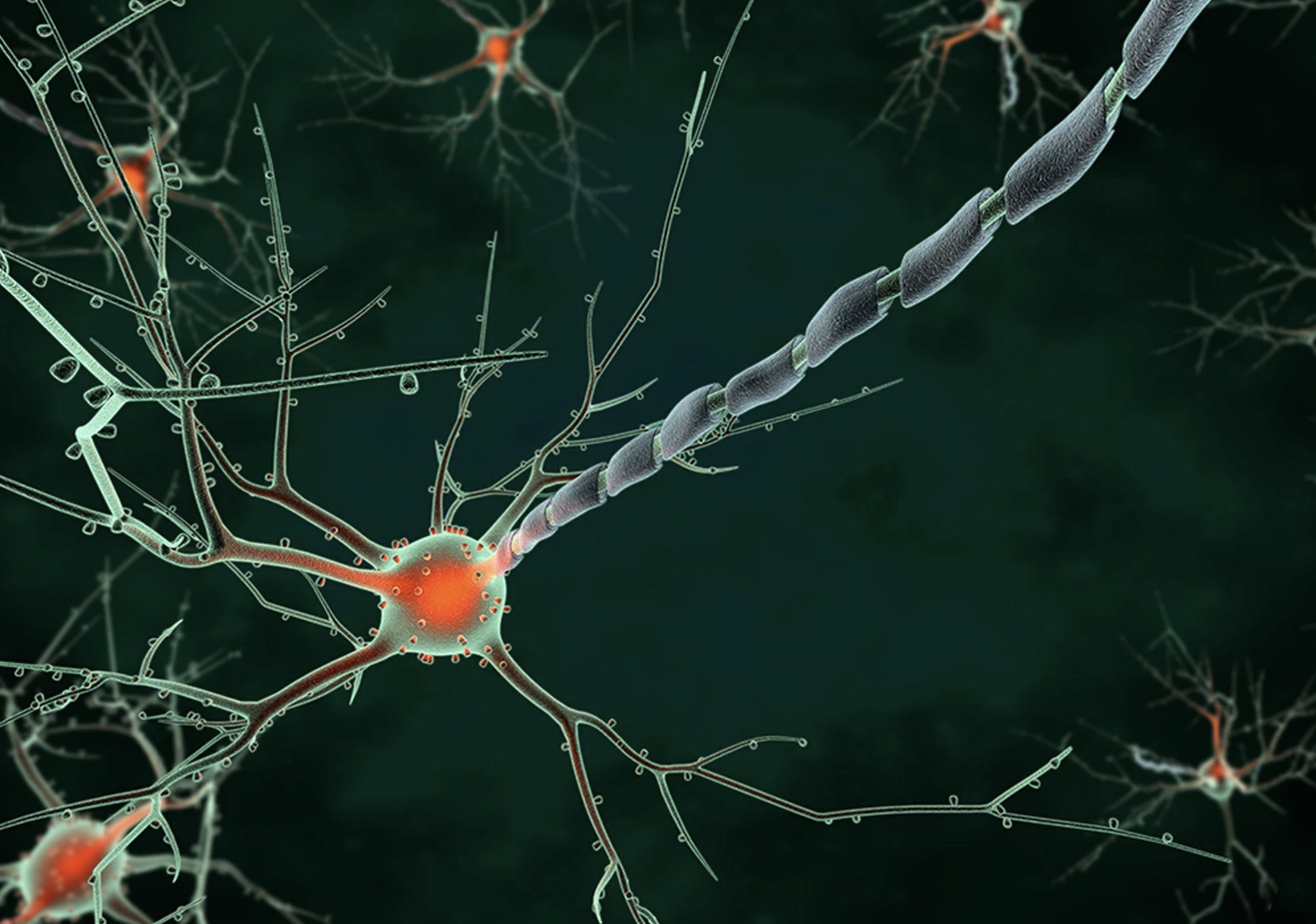
Is This the Purpose of Sleep? New Research on the Glymphatic System
What if the real reason we sleep is to clean? Long before this week's brain-motion paper, a quieter discovery reframed how scientists think about the sleeping brain. The glymphatic system is a network of microscopic channels that opens up at night to flush metabolic waste out of brain tissue. This humanOS blog walks through the foundational research that put the glymphatic system on the map, what it might mean for memory, dementia, and brain aging, and why deep sleep keeps showing up as one of the most powerful protective behaviors we have. Pair it with the Garborg paper above and a fuller picture starts to come into view. The brain doesn't clean itself in one mode. Sleep does one half. Movement, it now seems, may do the other.
Become a Member of humanOS
Get full access to the courses, how-to guides, podcasts, and recipe packs that translate the latest science into practical, daily tools for your healthspan.
Wishing you the best,