Newsletter #444
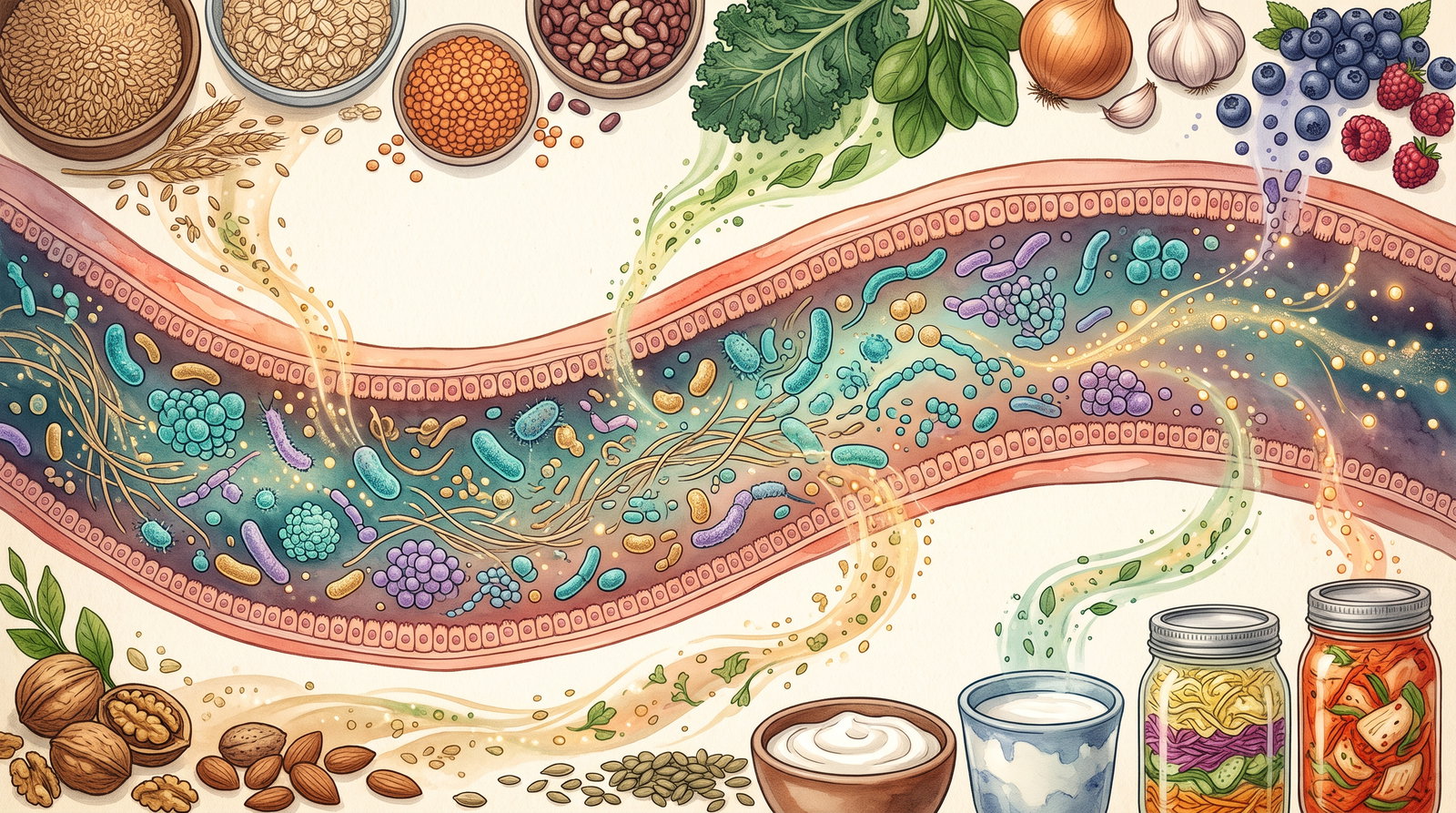
A healthy aging gut is defined more by what its microbes do than by which ones are there. A new systematic review pulled together 41 studies of people from their twenties to past 100, including centenarians from longevity hotspots in Sardinia and Singapore. No single bacterium marked healthy aging. The consistent signal was function. People who aged well kept gut microbes that ferment fiber into short-chain fatty acids, make vitamins, and support the gut barrier and immune balance. Most of those functions depend on what you feed them, which means a lot of this is in your hands. Below is what a healthy aging microbiome looks like, and what the broader research says about building one, including where probiotics fit.
If these newsletters are a regular part of how you stay informed on health and longevity, consider supporting the work with a Pro membership. $19.99 per quarter, about $1.67 per issue, less than a coffee tip.
Join here: Become a Member
Review Your Learnings: Newsletter Summaries ✨
Gut Microbiome and Healthy Ageing: A Systematic Review of Literature
What does a healthy aging gut microbiome look like?
It looks diverse, individual, and good at fermentation. There is no single "longevity bacterium."
The gut microbiome is the community of bacteria, archaea, fungi, and viruses living in your large intestine, along with their genes. These microbes help digest food, train the immune system, protect against pathogens, and make compounds your body uses, including vitamins and short-chain fatty acids.
Researchers in Saudi Arabia screened more than 5,700 records and kept 41 studies that profiled the gut microbiome in healthy people across five age groups. Young (under 25), adults (25 to 64), older adults (65 to 79), long-lived (80 to 99), and centenarians (100 and older). Most studies sequenced stool samples. A smaller set measured what the microbes were actually doing.
A few microbes showed up again and again in people who aged well.
Microbe | What it does | Pattern in healthy agers |
Akkermansia muciniphila | Lives in and renews the gut's mucus layer, which supports the gut barrier | Higher in long-lived people and centenarians |
Alistipes and Parabacteroides | Ferment fiber and protein and help produce short-chain fatty acids | Higher in older adults, long-lived people, and centenarians |
Christensenellaceae | A heritable family linked to leaner bodies and healthier metabolism | Higher in long-lived people and centenarians |
Methanobrevibacter | Archaea that clear hydrogen, which helps other microbes keep fermenting | Higher in centenarians |
Bifidobacterium | Ferments fiber and supports immune development | Highest in the young, often lower with age |
Faecalibacterium, Roseburia, Coprococcus | Major butyrate producers | Common in adults, often lower in the very old |
Some changes are mixed. Centenarians also carried more Escherichia and other Proteobacteria, a group often linked to inflammation. The authors can't say whether that is harmful or just a feature of extreme age.
Another pattern comes from one of the largest studies in the review. In more than 9,000 people, gut microbiomes became more unique with age. Healthy agers drifted away from a Bacteroides-heavy core. Among people over about 80, those who kept a more generic, Bacteroides-dominated microbiome had lower survival over four years.


Why does microbiome function matter more than names?
Different microbes can do the same job. When one butyrate producer fades, another can take over. Scientists call this functional redundancy, and it may explain why the species lists vary so much from study to study.
Seventeen studies measured function directly. The contrast between older adults and centenarians was clear.
In older adults (65 to 79), several jobs declined. Gut microbes did less work making B vitamins and vitamin K2, and less work processing branched-chain amino acids and tryptophan.
In centenarians, several jobs looked stronger.
- More fermentation. More fiber-degrading activity and more production of short-chain fatty acids, including butyrate, acetate, and lactate.
- More vitamin making. Higher activity in pathways for vitamin B2, vitamin B6, vitamin K2, and thiamine.
- Different amino acid handling. More breakdown of amino acids like glutamine and tryptophan, which may help keep nitrogen balanced and limit the buildup of harmful byproducts.
Short-chain fatty acids are compounds gut bacteria make when they ferment fiber. Butyrate is the best known. It fuels the cells lining the colon, helps keep the gut barrier tight, and calms inflammation. Many of the microbes enriched in centenarians are linked to short-chain fatty acid production.
This is where the review points toward action. The authors note that these pathways depend on what reaches the colon. Microbes can't ferment fiber you don't eat. Few studies adjusted for diet, so some of the centenarian signature is likely a dietary signature.
How can you support a healthy gut microbiome as you age?
Feed it fiber and variety, add fermented foods, move, and avoid harming it. The review didn't test interventions, but trials in other studies line up well with its findings.
- Eat a wide range of fiber. Different microbes prefer different fibers. Beans, lentils, oats, barley, whole grains, nuts, seeds, onions, leeks, garlic, and cooked-then-cooled potatoes and rice (a source of resistant starch) all feed different groups. In the NU-AGE trial, 612 adults aged 65 to 79 across five European countries followed either their usual diet or a Mediterranean diet for a year. The Mediterranean group gained microbes that produce short-chain fatty acids and lost some linked to inflammation. Those shifts tracked with less frailty, better memory, and lower inflammatory markers. Higher fiber, along with certain vitamins and minerals, drove the shifts. Add fiber gradually to limit gas and bloating.
- Aim for plant variety. In the American Gut Project, people who ate more than 30 different plant types a week had more diverse microbiomes than those eating 10 or fewer. It's an observational finding from a small subgroup, but variety is a useful habit. Herbs, spices, nuts, and seeds count.
- Eat fermented foods every day. In a Stanford trial, 36 healthy adults ate either a high-fiber diet or a high-fermented-food diet for 10 weeks. The fermented food group saw microbiome diversity rise and 19 inflammatory proteins fall, including interleukin-6 (IL-6). The high-fiber group didn't see those changes in 10 weeks. Yogurt, kefir, sauerkraut, kimchi, miso, and kombucha all count. Choose versions with live cultures, which usually means the refrigerated section. We covered more on fermented foods, the microbiome, and stress in an earlier issue.
- Add colorful polyphenols. Polyphenols from berries, grapes, pomegranate, cocoa, green tea, coffee, and olive oil reach the colon largely intact. Gut microbes break them down, and several appear to support Akkermansia. Most of that evidence comes from animal studies, but these foods have other benefits too. Coffee is a good example, as we covered in coffee, the gut microbiome, and cognition.
- Stay active. In a six-week trial, endurance training raised butyrate-producing bacteria and fecal butyrate in lean adults. The changes faded when people stopped training. Exercise works on the microbiome only as long as you keep doing it. Gut microbes may even feed back on performance, as we covered in gut microbes and exercise performance.
- Protect what you have. Use antibiotics when you need them, not as a precaution. Each course can knock out microbes that take months to return, and some may not come back. Highly processed foods tend to crowd out the fiber and polyphenols your microbes need.
Do probiotics help the gut age well?
For most healthy people, probiotics are optional. Food builds the foundation. Probiotics are useful for specific purposes, using specific strains.
A probiotic is a live microorganism that provides a health benefit when taken in an adequate amount. The benefit belongs to the strain, not the species. Lactobacillus rhamnosus GG and the yeast Saccharomyces boulardii, for example, have good evidence for reducing antibiotic-associated diarrhea. Most probiotic strains pass through the gut rather than settling in long term.
More is not always better. In a 2018 study in Cell, people who took a multi-strain probiotic after antibiotics took longer to recover their own native microbiome than people who took nothing. Their gut communities were still incomplete months later.
The next wave of products uses microbes found in healthy guts rather than in yogurt. In a small three-month trial of 32 adults with overweight or obesity, a pasteurized form of Akkermansia muciniphila improved insulin sensitivity and was well tolerated. It's promising, but early. Several studies in this review also found more Lactobacillus in centenarians, and one centenarian-derived strain made an anti-inflammatory compound in lab tests.
If you do use a probiotic, match it to a goal and pick a strain that has been tested in people for that goal. Keep feeding your microbes with fiber either way. Prebiotics are the fibers that feed the bacteria already living in you, and for most people that's the better daily investment.
Function Is the Signature
This review sets a baseline. It doesn't prove cause. Nine in ten of the studies were cross-sectional snapshots, and only eight of 41 statistically adjusted for factors like diet, medications, and body weight. Half the studies came from China, and large parts of the world had no data at all. Definitions of "healthy aging" varied widely. Most focused on physical function and living situation, and few measured quality of life or social connection.
Still, the pattern is consistent. People who age well tend to keep a gut that ferments fiber, makes vitamins, and keeps inflammation in check. Those functions run on fuel you provide every day.
Frequently Asked Questions
What is a healthy gut microbiome for aging?
A healthy aging gut microbiome is diverse, individual, and rich in microbes that ferment fiber into short-chain fatty acids and make vitamins. No single species defines it.
What are short-chain fatty acids?
Short-chain fatty acids (SCFAs) like butyrate, acetate, and propionate are made by gut bacteria when they ferment fiber. They fuel colon cells, support the gut barrier, and help regulate inflammation.
Do I need a probiotic for a healthy gut?
Most healthy people don't. Fiber, plant variety, and fermented foods support the microbes you already have. Probiotics make the most sense for specific uses with strains tested for that use.
Should I take probiotics after antibiotics?
It depends on the goal. Certain strains reduce antibiotic-associated diarrhea, but one study found a multi-strain probiotic delayed recovery of the native microbiome. Fiber and fermented foods help rebuild it.
What foods feed Akkermansia?
Polyphenol-rich foods like berries, grapes, pomegranate, green tea, and cocoa appear to support Akkermansia muciniphila, mostly based on animal studies. A fiber-rich diet helps too.
How many plants should I eat per week?
One observational study found people eating more than 30 plant types a week had more diverse microbiomes than those eating 10 or fewer. Herbs, spices, nuts, seeds, and whole grains all count.
Summary: Almatrafi et al. (2026, Microbiology) systematically reviewed 41 observational studies (from 5,781 records; searches to January 23, 2026) of gut microbiome composition and function in healthy ageing, stratified as young (<25 y), adults (25 to 64), older adults (65 to 79), long-lived (80 to 99), and centenarians (≥100). Most used 16S rRNA sequencing (58.5%) or shotgun metagenomics (31.7%), 90.2% were cross-sectional, 49% came from China, and four came from Blue Zones. Centenarians and long-lived individuals showed enrichment of Akkermansia, Alistipes, Parabacteroides, Christensenellaceae, Methanobrevibacter, and Proteobacteria, with lower Faecalibacterium, Coprococcus, and Bifidobacterium. Of 17 functional studies, centenarians showed higher SCFA production (butyrate, acetate, lactate), fiber degradation, and vitamin B2, B6, K2, and thiamine pathways. Older adults showed lower BCAA, tryptophan, and vitamin pathways. Only 8 of 41 studies (19.5%) adjusted for confounders, and only 7 (17.1%) were rated high quality.
Random Trivia & Weird News
The Nobel Laureate Who Bet on Yogurt

In 1908, Élie Metchnikoff shared the Nobel Prize for discovering how immune cells swallow invaders. He then turned to aging. Noticing that many Bulgarian villagers lived long lives on soured milk, he proposed that lactic acid bacteria could crowd out harmful gut microbes and slow aging. He drank soured milk daily. Many details were wrong, but he planted the idea that gut bacteria shape how we age. More than a century later, the science is catching up.
Your Gut Makes Methane

Not every gut microbe is a bacterium. Methanobrevibacter smithii is an archaeon, a member of a separate branch of life. It eats the hydrogen other microbes release during fermentation and turns it into methane. Clearing that hydrogen lets fermentation keep running. Roughly a third to half of adults carry enough of these archaea to show methane on a breath test. This week's review found Methanobrevibacter enriched in centenarians across five separate studies.
The Most Heritable Gut Bacterium
In 2014, researchers studying more than 1,000 twins in the UK asked which gut bacteria are most shaped by genes. The answer was a little-known family called Christensenellaceae. It was more common in lean people. When the team added it to the gut of mice, they gained less weight than mice without it. This same family turns up more often in long-lived people and centenarians, which makes it one of the few microbes that links genes, body weight, and aging.

How Blue Zones Got Their Name
In the early 2000s, demographers Gianni Pes and Michel Poulain mapped Sardinian villages with unusually high numbers of verified centenarians. They circled the hotspots on the map in blue ink. The phrase "Blue Zone" stuck and later spread to Okinawa, Ikaria, Nicoya, and Loma Linda. Sardinia's mountain villages remain a research focus, and three of the 41 studies in this week's review came from Sardinian centenarians, whose microbiomes looked distinct from younger adults on the same island.

You Are Not Mostly Bacteria
A popular claim says bacterial cells outnumber human cells ten to one. That ratio came from a rough 1970s estimate. In 2016, researchers recalculated it and landed closer to one to one, about 38 trillion bacteria and 30 trillion human cells in a typical adult. Most of those bacteria live in the colon. A single bowel movement can shift the ratio noticeably. The genetic picture is different. Gut microbes carry far more genes than your own genome.

Products We Love

Masontops Complete Mason Jar Fermentation Kit
Homemade sauerkraut and kimchi are the cheapest way to eat fermented foods every day. This kit turns ordinary wide-mouth mason jars into small fermentation crocks. Glass weights keep vegetables under the brine, silicone airlock lids let gas escape without letting air in, and a wooden tamper packs the cabbage down. No need to burp the jars, and there is little risk of mold. A head of cabbage, salt, and a week on the counter gets you a jar of live-culture kraut for a few dollars.
humanOS Catalog Feature of the Week

Fiber — from The Mediterranean Diet
Why did the Mediterranean diet change the gut microbiome of older adults so reliably? Much of the answer is fiber. This lesson from our Mediterranean Diet course explains how different types of fiber work in the body, how gut bacteria ferment them, and why a traditional Mediterranean diet contains more than twice the fiber of a typical Western diet. It connects fiber to inflammation, metabolic health, and mood, then gives you practical ways to eat more of it. It takes less than five minutes.
Enjoying these? A Pro membership keeps the newsletter going and unlocks the full humanOS library of courses, guides and protocols. $19.99 per quarter.
Join here: Become a Member
Wishing you the best,