

Brain Performance and Health Protocol
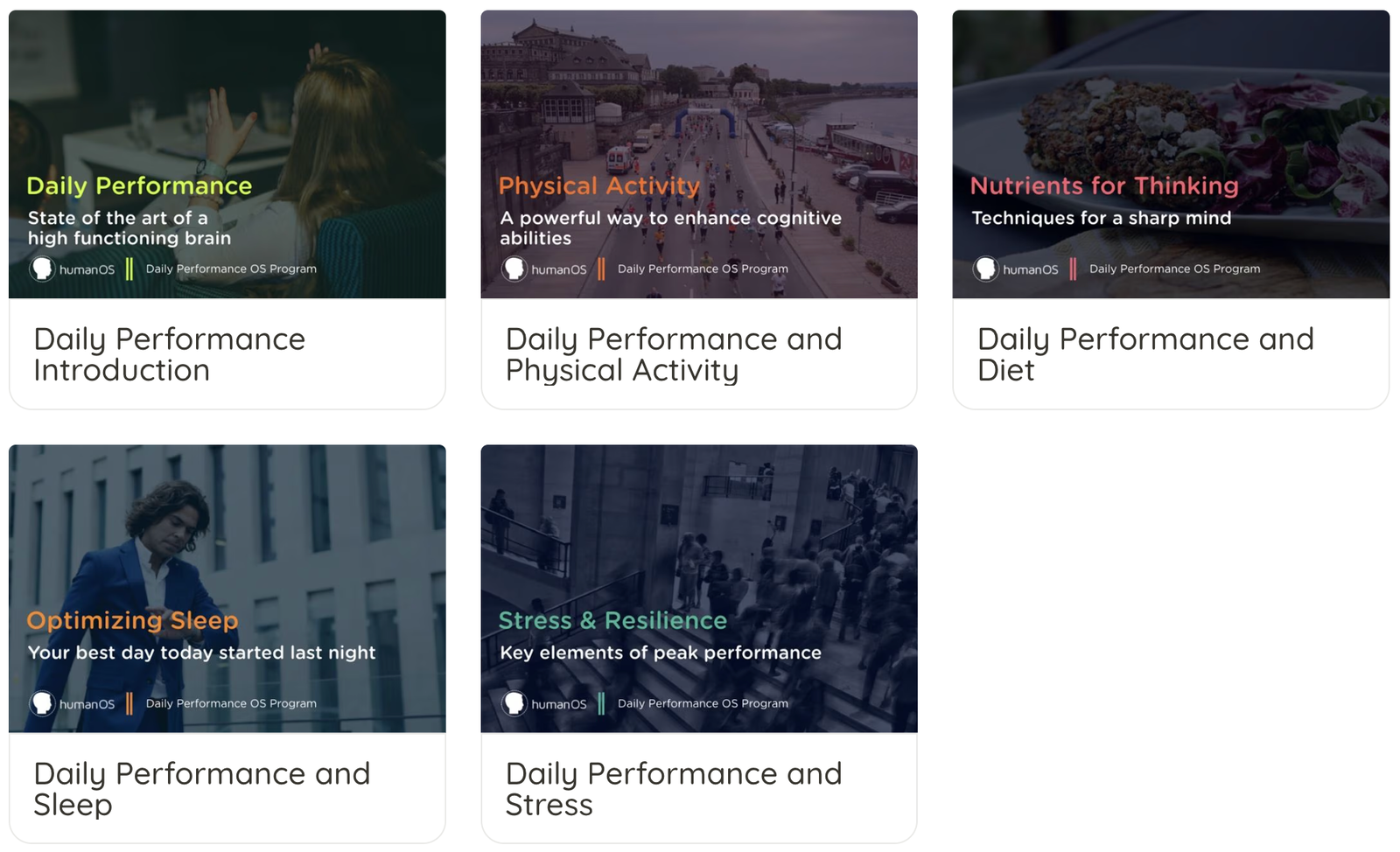
Transform how you show up in life with our science-backed Daily Performance Program—designed not just to boost how your brain performs today, but to help protect and strengthen it for the future.
Your daily performance is more than just how sharp you feel. It’s a reflection of your brain’s health. And here’s the powerful part: by using your brain well—by challenging it, fueling it, resting it, and supporting it—you actually build a stronger brain over time.
Through five interconnected courses, you’ll discover how to enhance mental clarity, energy, and focus—while laying down the foundations of lasting cognitive resilience. You’ll learn how high-quality sleep sharpens decision-making, how specific nutrients fuel neural pathways, how strategic movement primes your brain for peak output, and how to turn stress into an ally that builds strength.
With 38 bite-sized lessons totaling just over two hours, this program gives you practical, actionable strategies to elevate how your brain works day to day—and keep it healthier, longer.
Peak performance today. Brain longevity tomorrow.
The Daily Performance Program
You must be logged into your personal free humanOS Pro account to access this program.
Daily Performance Program Link
Qualia Mind 2.0
With and without caffeine
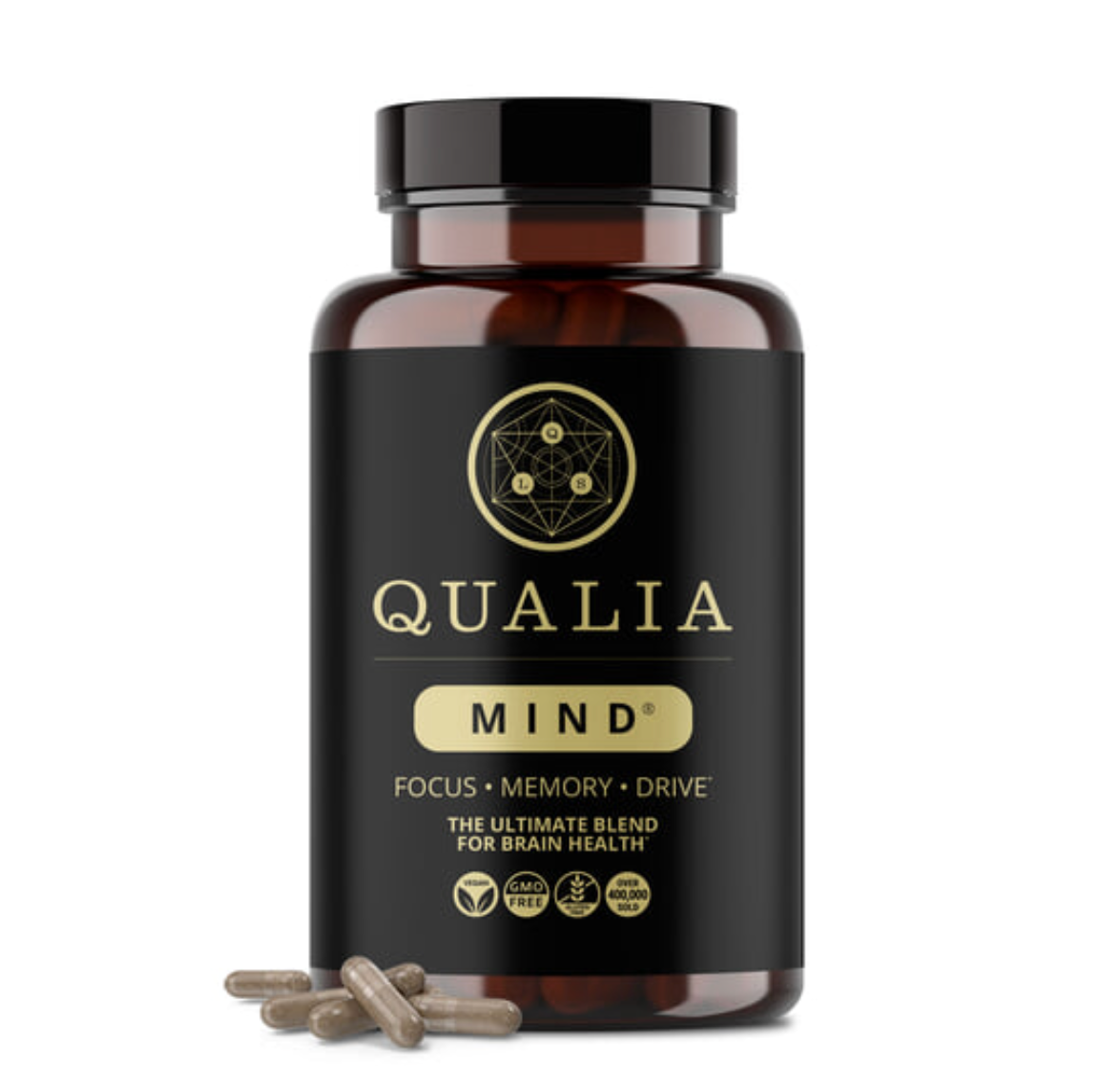
Qualia Mind is a premium, science-driven blend of 32 ingredients (including 21 brain-nutrients) designed to support both cognitive performance today and long-term brain health.
In the short term, it aims to sharpen focus, boost energy, enhance memory, and support mood and mental clarity. Over the long run, its formulation is crafted to promote neuroplasticity, neuroprotection, and healthy aging of the brain.
Think of it as a tool that helps your mind perform at its best — while also feeding and fortifying your brain’s foundation for lasting resilience.
Brain Health and Performance Protocol
Foundational Supplement Strategy
- Take Qualia Mind 5 days per week (typically Monday–Friday).
- Use weekends as reset days to maintain sensitivity and avoid tolerance build-up.
- Take it early in the day, ideally within an hour of waking, paired with hydration and light exposure.
Cognition-Boosting Lifestyle Strategies
General Approach
Protect and Optimize Mental Energy
- Treat mental energy like a finite resource.
- Structure your environment to minimize distractions and decision fatigue.
- Recognize that distraction recovery costs time (≈25 min per interruption).
- Plan your most demanding work during your personal high-energy window.
Prioritize Sleep Over Stimulation
- Sleep is the foundation of cognitive performance.
- Caffeine can support alertness but can’t fully compensate for poor sleep.
- Keep caffeine in the optimal zone to avoid overshooting arousal.
Manage Arousal to Stay in the Peak Zone
- Performance follows the Yerkes-Dodson curve: too little arousal = sluggish; too much = error-prone.
- Use movement, light, breathing, or a break to adjust your arousal level throughout the day.
Strengthen Cognitive Control
- Mental energy fuels cognitive control, which allows you to focus, filter out distractions, and regulate automatic reactions.
- Notice early signs of fatigue (wandering mind, irritability, sloppy errors) and intervene.
Build and Protect Self-Control Capacity
- Self-control (willpower) is a shared reservoir used across:
- Thoughts (regulating attention and focus)
- Emotions (stabilizing mood)
- Impulses (resisting temptation, e.g., addictive newsfeeds)
- Performance (sustained effort on hard tasks)
- When energy is low, these functions degrade — make important decisions early in the day and reduce temptations in the environment.
Support Executive Functions
- Executive function enables you to set future goals, make plans, initiate and re-initiate effort, and manage working memory — your mental whiteboard.
- This is highly influenced by sleep, movement, stress, light, and nutrition.
Shape Identity and Practice
- High performers use tools strategically to amplify effort, not replace it.
- The real goal isn’t a four-week change — it’s integrating these habits for life.
- Be a lifelong learner: experiment, personalize, and be self-compassionate when you fall short.
Physical Activity and Brain Performance
Regular Exercise for Brain Performance
- Train regularly to improve cardiovascular and energy system efficiency.
- This boosts mitochondrial density in both muscles and the brain, increasing mental stamina and resistance to fatigue.
- Include higher-intensity exercise (≥ 80 % max heart rate) at least a few times per week.
- This elevates glutamate and GABA in the anterior cingulate cortex → improved cognitive control.
- It also triggers BDNF (“brain fertilizer”), enhancing learning and neuroplasticity.
Exercise as a Stress Regulator
- Use exercise as a healthy stressor to build resilience.
- Moderate, regular training reduces the physiological impact of psychological stress.
- Overtraining can have the opposite effect — balance is key.
Within-Day Movement
- Avoid long sedentary periods.
- Two minutes of walking every 30 minutes restores brain blood flow.
- Light movement maintains alertness and cortical arousal.
- Use walking as a mental performance tool.
- Low-intensity walking (e.g., leisurely 17 min/mile pace) supports clear thinking and problem-solving.
Opportunistic Training (Intune Model)
- Integrate short bouts of movement throughout the day: push-ups, squats, planks, etc.
- Accumulate reps over the day rather than scheduling one workout block.
- Start viewing the day as full of movement opportunities.
- This approach improves daily energy, sharpness, and consistency.
Learning & Memory
- Schedule cognitively demanding tasks after workouts or movement sessions when BDNF is elevated.
- This can amplify learning, memory formation, and focus.
Sustainable Mindset
- Movement isn’t only about workouts — it’s about maintaining a daily rhythm of physical activity.
- Combine structured training (a few high-intensity sessions per week) with frequent micro-movement to emulate more natural activity patterns.
Diet and Brain Performance
Mediterranean Diet Pattern
- Prioritize a plant-forward eating pattern emphasizing:
- Fruits, vegetables, legumes, whole grains, nuts, and seeds.
- Olive oil as the primary fat source (≈ 40% of calories in traditional Mediterranean diets).
- Moderate fish, poultry, and eggs; low red meat.
- Optional moderate wine intake if appropriate.
- This pattern is associated with better cognitive function, lower Alzheimer’s risk, and improved general health across age groups.
Phytonutrients for Brain Performance
- Eat a variety of colorful plants daily to increase intake of key phytochemicals (e.g., catechins, anthocyanins, ellagic acid, lutein, lycopene).
- These support:
- Increased mitochondrial energy production (e.g., green tea catechins mimicking exercise effects).
- Brain growth factors (e.g., fisetin from strawberries).
- Improved cerebral blood flow (e.g., anthocyanins from blueberries).
- Enhanced brain connectivity (e.g., nitrates from beets, polyphenols from olive oil).
- Target multiple plant sources per meal and broad weekly diversity — far beyond the standard Western diet.
Practical Implementation Strategies
- Use smoothies as an easy way to pack several servings of vegetables and fruits into one meal.
- Drink teas (green, herbal) to add polyphenols throughout the day.
- Use spices liberally to increase phytonutrient variety.
- Choose high-quality extra virgin olive oil as a daily fat source.
- Whole plant supplements can be used to boost diversity if food intake is limited.
Timing and Frequency
- Phytonutrients often have acute cognitive effects lasting ~3 hours.
- Include some plant compounds in each meal to support sustained mental performance across the day.
Fasting as a Cognitive Tool
- Consider periodic fasting to boost BDNF, autophagy, and metabolic flexibility:
- Time-restricted eating: e.g., 9 AM–7 PM eating window.
- 5:2 fasting: 2 nonconsecutive lower-calorie days per week.
- Quarterly prolonged fasts (e.g., ProLon protocol) if appropriate.
- Fasting supports ketone production, enhances learning and memory, and reduces inflammation.
- Cognitive benefits are often felt during or shortly after fasting periods.
Variety & Convenience
- Plan for easy, repeatable systems to make plant diversity achievable:
- Keep a rotation of smoothie ingredients.
- Prep vegetables ahead of time.
- Stock teas, spices, and olive oil.
- Strive for variety over perfection — even incremental increases in plant variety yield benefits.
Sleep and Cognitive Performance
Protect Core Sleep Parameters
- Set sleep goals:
- Define your target time in bed and bedtime to ensure sufficient sleep duration.
- Track these two parameters daily (e.g., using Human OS tracker or a wearable).
- Use a bedtime alarm 1 hour before target sleep time to begin winding down and initiating your evening routine.
Light Management to Anchor Circadian Rhythm
- Morning:
- Get 10 minutes of outdoor light before 10 AM to anchor your circadian clock and boost alertness.
- Natural sunlight (~100,000 lux) is far more powerful than indoor light.
- Evening:
- Dim lights and reduce blue light exposure in the hour before bed.
- Use amber lighting or blue-blocking glasses to prevent wake rhythm shifts that impair next-day energy and sleep onset.
Environmental and Physiological Preparation
- Temperature regulation:
- Take a hot shower or bath before bed to induce a cooling effect that supports sleep onset.
- Optional: 3 g glycine before bed to enhance sleep initiation, depth, and next-day cognition.
- Parasympathetic activation:
- Use box breathing (inhale–hold–exhale–hold) for 2–10 minutes before bed to calm the nervous system and shorten sleep latency.
Morning Practices to Boost Wake Drive
- Hydration: Drink 16–32 oz of water upon waking to offset overnight fluid loss and support cognitive function.
- Cold exposure: End your morning shower with 30–60 seconds of cold water to boost alertness and strengthen circadian signaling.
- Light movement: Stretching, walking, or Intune training early in the day to raise arousal and energy.
- Caffeine timing: Use caffeine in the morning (not immediately upon waking) to enhance alertness and avoid late-day intake.
Cognitive & Performance Protection
- Prioritize 7–9 hours of quality sleep.
- Even moderate sleep restriction (e.g., 6 hrs/night) impairs attention, task switching, decision-making, memory consolidation, and emotional regulation.
- Deficits accumulate even if subjective sleepiness plateaus.
- Recognize that circadian alignment matters as much as sleep duration.
- Nighttime light exposure shifts rhythms and creates low mental energy during the day and insomnia at night.
Behavioral Anchors
- “Your best day tomorrow starts tonight.”
- Treat evening wind-down as a performance ritual, not an afterthought.
- Build consistent evening and morning routines to stabilize sleep–wake rhythms.
The Good and Bad of Stress on the Brain
Use physical stressors intentionally
- Include regular exercise to build physiological and psychological stress resilience.
- Eat plant-rich meals with phytochemicals to activate adaptive stress responses.
- Practice fasting (for example, time-restricted eating, 5:2 fasting, or occasional longer fasts).
- Get bright light exposure during the day, ideally outdoors.
- Use heat exposure such as sauna 15–20 minutes, 4–7 times per week if tolerated.
- Include cold exposure periodically, such as a cold shower finish or cold plunge.
Protect recovery capacity
- Prioritize adequate sleep to recover from stress and prevent cumulative damage.
- Do not use sleep restriction as a stressor.
- Maintain consistent sleep-wake rhythms.
Manage psychological stressors
- Reduce unnecessary stressors by simplifying commitments and setting realistic goals.
- Use gratitude practices daily, such as journaling, texting a friend, or reflecting.
- Use breathing techniques such as box breathing for 2–10 minutes to lower arousal.
- Practice progressive muscle relaxation or body scan meditations.
- Spend 20–30 minutes in nature at least 3 times per week.
- Connect regularly with friends, family, or community for social buffering.
Build psychological resilience
- Cultivate optimism through reframing and positive self-talk.
- Strengthen social support networks.
- Foster a sense of purpose and anchor daily actions to meaningful goals.
- Build coping self-efficacy through skills training and small wins.
- Practice and strengthen the character traits of bravery, zest, and hope.
Keep stress in the optimal zone
- Use mild stress intentionally to energize, but not chronically.
- Avoid relying on stress as your main performance tool.
- Monitor for chronically high stress signals such as fatigue, cognitive fog, or low motivation and downshift.
- Balance stress exposure with recovery practices like sleep, relaxation, and social connection.
Daily and weekly maintenance habits
- Schedule intentional recovery time such as vacation, downtime, and daily breaks.
- Pair stress inputs such as exercise, fasting, heat, and cold with recovery inputs such as sleep, relaxation, and social connection.
- Reflect weekly on what stressors are necessary and which can be reduced or eliminated.
- Revisit gratitude or breathing practices on stressful days.
—