Newsletter #427
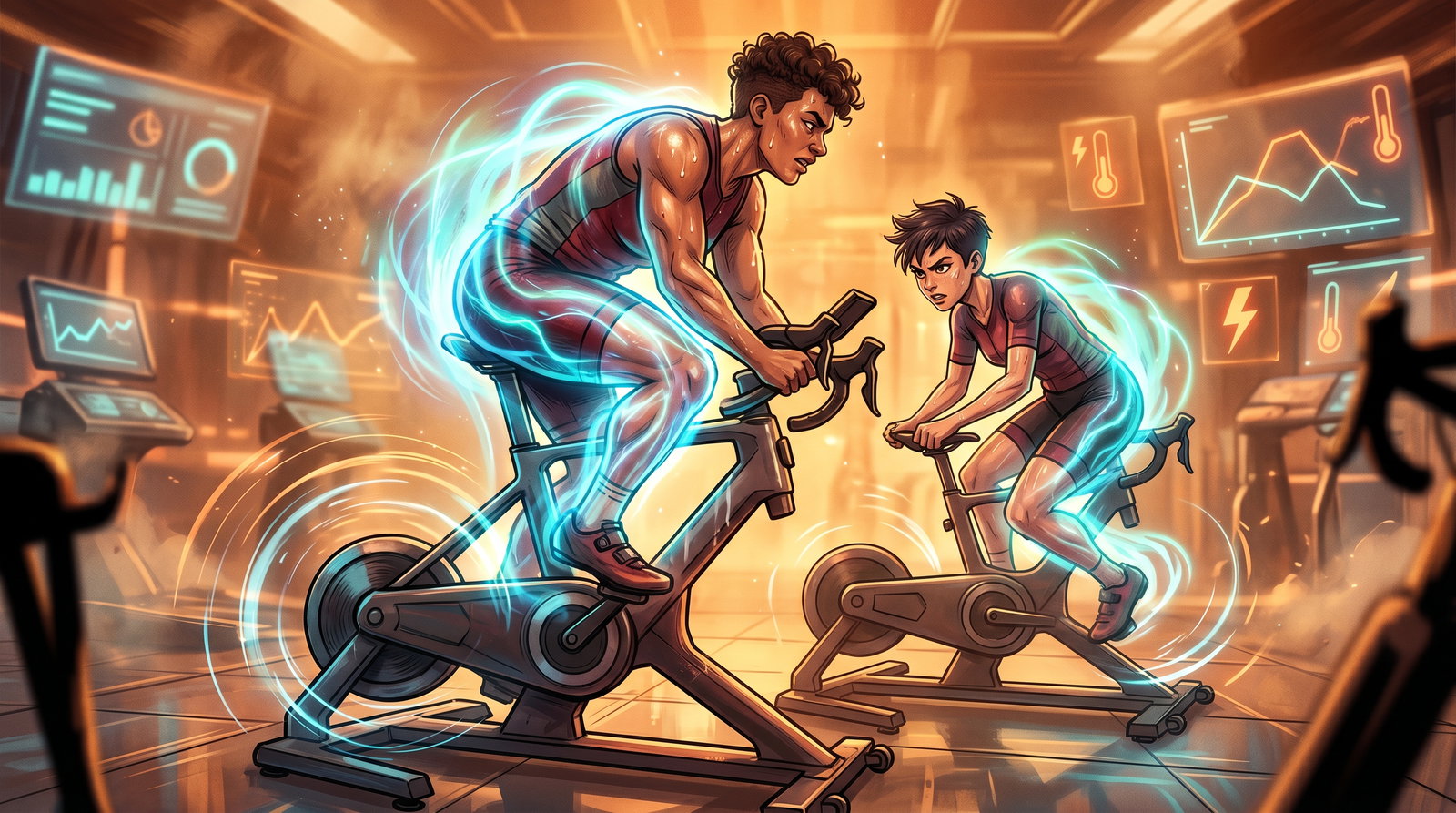
Sport demands hard efforts whether you’re fresh or exhausted. A midfielder in the World Cup must sprint again in the eightieth minute. A firefighter climbs one more flight after the first has emptied the tank. Add heat and humidity and it gets worse. The body tires faster, power fades sooner, and the seconds of rest between efforts stop being enough.
Taurine may help here. It is an amino acid your muscles already store in large amounts, and it has a reputation for blunting fatigue in exactly these conditions. A team in Beijing wanted a sharper answer. Give people taurine before they ride to exhaustion in a hot, humid chamber, and can they sprint again afterward? And does the right dose depend on who is taking it?
If these newsletters are a regular part of how you stay informed on health and longevity, consider supporting the work with a Pro membership. $19.99 per quarter, about $1.67 per issue, less than a coffee tip.
Join here: Become a Member
Review Your Learnings: Newsletter Summaries ✨
Effects of different doses of taurine supplementation on repeated-sprint performance after exhaustive exercise in a high temperature and humidity environment
Pushing past exhaustion in the heat
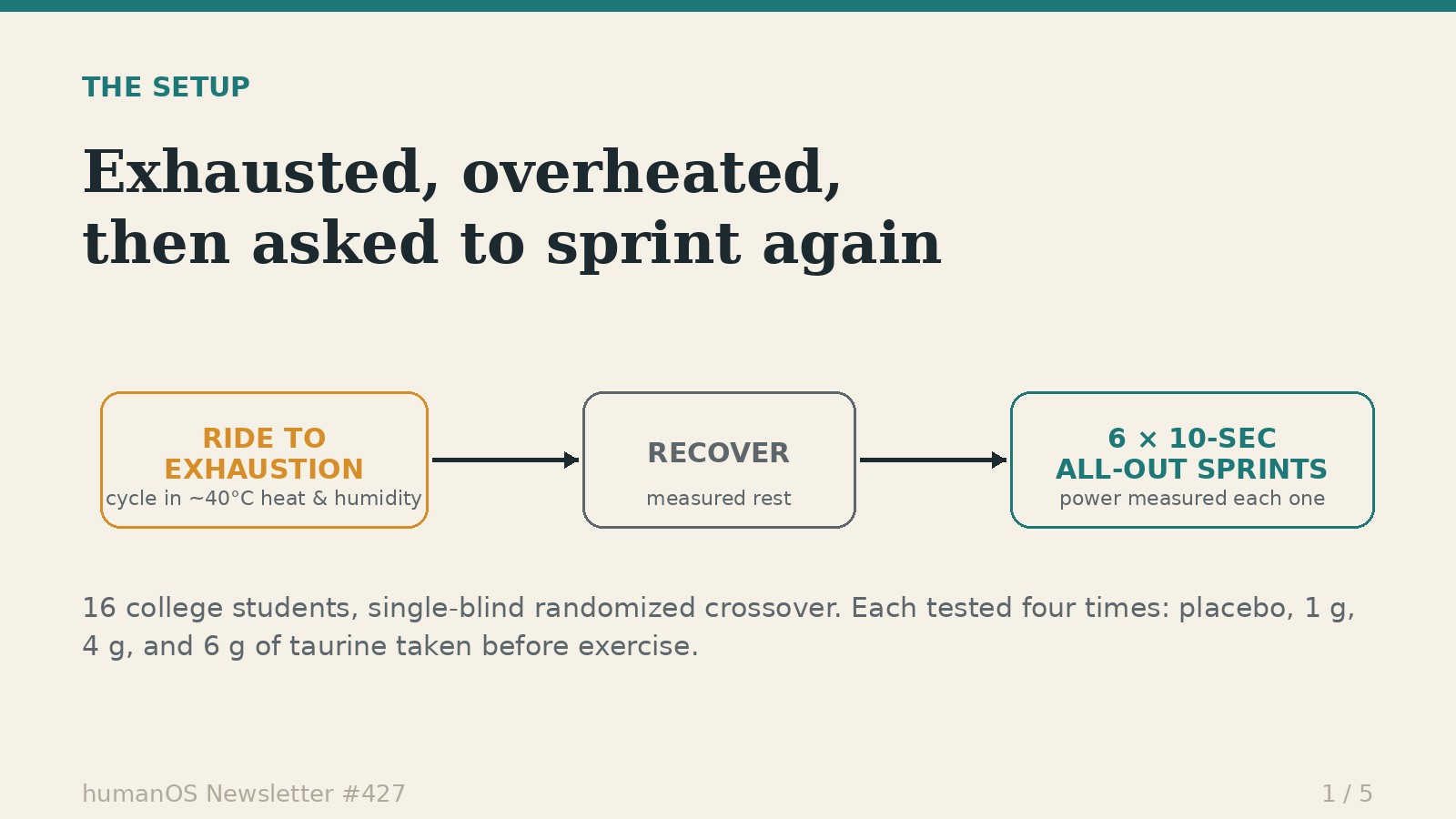
The design was simple and demanding. Researchers recruited sixteen college students, half men and half women. Each did four separate sessions.
Before each session, participants drank a beverage with a high (6g), medium (4g), or low dose (1g) of taurine, or a placebo matched in taste and look. Then they entered a chamber set to brutal heat and humidity and cycled through a test that grew harder every few minutes until they could not continue. That gave a time to exhaustion for each condition.
Then the real test began. After a measured recovery, participants performed six all-out sprints on the bike, back to back, with only seconds of rest between them. The question was how much power they could still produce once they were already cooked.
Taurine held the line on power out
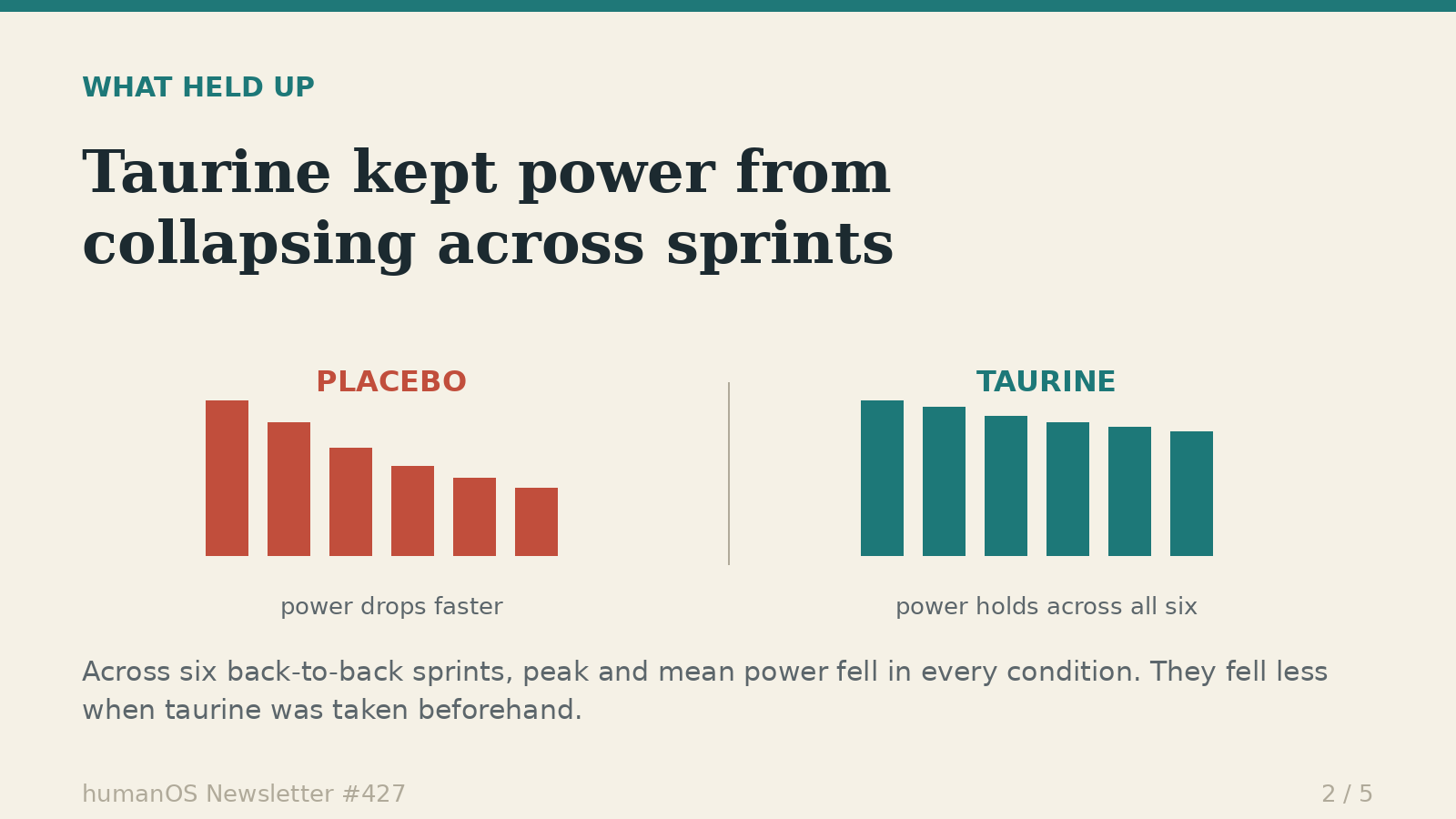
In every condition, power dropped as the sprints piled up. That is the ordinary signature of fatigue. What stood out was the placebo. Power output fell away much faster when people had taken nothing.
Those who took taurine kept more of their power across the six sprints. They also lasted longer on the exhaustion test before quitting. The effect showed up in both peak power and average power. Among the women, the placebo group faded steeply while the taurine group was largely spared that climb.
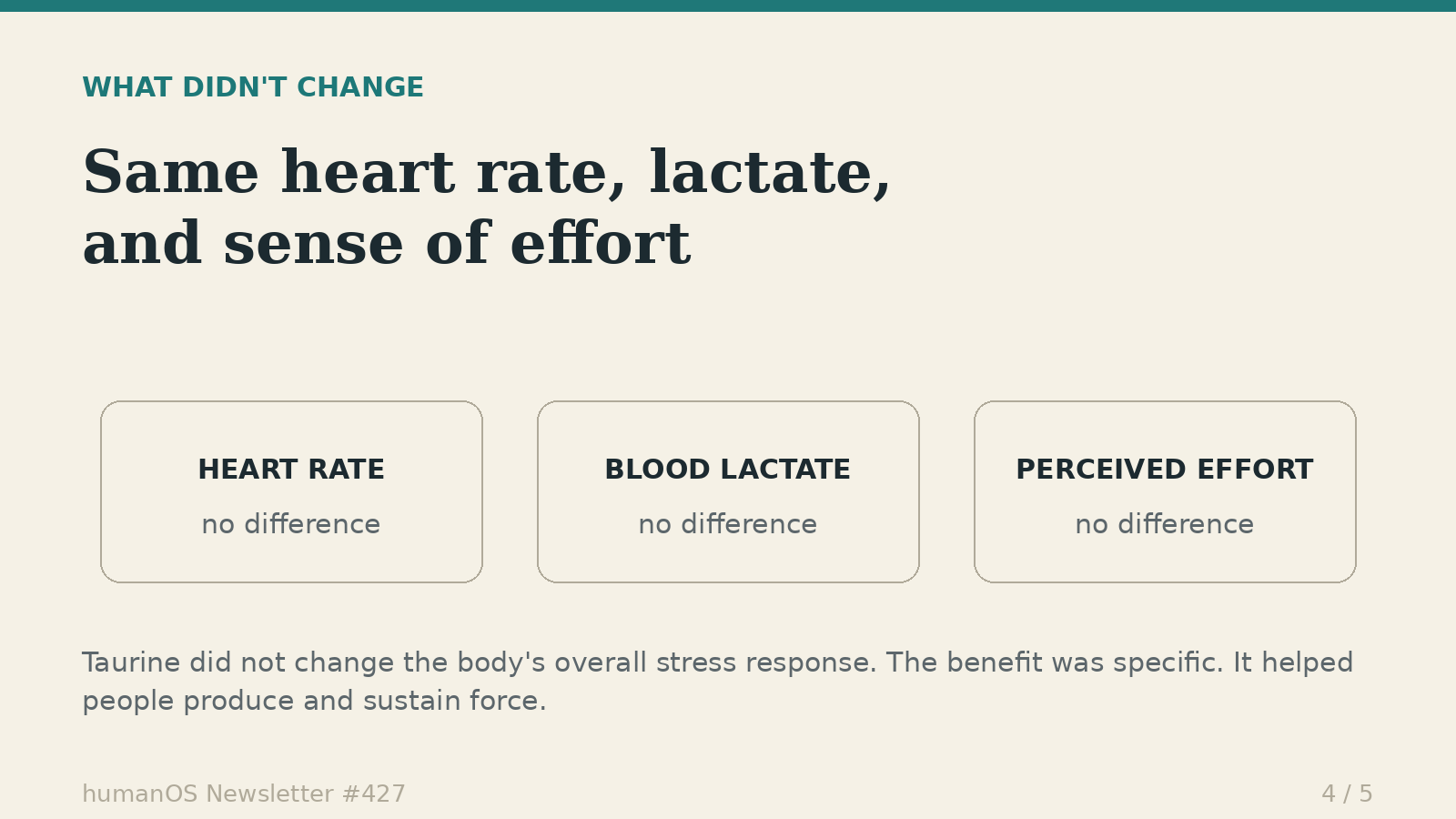
The benefit was specific. Taurine did not change heart rate, blood lactate, or how hard the work felt. It helped people produce and sustain force at the exact moment when heat and prior exhaustion usually win.
Dose Is Not One Size Fits All
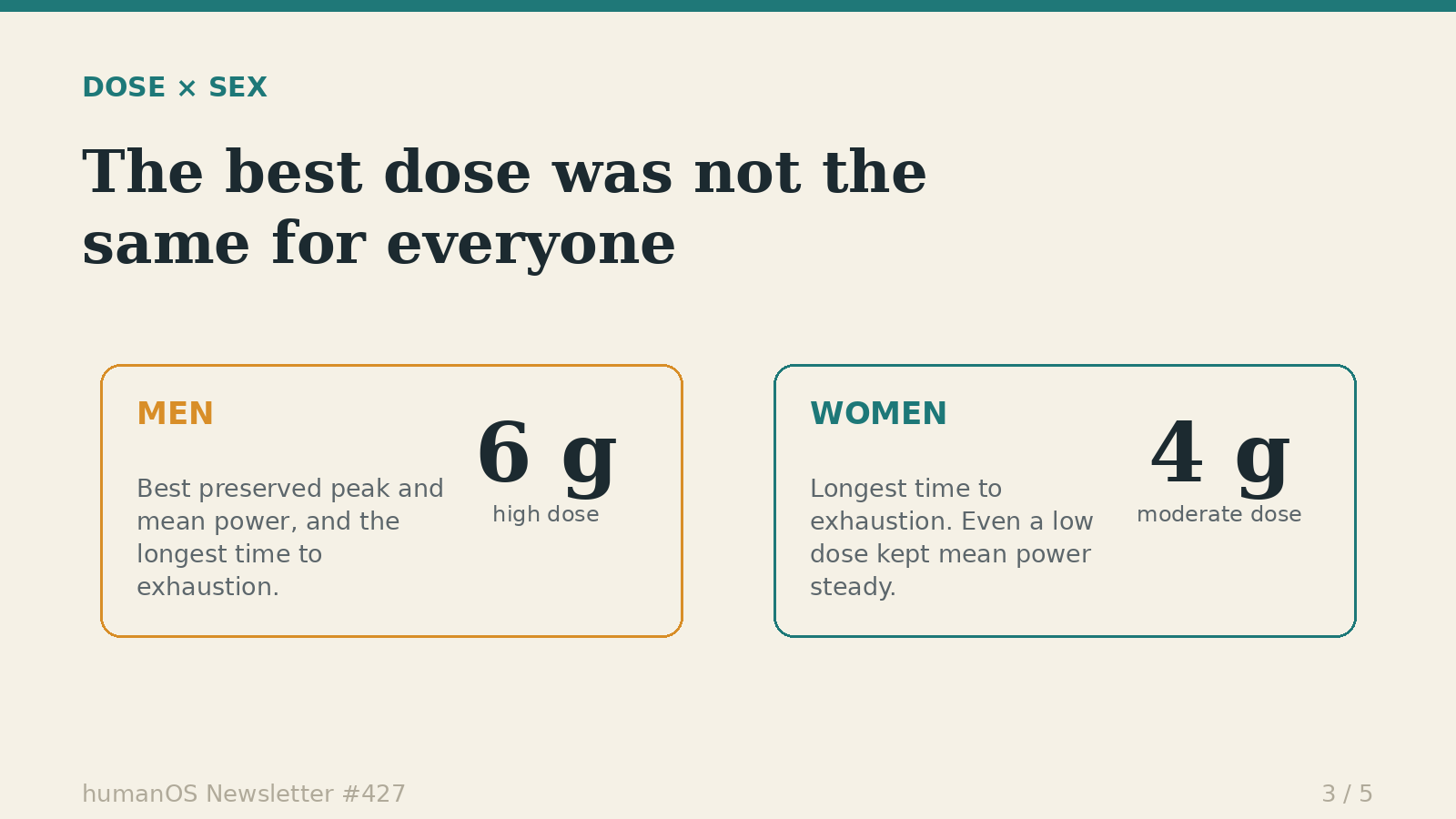
The most useful finding was not that taurine works. It was that the dose that works is not the same for everyone.
The men did best on the highest dose. It preserved the most power and stretched out time to exhaustion. The women did best on a moderate dose, and even a low dose kept average power from sagging. Pushing the dose higher in women added nothing.
The researchers tie this to differences in body size, muscle composition, and the way heat shifts how the body uses taurine. They also noted that the effective doses here ran larger than the older literature recommends. Working in heat raises the body's demand, which likely changes how much taurine it takes to feel a difference.
The dose that helps is shaped by who you are and the conditions you are working in. We really don’t know if there are male and female differences here so take these conclusions with a grain of salt. It just might be body weight. Future studies will have to use different design methodology to proportion the dose to body weight to see if a sex difference really exists.
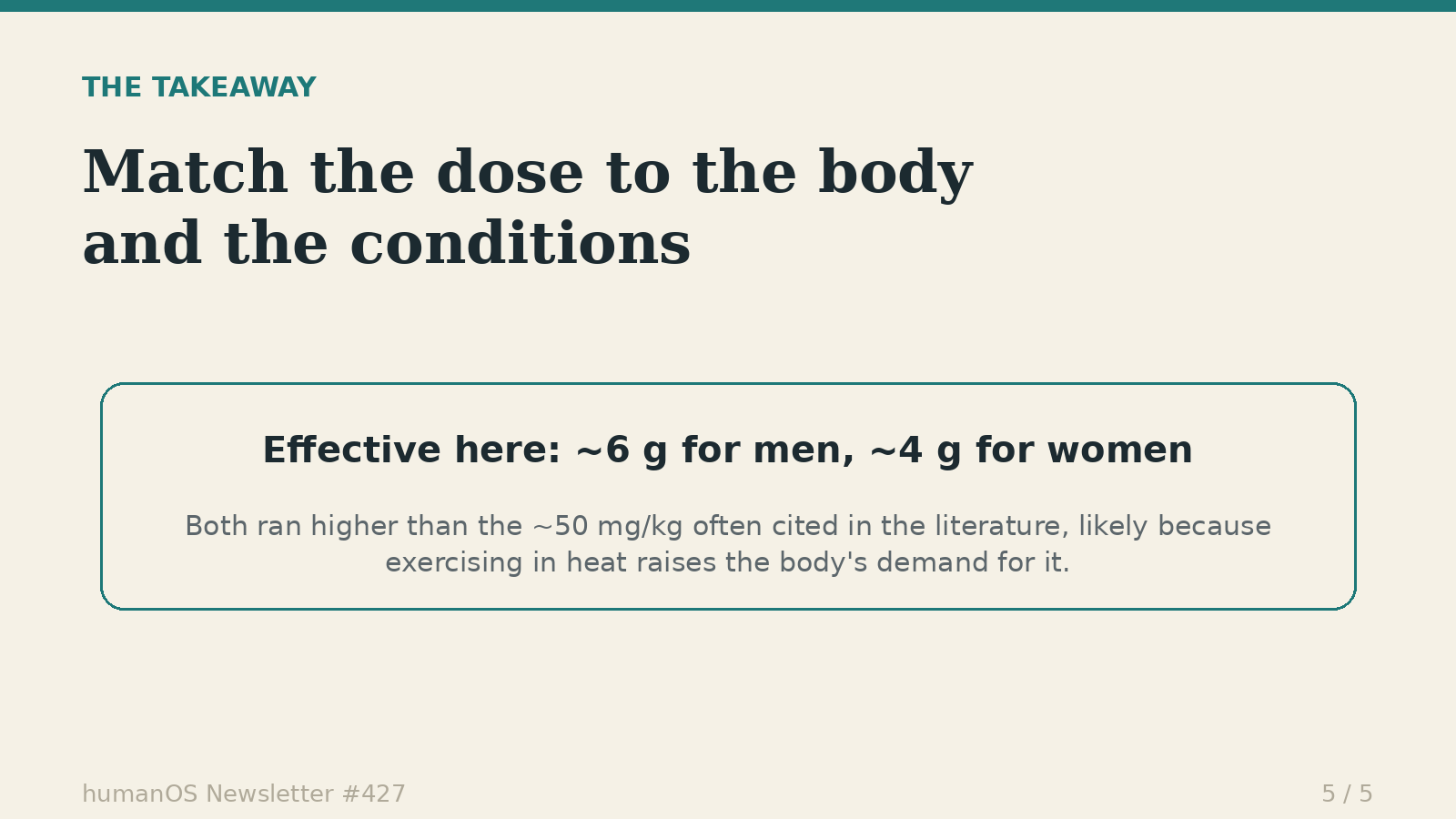
Summary: In a single-blind, randomized crossover trial, 16 college students (8 men, 8 women) took taurine (1 g, 4 g, or 6 g) or a maltodextrin placebo about 50 minutes before cycling to exhaustion in a hot, humid chamber (~40°C). After recovery they performed six 10-second maximal sprints. Peak power (PP) and mean power (MP) declined across sprints in every condition, but taurine attenuated the decline versus placebo. In men, the 6 g dose best preserved PP and MP, with MP staying significantly higher than placebo from sprint 3 onward, and the longest time to exhaustion (ET). In women, the 4 g dose produced the longest ET, low-to-moderate doses preserved MP, and only the placebo group showed a significant rise in fatigue index. Heart rate, blood lactate, and perceived exertion did not differ between conditions. Effective doses (roughly 72 mg/kg in men, 67 mg/kg in women) exceeded the ~50 mg/kg often cited, possibly because heat raises metabolic demand. With n=8 per sex, subgroup findings are exploratory.
Random Trivia & Weird News
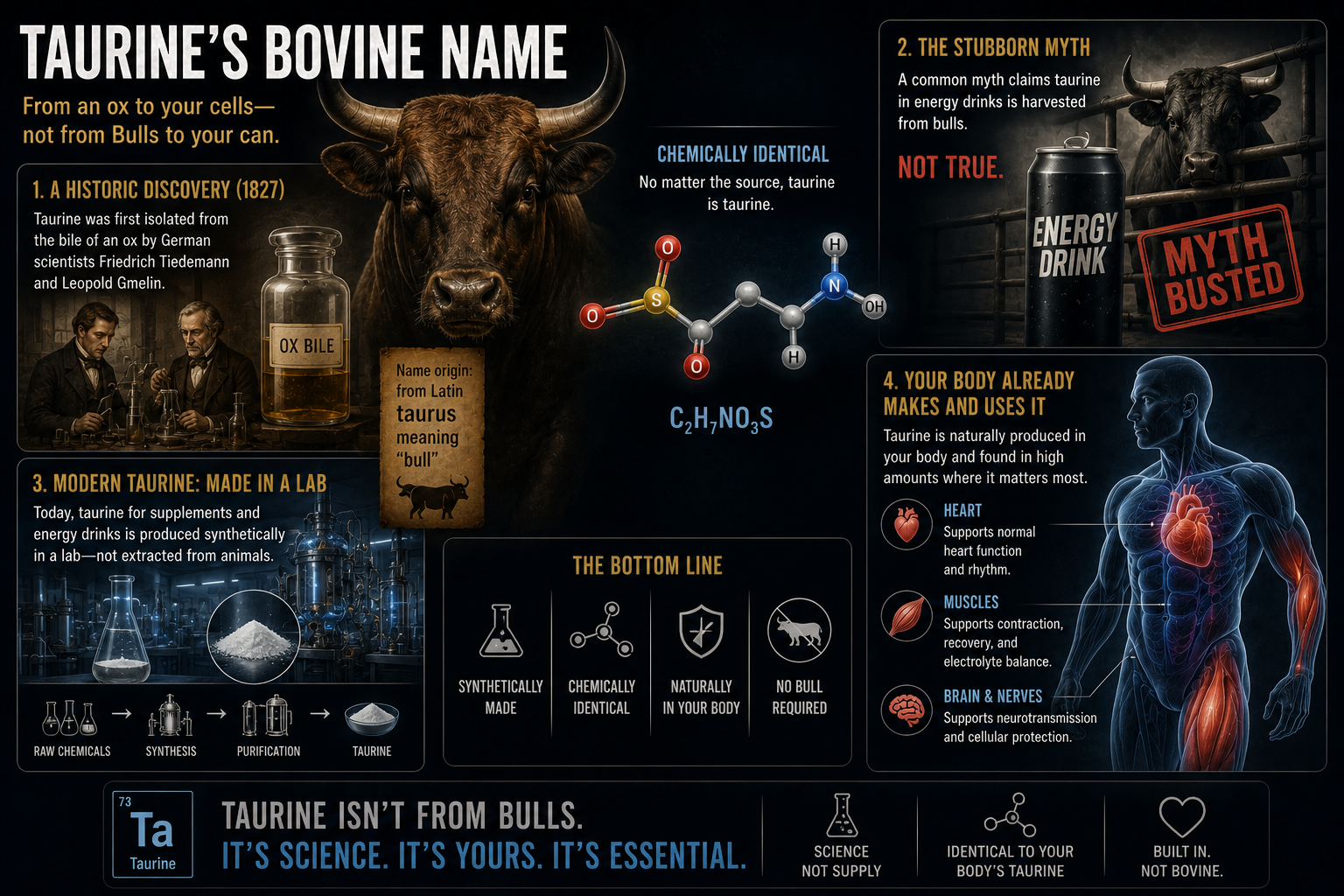
Taurine's Bovine Name
Taurine was first isolated in 1827 from the bile of an ox, which is how it earned its name from the Latin taurus, meaning bull. That origin still fuels a stubborn myth that the taurine in energy drinks is harvested from bulls. It is not. The taurine in supplements and drinks is made synthetically in a lab and is chemically identical to what your own body produces. Your muscles and heart already hold large amounts of it, no bull required.
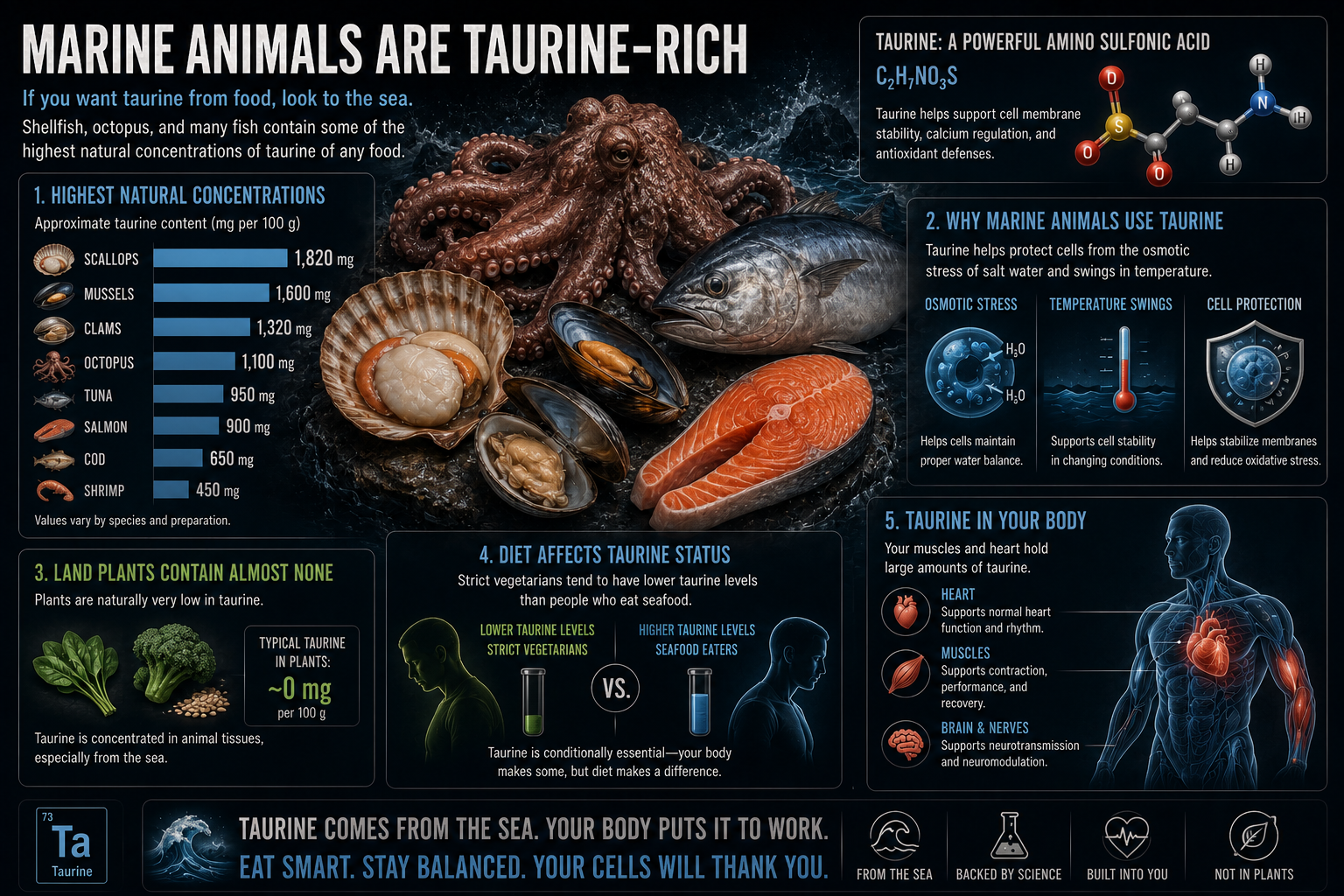
Marine Animals Are Taurine-Rich
If you want taurine from food, look to the sea. Shellfish like scallops, mussels, and clams, along with octopus and many fish, carry some of the highest natural concentrations of taurine of any food. Marine animals appear to use it to protect their cells against the osmotic stress of salt water and swings in temperature. Land plants contain almost none, which is one reason strict vegetarians tend to have lower taurine levels than people who eat seafood.
⏰ The House Votes to End Clock Changes
The U.S. House of Representatives has passed the Sunshine Protection Act, which would eliminate the twice-yearly ritual of changing the clocks and make daylight saving time permanent nationwide.
Supporters argue the change could benefit health and the economy. Critics point to a major tradeoff. During winter, permanent daylight saving time would mean darker mornings, potentially making it harder for people to wake up and stay aligned with their natural circadian rhythms.
That distinction matters. The American Academy of Sleep Medicine supports ending seasonal clock changes, but favors permanent standard time, not permanent daylight saving time, because morning light is especially important for sleep and circadian health.
The bill now heads to the Senate, where its prospects remain uncertain.
Podcasts We Loved This Week
- Rhonda Patrick: Aliquot #146: When Is the Best Time to Exercise? via FoundMyFitness
- Jeff Rothschild: Ergogenic Aids to Enhance Sports Performance via humanOS Radio
Products We Love
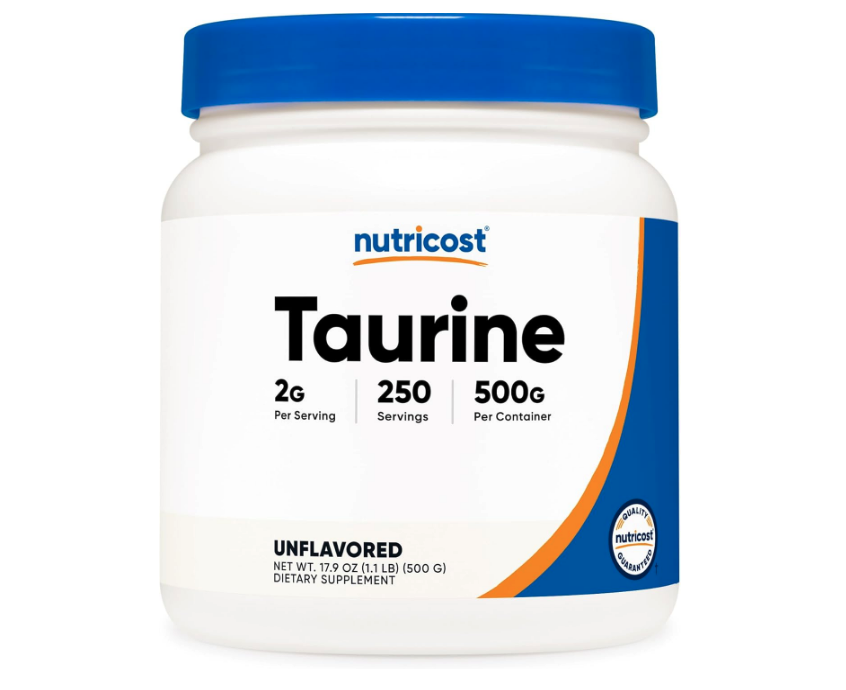
Nutricost Taurine Powder
If you want to experiment with taurine the way this study did, a plain powder is a simple and cheapest way to do it. Nutricost's taurine powder is exactly that, pure taurine with nothing added, so you can dial in whatever dose you want and stir it into water before a workout. A single bag holds hundreds of servings, which makes the cost per dose almost trivial. It is third-party tested and made in a GMP-compliant facility.
humanOS Catalog Feature of the Week

The How-to Guide to Ergogenic Aids
Which performance supplements actually earn their place in your routine, and which are just clever marketing? Taurine is one of dozens of compounds sold to athletes, and sorting the few that work from the many that don't is its own skill. This how-to guide walks through the best-researched ergogenic aids, what the evidence really says about each, and how to think about dosing and timing so you get the benefit you are training for. It is a practical map for anyone who wants to spend on supplements wisely rather than hopefully.
If today's newsletter was worth your time, a Pro membership is what keeps it coming. Only $1.67 per newsletter!
Join here: Become a Member
Wishing you the best,