Newsletter #431
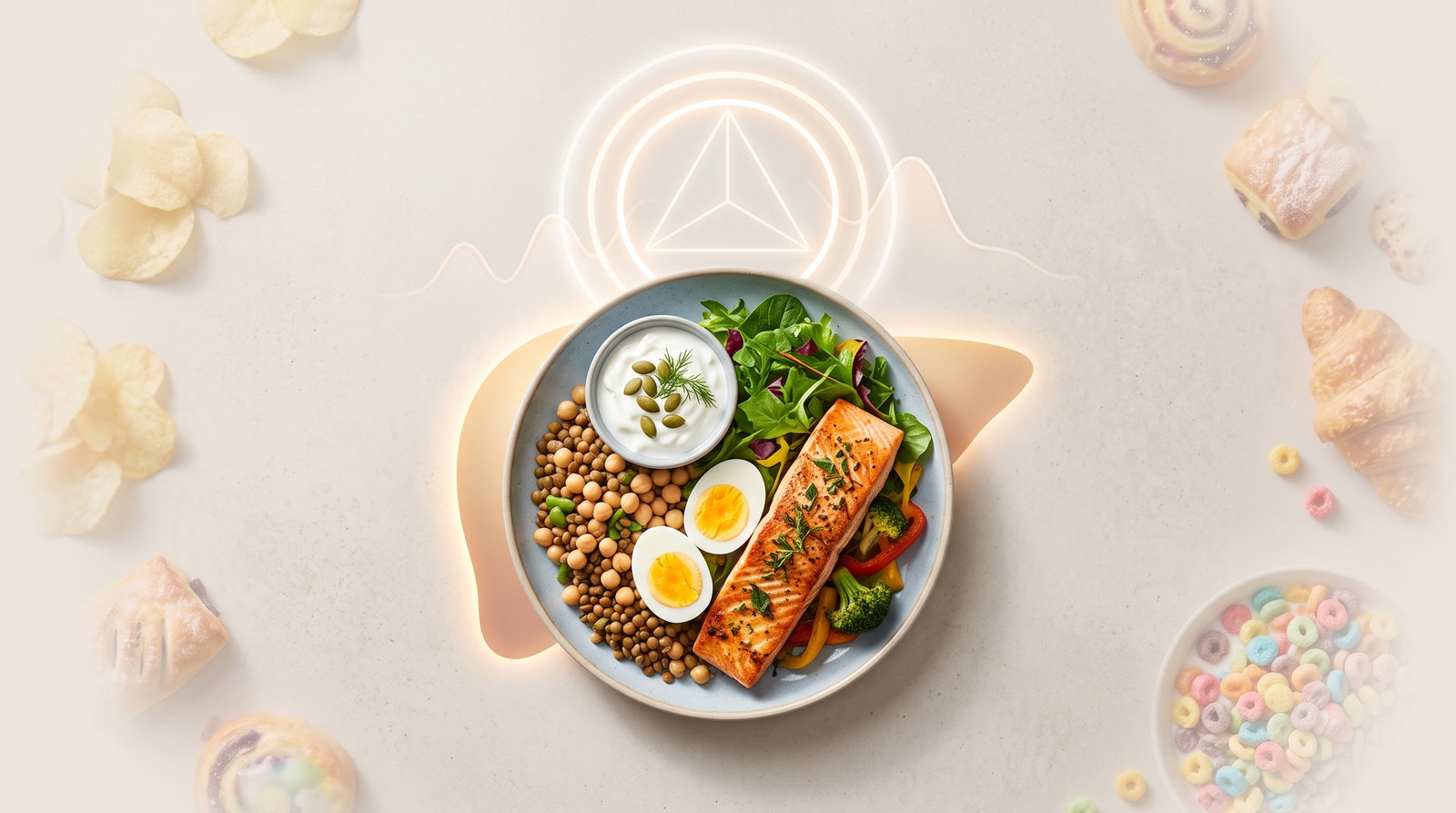
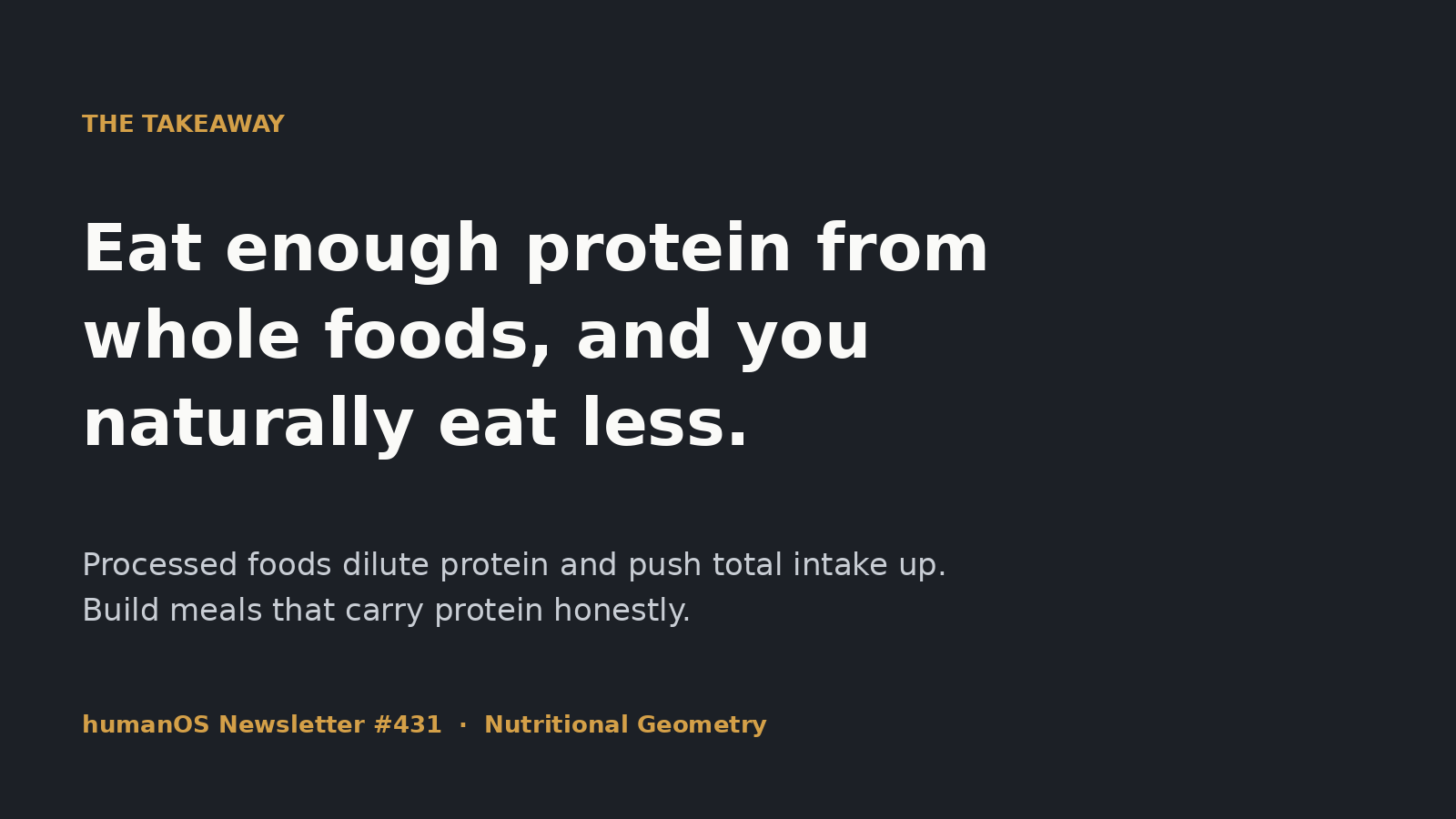
🧬 🍽️ Newsletter #431: Eat enough protein, and you naturally eat less. Humans defend a protein target more tightly than fat or carbohydrate. When processed foods dilute protein, we keep eating to reach that target and overshoot on calories along the way. The liver hormone FGF21 helps drive the protein hunger. Building meals around whole, protein-honest foods may be the simplest guard against the overeating the modern food supply invites. — August 14, 2026
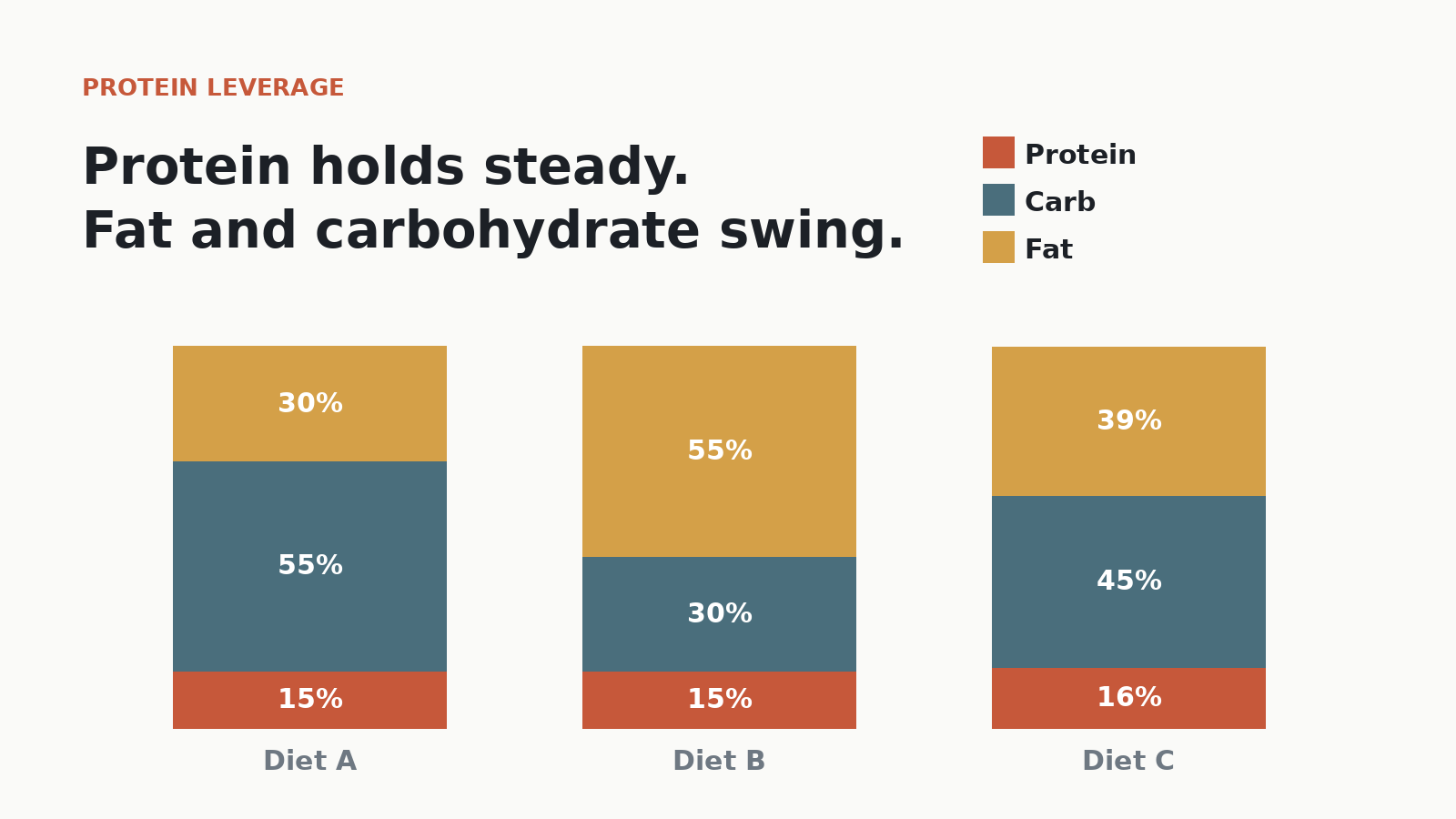
Most explanations for why people overeat come back to willpower. Too much temptation, not enough discipline. A group of nutrition scientists has spent two decades building a different case, one that starts with a simple observation. Across wildly different cultures and cuisines, the share of calories people get from protein stays remarkably steady, while fat and carbohydrate swing all over the map. That stability hints at something the body is actively defending. So the researchers behind this new review in Nature Reviews Endocrinology asked a question worth sitting with. What if the modern tendency to overeat is not a failure of restraint, but a protein appetite doing exactly what it evolved to do?
Become a Member. Get every course, guide, workout, recipe, and the full premium newsletter library, all in one place. Join humanOS ✨
Review Your Learnings: Newsletter Summaries ✨
Macronutrient mixtures and interactions in health and disease
Why Protein Calls The Shots
Humans have a dedicated appetite for protein that behaves differently from our appetite for fat or carbohydrate. Protein intake is regulated tightly, while fat and carbohydrate are treated by the body as more or less interchangeable sources of energy. You can see this in population data. Groups eating completely different diets still land on a similar proportion of calories from protein. The interpretation is that we have a target for protein, and our eating behavior works to reach it. When foods are balanced, hitting that target is easy. We combine what is available and stop once protein needs are met.
What Happens When Protein Gets Diluted
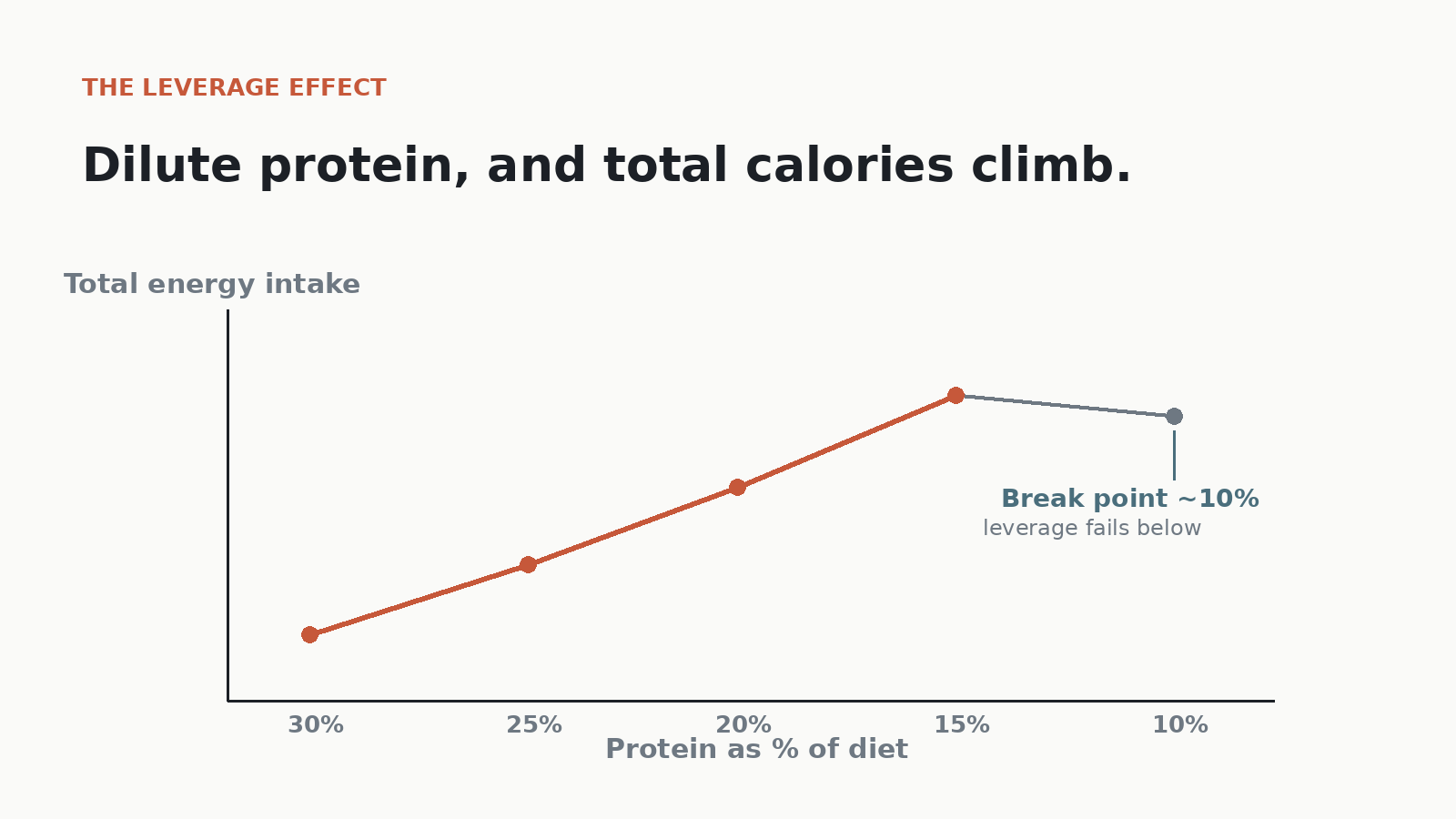
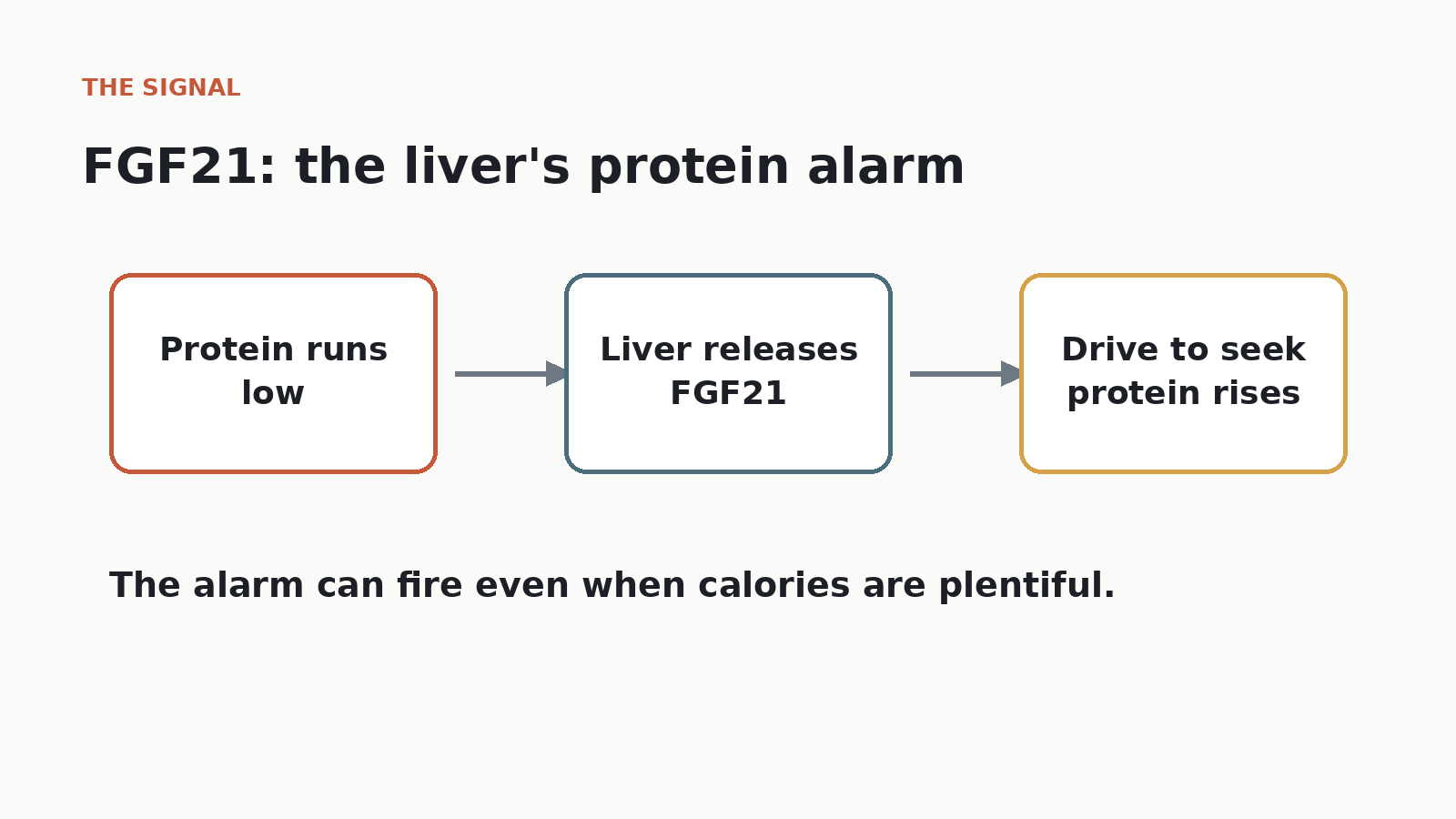
When protein in the diet gets diluted, we keep eating until we reach our protein target, and we overshoot on total calories along the way. This is the protein leverage hypothesis. Picture a diet where protein makes up a smaller and smaller share of what is on offer, crowded out by refined carbohydrate and fat. To take in the same amount of protein, you have to eat more food overall. The appetite for protein leverages up total intake. The liver appears to broadcast the signal. A hormone called FGF21 climbs when protein is scarce and sharpens the drive to seek it out, a kind of internal alarm for protein starvation that can fire even when calories are plentiful. Modern industrial foods sit right in this danger zone. They tend to be low in protein, low in fiber, energy dense, and engineered to taste savory, which can mimic the flavor cues of protein and pull intake toward foods that do not actually deliver much of it.
Diet Is A Mixture, Not A List
No single nutrient acts alone. The framework behind this work, called nutritional geometry, treats a diet as a mixture and maps how combinations of protein, fat, and carbohydrate shape everything from appetite to lifespan. Read this way, old paradoxes start to resolve. Diets low in protein and high in quality carbohydrate are linked in animal studies to longer life and better mid-life metabolic health, yet the protein target itself shifts with age, pregnancy, and the hormonal changes of menopause. The right mixture is not fixed. It depends on the tissue, the life stage, and the context. That is why arguing about protein alone, or carbs alone, so often misses the point.
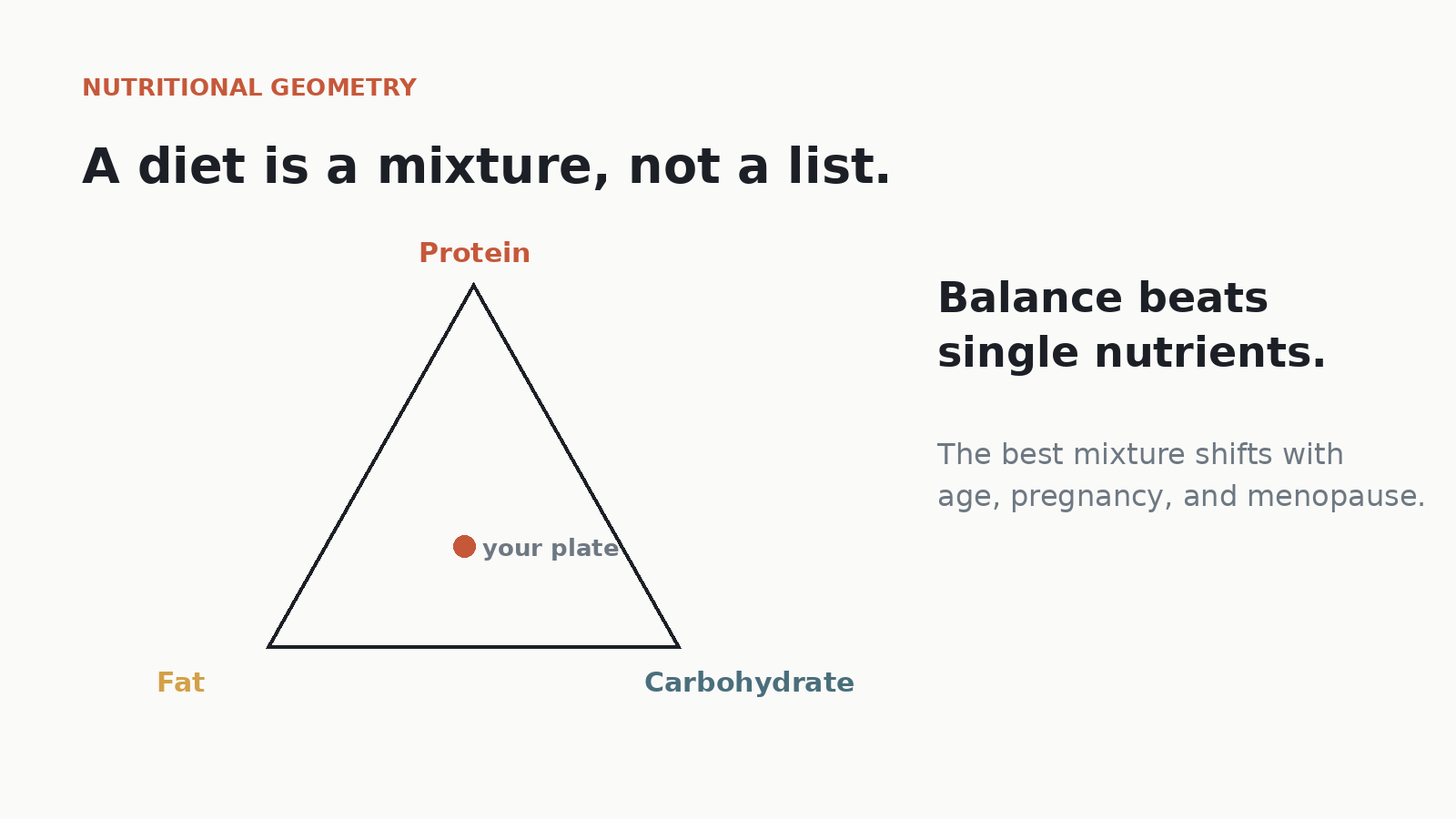
I keep coming back to how much of this is about the food environment rather than personal resolve. For my own eating, I am paying less attention to any single macronutrient and more to whether my meals are built around whole foods that carry protein honestly, without the dilution that industrial products slip in.
Summary
This review in Nature Reviews Endocrinology argues that macronutrient proportions matter more than single nutrients, using protein as the entry point. Across human populations, protein holds near 15% of energy while fat and carbohydrate vary widely, consistent with a regulated protein target. The protein leverage hypothesis follows. When dietary protein is diluted, people eat more total energy to reach that target. A compilation of 44 studies and four randomized controlled trials shows energy intake rising as protein falls from 30% to 10% of energy, with a breakpoint near 10% below which the response fails. The liver hormone FGF21 rises under protein restriction and drives protein appetite. In animals, low-protein, high-carbohydrate diets extend lifespan, improve mid-life cardiometabolic markers, reduce mTOR and IGF1 signaling, and lengthen telomeres, though protein requirements rise with age, pregnancy, and menopause. Branched-chain amino acids and simple sugars worsen the metabolic tradeoffs.
FAQ
What is the protein leverage hypothesis? It is the idea that humans regulate protein intake more tightly than fat or carbohydrate, so when a diet is low in protein we keep eating to reach our protein target and take in excess calories.
Does eating more protein help you eat less overall? Often, yes. Meals with adequate protein satisfy the protein appetite sooner, which can reduce the drive to keep eating energy-dense foods.
What is nutritional geometry? It is a framework that models a diet as a mixture of nutrients and maps how their proportions, rather than any single nutrient, shape appetite, health, and lifespan.
Are low-protein diets healthy? In animals, low-protein high-quality-carbohydrate diets can extend lifespan and improve mid-life metabolic health, but protein needs rise with age, pregnancy, and menopause, so context matters.
Random Trivia and Weird News
The Locust That Started It
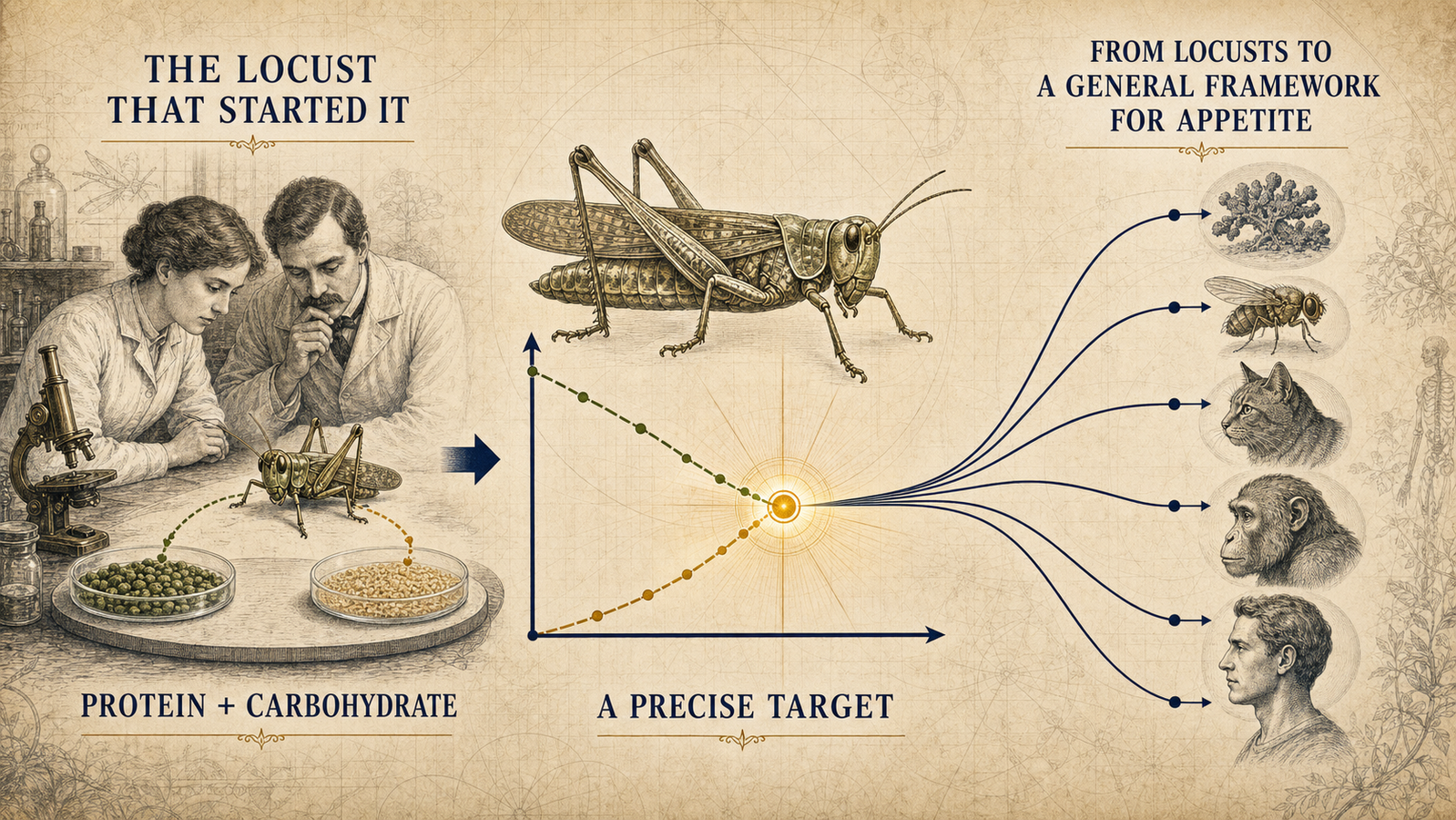
Nutritional geometry did not begin with humans. It began with locusts. Decades ago, Stephen Simpson and David Raubenheimer watched locusts in the lab balance protein against carbohydrate with startling precision, mixing foods to hit a target ratio. That work grew into a general framework now applied to slime molds, fruit flies, cats, primates, and human obesity. The next time you hear about macronutrient ratios and appetite, remember the humble insect that revealed the underlying math.
Cats Count Protein, Not Calories
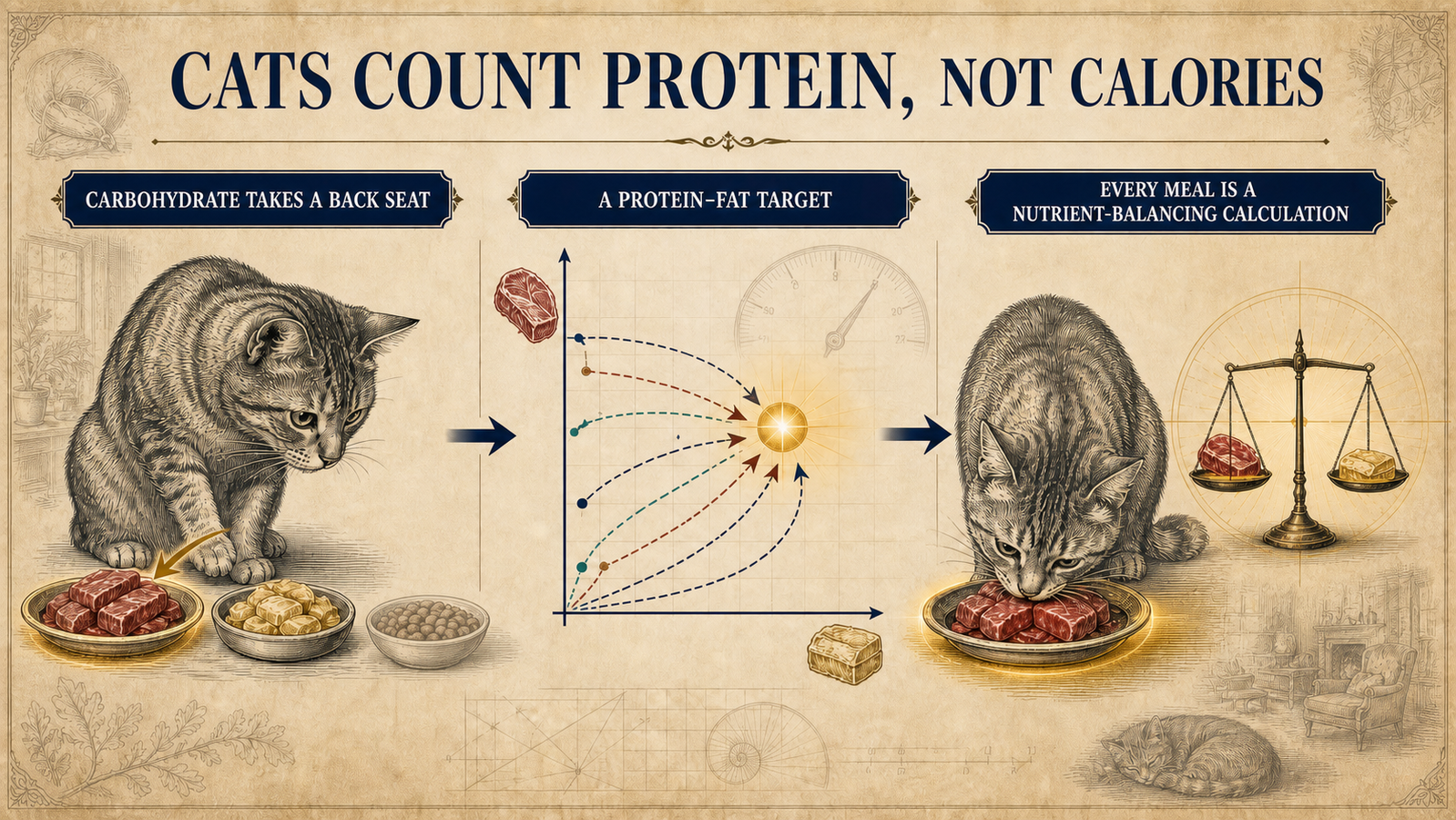
House cats are obligate carnivores, and their appetite proves it. Given a choice of foods, cats consistently steer toward a fixed target ratio of protein to fat, largely ignoring carbohydrate. Researchers mapped this using the same geometry applied to human diets. It explains why many cats reject high-carbohydrate kibble when a more protein-rich option is available. Your cat is running a nutrient-balancing calculation at every meal, whether or not it looks like it.
Podcasts We Loved This Week
- Rhonda Patrick: Rethinking protein needs for performance, muscle preservation, and longevity via FoundMyFitness
- Gabrielle Lyon: Rethinking Protein Guidelines for Optimal Health via The Dr. Gabrielle Lyon Show
Products We Love
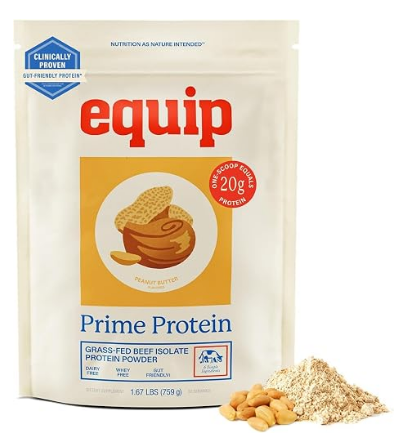
Equip Prime Protein - Peanut Butter
One clean way to defend your protein target is to keep a high-quality protein on hand for the moments when whole-food options are thin. Equip Prime Protein is not whey, it’s beef. And it’s the best tasting and digesting protein shake I’ve ever tried.
humanOS Catalog Feature of the Week
The Simple Food Diet
What if eating well were less about counting and more about the kind of food on your plate? The Simple Food Diet is built around whole, minimally processed foods, the same foods that carry protein honestly and resist the dilution that drives protein leverage. It walks you through what to eat, why it works, and how to make it stick without tracking every gram. If this issue has you rethinking the modern food environment, this is the practical companion. It turns the science of macronutrient balance into meals you can build a week around.
Become a Member. Join humanOS for unlimited access to courses, guides, workouts, recipes, and the premium newsletter library. Join humanOS ✨
Wishing you the best,