Newsletter #426
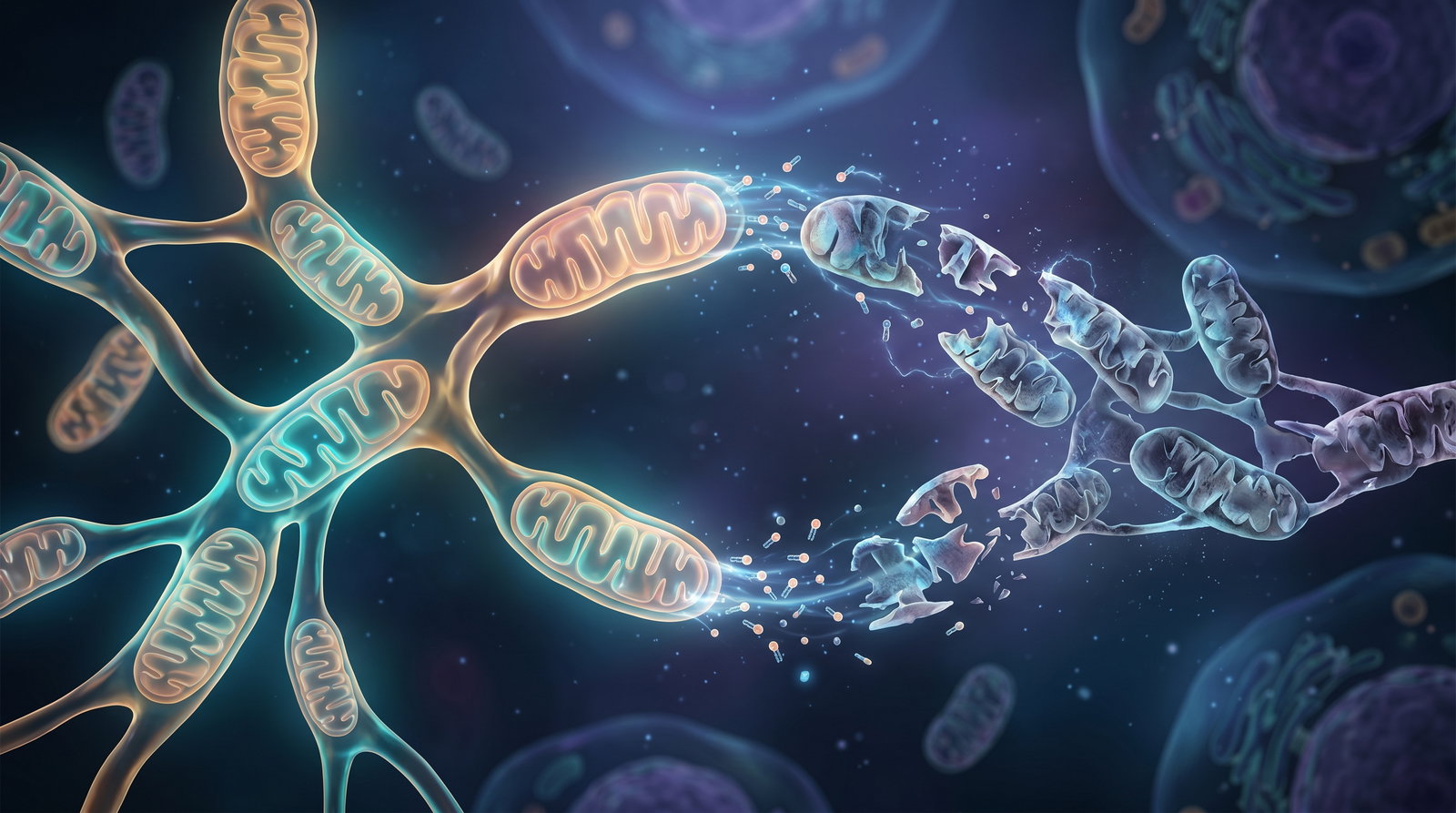
Mitochondria are the part of our cells that turn food and oxygen into usable energy, and their slow decline is one of the most reliable signatures of getting older. We usually describe that decline in broad strokes, oxidative damage, accumulated mutations, simple wear. What we understand far less well is whether normal aging has a specific, identifiable trigger, something that quietly shifts inside healthy cells and starts the slide. A new study set out to find one, and to ask a more hopeful question alongside it. If a natural driver of mitochondrial aging exists, can we reverse it with something as ordinary as what we eat?
Become a humanOS Member. Get evidence-based courses, programs, and tracking tools that turn health science into daily practice. Join here.
Review Your Learnings: Newsletter Summaries ✨
Aging-associated decline of phosphatidylcholine synthesis is a malleable trigger of natural mitochondrial aging
A fat that holds mitochondria together
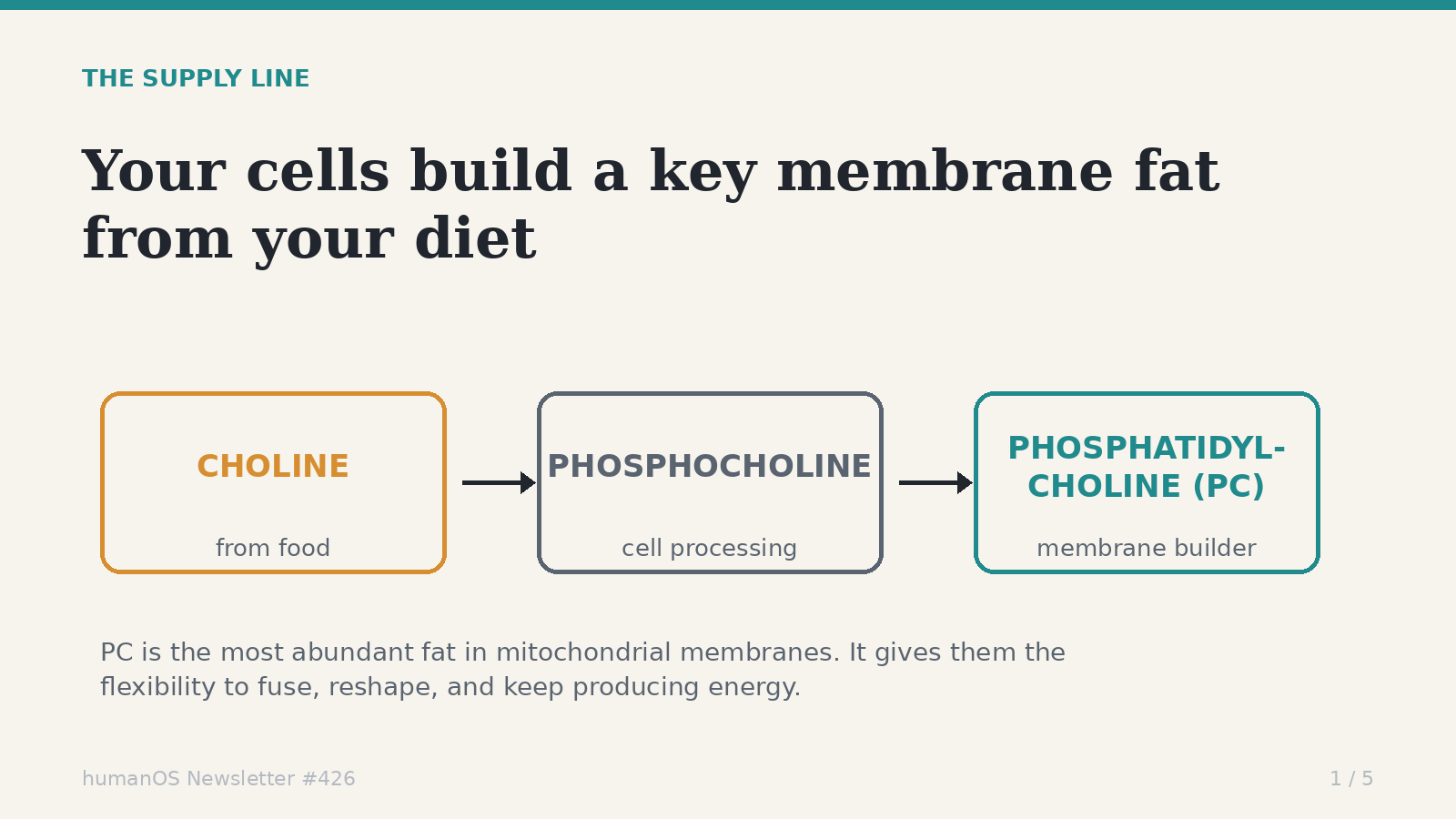
Mitochondria are not static beans sitting inside the cell. They form a shifting network, fusing together and dividing apart to share resources and stay efficient. That flexibility depends on the fats that make up their membranes. The most abundant of those fats is phosphatidylcholine, often shortened to PC, and it gives the membrane the pliability it needs to fuse and reshape.
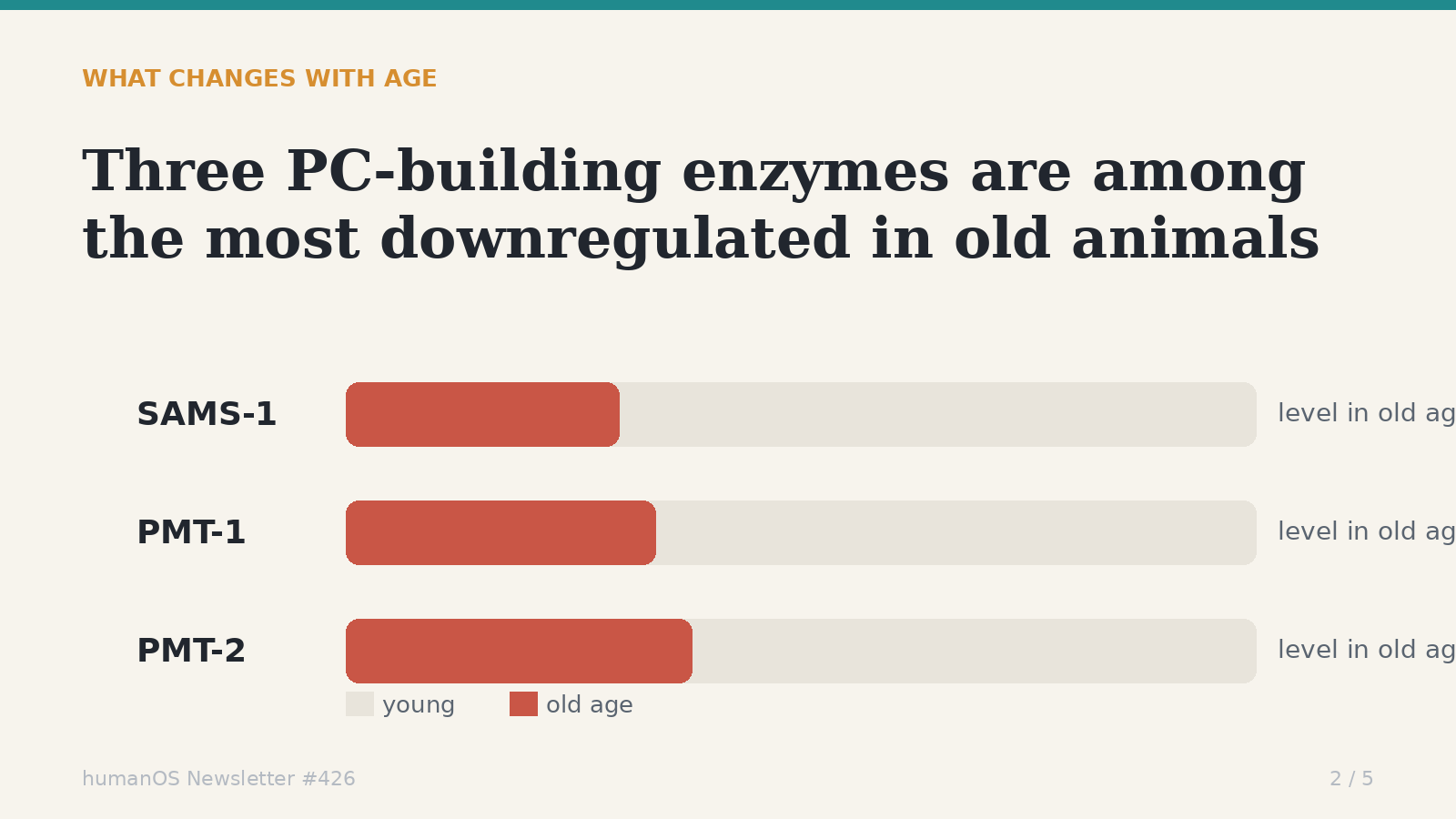
To find what changes with age, the researchers tracked proteins across the full lifespan of a small worm often used in aging research (C. elegans), including long-lived strains that carry mild mitochondrial faults their entire lives. Among the proteins that dropped most steeply in old animals were the ones the cell uses to build PC. As that machinery faded, the mitochondrial network broke apart and energy production fell.
What happens when the supply runs dry
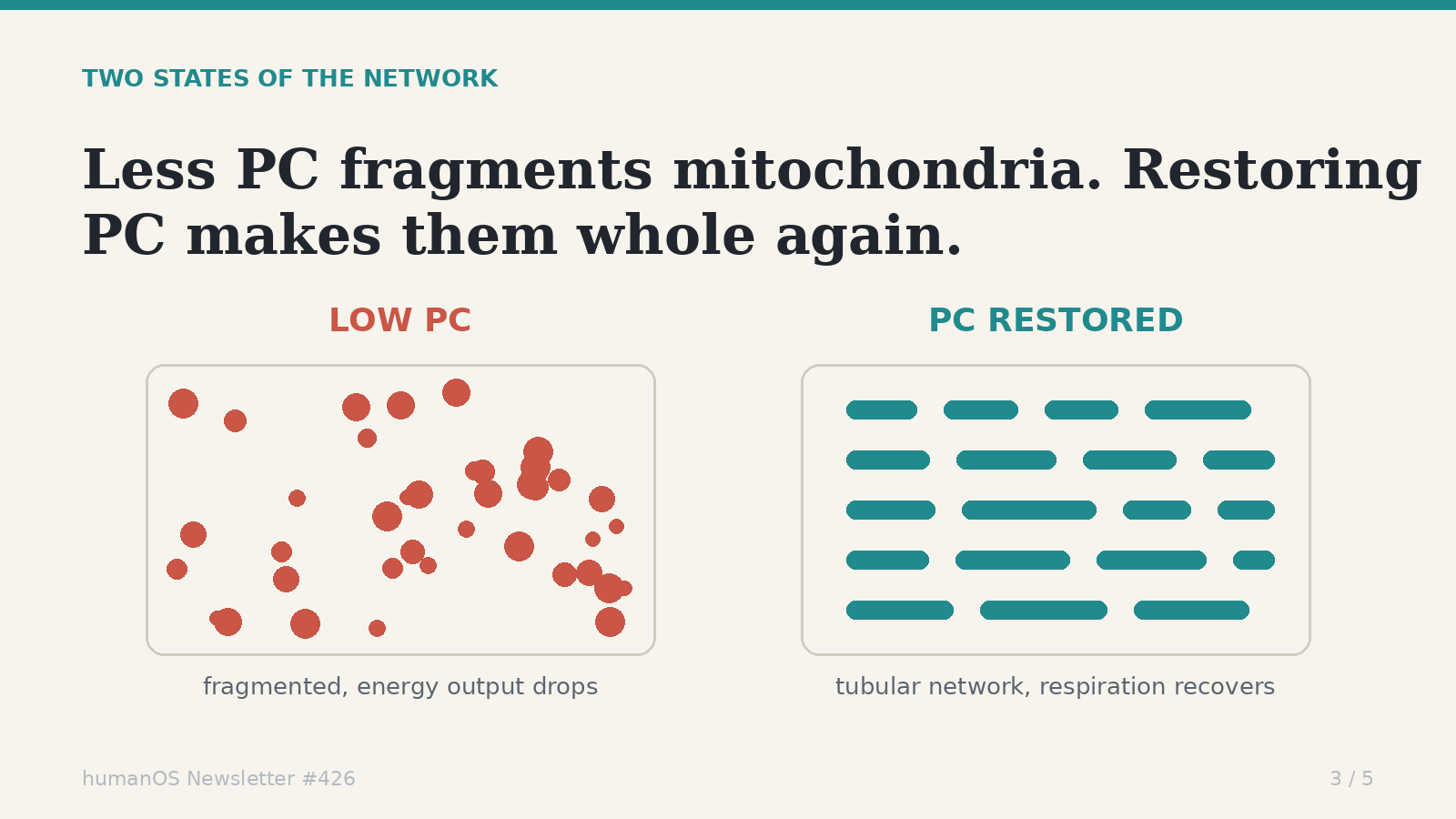
To test whether falling PC was a cause rather than a bystander, the team switched off the PC-building pathway in young animals. The young mitochondria began to look old. The network fragmented, oxygen use dropped, and the animals grew smaller. A single change in one supply line reproduced a core feature of aging.
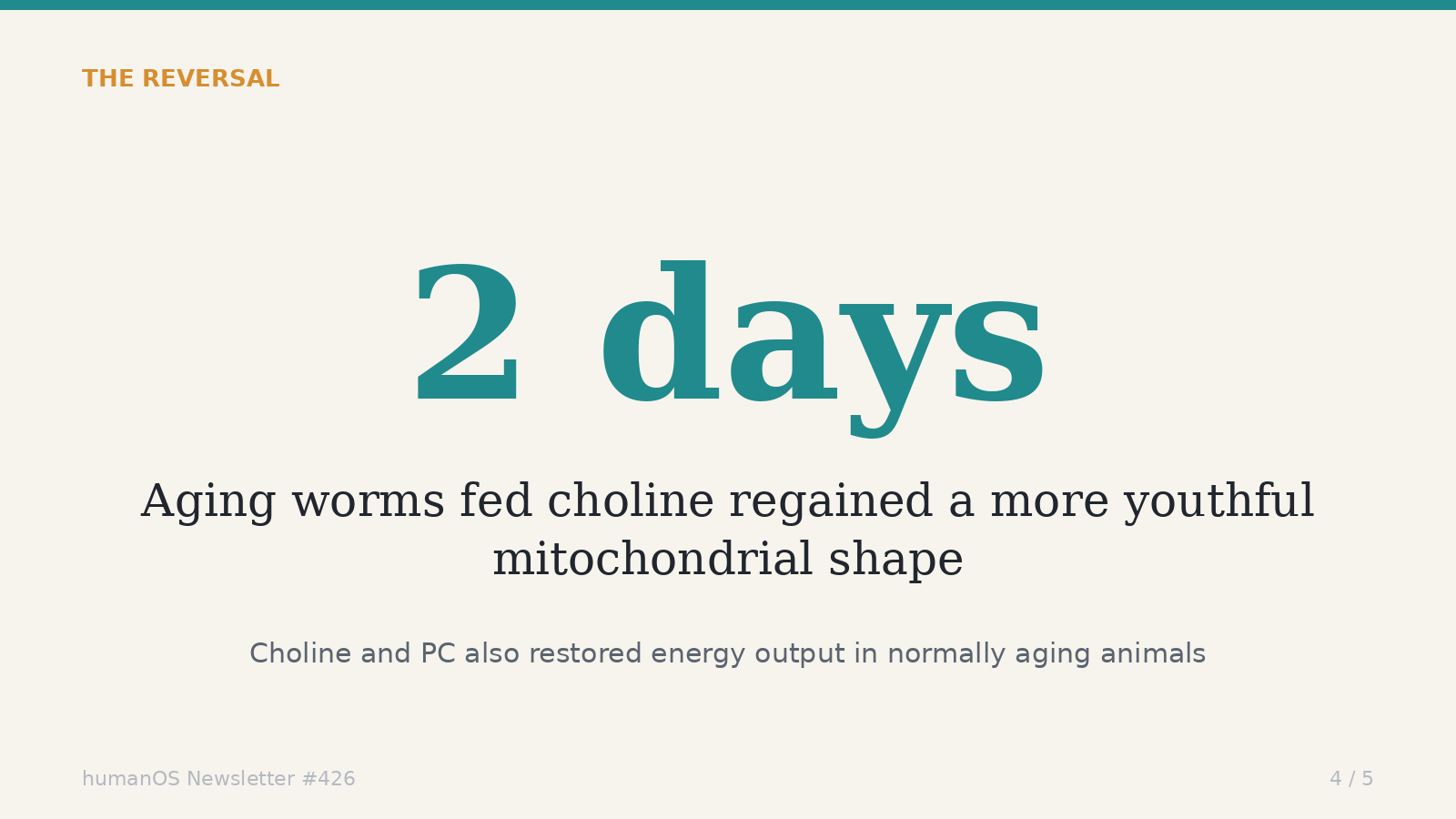
Then came the reversal. When the researchers fed the animals PC directly, or choline, a precursor the body converts into PC, the mitochondrial network knit back together and respiration recovered. This worked in the animals with the engineered defect, and it also worked in animals that were simply aging normally. Older worms given choline regained a more youthful mitochondrial shape within a couple of days.
Aging Mitochondria Are Not Fixed
The pattern held in people. The human version of the same PC-building enzyme declines with age, and the drop is largest in tissues rich in fat. Levels of PC in the blood fall with age too, and the decline is sharpest in women after menopause, a stage already linked to lower cellular energy.
Those lower PC levels were not just a number on a chart. People with more PC tended to show signs of healthier metabolism and healthier aging, including a faster walking pace and stronger memory recall. And in human cells pushed into mitochondrial stress, choline helped protect them.
There is a larger idea here worth holding onto. Some of what we file under inevitable aging may be a supply problem, a pathway that slows down and can be supported from the outside. That does not make aging optional. It suggests that specific, late-life declines can sometimes be met with specific, simple interventions, the kind you can find in food.
For my part, I'll continue paying close attention to choline in my own diet, the egg yolks, liver, salmon, beef, and other foods that contain it. I’ll also continue to watch to see how this line of research holds up in people.
Rank | Food | Approx. Choline (mg per 100 g) | Typical Serving | Choline per Serving (mg) |
1 | Beef liver | ~420 | 3 oz (85 g) | ~355 |
2 | Chicken liver | ~290 | 3 oz (85 g) | ~245 |
3 | Egg yolk | ~680 | 1 large yolk | ~125 |
4 | Whole egg | ~290 | 1 large egg | ~145–150 |
5 | Salmon | ~90–100 | 6 oz (170 g) | ~155–170 |
6 | Shrimp | ~150 | 3 oz (85 g) | ~125–130 |
7 | Lean beef | ~80–90 | 6 oz (170 g) | ~140–150 |
8 | Turkey breast | ~85–95 | 6 oz (170 g) | ~145–160 |
9 | Soybeans | ~115 | 1 cup cooked | ~210 |
10 | Wheat germ | ~150 | ¼ cup (28 g) | ~40–45 |
Highest-density sources: liver, egg yolks, eggs, shrimp, and soybeans.
For reference, the Adequate Intake (AI) for choline is 550 mg/day for adult men and 425 mg/day for adult women. A single serving of beef liver or about four large eggs can provide roughly half to all of a day’s recommended intake.
Summary: Using C. elegans, human datasets (GTEx and the UK Biobank), and human cell culture, researchers identified declining methylation-dependent phosphatidylcholine (PC) synthesis as a conserved, "natural" driver of mitochondrial aging. Three enzymes, SAMS-1, PMT-1, and PMT-2, were among the most strongly downregulated proteins in old worms. Knocking down any of them in young animals fragmented the mitochondrial network, lowered the oxygen consumption rate (OCR), and reduced body size, mimicking aged mitochondria. Dietary PC or choline (converted to PC via the CDP-choline/Kennedy pathway) restored network integrity and respiration in both the knockdowns and normally aging worms, with aged mitochondria recovering within about two days. In humans, PEMT expression and plasma PC declined with age, most in adipose-rich tissues and in post-menopausal women. Higher PC and PUFA levels correlated with lower lactate, faster walking pace, better digit memory, and a lower comorbidity index. Choline protected human cells from metformin-induced mitochondrial toxicity. The human findings are correlative.
Random Trivia & Weird News
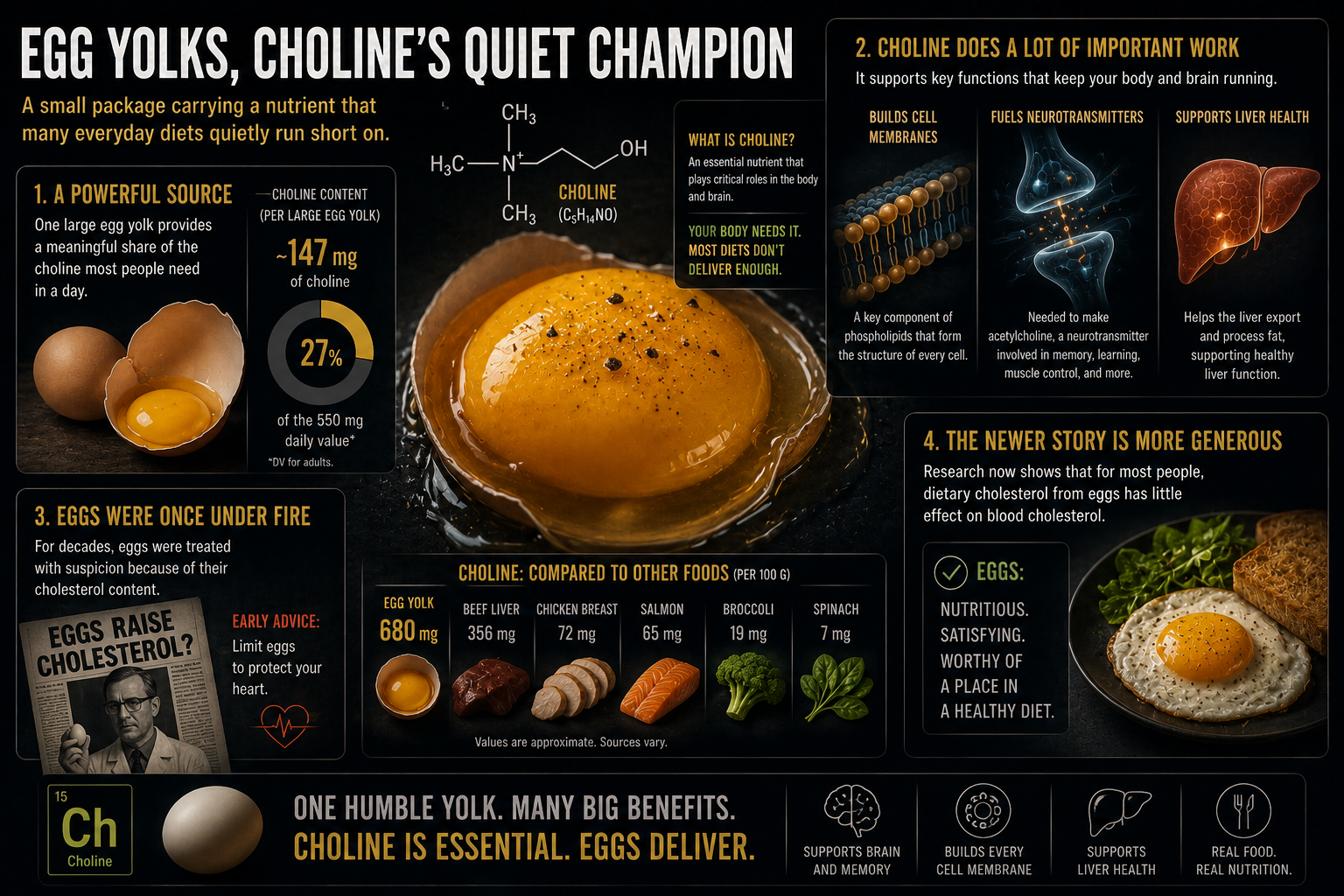
Egg Yolks, Choline's Quiet Champion
A single large egg yolk delivers a meaningful share of the choline most people need in a day, which is part of why eggs keep resurfacing in nutrition research. Choline supports the membranes this week's study spotlights, along with the neurotransmitter acetylcholine and the liver's handling of fat. For decades eggs were treated with suspicion over cholesterol. The newer story is more generous, a small package carrying a nutrient that many everyday diets quietly run short on.
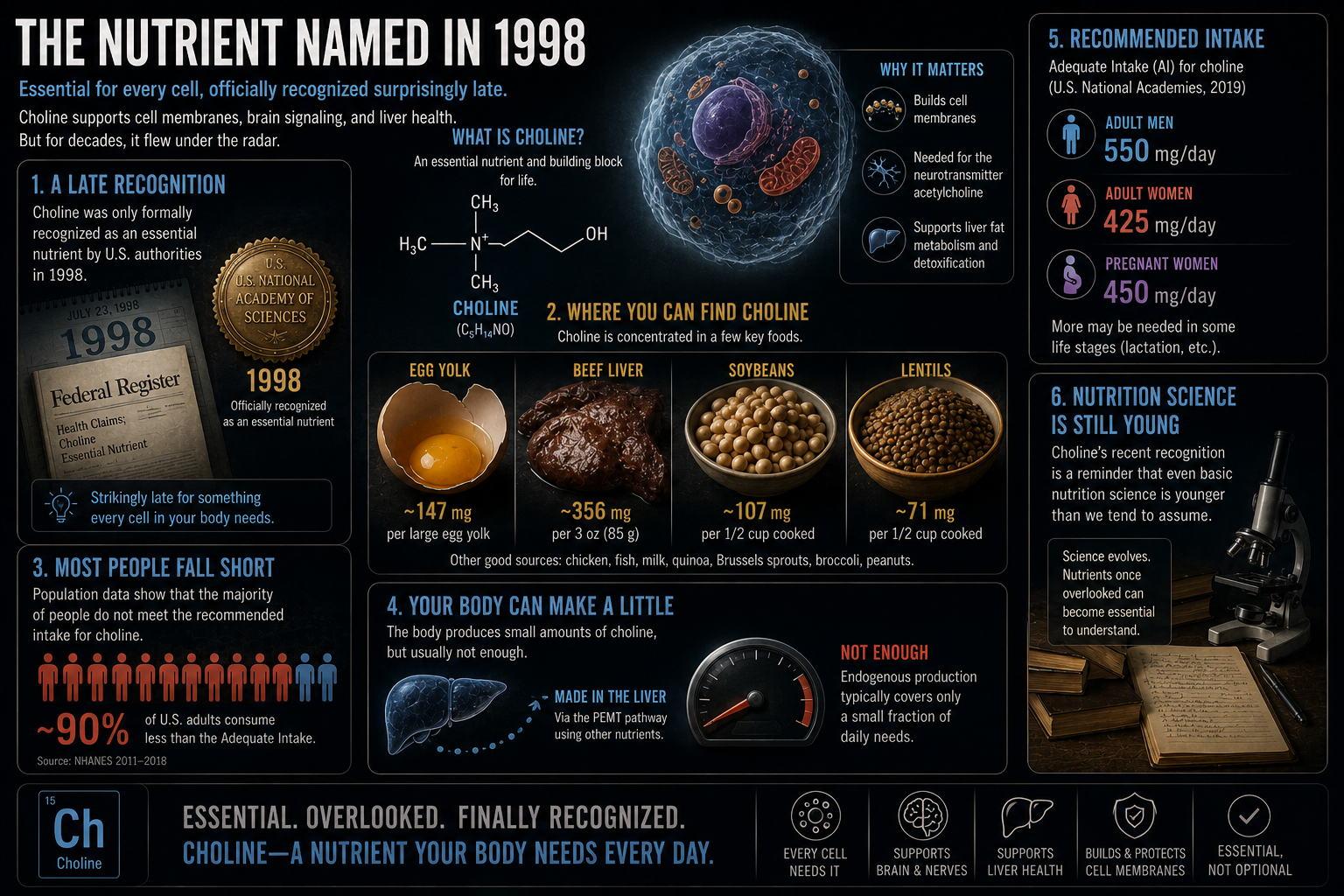
The Nutrient Named in 1998
Choline is essential, yet it was only formally recognized as a required nutrient by U.S. authorities in 1998, strikingly late for something every cell needs. Most people still fall below the recommended intake. It is concentrated in eggs, liver, and some legumes, and the body can make a little on its own, though usually not enough. The recency of its official status is a reminder that even basic nutrition science is younger than we tend to assume.
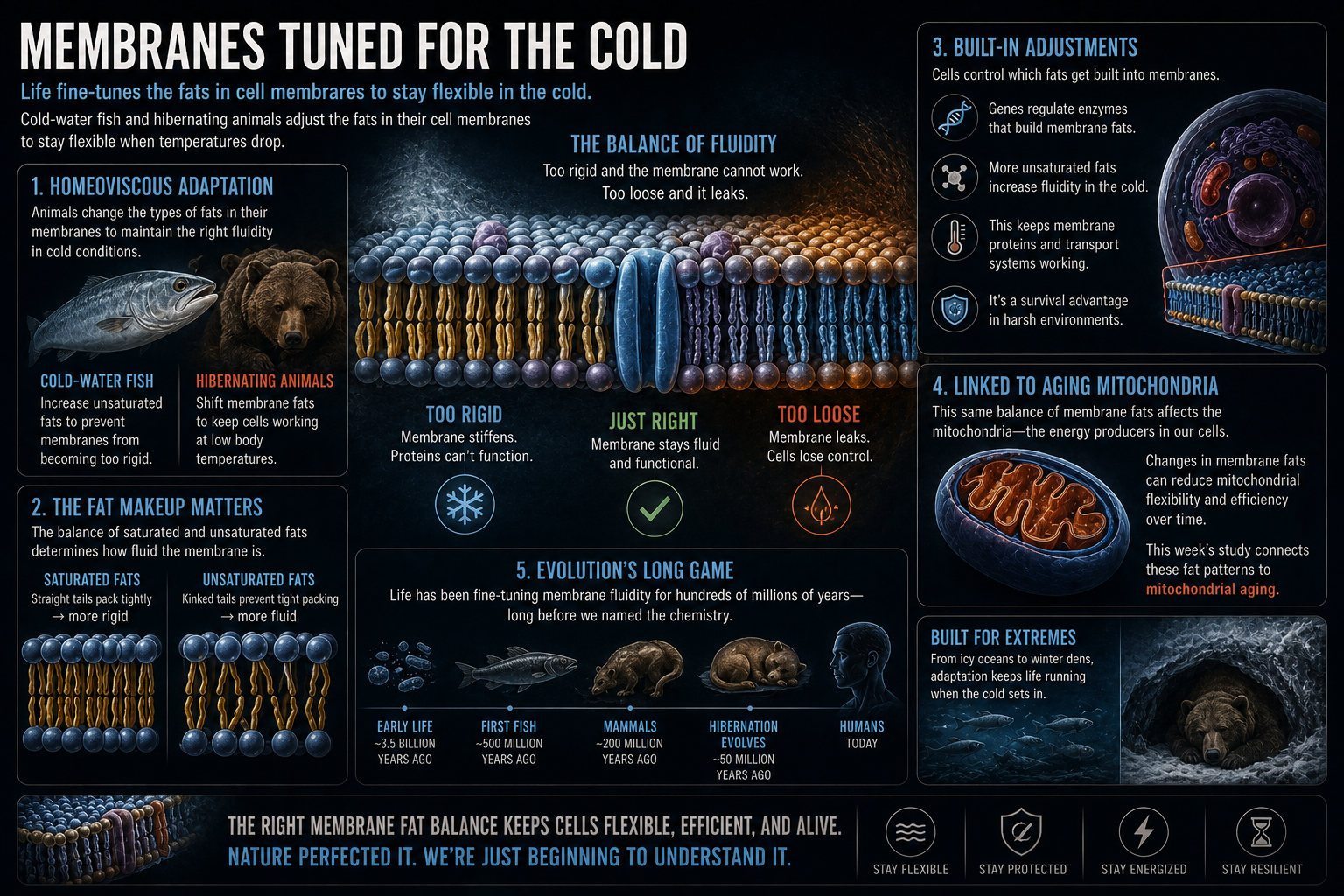
Membranes Tuned for the Cold
Cold-water fish and hibernating animals adjust the fats in their cell membranes to stay flexible when temperatures drop, a trick called homeoviscous adaptation. Too rigid and the membrane cannot work, too loose and it leaks. The balance is set largely by which fats get built in, the same kind of balance this week's study links to aging mitochondria. Life has been fine-tuning membrane fluidity for hundreds of millions of years, long before we named the chemistry.
Podcasts We Loved This Week
- Dr. Steve Horvath: How To Slow Biological Aging With a Multivitamin, Vegetables, & Omega-3 via FoundMyFitness
- Dr. Natalie Yivgi-Ohana: A Mind-Blowing Mitochondria Episode — Mito Transplant, Rare Diseases & Biomarkers via LONGEVITY with Nathalie Niddam
Products We Love

BodyBio PC (Phosphatidylcholine)
This week's research put phosphatidylcholine at the center of mitochondrial health, so it is worth knowing where to find a clean source. BodyBio PC is a phospholipid complex built around phosphatidylcholine, the same membrane fat the study highlights. It comes as a liquid or as softgels, and the company third-party tests each batch. I like that it delivers PC directly rather than relying only on precursors, which makes it a straightforward way to support cell membranes as we age. This is the phosphatidylcholine supplement I keep on hand, and I reach for it regularly.
humanOS Catalog Feature of the Week

Optimizing Energy Production by Mitochondria. Podcast with Bruce Hay
What if your cells could be coaxed into clearing out their worn-down mitochondria and keeping only the strong ones? In this humanOS Radio conversation, Dan talks with Caltech biologist Professor Bruce Hay about mitochondrial quality control, the idea that cells can selectively remove damaged mitochondria and favor healthy ones. It pairs naturally with this week's study. One looks at the membrane fats that keep mitochondria whole, the other at how cells decide which mitochondria to keep. Together they sketch a fuller picture of how we might protect cellular energy as we age.
Ready to go deeper? humanOS members get the full library of science-backed courses, programs, and tracking tools. Become a member.
Wishing you the best,