

Newsletter #402
Most weight-loss advice still assumes people are highly active, disciplined, and living in near-perfect conditions. But most people are not. This study asks a more realistic question: when daily movement is limited, what actually protects muscle and keeps body fat down? The answer turns out to be simpler and more actionable than most programs admit, and it reframes protein as more than just a gym supplement.
If these newsletters are a regular part of how you stay informed on health and longevity, consider supporting the work with a Pro membership. $19.99 per quarter — about $1.67 per issue, less than a coffee tip.
Join here: Become a Member
New Feature: Newsletter Summaries ✨
Higher Protein Intakes Predict Leaner Body Composition in Weight-Loss Participants—Findings from the International Weight Control Registry
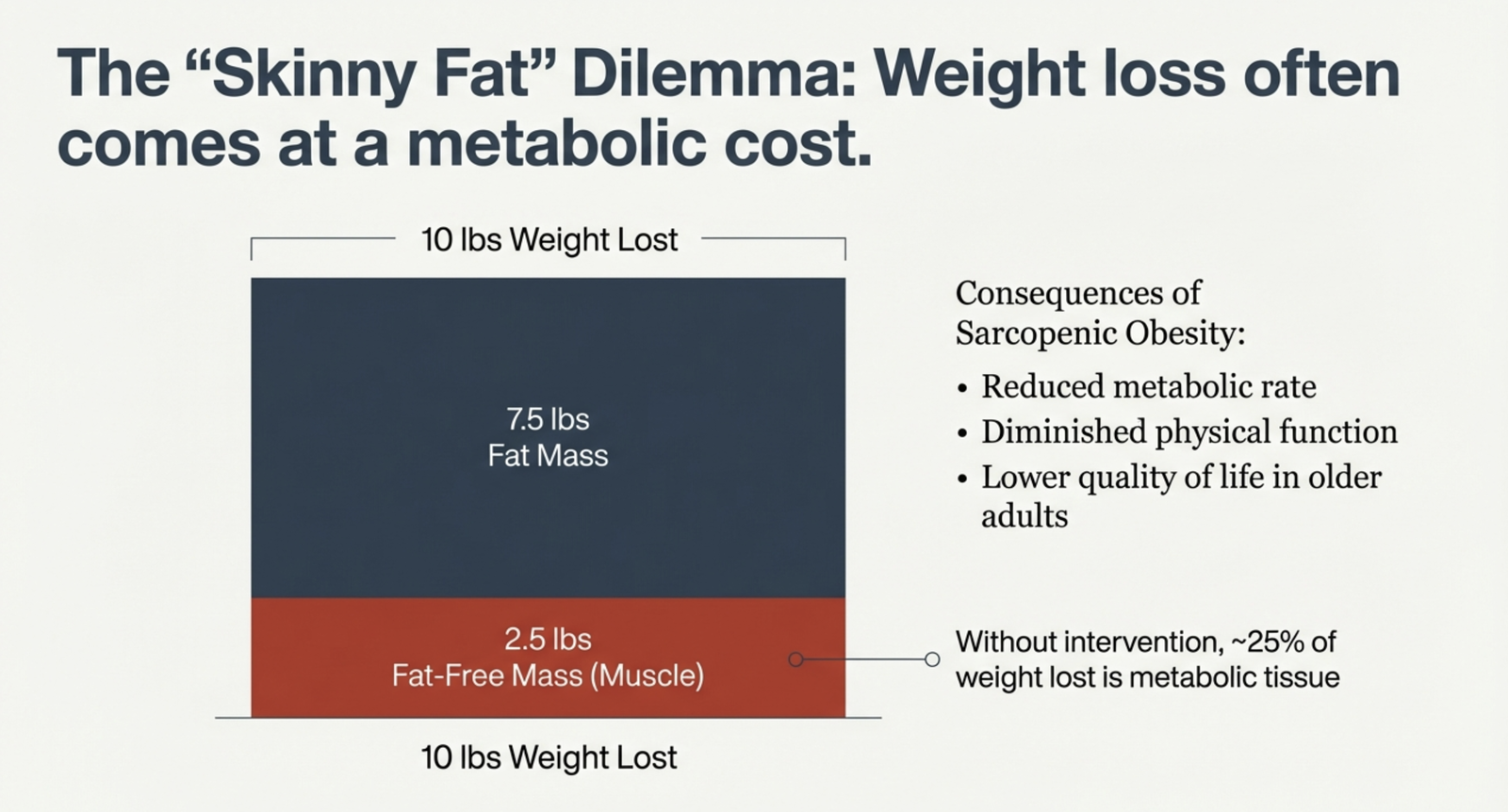
Weight loss is often treated as a single outcome. Pounds down equals success. But biologically, weight loss has two very different components: fat mass and lean mass. Losing fat improves health. Losing muscle quietly undermines it. Muscle loss lowers metabolic rate, weakens physical function, and makes weight regain more likely. This study focuses on that distinction and asks what actually predicts leaner weight loss in everyday life.
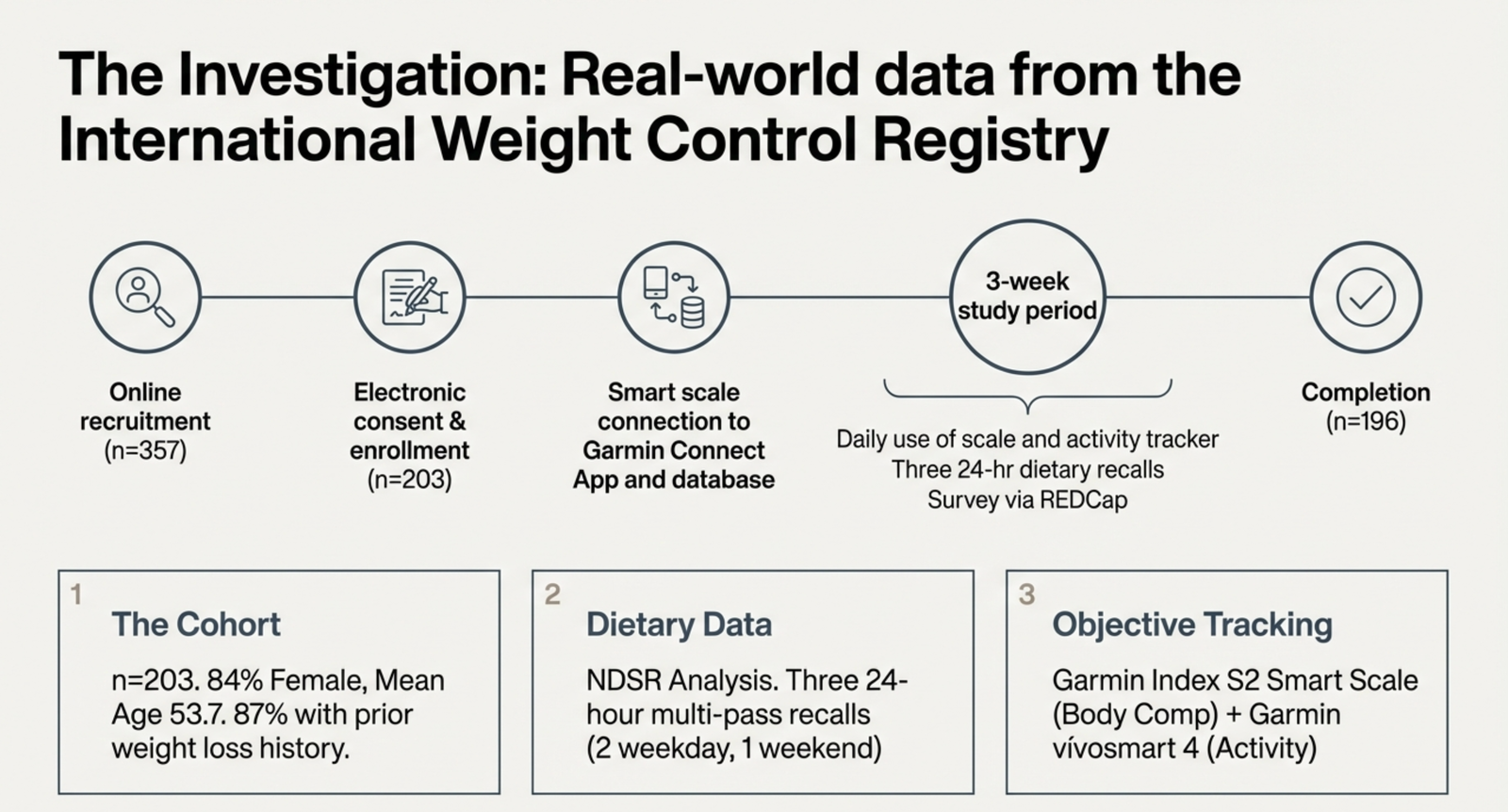
The researchers followed 203 adults enrolled in the International Weight Control Registry, a group already committed to managing their weight long term. These were not lab-bound volunteers eating pre-measured meals. They were free-living adults going about their daily routines, tracking food, steps, and body composition using consumer devices. That matters because most nutrition research happens under controlled conditions that do not resemble real life.
Participants logged what they ate over three days. Researchers focused on total protein intake, essential amino acids, and leucine, a key signal for muscle building. Body composition was measured using a smart scale that estimates fat and muscle mass. Physical activity was tracked through daily step counts. Then the researchers asked how protein and movement related to body fat, muscle mass, and BMI, both independently and together.
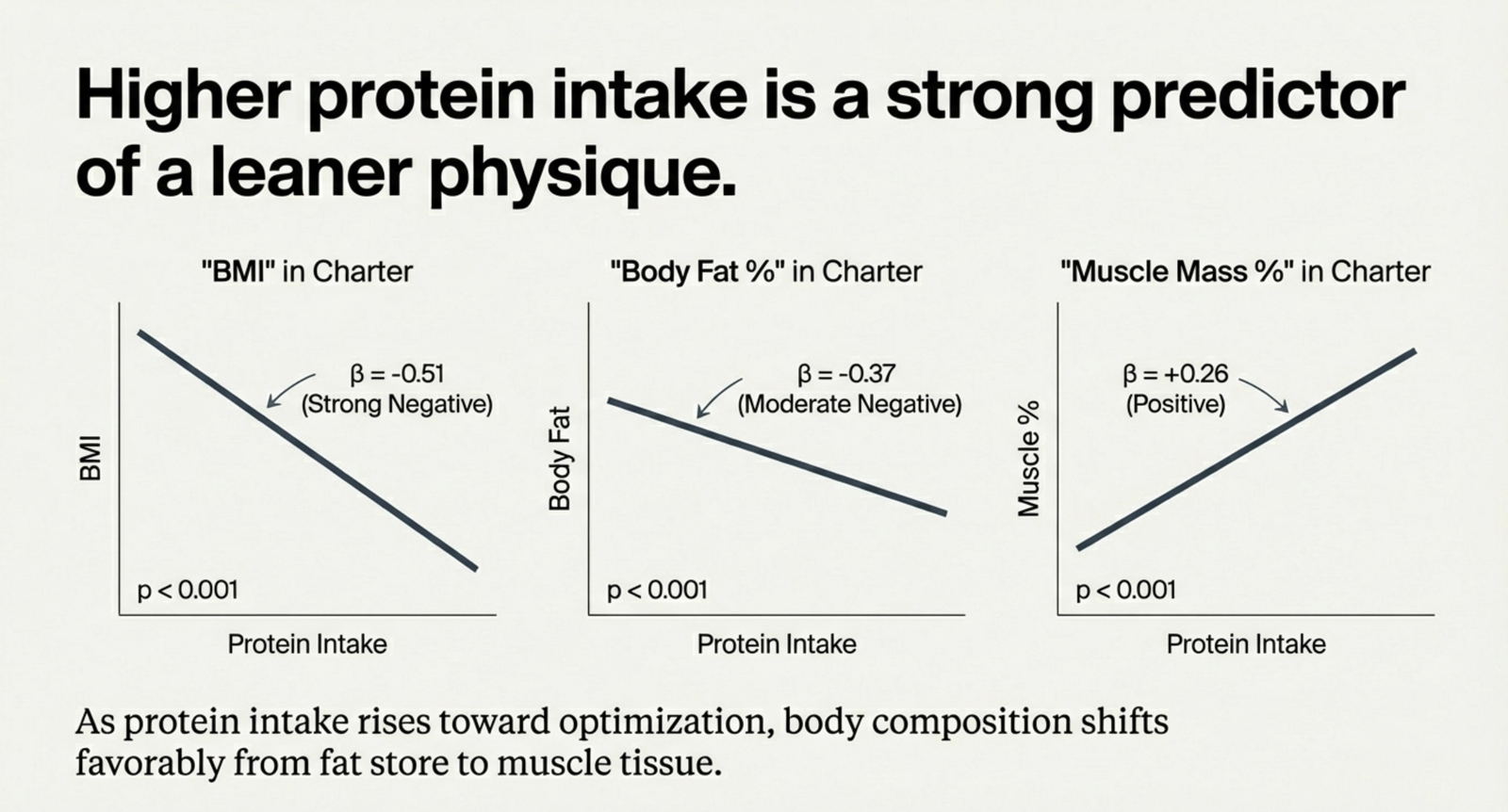
The first finding was straightforward. Higher protein intake predicted lower body fat and higher muscle mass. This relationship held whether protein was measured as total grams, essential amino acids, or leucine specifically. People who ate more protein relative to their body weight tended to carry more muscle and less fat.
Daily steps mattered too. More steps predicted leaner body composition across the board. This reinforces a simple truth that often gets buried under complex exercise prescriptions. Regular movement, even walking, is a powerful regulator of body composition.
But the most interesting result came from looking at protein and activity together.
Protein intake was associated with lower BMI at every activity level. However, the strength of that association changed depending on how active someone was. Among people averaging around 5,000 steps per day, higher protein intake had the strongest relationship with lower BMI. As daily steps increased toward 12,000 per day, the relative importance of protein intake diminished.
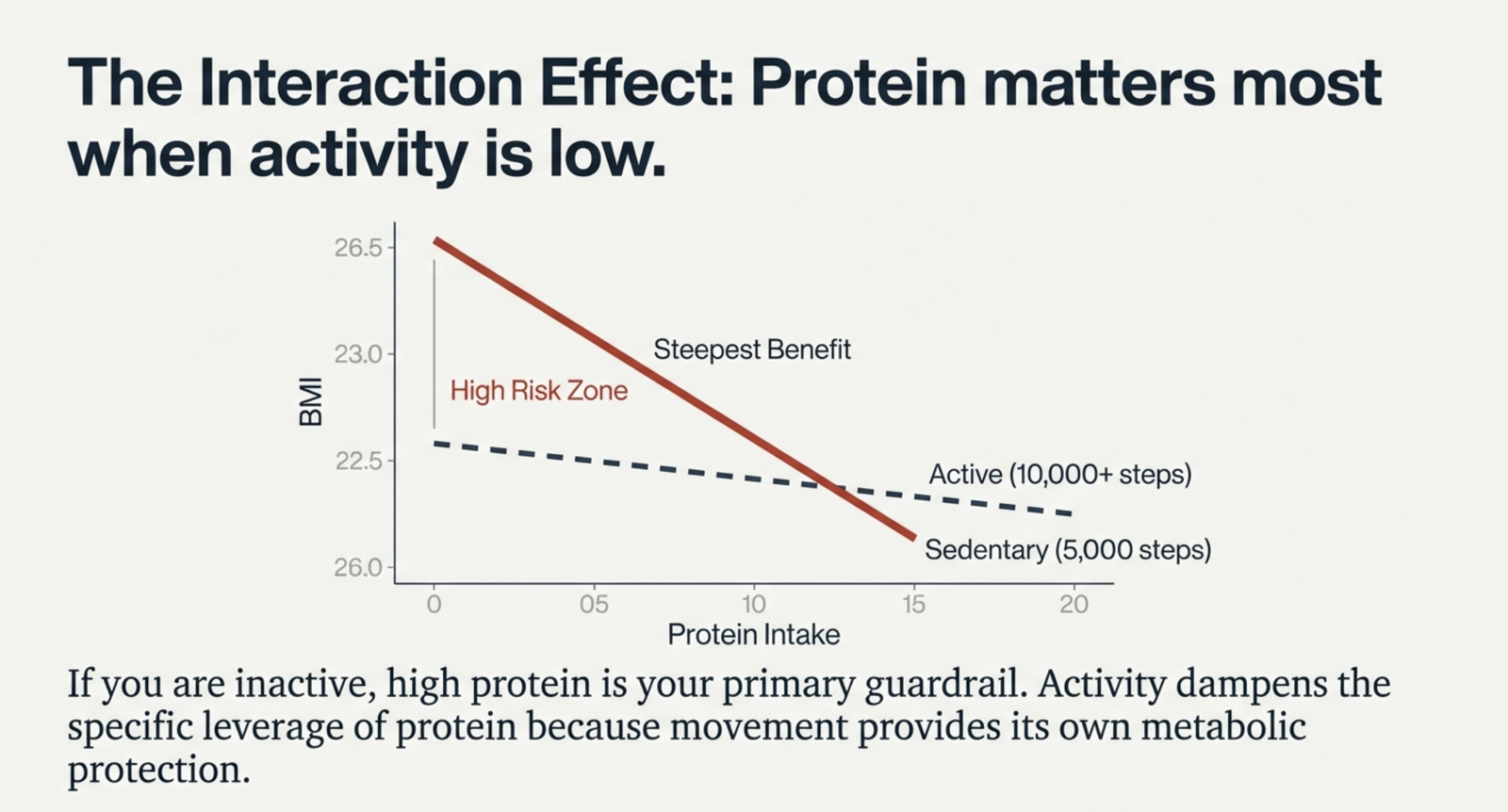
This suggests that protein acts as a buffer when movement is low. Physical activity provides a stimulus that tells the body to maintain muscle. When that signal is weak or absent, protein becomes more important as the primary driver of muscle preservation. In other words, protein partially compensates for inactivity.
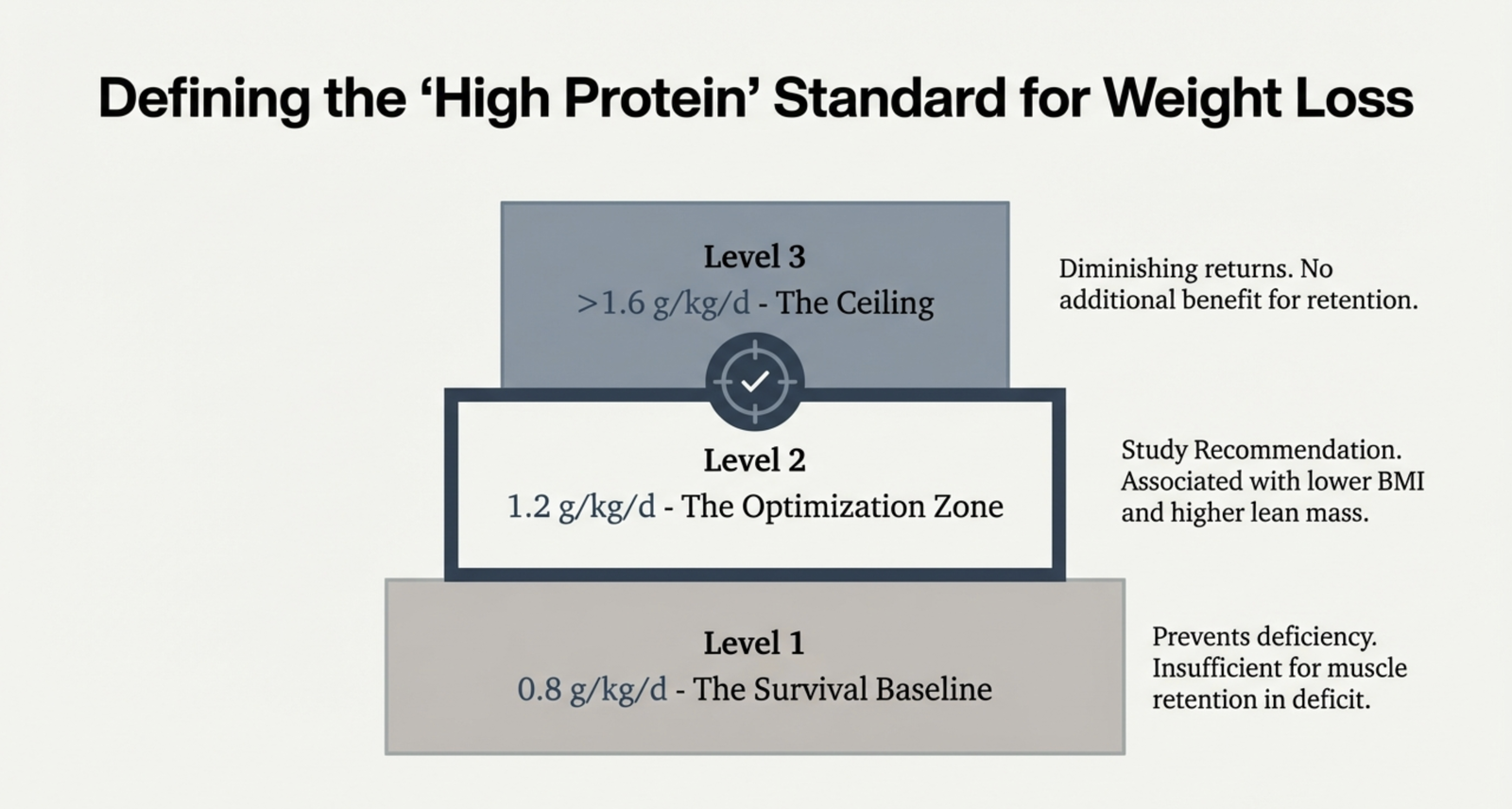
Another important finding was how few people reached protein intakes associated with optimal muscle retention. While most participants met the standard Recommended Daily Allowance of 0.8 grams per kilogram of body weight, fewer than one in four reached 1.2 grams per kilogram. That higher level is commonly recommended to preserve muscle during weight loss, especially in midlife and older adults.
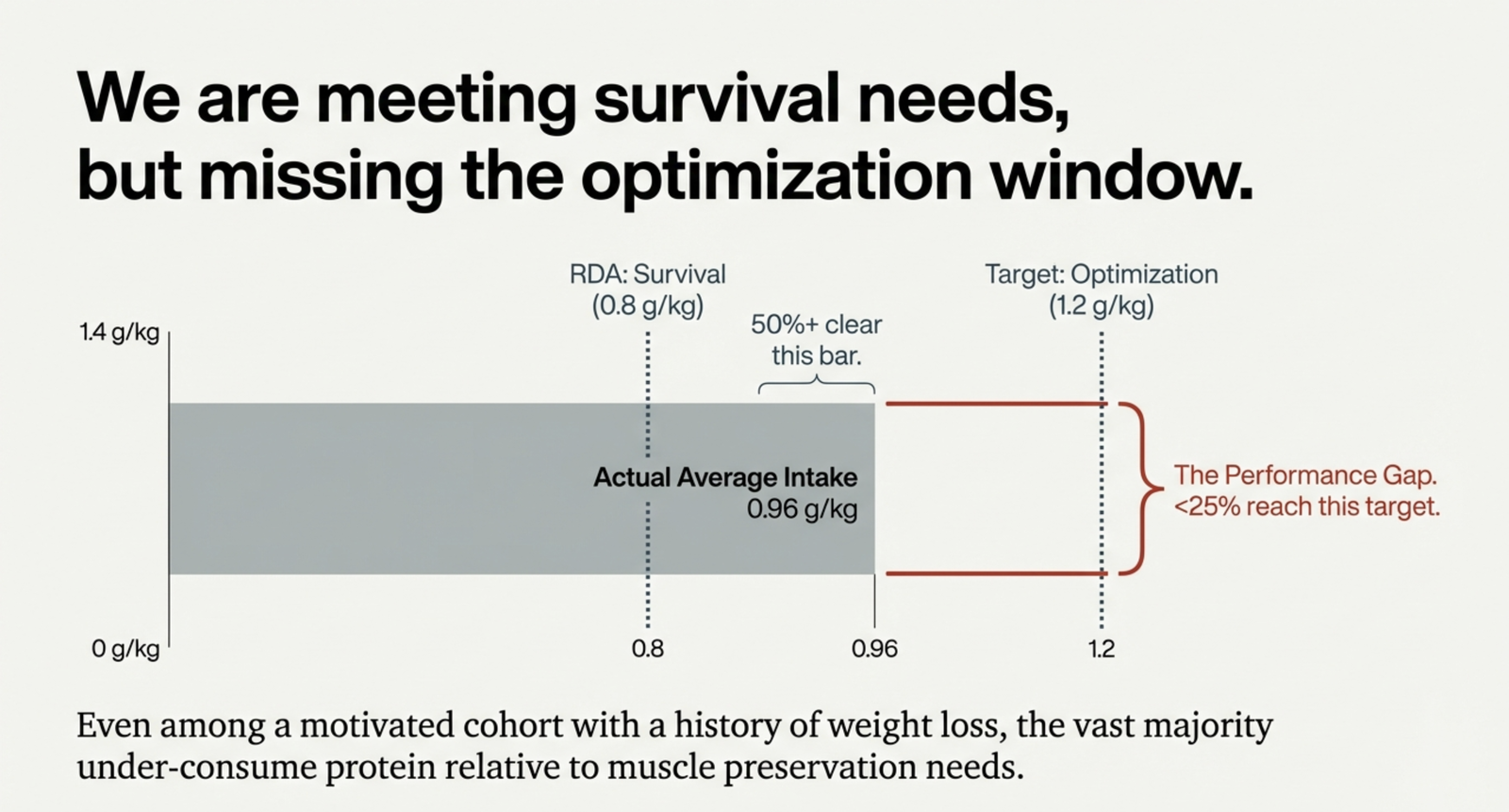
This matters because muscle loss accounts for roughly a quarter of total weight lost in typical dieting. Over time, that loss reduces strength, mobility, and metabolic health. People often believe they are eating enough protein because they meet minimum guidelines. This study suggests that minimum is not optimal, especially for people who are sedentary.
The real-world nature of the study strengthens its relevance. Participants used consumer-grade tools, tracked their normal diets, and lived their usual lives. The patterns observed are not theoretical. They reflect how bodies respond under everyday conditions.
The takeaway is not that steps stop mattering once protein is high, or that protein replaces movement. It is that protein becomes more critical when movement is constrained. For people struggling to hit high activity targets, prioritizing protein intake may help preserve muscle and improve body composition even before exercise habits change.
From a practical standpoint, the strategy is simple. Aim to move more, ideally into the 7,000 to 12,000 steps per day range. But if activity is limited, protein intake becomes non-negotiable. Targeting around 1.2 grams per kilogram of body weight helps ensure that weight loss comes from fat rather than muscle.
Weight loss quality matters more than weight loss speed. This study makes that clear, and it shows that protein plays a larger role than many guidelines currently acknowledge.
Random Trivia & Weird News

The Manpo-Kei - How Walking Became a Prescription in Japan
In the 1960s, Japanese health officials promoted 10,000 steps per day not as a medical threshold but as a marketing campaign for a pedometer - Manpo-kei (万歩計), which literally means “10,000-step meter.”. The number stuck, shaped global fitness culture, and still influences how we think about daily movement decades later.
Podcasts We Loved This Week
- Dr. Gabrielle Lyon: Muscle Is the Key to Longevity (Not Fat Loss) via The Dr. Hyman Show
- Dr. Anurag Singh: GLP 1s, muscle, and metabolic health, what matters most via The Dr. Gabrielle Lyon Show
Products We Are Enjoying
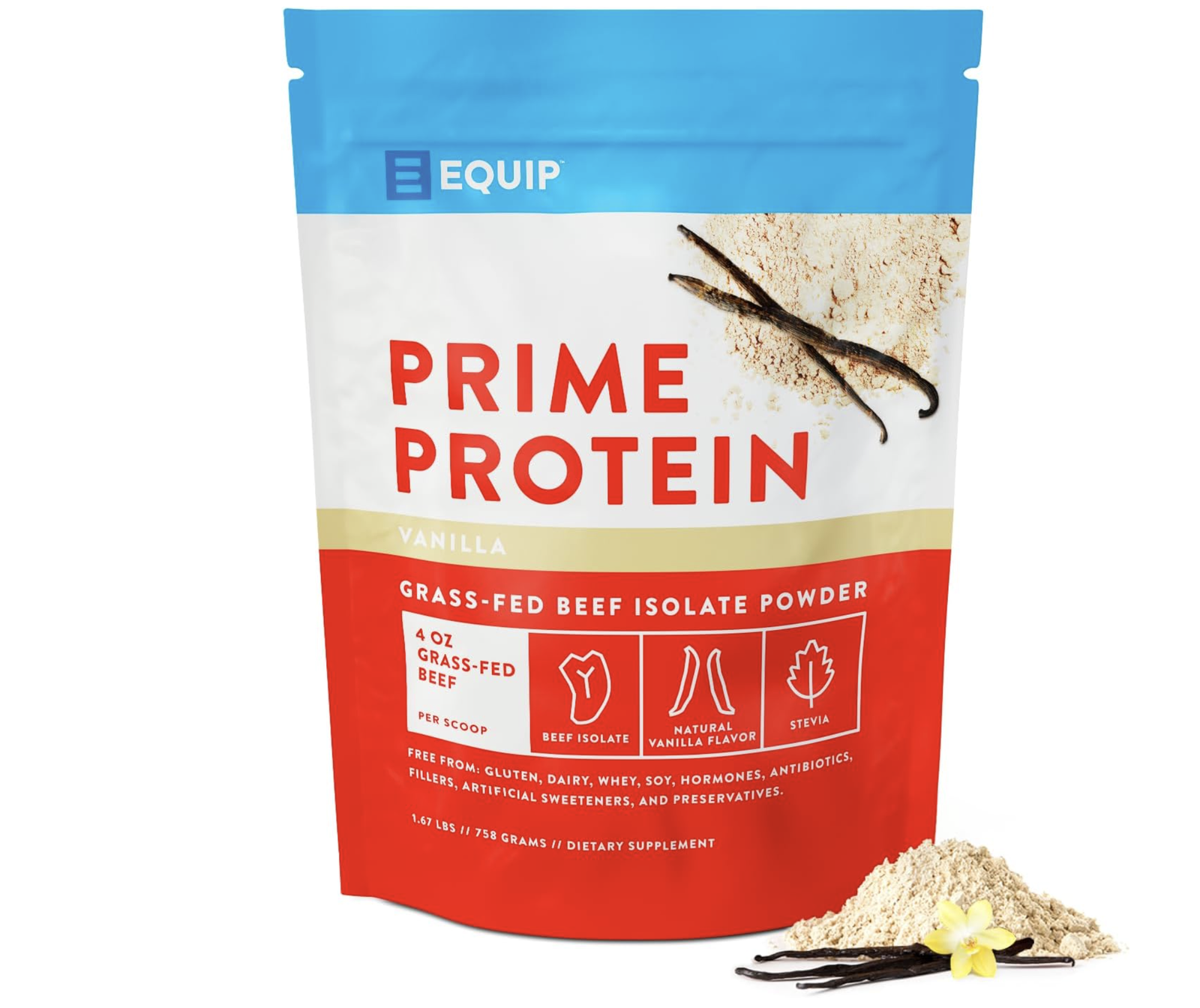
Prime Protein Powder - Grass Fed Beef Protein Powder by Equip Foods
This grass-fed beef protein powder delivers 21g+ of high-quality protein per serving with no added sugar, soy, dairy, gluten, egg, or whey—perfect for keto, paleo, and carnivore diets. Each serving provides ”bloat-free” nutrition equivalent to 4oz of steak, plus collagen, gelatin, and essential micronutrients to support muscle recovery and building. Available in 8 naturally sweetened flavors including chocolate, vanilla, strawberry, and salted caramel (I’ve only tried peanut flavor and it’s one of the best tasting proteins powders I’ve ever tried), it's made with real, whole ingredients only—no fillers or artificial additives. Third-party tested. I've personally tried this product and can attest that it tastes great and digests well.
humanOS Catalog Feature of the Week
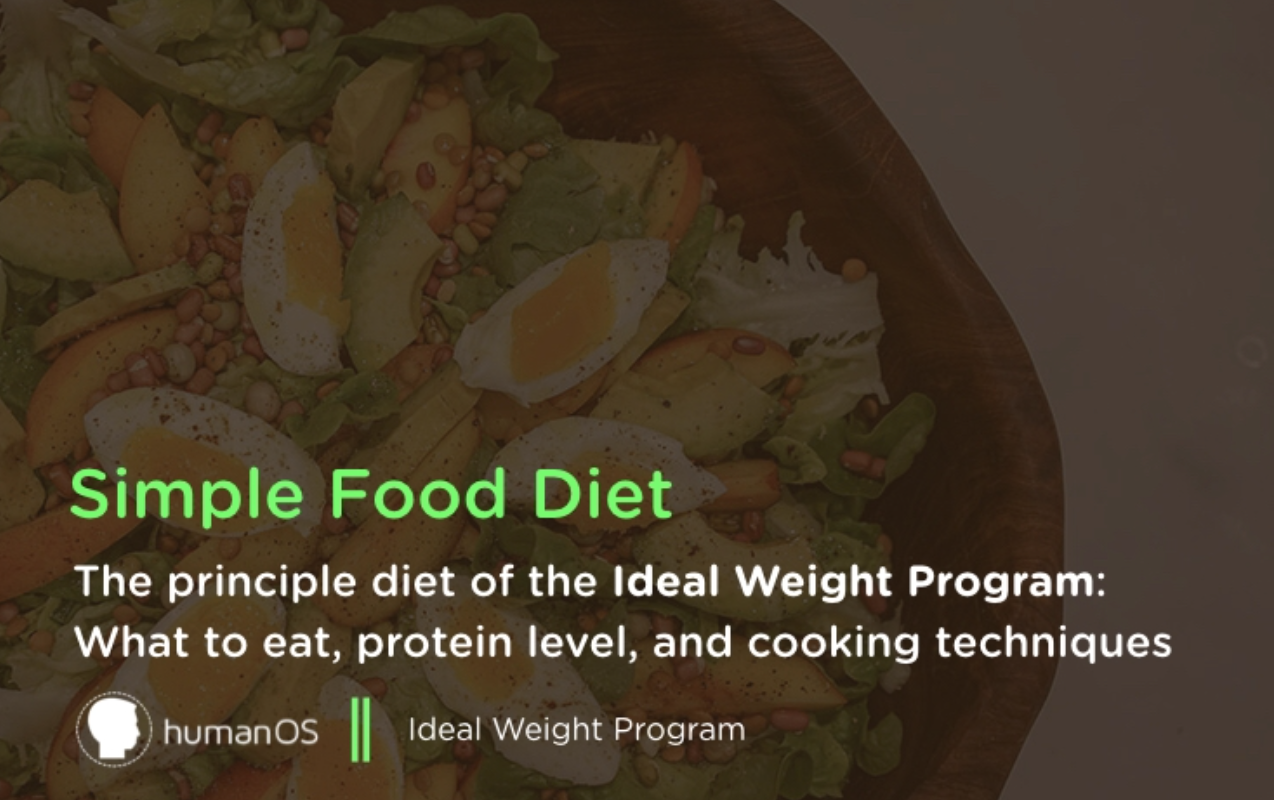
The Simple Food Diet
This week, we’d like to highlight one of the courses from our Ideal Weight Program, developed by our good friend Stephan Guyenet.
Simple food is exactly what it sounds like – food that is prepared and consumed as close as possible to its natural state, with limited added fats and sugars. These types of food enable you to stay satisfied and stave off hunger, while lowering energy density. Lean protein, importantly, is a pillar of this approach.
In this course, Stephan breaks down the scientific rationale for the Simple Food Diet, what to eat, vital food preparation tips, and other information crucial to lasting success on this plan. For more information, please refer to our How-to Guide for the Simple Food Diet, and the other materials from the Ideal Weight Program.
Wishing you the best,

—