Newsletter #428
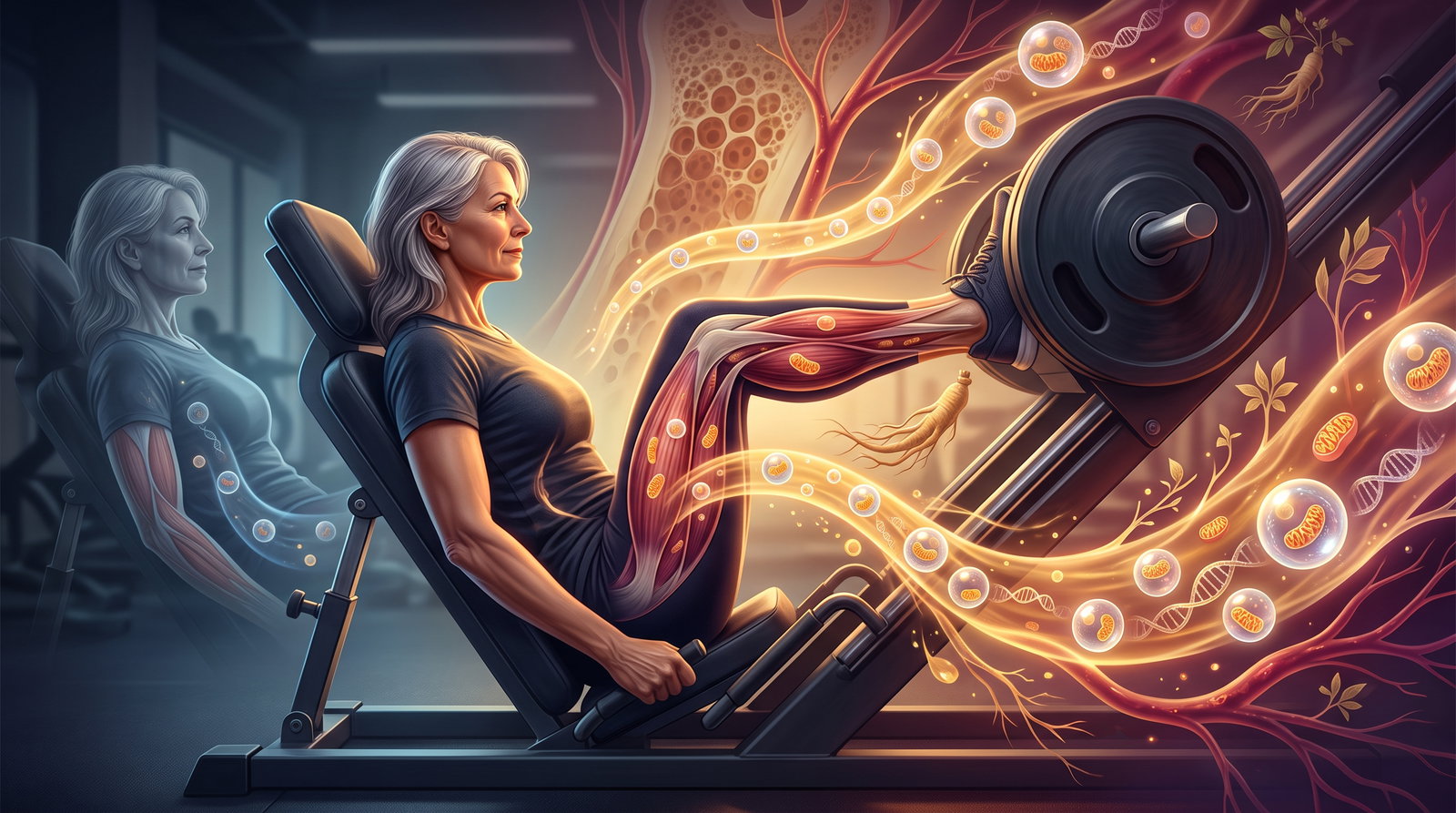
Resistance training is one of the most reliable ways to hold onto muscle as we age, yet the same workout that builds a young body seems to give back less over the years. Part of the reason may be hidden in the bloodstream. After menopause, the anabolic sex hormones that help muscle recover fall away, and some of the raw material the body uses to repair itself goes with them. A team in Taiwan working with women in their sixties and seventies asked whether a plant compound that resembles their own sex hormones given one hour before a hard leg workout, changes how their muscle heals, and does it change what the body sends to the site of the damage?
If these newsletters are a regular part of how you stay informed on health and longevity, consider supporting the work with a Pro membership. $19.99 per quarter, about $1.67 per issue, less than a coffee tip.
Join here: Become a Member
Review Your Learnings: Newsletter Summaries ✨
Ginsenoside Rg1 enhances stem cell abundance in aging human skeletal muscle after resistance exercise
A workout that emptied the repair crew
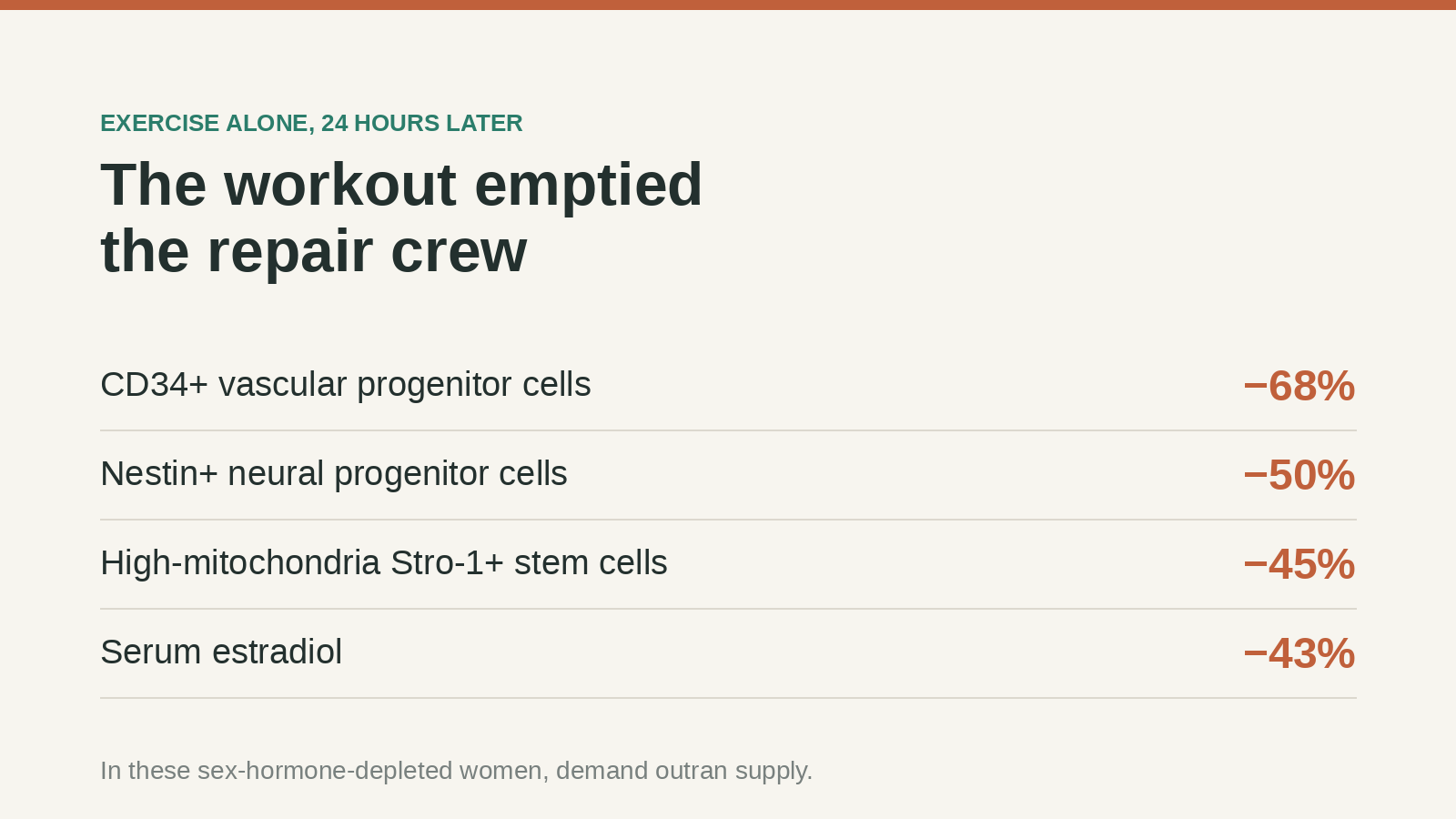
Hard resistance exercise damages muscle on purpose, and that damage is the signal that summons help. In these older women, the workout alone did something the researchers did not expect. Instead of drawing more repair cells into the muscle, the intense leg session left the tissue with fewer of them a day later. The cells that normally travel from the bone marrow to rebuild blood vessels dropped sharply. So did a population that supports the muscle's nerve connections. Even the most active, energy-rich repair cells, the ones carrying the most mitochondria, thinned out rather than surging in.
The picture is one of demand outpacing supply. The exercise created a big repair job, the body called for reinforcements, and in these hormone-depleted women the reinforcements did not arrive to the same extent they used to. Their blood told a similar story. The workout pushed estrogen down further, deepening the very shortfall that makes recovery harder after menopause.
Rg1 changed what the muscle received
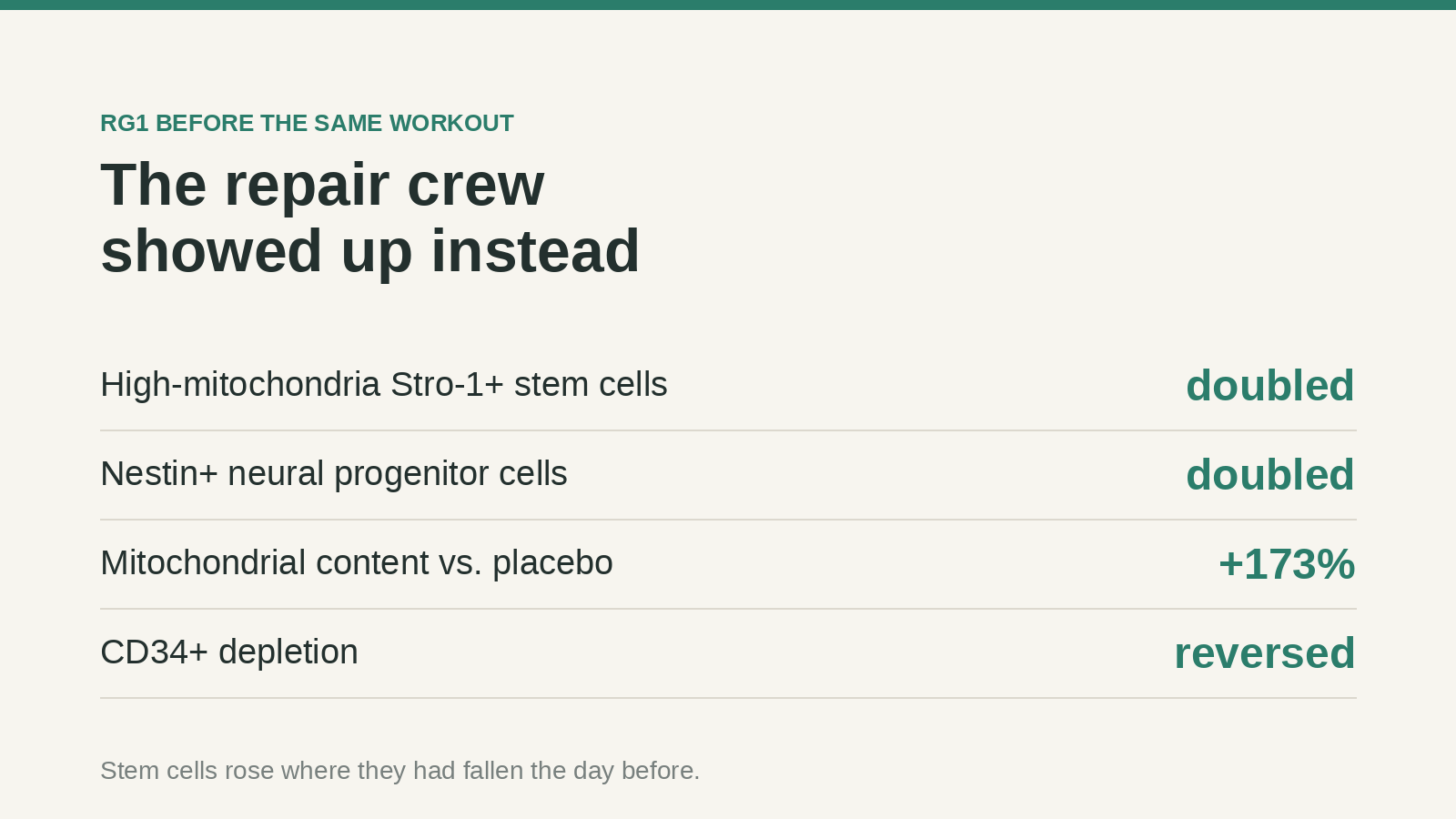
Taking Rg1 an hour before the same workout flipped the pattern. The women who took the compound saw their repair cells rise instead of fall. The bone marrow cells that rebuild blood vessels held their ground rather than collapsing. The cells that support nerve regeneration roughly doubled. And the mitochondria-dense repair cells increased markedly in the exercised muscle.
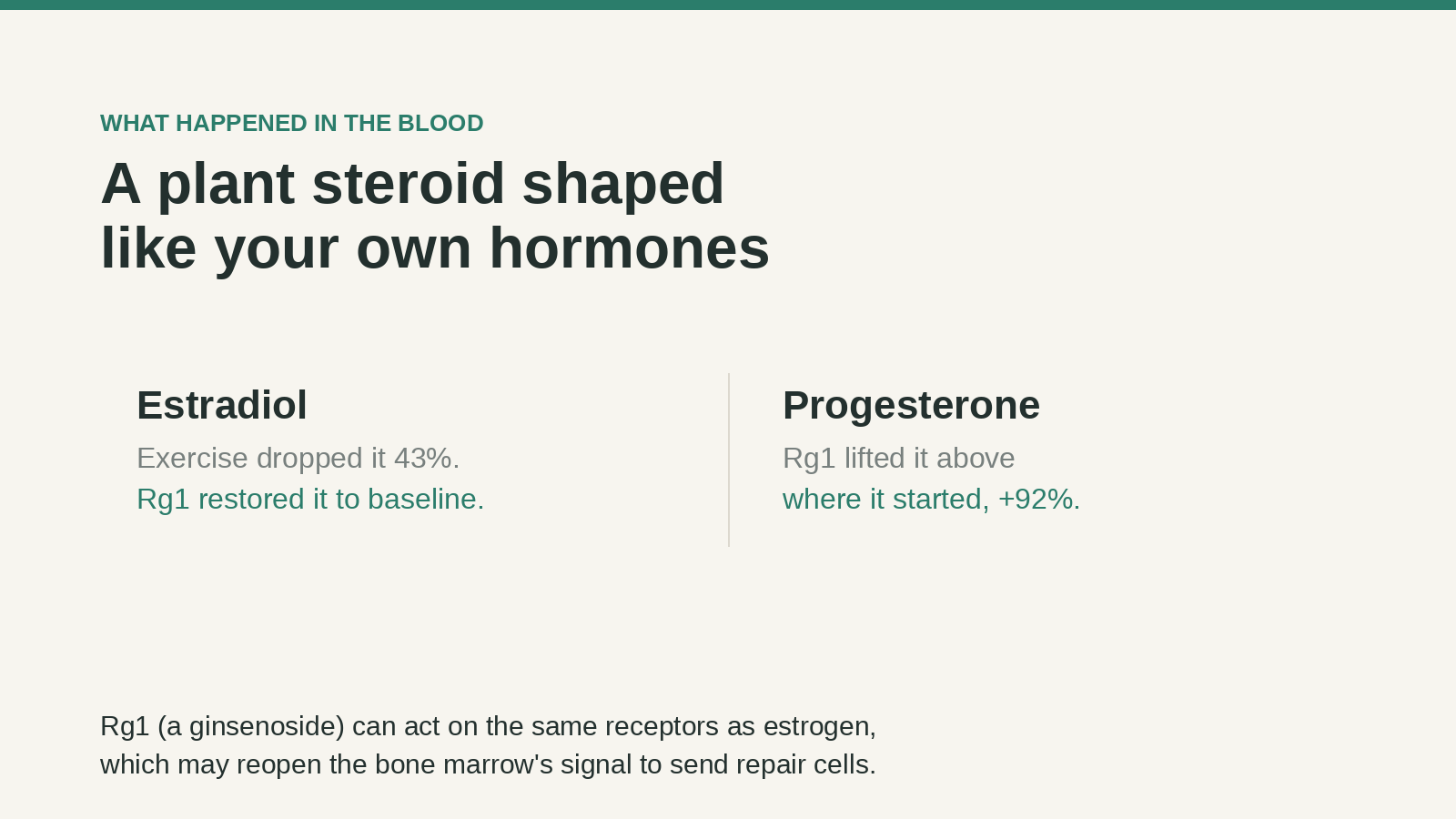
Something shifted in the blood too. Rg1 kept estrogen from dropping after exercise and lifted progesterone above where it started. Rg1 is a plant steroid shaped much like the body's own sex hormones, close enough to act on some of the same receptors. The researchers suspect that by steadying these hormones, Rg1 restores the signal the bone marrow needs to release its repair cells on time.
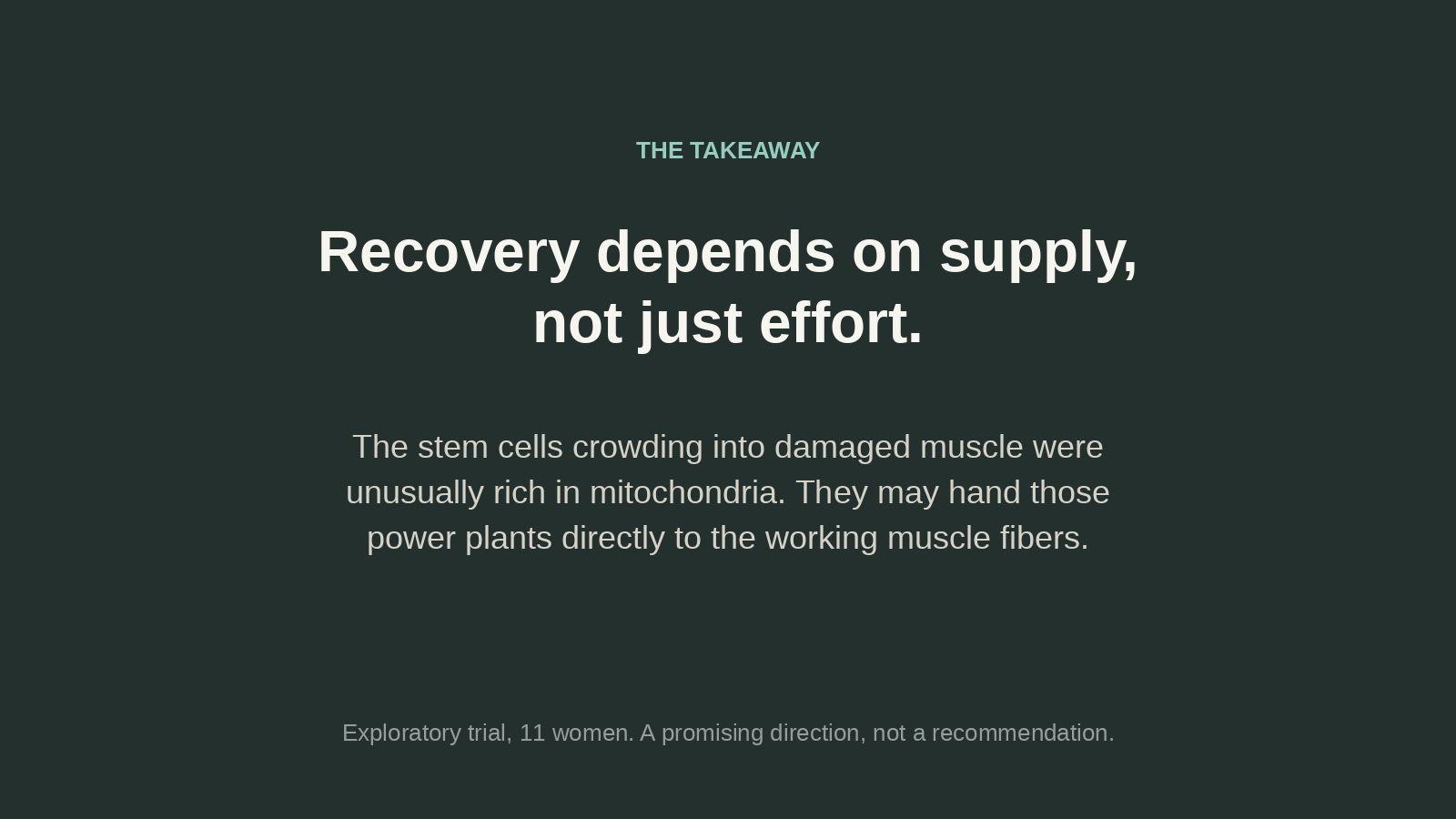
One detail stood out. The repair cells crowding into the damaged muscle were unusually rich in mitochondria, far richer than the muscle fibers around them. That gradient hints at something researchers have mostly watched in the lab until now. The incoming cells may be handing off their mitochondria to the working muscle, delivering fresh power plants rather than waiting for the fiber to build its own.
The incoming cells may be handing off their mitochondria to the working muscle, delivering fresh power plants rather than waiting for the fiber to build its own.
Recovery Depends On Supply, Not Just Effort
The usual story of exercise is about stimulus. You train hard, you break the tissue down, and it comes back stronger. This study adds a second half to that story. The comeback also depends on whether the body can deliver enough repair material to the site of the damage, and that delivery runs partly on sex hormones that fade with age.
For a woman past menopause, effort in the gym may not be the limiting factor. The bottleneck can sit upstream, in a supply line that has dwindled. A compound that steadies the hormonal signal appears to help reopen it, at least in this relatively small study. The finding is exploratory and the group was small, so it points to a promising direction rather than a settled recommendation.
The findings offer hope that natural compounds such as Rg1 actually help support the body’s regenerative capacity as we age.
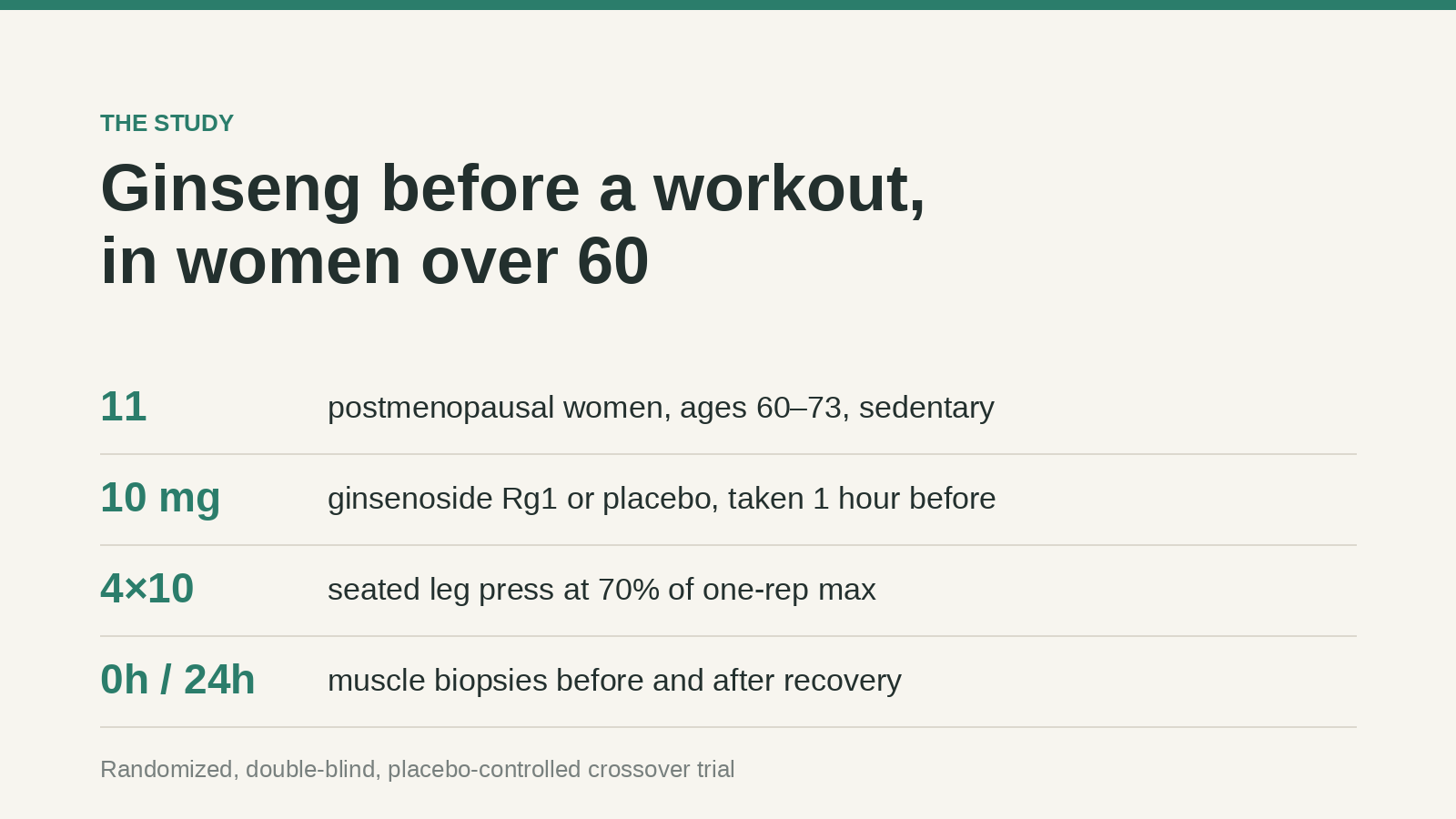
Summary: In a randomized, double-blind, placebo-controlled crossover trial, 11 sedentary postmenopausal women (aged 60–73, mean 64.8) took 10 mg of ginsenoside Rg1 or a cornstarch placebo one hour before four sets of seated leg press at 70% of their one-rep max. Vastus lateralis biopsies were taken at baseline, immediately after exercise, and 24 hours later. Exercise alone reduced the high-mitochondria fraction of Stro-1+ mesenchymal stem cells (~45–50%), CD34+ progenitors (−68%, p<0.01), Nestin+ neural progenitors (~−50%), and serum estradiol (−43%). Rg1 reversed these effects. It doubled the high-mitochondria Stro-1+ cells, raised total Stro-1+ cells 114% over baseline, increased mitochondrial content 173% versus placebo (p=0.03), attenuated CD34+ depletion, doubled Nestin+ cells, restored estradiol to baseline, and raised progesterone 92%. Rg1, a phytosteroid structurally similar to sex hormones, may steady hormone signaling and let bone marrow stem cells deliver mitochondria to damaged muscle. Findings are exploratory (n=11); the trial was co-funded by an Rg1 manufacturer (NuLiv Science).
Common Questions
What is ginsenoside Rg1?
Rg1 is one of the active compounds in ginseng, a family of molecules called ginsenosides. It has a chemical backbone similar to the body's sex hormones and can act on some of the same receptors.
Does ginseng build muscle? I
n this small trial, Rg1 taken before resistance exercise helped older women's muscle recruit more repair cells and mitochondria, rather than building muscle directly. It is early, exploratory evidence, not proof.
How much Rg1 did the study use?
Participants took a single 10 mg dose one hour before their workout, alongside a small protein drink.
Is this relevant to men or younger people?
The trial studied only postmenopausal women. An earlier study by the same group reported muscle benefits of Rg1 in young men, but this recovery pattern was tested here in older women.
Random Trivia & Weird News
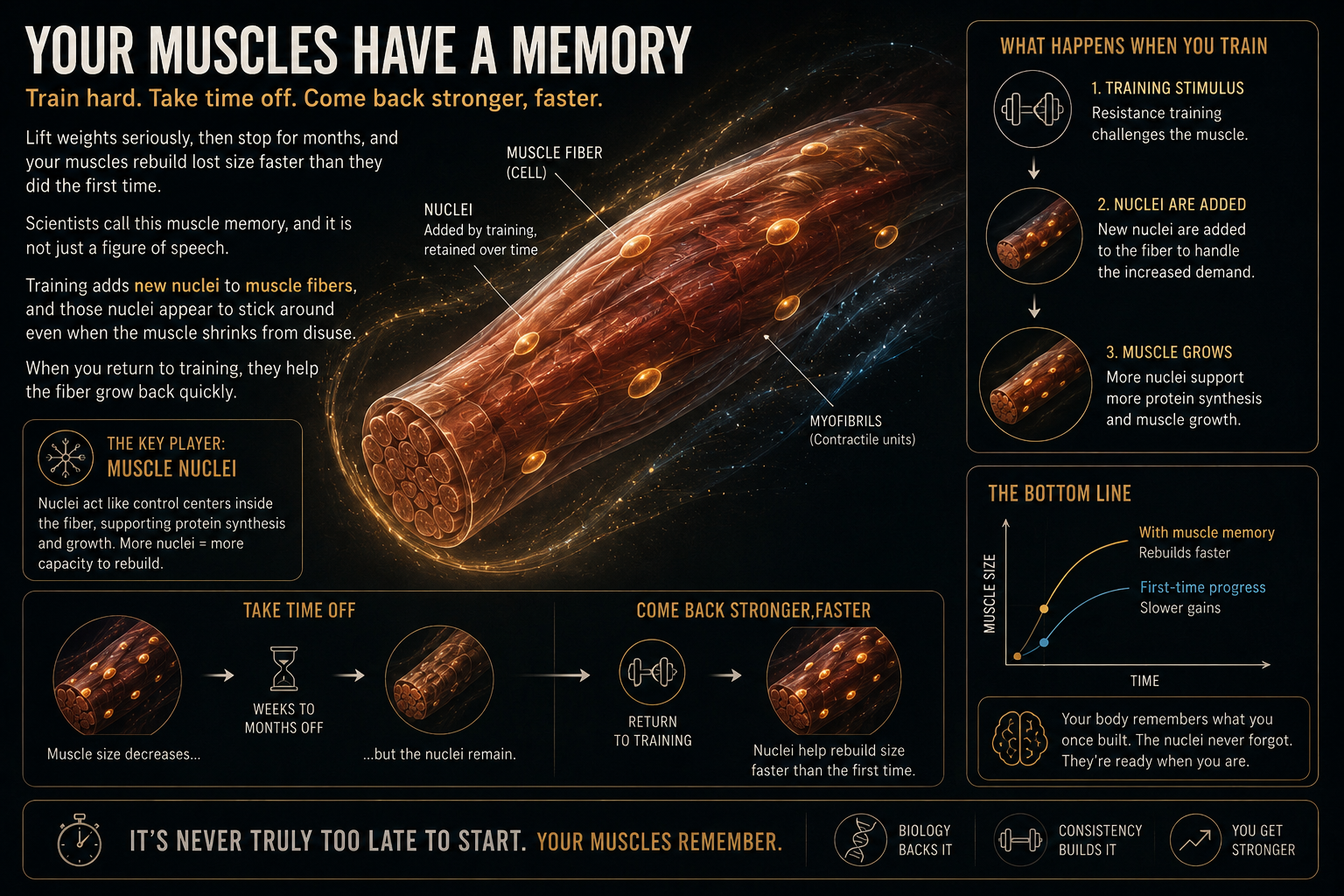
Your Muscles Have a Memory
Lift weights seriously, then stop for months, and your muscles rebuild lost size faster than they did the first time. Scientists call this muscle memory, and it is not just a figure of speech. Training adds new nuclei to muscle fibers, and those nuclei appear to stick around even when the muscle shrinks from disuse. When you return to training, they help the fiber grow back more quickly.
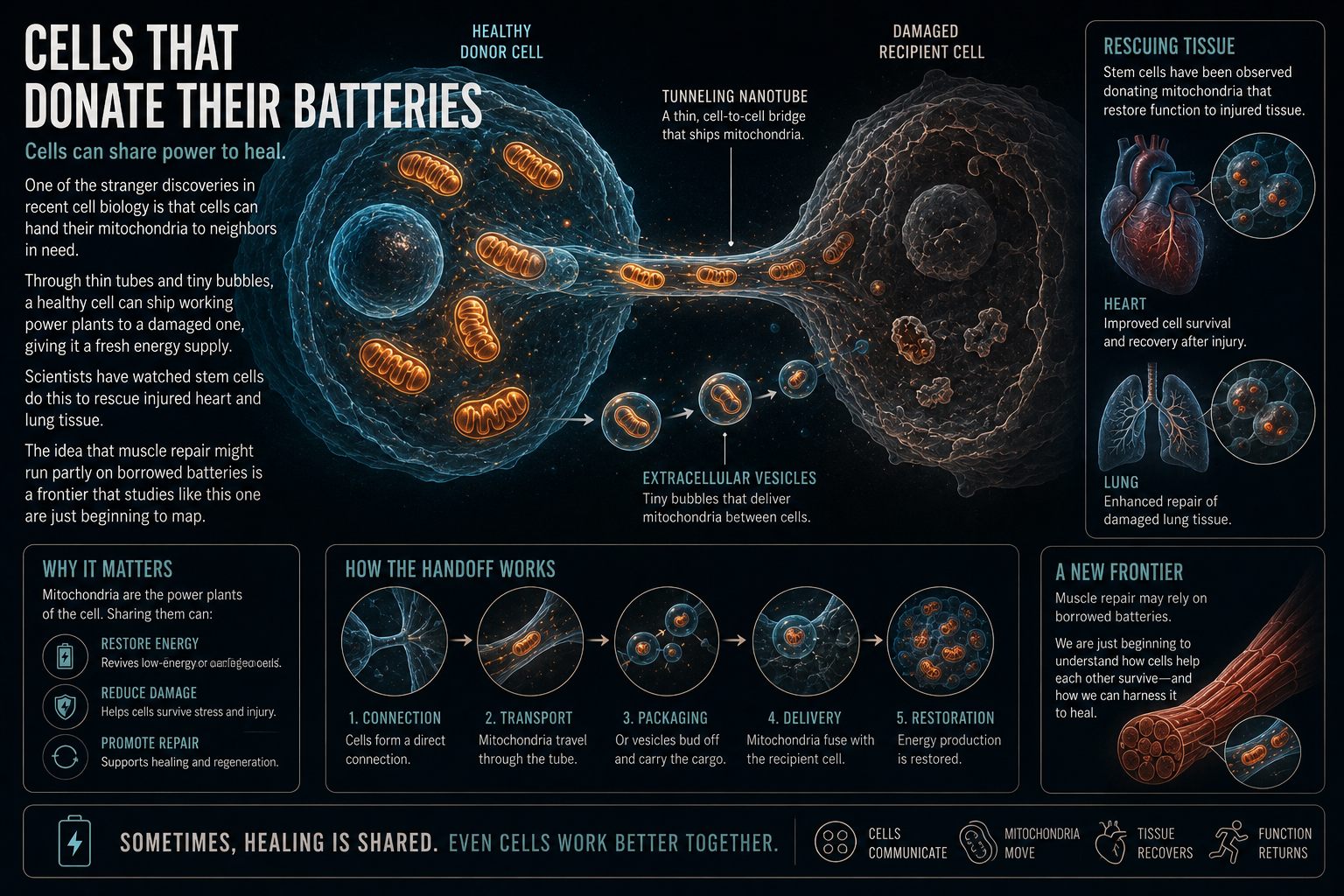
Cells That Donate Their Batteries
One of the stranger discoveries in recent cell biology is that cells can hand their mitochondria to neighbors in need (like the primary study in this newsletter suggests). Through thin tubes and tiny bubbles, a healthy cell can ship working power plants to a damaged one, giving it a fresh energy supply. Scientists have watched stem cells do this to rescue injured heart and lung tissue. The idea that muscle repair might run partly on borrowed batteries is a frontier that studies like this one are just beginning to map.
Podcasts We Loved This Week
- Dr. Jamie Baum: Revolutionizing Women's Health: Protein, Menopause & Skeletal Muscle via The Dr. Gabrielle Lyon Show
- Rhonda Patrick: Why It's Never Too Late to Start Building Muscle via FoundMyFitness
Products We Love
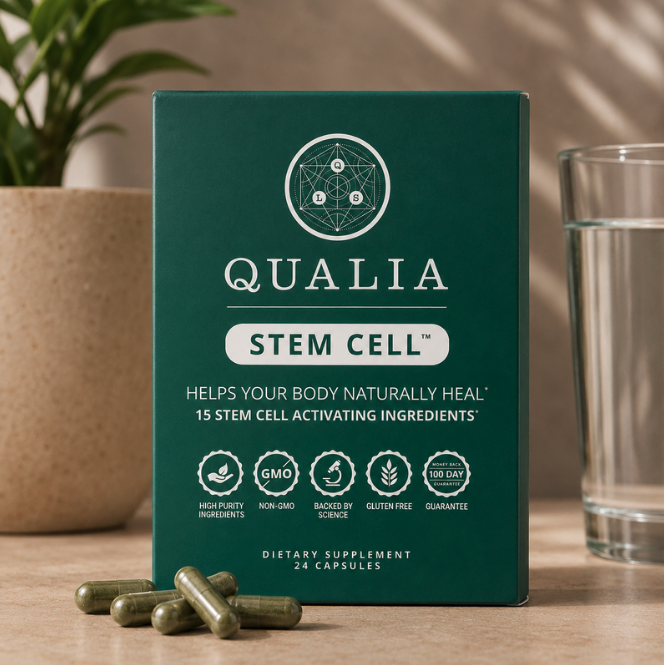
Qualia Stem Cell
Qualia Stem Cell™ is a once-monthly formula designed to support the body’s natural renewal processes by promoting healthy stem cell function. Taken for just four consecutive days each month, it combines 15 research-backed ingredients that target multiple aspects of stem cell biology, including mobilization, communication, survival, and tissue repair. The formula also supports healthy immune function, mitochondrial health, circulation, and resilience to oxidative stress, helping maintain the body’s capacity for recovery and healthy aging.
humanOS Catalog Feature of the Week

Muscle and Health, a Podcast with Keith Baar
What actually makes muscle and tendon adapt to training, and how do you eat and load your body to get there? Keith Baar studies exactly that, and in this humanOS Radio conversation he breaks down how the tissues that move you grow stronger, why connective tissue needs different care than muscle, and how to time nutrition around training so the adaptation sticks. If today's study left you curious about the machinery of muscle repair, this is a rich, practical listen on how to work with that machinery rather than against it.
If today's newsletter was worth your time, a Pro membership is what keeps it coming. Only $1.67 per newsletter!
Join here: Become a Member
Wishing you the best,