
Newsletter #439
The age a woman goes through menopause still shows up in her brain decades later. A new study in JAMA Network Open followed 2,603 older women for up to 18 years. Women who reached menopause earlier had faster memory decline and were diagnosed with Alzheimer's disease earlier. In women whose menopause came naturally, earlier timing also meant faster buildup of white matter damage, the small scars tied to the brain's tiniest blood vessels. Each year made only a small difference, but the gaps grew with age. That turns menopause age into a useful clue in midlife, long before any symptoms appear. Let's take a closer look.
If these newsletters are a regular part of how you stay informed on health and longevity, consider supporting the work with a Pro membership. $19.99 per quarter, about $1.67 per issue, less than a coffee tip.
Join here: Become a Member
Review Your Learnings: Newsletter Summaries ✨
Age at Menopause and Brain Atrophy Among Older Women
Why would menopause age matter for the brain?
Estrogen does far more than run the reproductive system. It also helps maintain the brain.
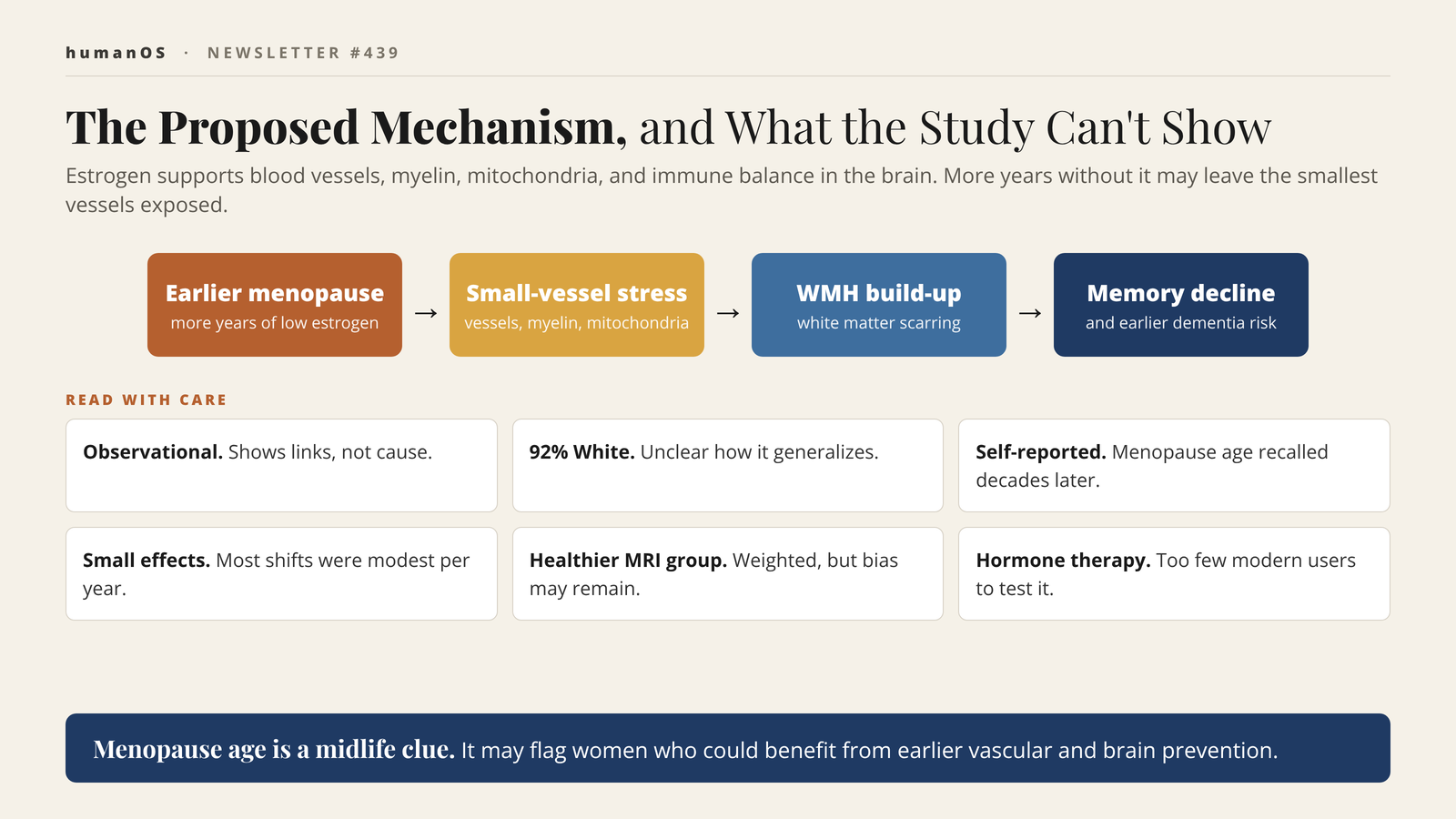
In the brain, estrogen supports synapses (the connections between neurons), myelin (the fatty coating that insulates nerve fibers), mitochondria, and the balance of immune activity. Progesterone and testosterone help too. When menopause comes earlier, a woman spends more of her life with low levels of these hormones.
Earlier research had already linked earlier menopause to faster cognitive decline. What was missing was long-term brain imaging that showed what happens to brain structure over the years that follow.
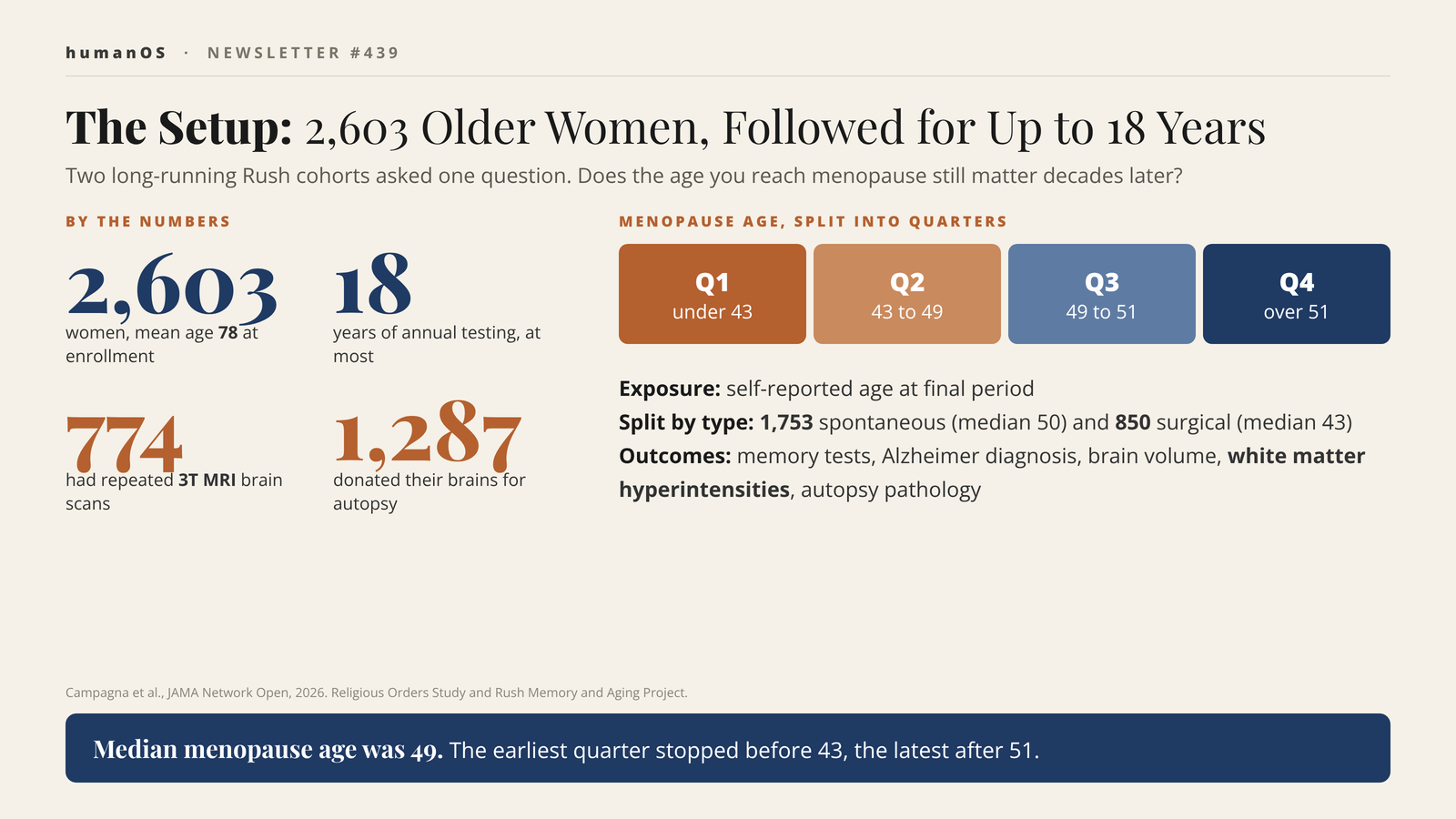
To get at that, researchers drew on two long-running Rush University cohorts. The Religious Orders Study enrolls Catholic nuns, priests, and brothers. The Rush Memory and Aging Project enrolls older adults from the Chicago area. Women in this analysis were 78 on average when they joined. They took memory and thinking tests every year, and a subset had repeated brain scans (MRI). Many also agreed to donate their brains for study after death.
The team sorted women into four groups by menopause age, from under 43 to over 51. They also looked at natural (spontaneous) menopause and surgical menopause separately.
What did the study find?
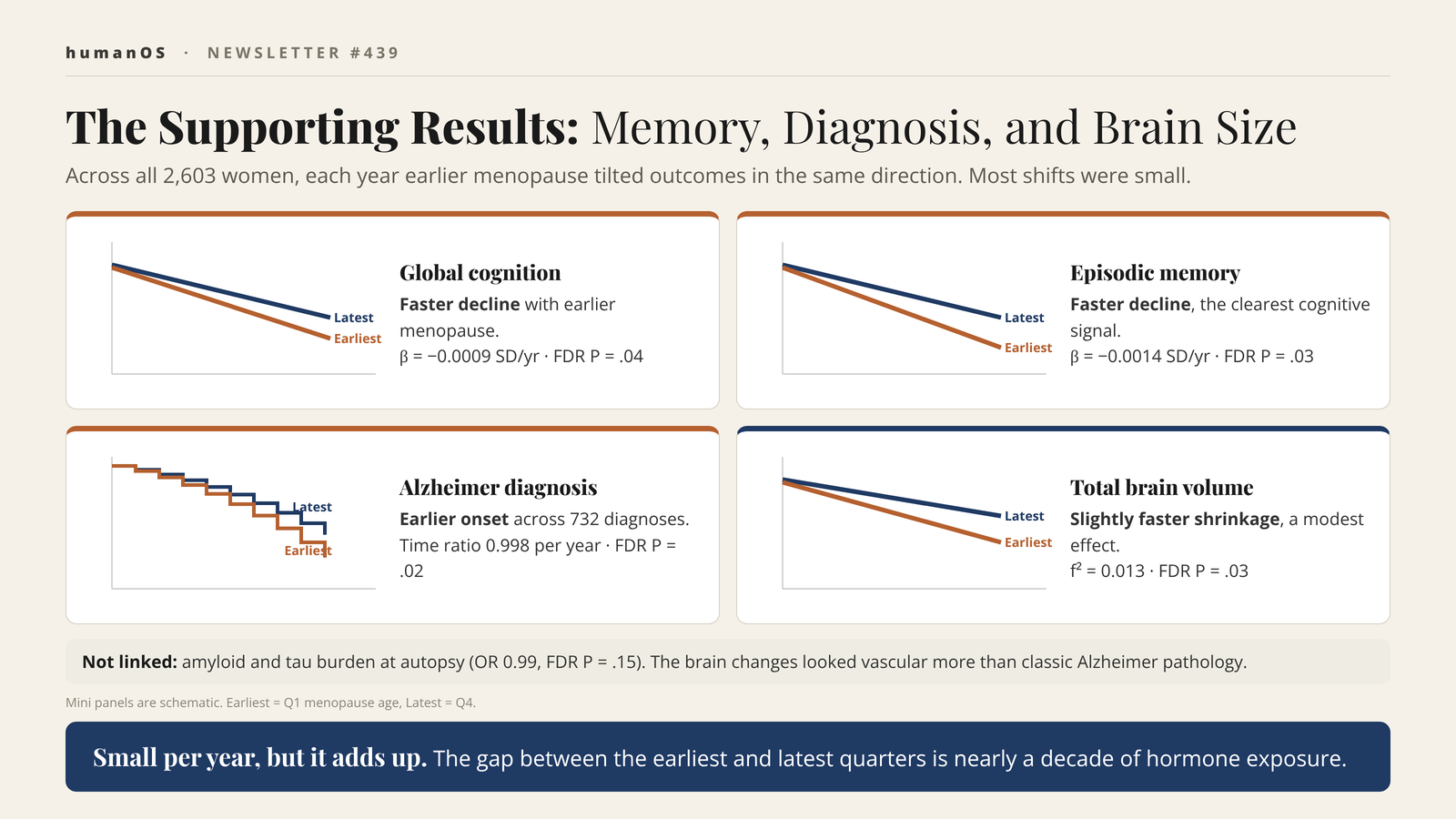
Women who went through menopause earlier did worse on almost every brain measure.
- Thinking and memory. Overall cognition declined faster. Episodic memory, the memory for events and experiences, showed the clearest drop.
- Alzheimer's diagnosis. It came earlier on average.
- Brain size. Total brain volume shrank slightly faster.
Per year of earlier menopause, each of these shifts was small. But the earliest and latest groups were nearly a decade apart, and the differences grew as the women got older.
One measure didn't line up. At autopsy, the amount of amyloid plaques and tau tangles, the classic signs of Alzheimer's disease, wasn't clearly tied to menopause age. The brain changes looked more like blood vessel injury.
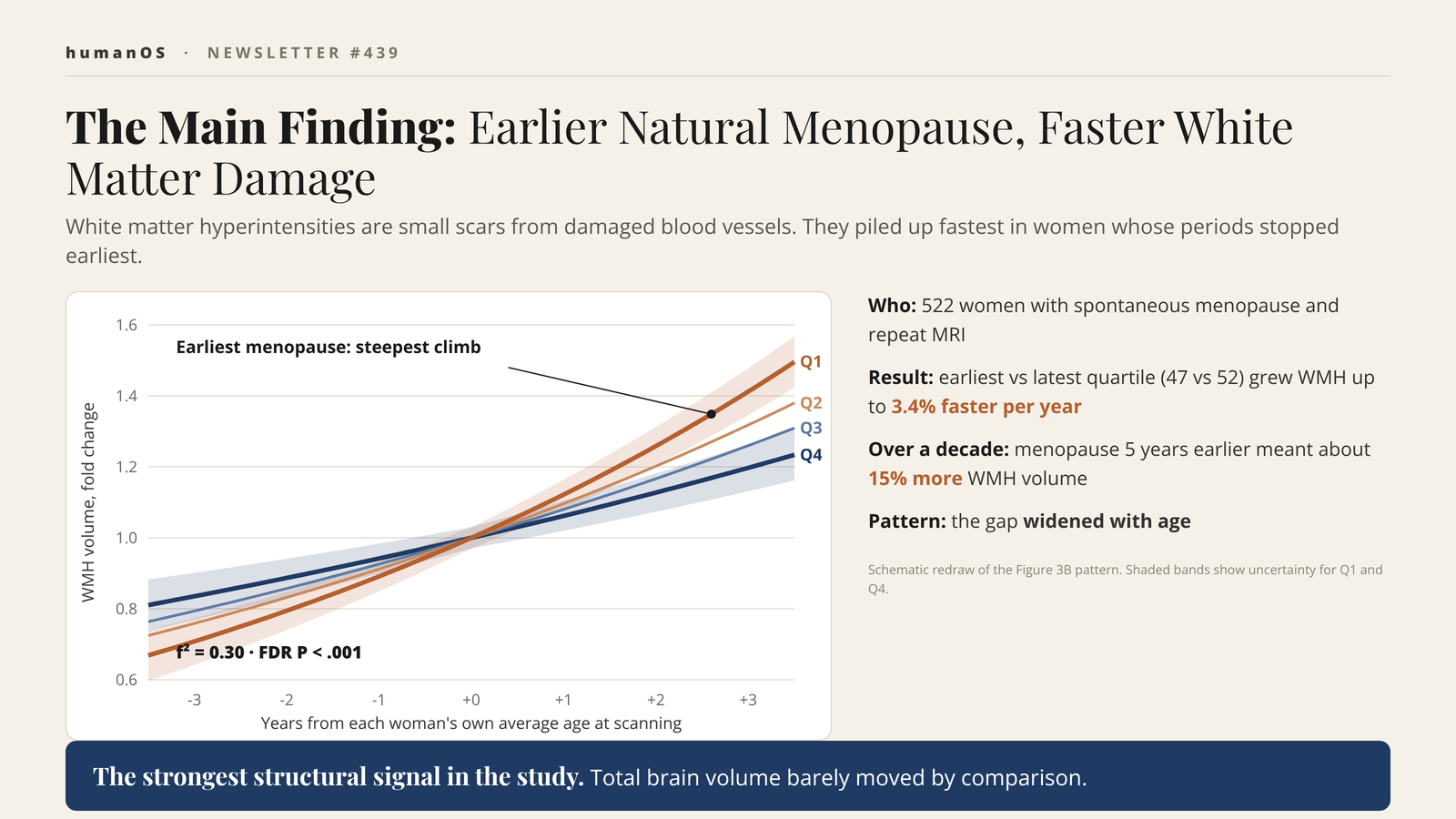
That points to the strongest finding in the study. White matter hyperintensities are bright spots on an MRI that mark damaged white matter, usually caused by disease in the brain's smallest blood vessels. They become more common with age and are linked to memory problems, stroke, and dementia.
In women who went through menopause naturally, these spots built up much faster when menopause came earlier. The gap widened with age. By the authors' estimate, menopause five years earlier meant noticeably more white matter damage over a decade.
Does the type of menopause matter?
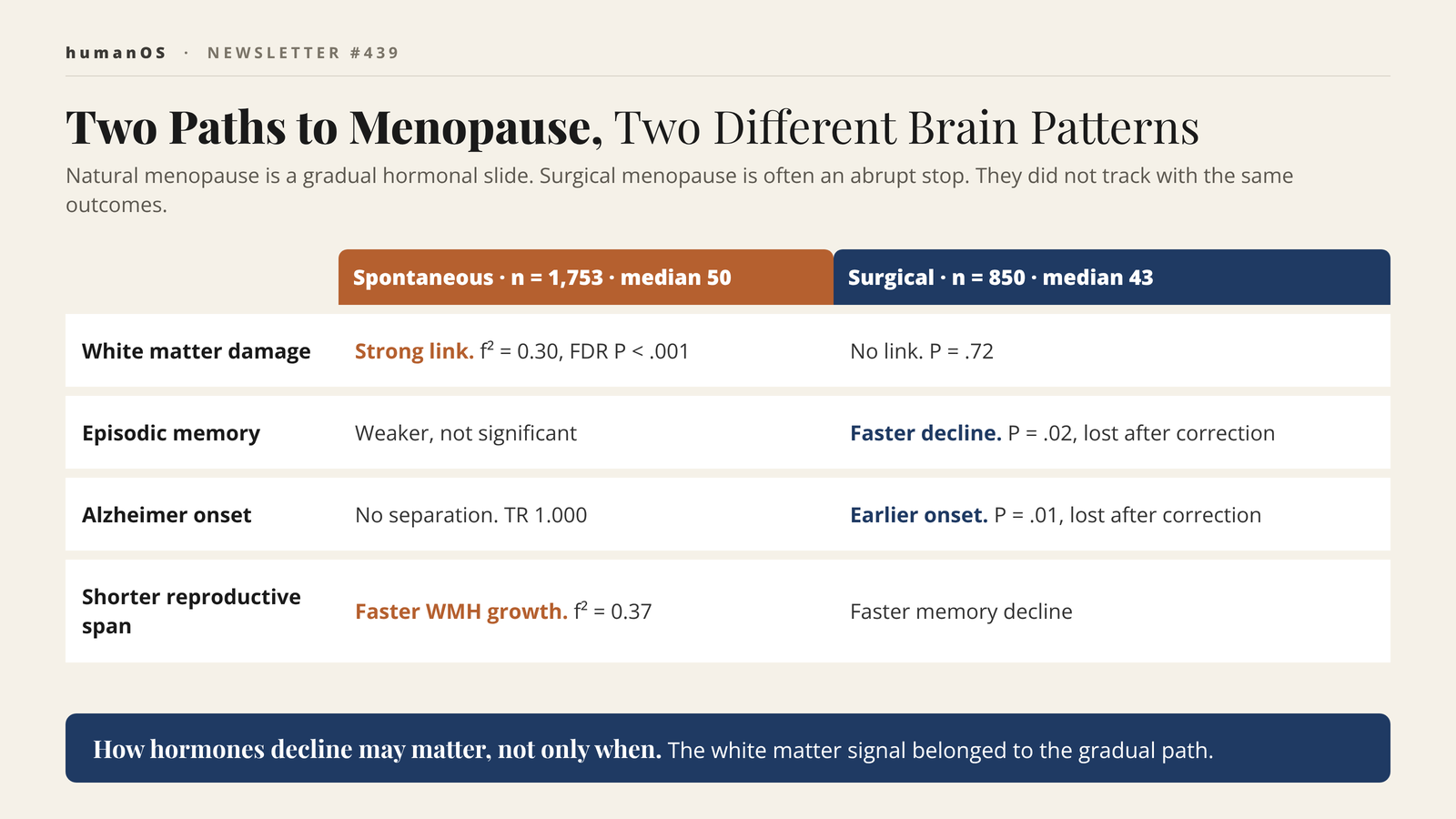
It seems to. Natural and surgical menopause showed different patterns.
Natural menopause is a gradual slide in hormones over several years. Surgical menopause, from removing the ovaries, is often an abrupt stop. The white matter link showed up only in natural menopause. The surgical group showed hints of faster memory decline and earlier Alzheimer's, but those signals didn't hold up after the researchers corrected for running many tests.
Outcome | Natural menopause | Surgical menopause |
White matter damage | Strong link with earlier menopause | No link |
Episodic memory decline | Weaker, not significant | Faster, but not significant after correction |
Alzheimer's onset | No clear difference | Earlier, but not significant after correction |
The authors read this as a sign that how hormones decline may matter, not only when. One caution is that the surgical group was mixed. Some women had their ovaries removed and some kept them, and the data couldn't separate the two.
Menopause Age Is a Midlife Clue
The authors propose menopause age as a marker that can be identified in midlife to flag women who may benefit from earlier prevention.
Most women know when their periods stopped. A doctor can ask in under a minute. That makes it one of the cheapest pieces of risk information available, and it shows up decades before memory problems or brain changes would.
This study didn't test any treatment. But because the strongest signal was in small blood vessels, vascular health is the natural place to focus. The best evidence here comes from blood pressure. In the SPRINT MIND trial, intensive blood pressure control slowed the growth of white matter lesions compared with standard care. Staying active and not smoking also protect the same small vessels.
What about hormone therapy? The study couldn't answer that. Too few women started it within five years of menopause, the window where it's thought to be most likely to help the brain.
The usual limits apply. This was an observational study, so it shows links, not cause. Nine in ten women were White. Menopause age was recalled decades later, and the women who had MRI scans were healthier than the group overall.
Common Questions
What age counts as early menopause?
Menopause before 45 is usually called early menopause. Menopause before 40 is called premature menopause, or primary ovarian insufficiency. The average age in the US is about 51.
What are white matter hyperintensities?
They're bright spots on an MRI scan that show damaged white matter, the brain's wiring. They're mostly caused by small vessel disease and are linked to slower thinking, memory problems, stroke, and dementia.
Does early menopause cause dementia?
This study can't show that. It found that earlier menopause was associated with faster brain aging, and the differences per year were small. Many women with early menopause will never develop dementia.
Can hormone therapy protect the brain after early menopause?
This study couldn't tell. Too few women used hormone therapy in the window thought to matter most. It's a question worth discussing with a doctor, especially for women with early or premature menopause.
What can women with early menopause do now?
The study didn't test interventions. The strongest link was with small vessel damage, so keeping blood pressure in a healthy range, staying active, and not smoking are reasonable places to start.
Summary: Campagna and colleagues followed 2,603 women (mean age 78) from two Rush cohorts for up to 18 years. Median menopause age was 49 (spontaneous 50, n = 1,753; surgical 43, n = 850). Each year earlier menopause was associated with faster global cognitive decline (β = −0.0009 SD/yr, FDR P = .04), faster episodic memory decline (β = −0.0014, FDR P = .03), and earlier Alzheimer's diagnosis (time ratio 0.998, FDR P = .02). In 774 women with serial 3T MRI brain imaging, total brain volume loss was modestly faster (f² = 0.013). The largest effect was faster white matter hyperintensity accumulation in spontaneous menopause (n = 522, f² = 0.30, FDR P < .001), about 15% more volume per decade for menopause five years earlier. Surgical menopause showed no white matter hyperintensity link. Alzheimer's pathology at autopsy (n = 1,287) was not significant (OR 0.99). Hormone therapy use was too low to test.
Random Trivia & Weird News
Grandmothers and Long Lives
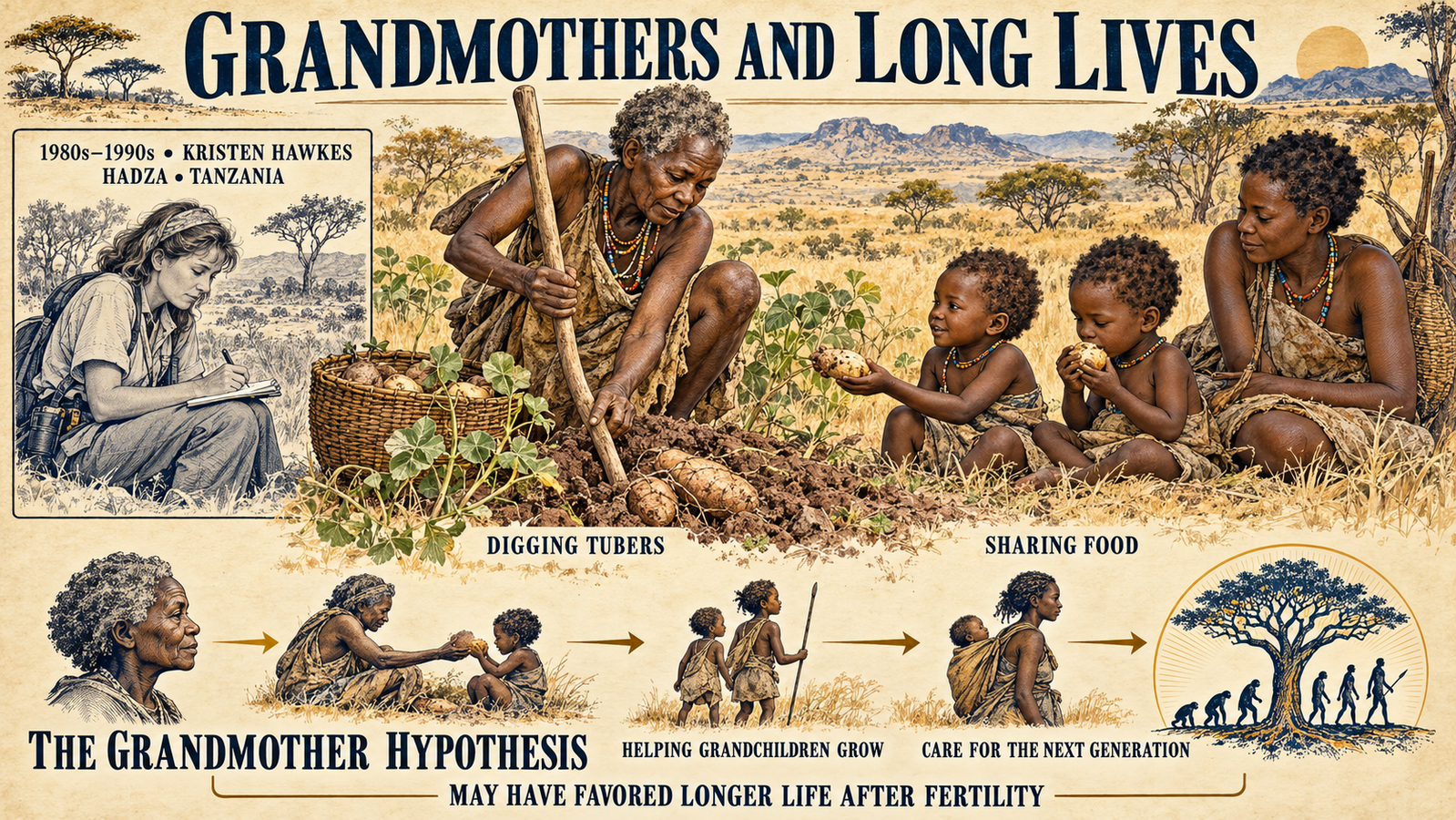
Why do women live for decades after they can no longer have children? In the 1980s and 1990s, anthropologist Kristen Hawkes studied the Hadza, hunter-gatherers in Tanzania. She saw that older women spent long days digging tubers and sharing them with their grandchildren, which helped those children grow. This became the grandmother hypothesis. It proposes that grandmothers who helped feed the next generation gave our species its unusually long life after fertility ends.
On that note….
Orca Grandmothers Lead the Pod
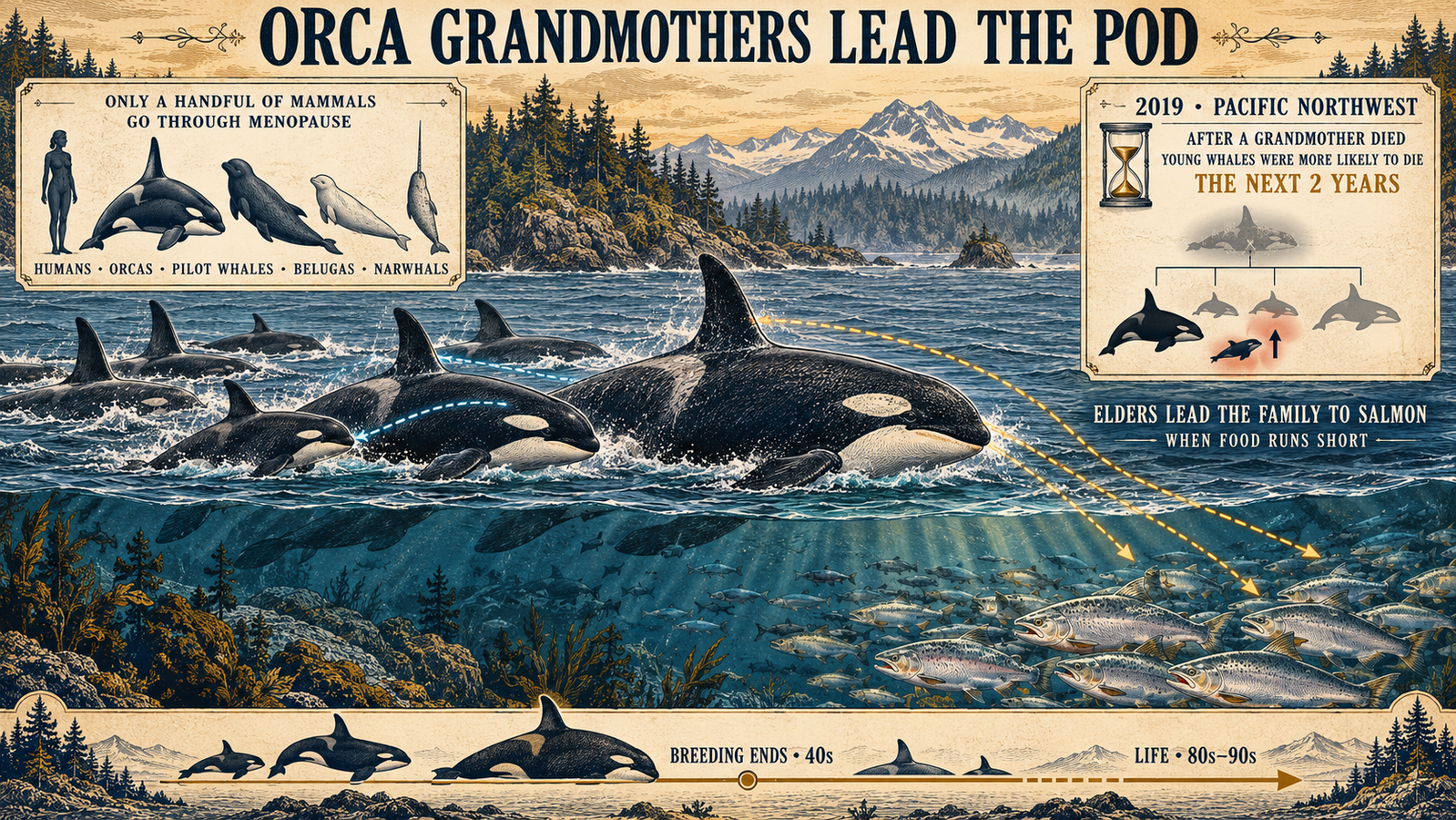
Only a handful of mammals go through menopause. Humans are one. The others are toothed whales, including orcas, short-finned pilot whales, belugas, and narwhals. Female orcas usually stop breeding in their 40s but can live into their 80s or 90s. A 2019 study of orcas in the Pacific Northwest found that young whales were more likely to die in the two years after their grandmother died. Older females seem to lead the family to salmon when food runs short.
Timely News - the 2026 Nobel Prize in Physiology or Medicine.
From Algae to a Brain Switch with Light
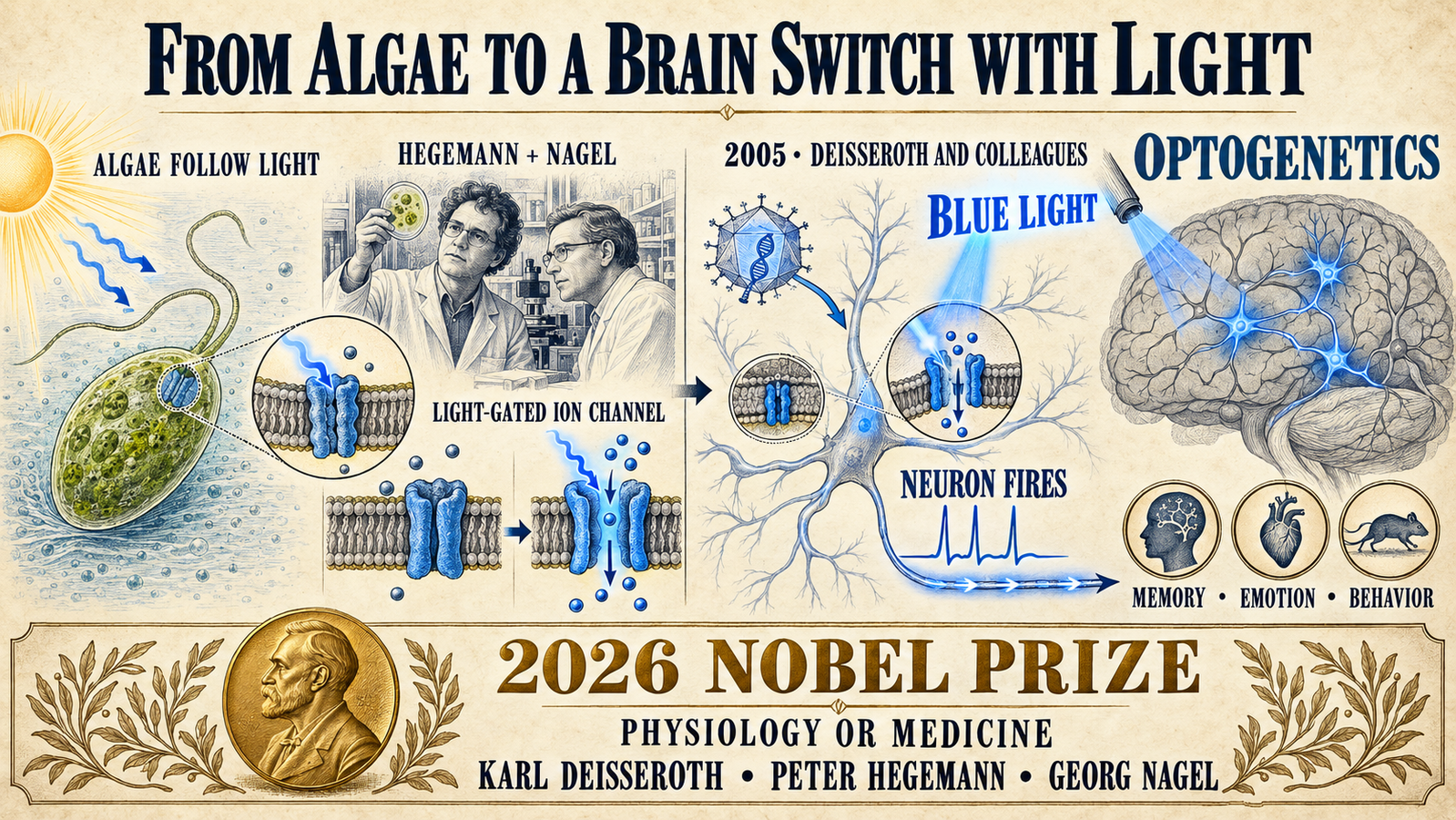
Algae use light to find their way. Scientists found a way to put that ability to work in the brain. Peter Hegemann and Georg Nagel discovered a protein in algae that opens an ion channel when illuminated. In 2005, Karl Deisseroth and his colleagues showed that putting its gene into nerve cells let them trigger electrical signals with blue light. The technique, called optogenetics, lets researchers test how specific cells contribute to memory, emotion, and behavior. On October 5, the three scientists were awarded the 2026 Nobel Prize in Physiology or Medicine.
Products We Love
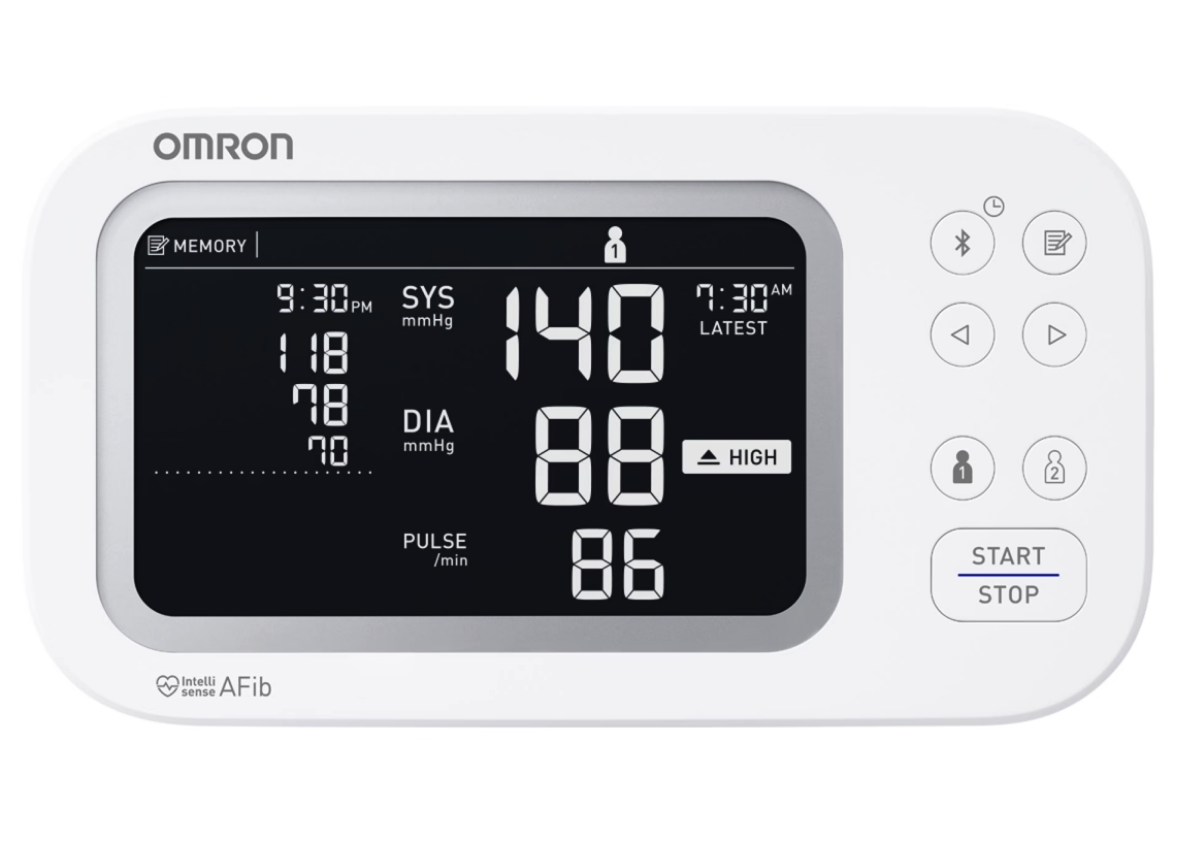
OMRON Platinum Blood Pressure Monitor
Blood pressure is the best-established lever for protecting the brain's small blood vessels, and the only way to know your numbers is to measure them. Readings at home are often more useful than a single reading at the clinic, where stress can push them up. The OMRON Platinum is an upper-arm monitor with a cuff that fits most adults. Its TruRead mode takes three readings in a row and averages them. It stores readings for two users, flags irregular heartbeats, and syncs to the OMRON Connect app so you can track trends over months.
humanOS Catalog Feature of the Week
Neurotrophic Factors and Blood Flow, from Nutrients for Thinking
Why does an organ that makes up just 2 to 4 percent of your body weight claim about 20 percent of your blood supply? This lesson from our Daily Performance & Diet course looks at how blood flow and growth factors keep the brain working. We cover how flavonoids get past the blood-brain barrier, a hurdle that stops many drugs, and the research on fisetin, a strawberry compound studied at the Salk Institute. We also look at how quickly flavonoid-rich foods can sharpen thinking in both children and adults.
Enjoying these? A Pro membership keeps the newsletter going and unlocks the full humanOS library of courses, guides and protocols. $19.99 per quarter.
Join here: Become a Member
Wishing you the best,