
Newsletter #423
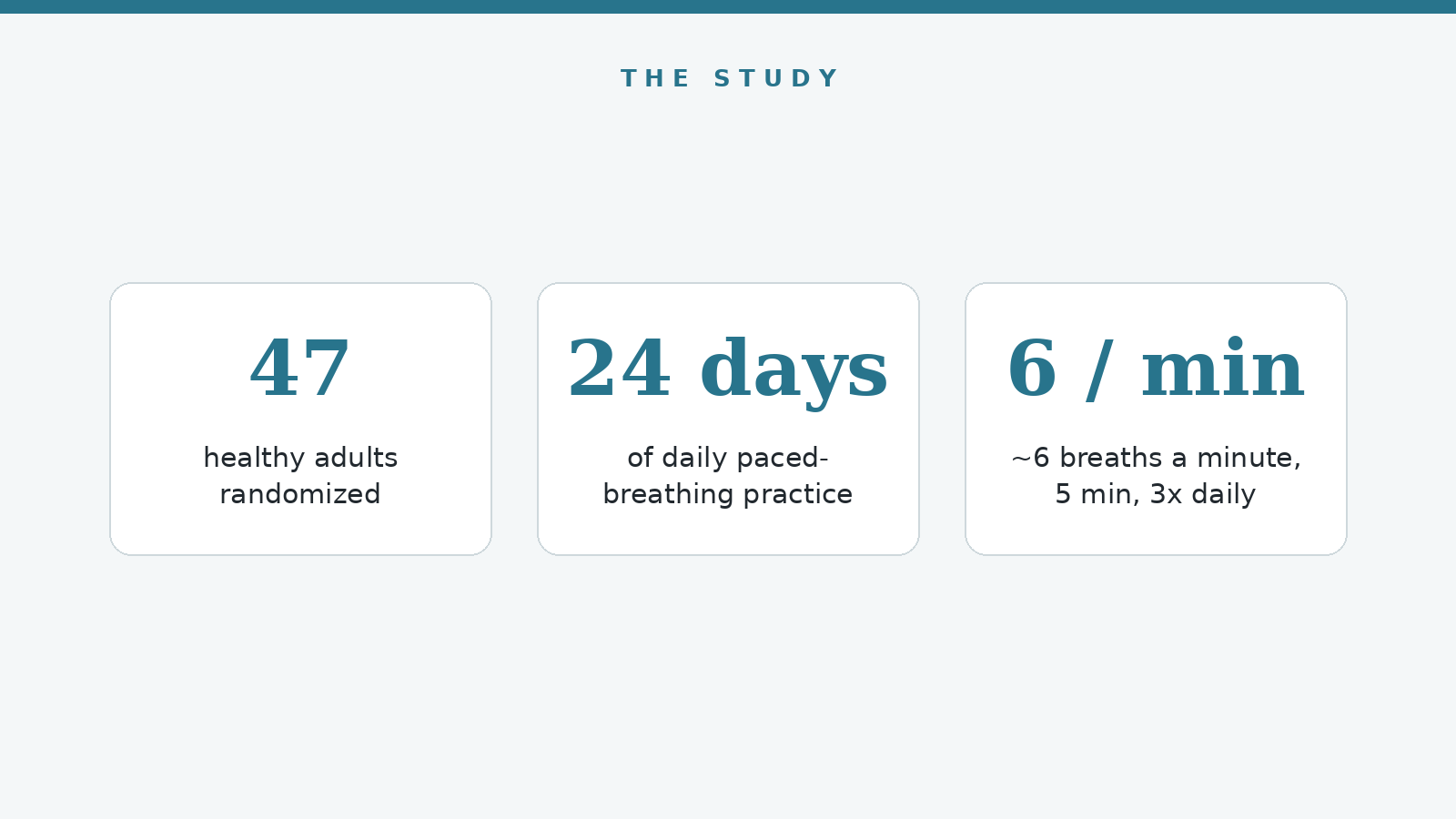
Slow breathing is an intervention that survives skeptical scrutiny. The protocol that has defined the field for the past two decades is five minutes of paced breathing at roughly six breaths per minute, three times a day, over several weeks.
The rationale has been equally straightforward. Slow breathing increases heart rate variability, which is thought to strengthen vagal tone and, in turn, improve mood and resilience.
But a new randomized controlled trial tested that explanation more rigorously than any before it by comparing slow breathing with a sham intervention. The findings shift the conversation toward a different question. What is actually driving the benefit?
If these newsletters are a regular part of how you stay informed on health and longevity, consider supporting the work with a Pro membership. $19.99 per quarter, about $1.67 per issue, less than a coffee tip.
Join here: Become a Member
Review Your Learnings: Newsletter Summaries ✨
Heart rate variability biofeedback versus sham-controlled biofeedback: A randomized controlled trial
The Trial That Built a Fake Group
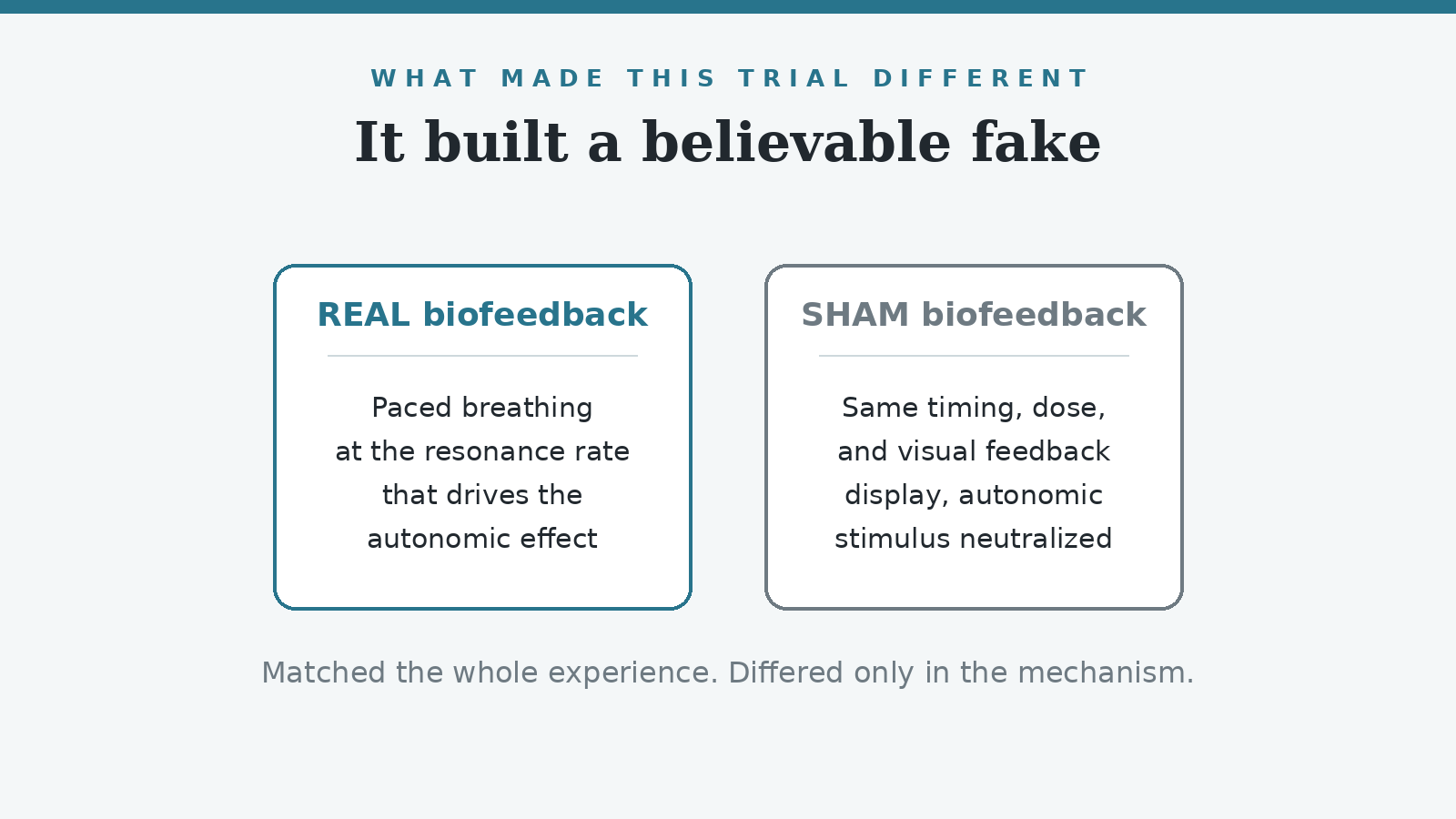
Most published breathwork studies do not have a believable placebo. The challenge is obvious. You cannot give someone a fake breathing exercise that feels nothing like the real thing, and so a comparison between real practice and no practice always carries the suspicion that the daily ritual, the attention, and the expectation of feeling better are doing some unmeasured fraction of the work. Sandrine Minjoz and colleagues, writing in Biological Psychology, set out to fix that. They built a sham version of the standard heart rate variability biofeedback protocol that preserved everything about the experience, the timing, the dose, the visual feedback display, the daily commitment, while quietly neutralizing the parts of the practice that are supposed to drive the autonomic effect. They then recruited healthy adults, randomized them, and ran the protocol for about three and a half weeks.
Before and after the trial, the team measured each participant's heart rate variability at rest, while reacting to a controlled laboratory stressor, and during recovery from that stressor. They also tracked mood. Positive affect, negative affect, and depressive symptoms.
Mood Lifted. Heart Rate Variability Did Not.
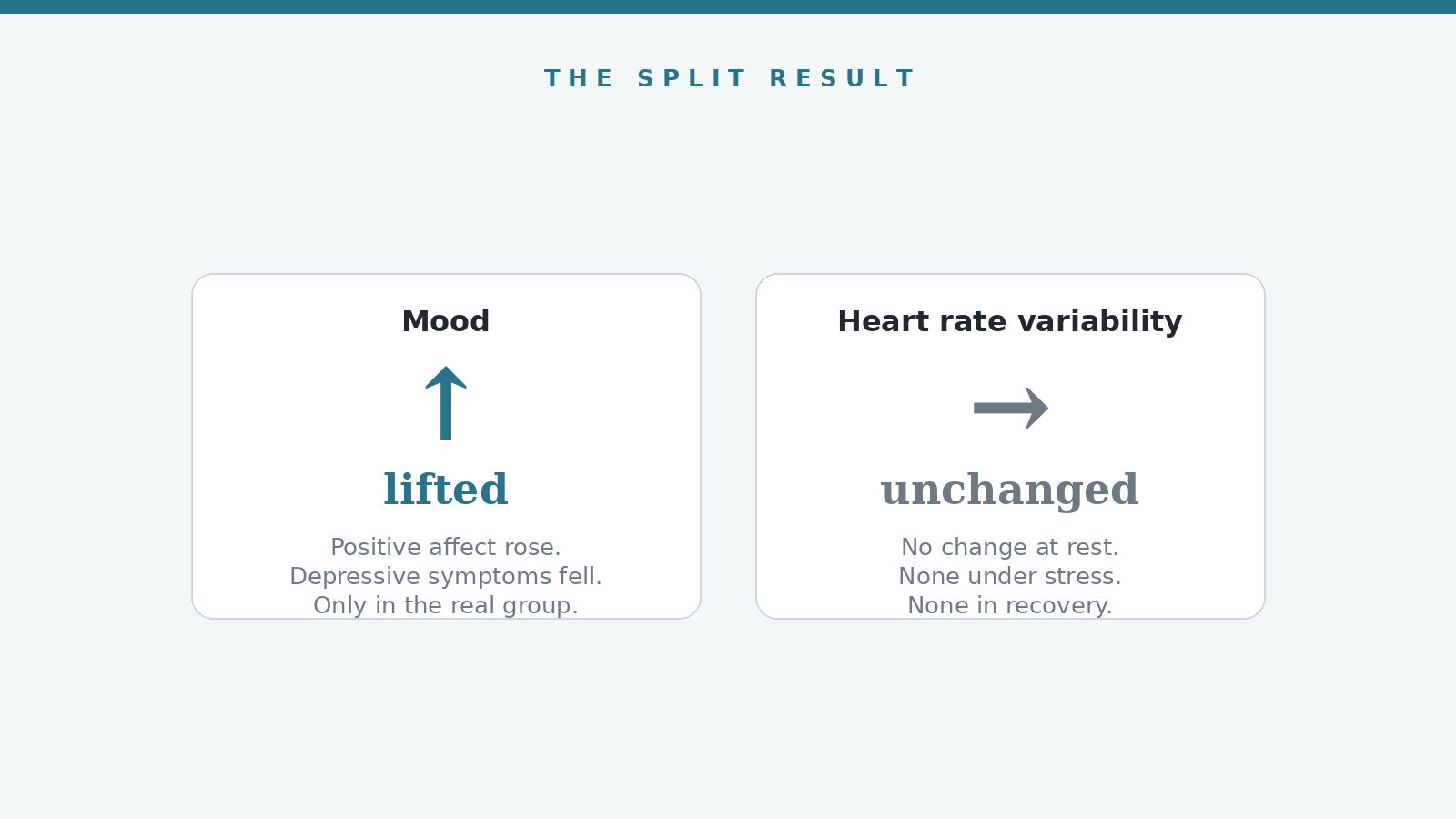
The mood data were clean. Compared with the sham group, the real biofeedback group reported significant increases in positive affect at the end of the trial, and significant reductions in depressive symptoms. The effect size was modest, but it was clearly larger than what the fake practice produced, and consistent enough across participants to be unlikely to be chance.
The autonomic data were not clean. Resting heart rate variability did not differ between groups. Variability while reacting to the stressor did not differ. Variability during recovery did not differ either. By every measure the trial collected, the autonomic system looked the same in people who had spent twenty-four days doing real slow breathing and in people who had spent twenty-four days doing fake slow breathing. The downstream effect was real. The upstream mechanism was missing.
The implication is interesting and not bad news. It means slow breathing helps mood. It also means the cleanest story for why, the one the field has told itself for two decades, may not be the whole story. Something else is doing the work.
A Flat Number Is Not a Failed Practice
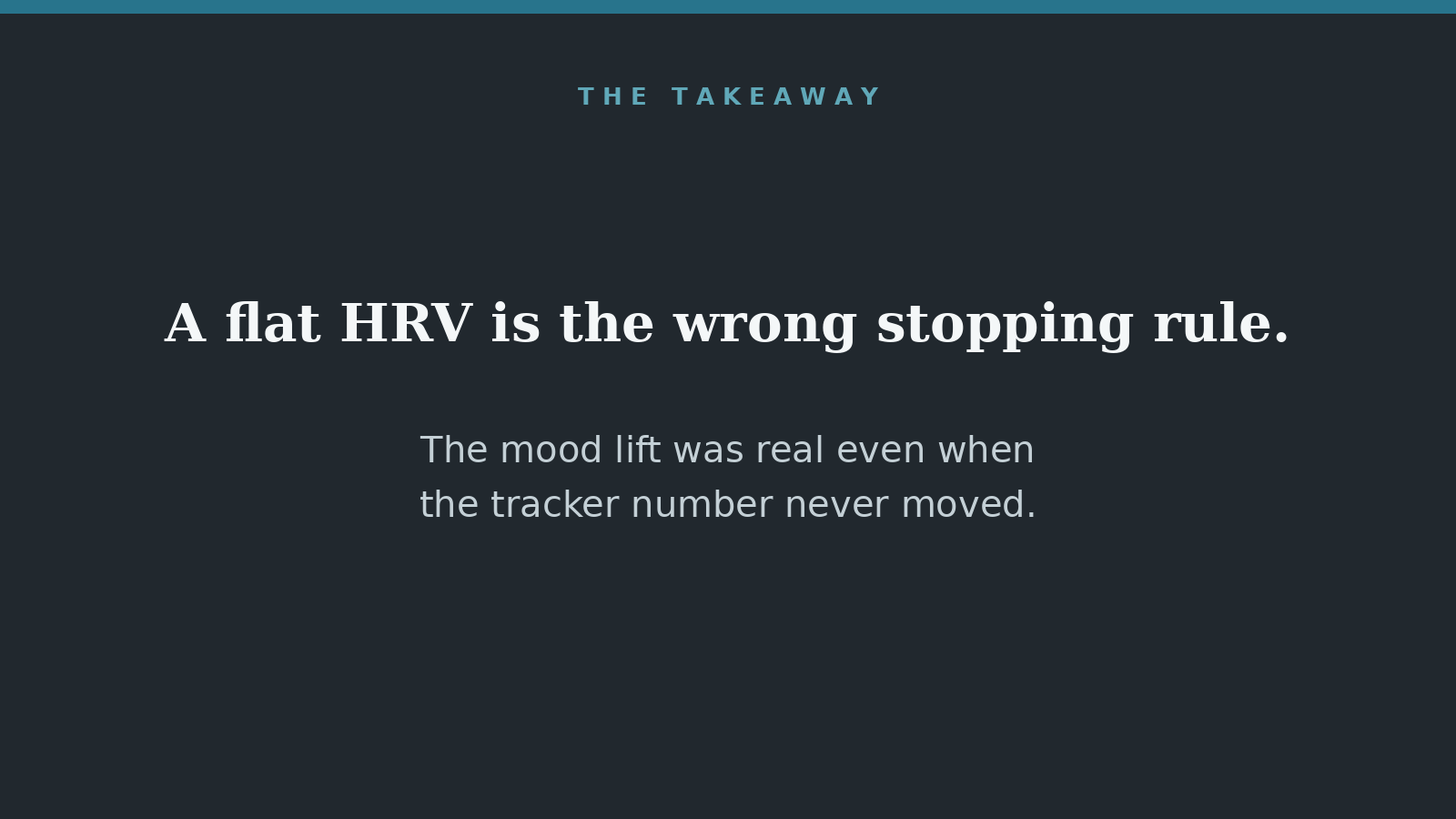
This result quietly undercuts the wearable-as-verdict culture that has grown up around breathwork. Many people set up a daily breathing practice, watch their heart rate variability stay flat on their tracker, and conclude that the practice is not working. This trial argues the opposite. The mood lift is real even when the variability number does not move. Stopping a practice because the variability stays flat is, on this evidence, the wrong stopping rule.
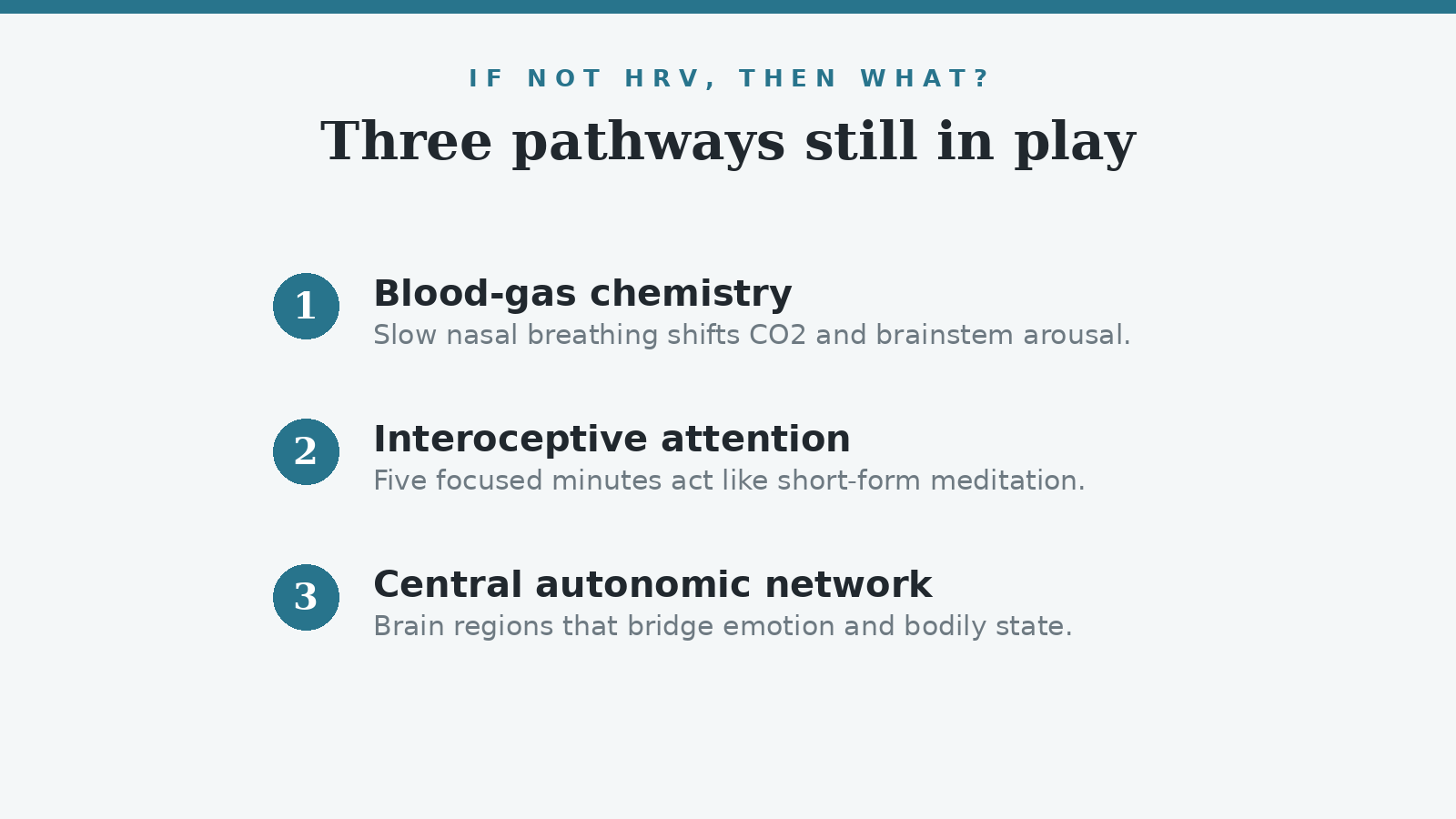
There are several mechanisms that remain plausible candidates for what slow breathing is doing. None of them are exotic. Slow nasal breathing changes blood-gas chemistry in ways that influence brainstem arousal independently of beat-to-beat heart rate. Repeated five-minute episodes of focused breathing are also a low-dose attentional practice, an interoceptive turn inward that resembles short-form meditation. The central autonomic network in the brain, a set of regions that bridges emotion regulation and bodily state, is sensitive to both. Either pathway could lift mood without leaving a fingerprint on a standard variability measurement.
Modern life pulled us out of a particular kind of breathing. The natural human breath, observed in resting infants, in unhurried sleep, in animals at peace, sits closer to six per minute than the twelve to twenty we average through our days. The act of slowing the breath may not be unlocking some special biofeedback channel. It may be returning us to a baseline our nervous systems already know how to use, after a few decades of being pushed off it by speed, screens, and a steady drip of low-grade stress. The right way to read this trial is that the practice works. Where the benefit actually lives is the open question.
For my own part, this settles something. I am going to keep my mid-morning and afternoon breathing practice and not worry if my HRV on my Oura Ring notices.
Summary: In a 24-day randomized controlled trial of 47 healthy adults, daily heart rate variability biofeedback (paced breathing at approximately 6 breaths per minute, 5 minutes three times daily) significantly improved positive affect and reduced depressive symptoms compared with a credible sham protocol that matched dose, timing, and visual feedback while neutralizing the autonomic stimulus. Despite the mood gains, the active group showed no statistically detectable change in resting heart rate variability, in heart rate variability reactivity to a laboratory stressor, or in heart rate variability recovery. The result decouples the psychological benefit of slow breathing from the autonomic mechanism long credited for it, and points to alternative pathways including blood-gas chemistry, interoceptive attention, and central autonomic network engagement. The findings caution against using wearable-derived heart rate variability as a sole indicator of whether a slow-breathing practice is producing benefit.
Random Trivia and Weird News
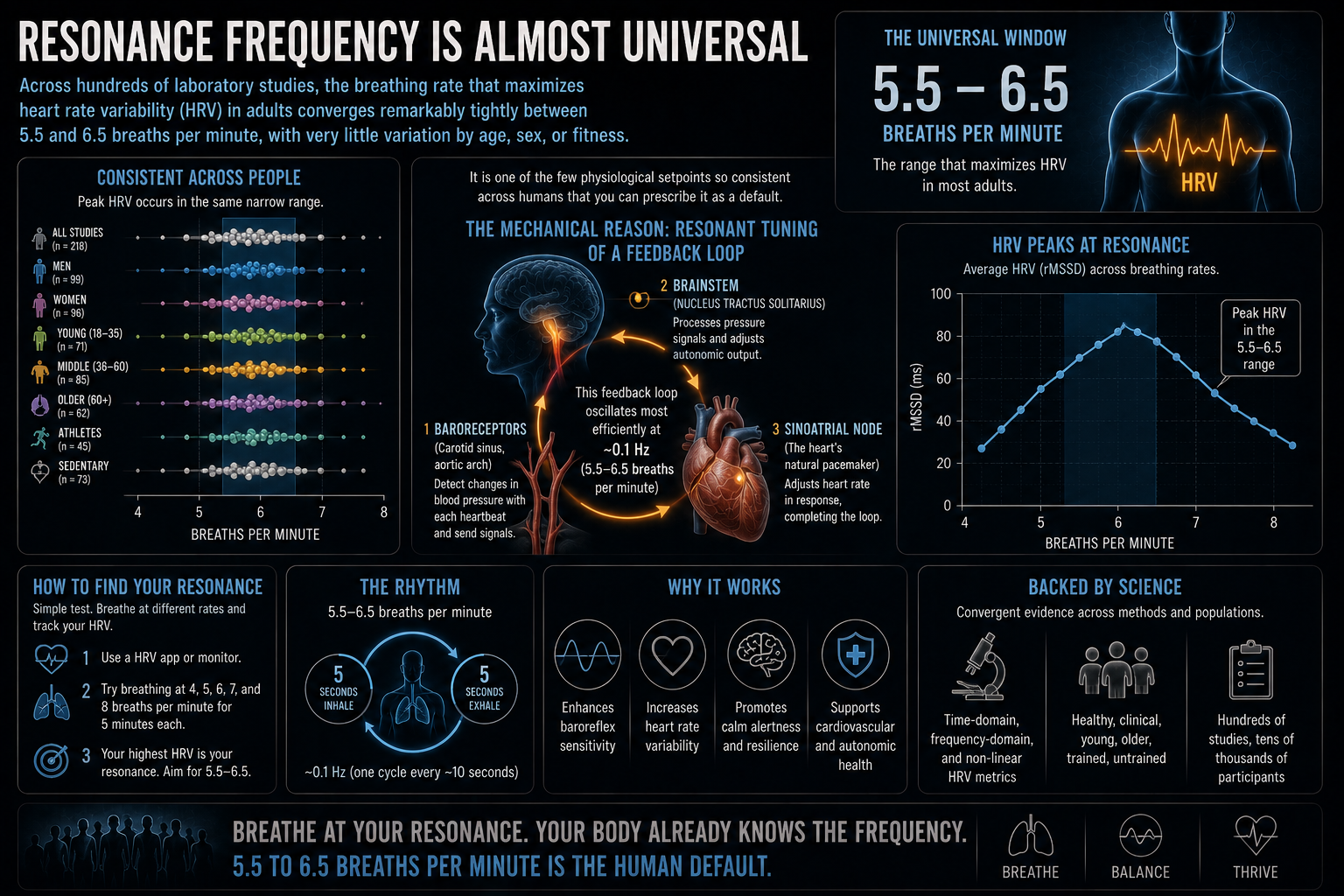
Resonance Frequency Is Almost Universal
Across hundreds of laboratory studies, the breathing rate that maximizes heart rate variability in adults converges remarkably tightly between five and a half and six and a half breaths per minute, with very little variation by age, sex, or fitness. It is one of the few physiological setpoints so consistent across humans that you can prescribe it as a default. The reason is mechanical. It is the resonant tuning of a feedback loop between the baroreceptors, the brainstem, and the sinoatrial node.
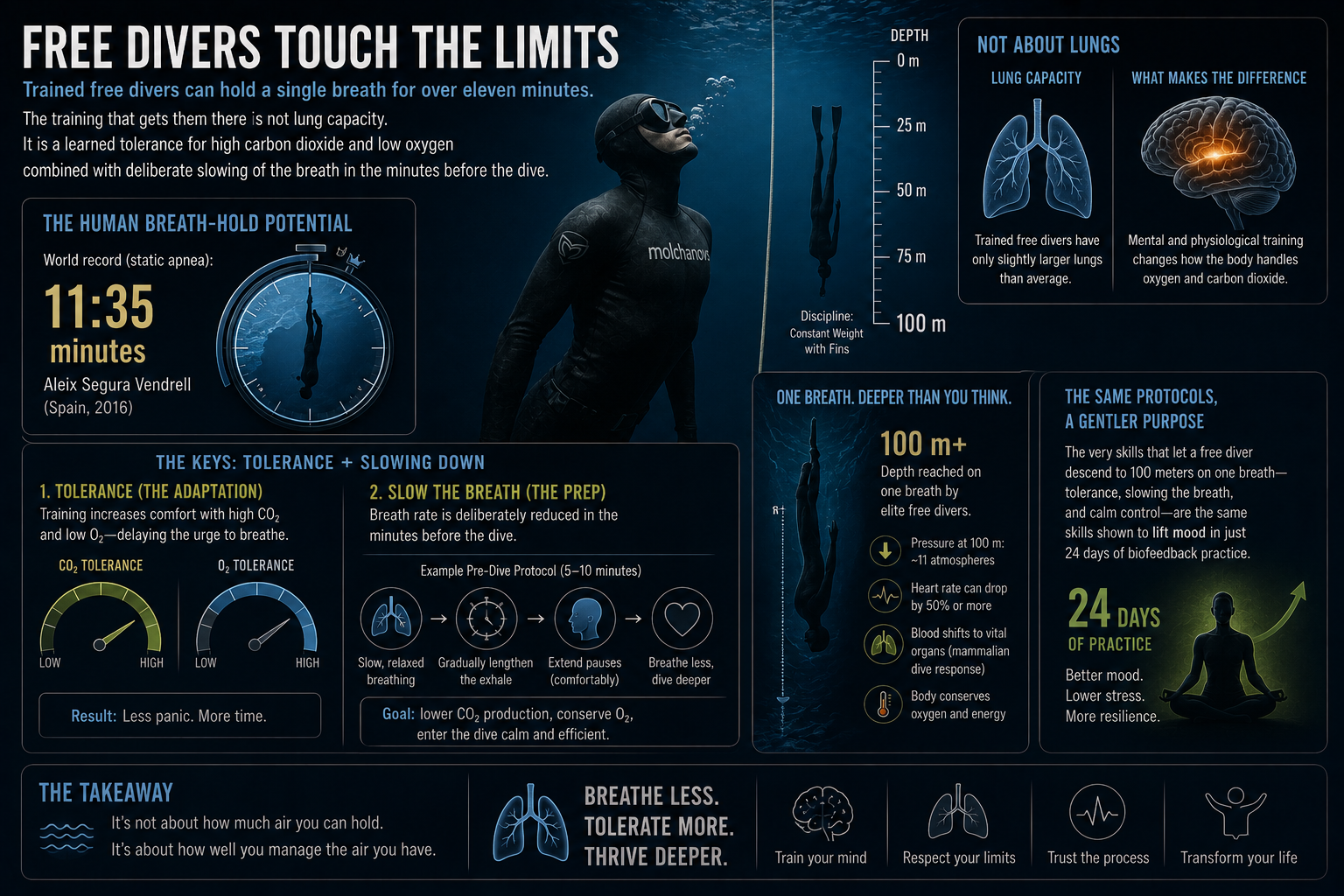
Free Divers Touch the Limits
Trained free divers can hold a single breath for over eleven minutes. The training that gets them there is not lung capacity. It is a learned tolerance for high carbon dioxide and low oxygen combined with deliberate slowing of the breath in the minutes before the dive. The same protocols that let a free diver descend to a hundred meters on one breath are, in shorter and gentler form, the same protocols that lift mood in twenty-four days of biofeedback practice.
Products We Love
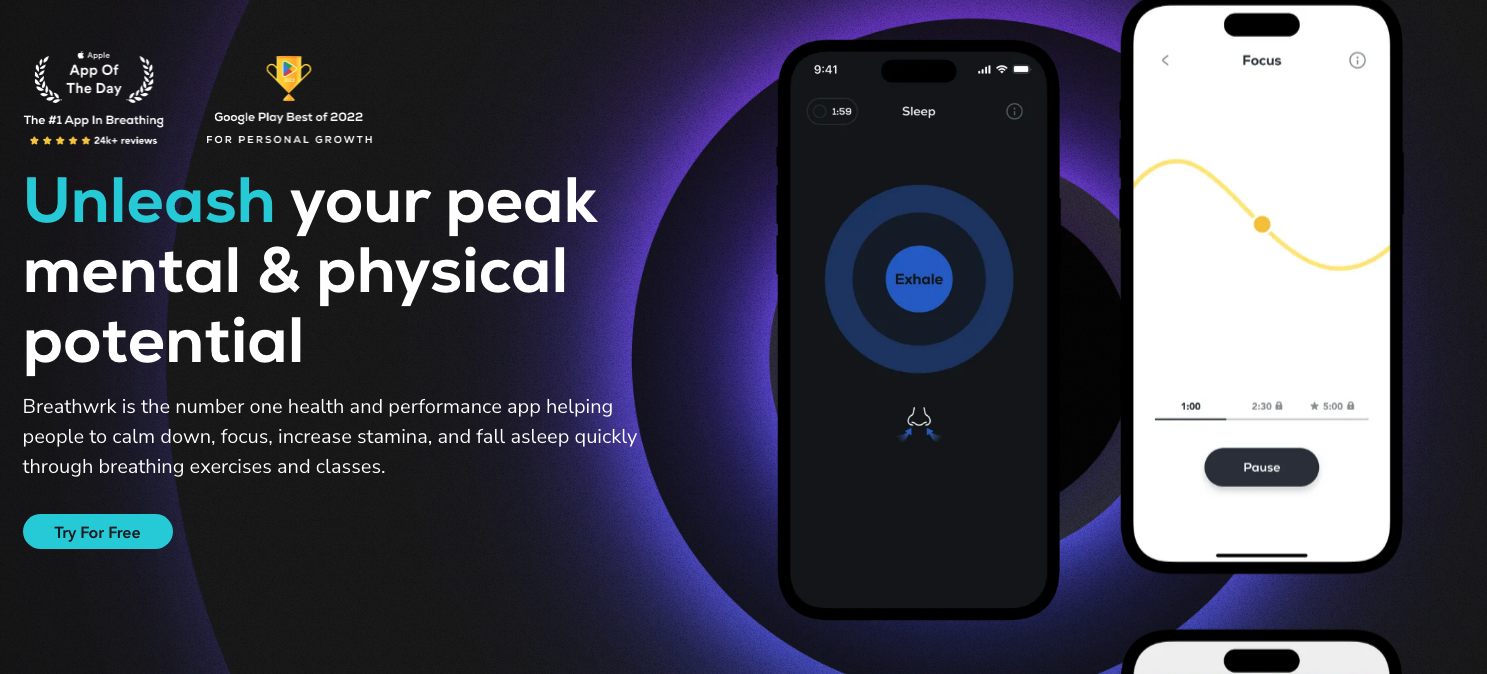
Breathwrk
Breathwrk is the breathing app I keep on my phone. It runs short guided sessions paced to a slow, steady rhythm, with a clean visual to follow and gentle audio cues so you are not watching a clock. There are tracks for calming down, for focus, and for sleep, and most take only a few minutes. What I like is that it asks nothing of a wearable. You set the pace, you follow the animation, and you feel the shift. It is free to start, with a subscription that unlocks the full library. I reach for it when I notice my breathing has crept fast during the day, and a few minutes brings me back down.
humanOS Catalog Feature of the Week

Heart Rate Variability (HRV): A Conversation with Expert Phyllis Stein
What can a heartbeat tell you that a wearable cannot? Phyllis Stein directs the Heart Rate Variability Lab at Washington University and has spent decades reading the rhythm of the human heart to predict who stays well and who does not. In this humanOS Radio conversation she explains what HRV actually measures, why so many consumer devices oversell what their numbers mean, and where the science is solid versus where it is still marketing. She is candid about the limits of tracking your own HRV, and clear about what a daily reading can and cannot tell you about your stress and recovery.
If today's newsletter was worth your time, a Pro membership is what keeps it coming. Only $1.67 per newsletter!
Join here: Become a Member
Wishing you the best,