
Newsletter #414
Sauna bathing has been linked to a long list of health benefits. Lower blood pressure. Less cardiovascular disease. Less dementia. Less respiratory illness. But the biology behind those outcomes is still fuzzy. One common theory is that heat acts like mild exercise, triggering immune changes that compound over time. A new Finnish study put that idea to the test. Researchers evaluated immune system markers before, during, and after a sauna session. The findings were not quite what anyone expected. Let's take a look!
If these newsletters are a regular part of how you stay informed on health and longevity, consider supporting the work with a Pro membership. $19.99 per quarter — about $1.67 per issue, less than a coffee tip.
Join here: Become a Member
Review Your Learnings: Newsletter Summaries ✨
Acute Finnish Sauna Heat Exposure Induces Stronger Immune Cell Than Cytokine Responses
What Sauna Has Been Linked To
Regular sauna bathing is associated with better outcomes across a long list of conditions. Hypertension. Heart disease. Stroke. Dementia. Pneumonia. Overall mortality.
That is an impressive list but the problem is that we still do not have a clean mechanistic story. Researchers suspect the benefits come from some combination of cardiovascular strain, improved vascular function, and immune activation. The immune piece in particular has been understudied. Most of what we know comes from longer-term observations, not controlled exposures.
The Question This Study Asked
The research team wanted to know what actually happens inside the body during and after a single sauna session. Specifically, they wanted to know if heat mobilize the immune system the way a hard workout does? And if so, what exactly gets mobilized — the immune cells themselves, the signaling molecules they release, or both?
Study Design: 51 Adults, One Sauna, Lots of Blood Work
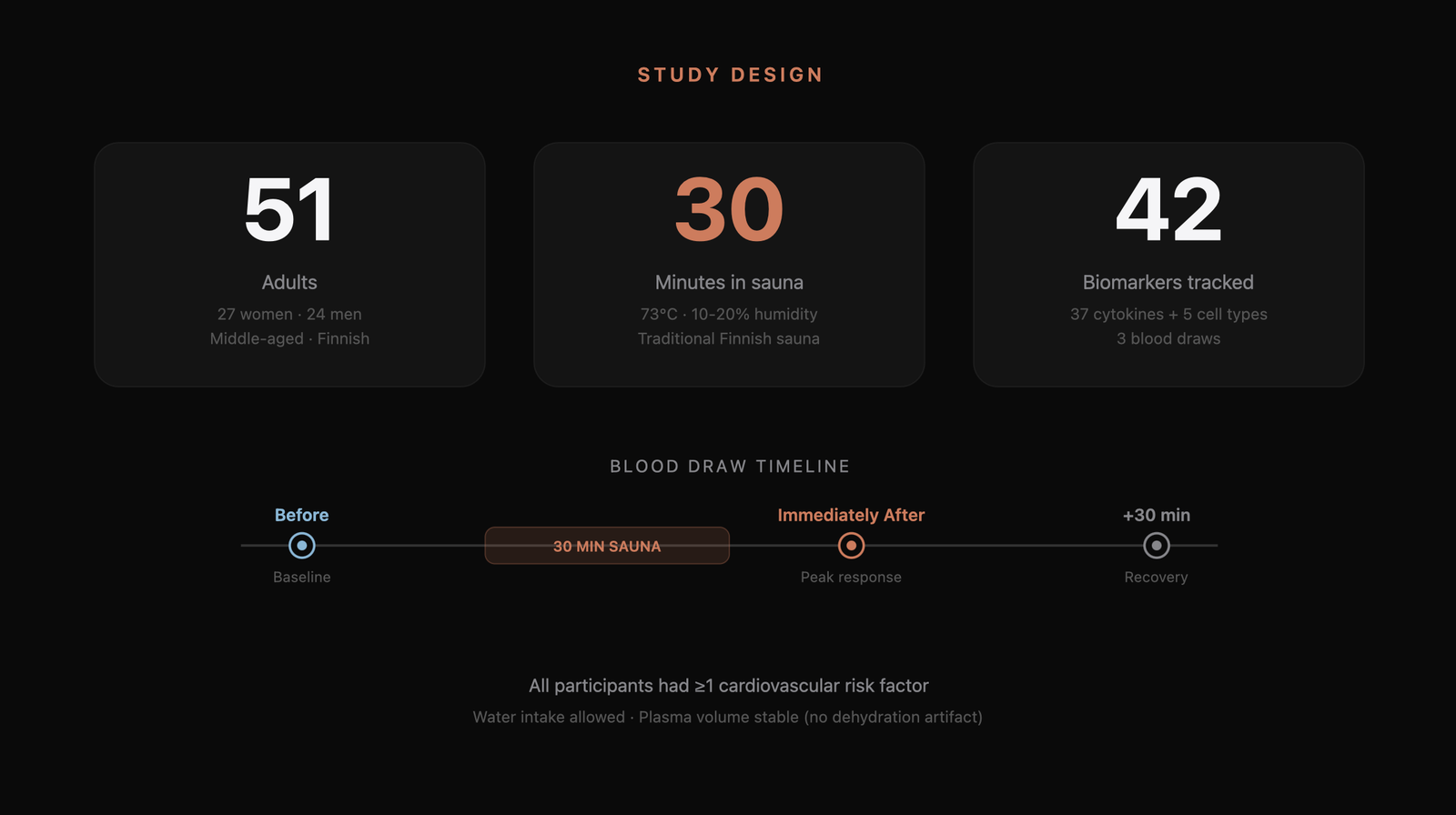
The researchers recruited 51 middle-aged Finnish adults: 27 women and 24 men. All were healthy but carried at least one cardiovascular risk factor, such as hypertension, elevated BMI, or family history.
Each participant spent 30 minutes in a traditional Finnish sauna at 73 degrees Celsius with 10 to 20 percent humidity. They were allowed to drink water and take a short break halfway through.
Blood was drawn at three time points. Before the sauna. Immediately after. And 30 minutes later.
From that blood, the team measured white blood cell counts across the major subtypes, along with 37 different cytokines — the signaling molecules that coordinate immune responses.
Body Temperature Climbed Fast
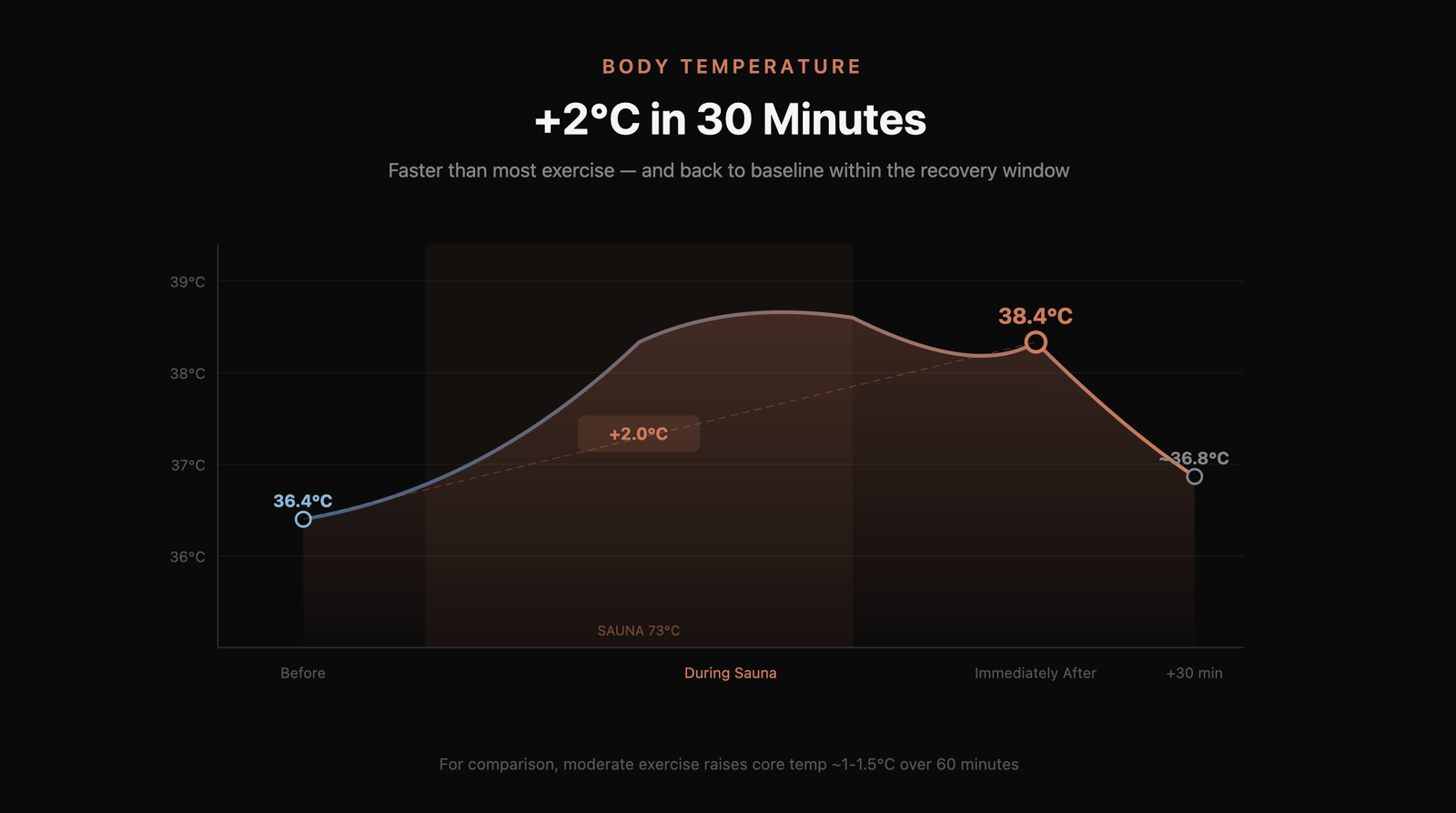
Core body temperature rose from 97.5 °F to 101.1 °F (36.4 to 38.4 °C) during the session. A 3.4°F (2°C) spike in 30 minutes.
By the end of the recovery period, temperature had returned close to baseline.
Plasma volume did not meaningfully change, which matters because dehydration can create false signals in blood work. Since participants were allowed to drink water throughout, the blood results reflect real biological changes, not concentration artifacts.
White Blood Cells Went Up Across the Board
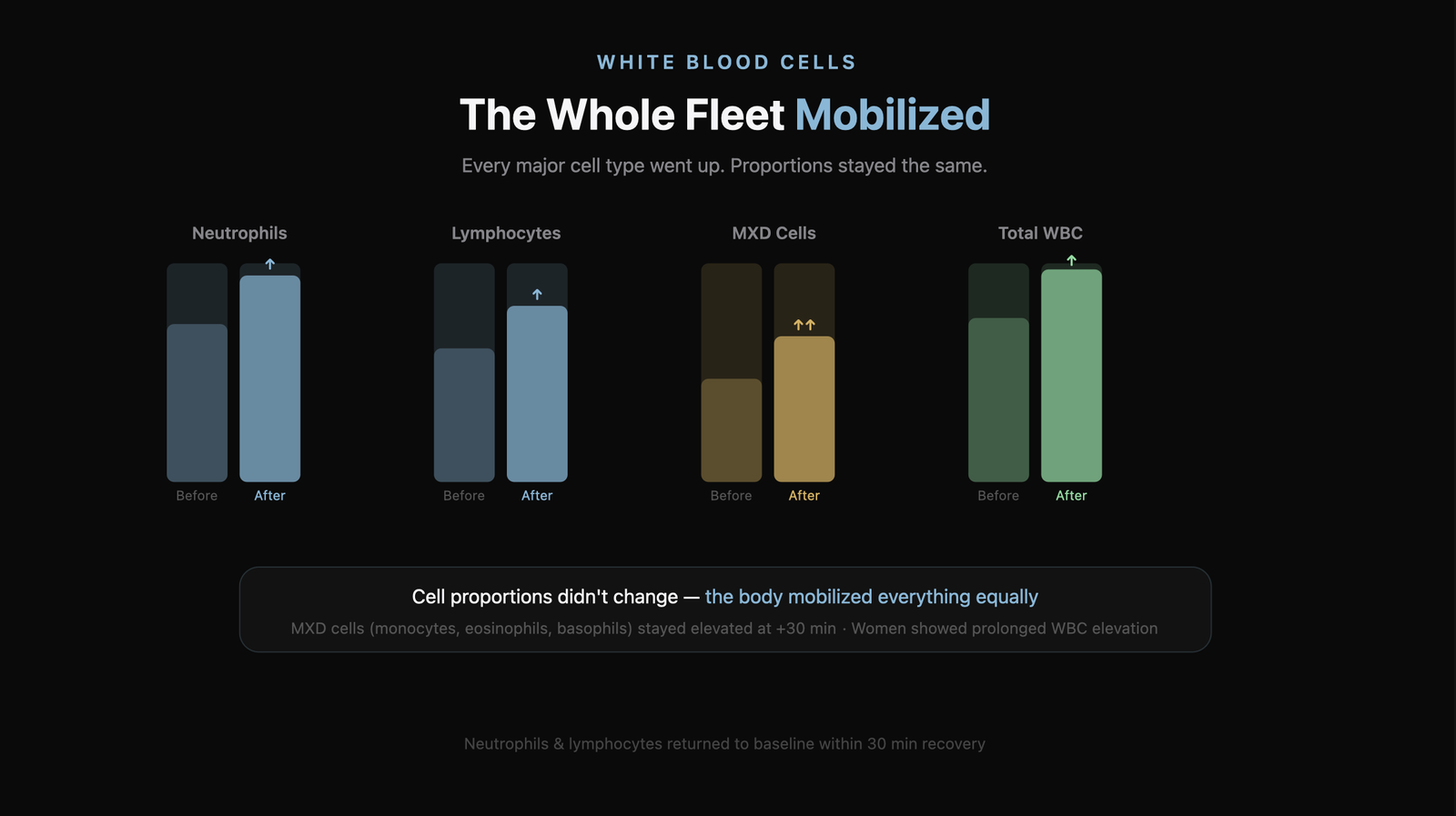
Total white blood cell counts rose significantly after the sauna session.
Neutrophils and lymphocytes spiked immediately post-sauna, then returned close to baseline within 30 minutes. MXD cells — a group that includes monocytes, eosinophils, and basophils — stayed elevated at the 30-minute mark.
In women, total WBC count was still elevated 30 minutes after exposure.
The proportions of the different cell types did not change. The body was not favoring one branch of the immune system over another. It was mobilizing the whole fleet.
The Cytokine Response Was Much Smaller
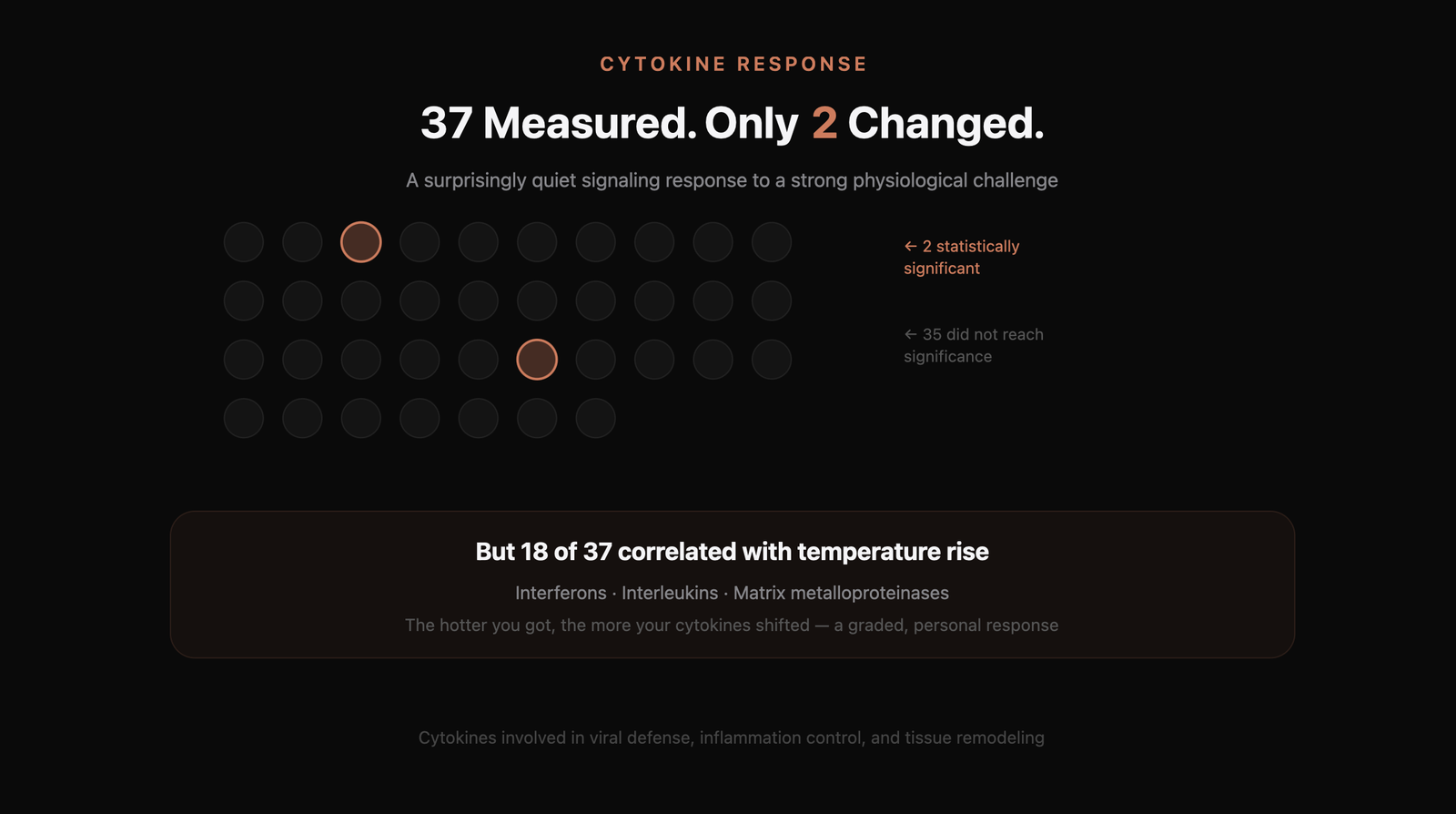
Of the 37 cytokines measured, only two showed statistically significant changes. One went down. One trended up. That is surprisingly little movement for what looks like a strong physiological challenge.
Body Temperature Was a Factor
Even though most cytokines did not change in absolute terms, 18 of them showed significant correlations with how much a person's body temperature rose during the sauna.
Participants who heated up more had larger shifts in interferons, interleukins, and matrix metalloproteinases — cytokines involved in viral defense, inflammation control, and tissue remodeling.
The cytokine response was proportional to the heat stress. The immune cell response was not.
Two Independent Systems
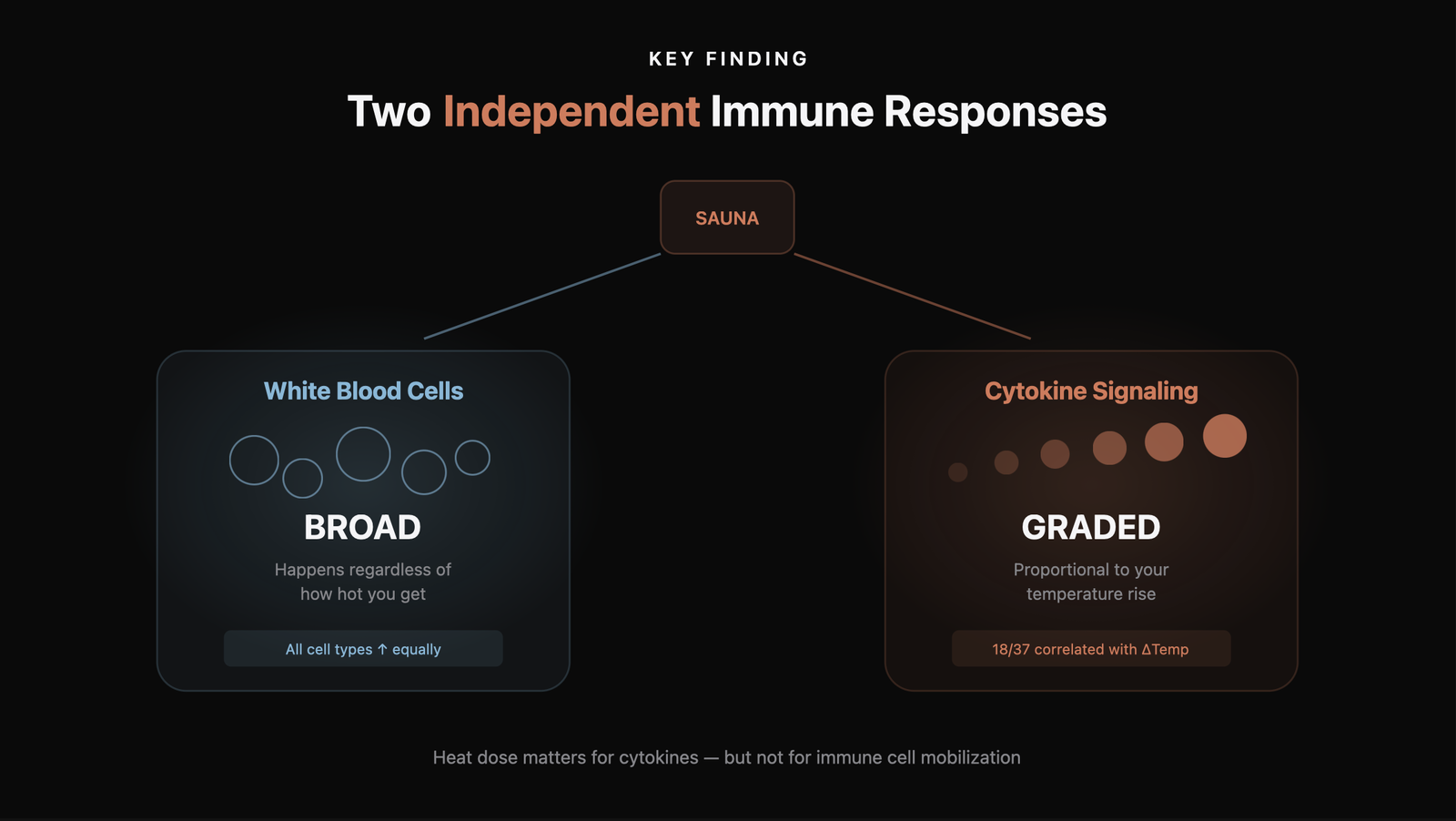
Here is the key insight: White blood cell mobilization and cytokine activation appear to be separate pathways. The WBC surge happened broadly, regardless of how hot the person got. The cytokine changes tracked more precisely with individual heat exposure.
That suggests two different layers of the acute sauna response. One response is general and the other graded.
It also means that the magnitude of the heat dose matters for part of the immune response — but not all of it.
Limitations to Keep in Mind
This is an acute study with a single session. It cannot tell us what repeated sauna use does over months or years. Tympanic thermometry — temperature measured at the ear — is a practical tool but not a perfect proxy for core body temperature. Participants were already regular sauna users, so heat-adapted. The response in a first-time user could look different. And the study only tracked basic immune cell subtypes. It did not look at specific T-cell populations or natural killer cells, which could tell a more nuanced story.
What This Means Going Forward

The bigger picture is that a single sauna session produces a real, measurable immune response.
It is not identical to exercise. It is not identical to infection. But it does mobilize a broad set of immune cells and nudge a wide panel of cytokines in proportion to how hard the body is working to cool itself.
That is probably part of what makes sauna useful. Not because it does something dramatic in any one session. But because it gently and repeatedly activates the systems that keep the body resilient.
Frequency likely matters more than intensity. Over time, that is what heat training looks like. Next, I’d like to see outcome data tied to this particular immune response. For instance, in a prospective cohort study over one year, do people who sauna get sick less frequently, where other factors - like nutrition and exercise level - are equal? If we find a meaningful response on cold and flu frequency, regular sauna usage would be especially helpful for people who find them selves ill too often. Personally, I already use regular sauna bathing as a cold-mitigation strategy. Hard to know for certain, but my experience suggests it works — I get sick less often, and when I do feel something coming on, illnesses seem to be shorter and milder with sauna usage.
Summary: A new Finnish study examined what happens to the immune system during a single 30-minute sauna session in 51 middle-aged adults. Researchers tracked white blood cell counts and 37 different cytokines before, immediately after, and 30 minutes after the sauna. Body temperature rose by about 2 degrees Celsius. Total white blood cell counts climbed broadly, with neutrophils, lymphocytes, and MXD cells all increasing. The proportions of immune cell types did not change, indicating a general mobilization rather than a targeted one. Only two cytokines changed significantly, but 18 showed correlations with the magnitude of temperature rise. The authors conclude that sauna triggers two distinct responses: a broad immune cell mobilization unrelated to heat dose, and a graded cytokine response proportional to it. Together these findings help explain how regular sauna bathing may support long-term immune resilience and cardiovascular health.
Random Trivia & Weird News
The Sauna Is Almost as Old As Writing

The Finnish sauna has been around for at least 2,000 years, and likely much longer. Archeological evidence suggests early saunas were dug into hillsides or built as wood-fired pits covered with animal skins. For centuries they served as birthing rooms, sick rooms, and the cleanest spaces in the household. Today, Finland has more saunas than cars, and the practice is so culturally embedded that even the Finnish parliament has its own sauna room. Few health practices in the modern world have been tested at such population scale, for so many generations, across such a wide age range.
The Finns Have A Word For Sauna Steam That Doesn't Exist in English

"Löyly" describes the specific kind of steam that rises when water hits hot sauna stones. It is considered an almost living phenomenon in Finnish tradition, capable of being good or bad depending on the care of the bather. Traditional sauna masters describe löyly as having its own rhythm and personality. It is not just heat and humidity. It is the atmosphere of the room. This level of cultural attention to a specific sensation suggests the Finns have been paying attention to subtle heat effects for a very long time. It reminds me of when I was in Iceland and learned they have over 100 words to represent different forms of wind. 💨
Podcasts We Loved This Week
- Melissa Urban: The Invisible Price of Poor Sleep and How To Fix It, Tech Hacks That Save Marriages, and the Longevity Equation via LONGEVITY with Nathalie Niddam
- Dr. Susanna Søberg: Deliberate Heat & Cold Exposure via Huberman Lab
Products We Are Enjoying

Qualia Magnesium+
Magnesium is one of those nutrients that quietly touches almost every system in the body, yet most people run low. Qualia Magnesium+ takes a different approach by combining 10 distinct forms of magnesium with over 70 trace minerals, designed to improve how magnesium is absorbed, distributed, and actually used at the cellular level. Instead of relying on a single form, it creates a broader spectrum effect that supports the brain, cardiovascular system, bones, and metabolic function.
I use this as part of my nightly routine. Before bed, it serves as a signal to shift gears. You can feel the nervous system start to downshift. Muscles relax, mental tension softens, and sleep comes on more easily. It is not sedating in a blunt way. It is more like removing friction from the system so the body can do what it is already designed to do.
humanOS Catalog Feature of the Week
Sauna Health Benefits. Podcast with Jari Laukkanen, MD, PhD
What if one of the most powerful tools for protecting your brain and heart isn’t a supplement or a workout, but something far older and simpler?
In this episode of humanOS Radio, I sat down with Jari Laukkanen—a clinical cardiologist and one of the lead authors behind the long-running Finnish studies featured in this newsletter. His work draws from decades of real-world data in a uniquely high-risk population.
We explore how a deeply ingrained cultural practice became the subject of serious scientific inquiry, and what his findings suggest about long-term health. The conversation raises questions that challenge how most people think about heat, recovery, and disease risk.
Wishing you the best,