
Newsletter #413
We know exercise is good for the brain, but the mechanisms remain surprisingly murky. Scientists have long suspected that brain-derived neurotrophic factor (BDNF)—a molecule that supports neuron health and growth—drives cognitive improvements after workouts. Yet studies linking BDNF spikes to actual cognitive performance have been frustratingly inconsistent. Now, a new study using brain imaging technology reveals something unexpected related to exercise and the brain. Let’s take a look!
If these newsletters are a regular part of how you stay informed on health and longevity, consider supporting the work with a Pro membership. $19.99 per quarter — about $1.67 per issue, less than a coffee tip.
Join here: Become a Member
New Feature: Newsletter Summaries ✨
Cardiovascular Fitness Modulates the Acute Neurophysiological and Neurotrophic Responses to a Single Bout of Exercise: The Role of BDNF
Why BDNF Has Been So Hard to Pin Down
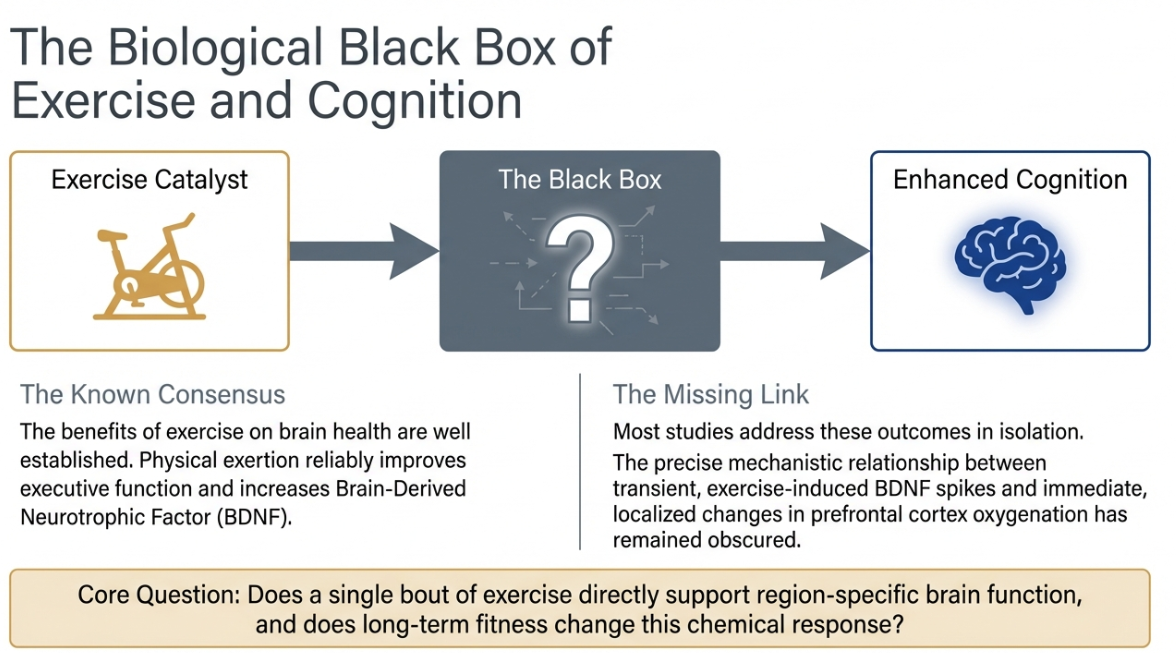
The relationship between exercise and brain health has been studied for decades, but the biology has been harder to pin down than most people assume. BDNF is often treated as the central player. It supports neuron survival and synaptic plasticity. But the data has been inconsistent. Some studies show it rises after exercise. Others do not. And even when it does, it does not always track with better cognitive performance.
The issue is how the research has been done. Most studies isolate variables. Many focus on older or clinical populations. Very few look at what is happening inside the brain in real time.
A Different Way to Study the Brain During Exercise
This study approached the problem differently.
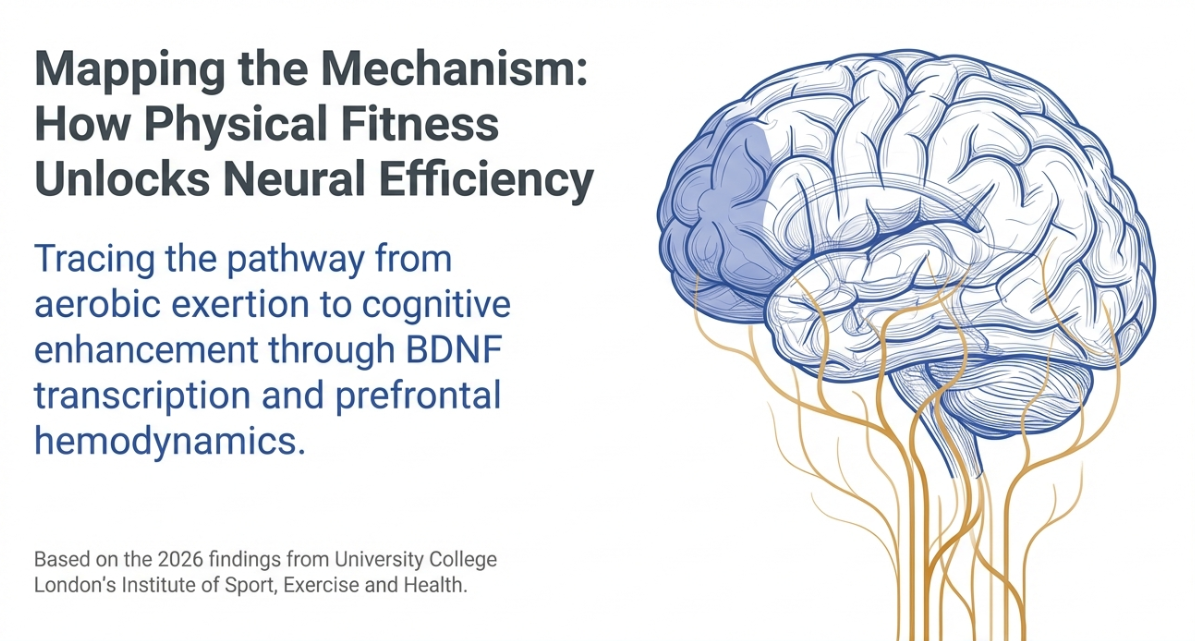
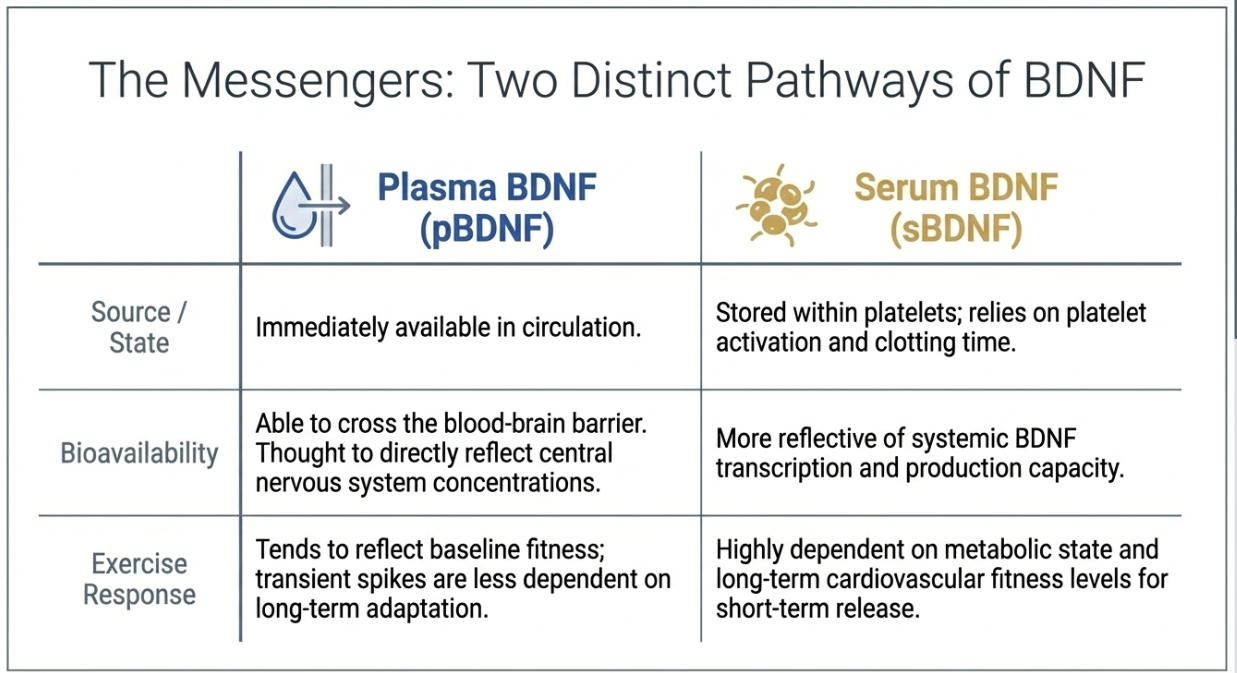
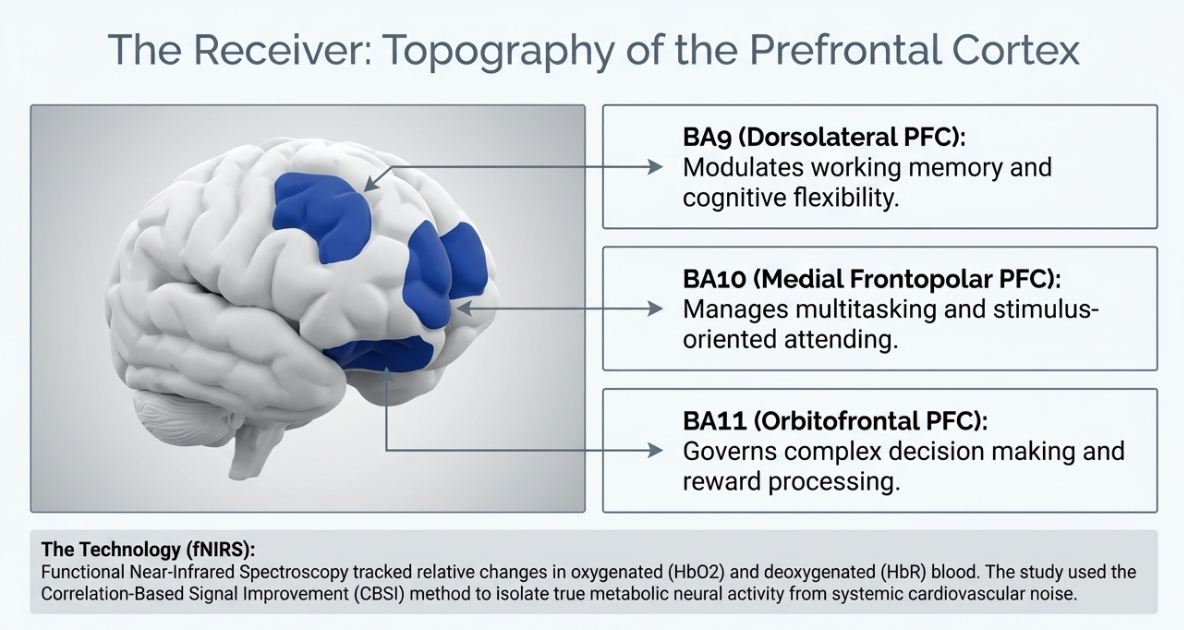
Researchers used a portable brain imaging system called fNIRS to measure blood flow and oxygenation in the prefrontal cortex. At the same time, they tracked two forms of BDNF. Plasma BDNF, which circulates freely and can enter the brain quickly. And serum BDNF, which is stored in platelets and reflects longer-term production.
Study Design: Training, Testing, and Real-Time Brain Data
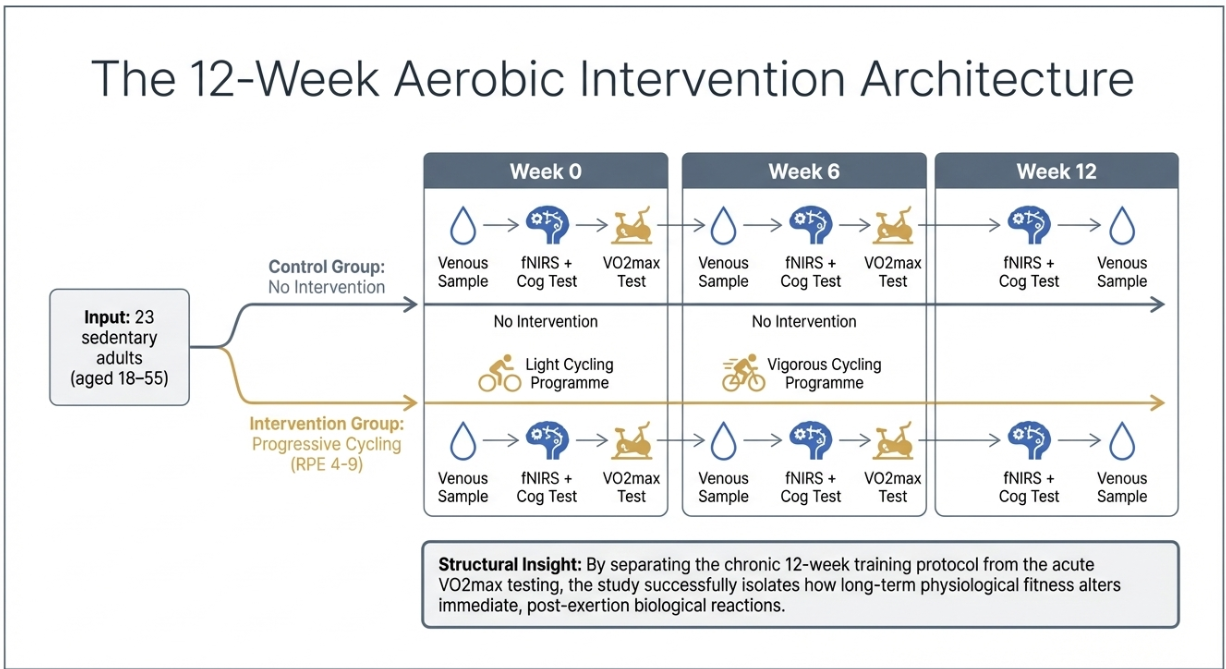
They recruited 23 healthy but sedentary adults and ran a 12 week randomized trial. One group followed a progressive cycling program that built toward high intensity intervals. The other group stayed inactive.
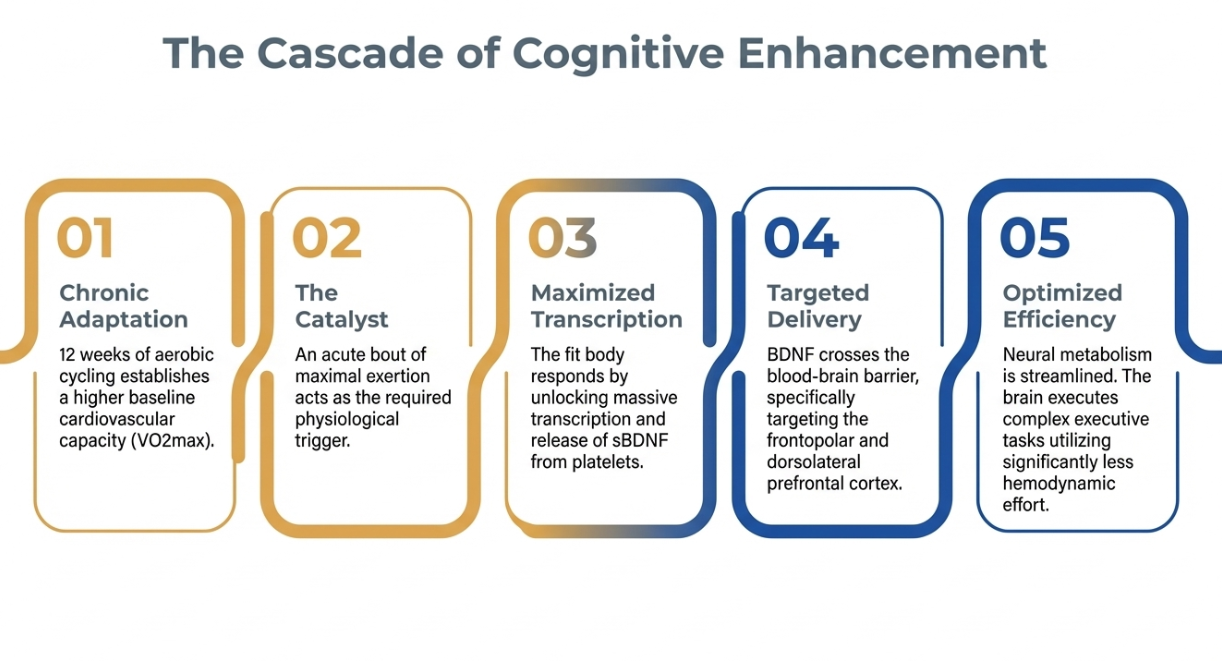
At baseline, week 6, and week 12, participants completed a maximal cycling test to exhaustion. This gave researchers a measure of VO₂max. Blood samples were taken before and 30 minutes after the test to assess both resting and exercise-induced BDNF.
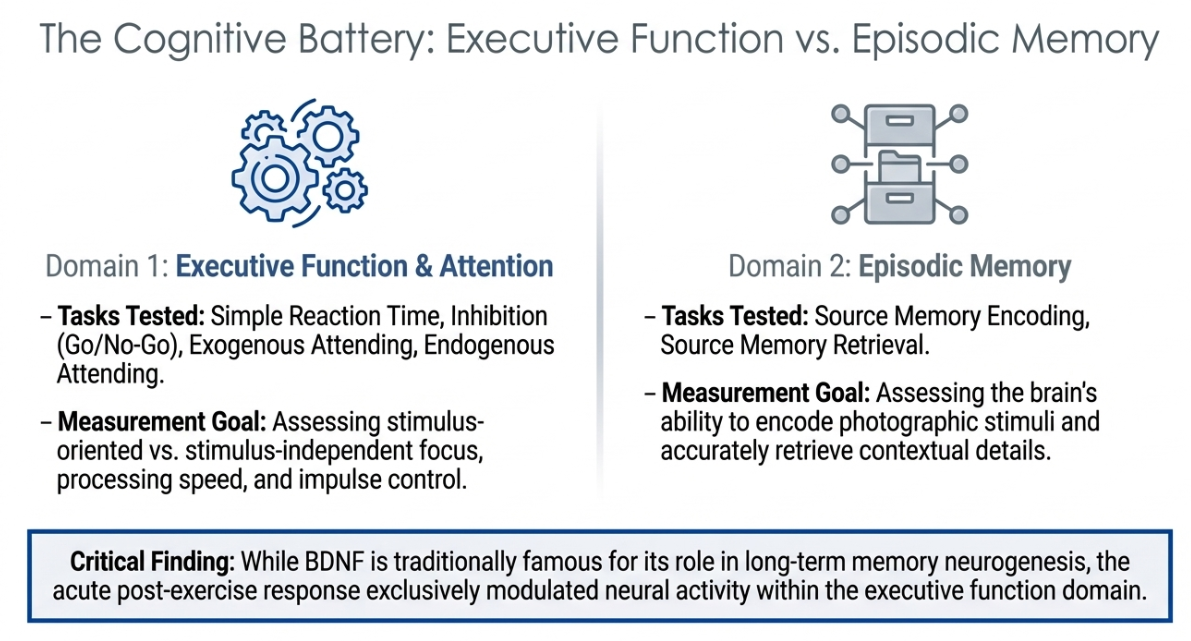
They also ran cognitive testing before and after the workout. This included reaction time, inhibition, attention shifting, and memory tasks. During weeks 6 and 12, participants wore the fNIRS device while performing these tasks, allowing researchers to see how the brain was working in real time.
What Actually Changed (and What Didn’t)
The results were not what most people expected.
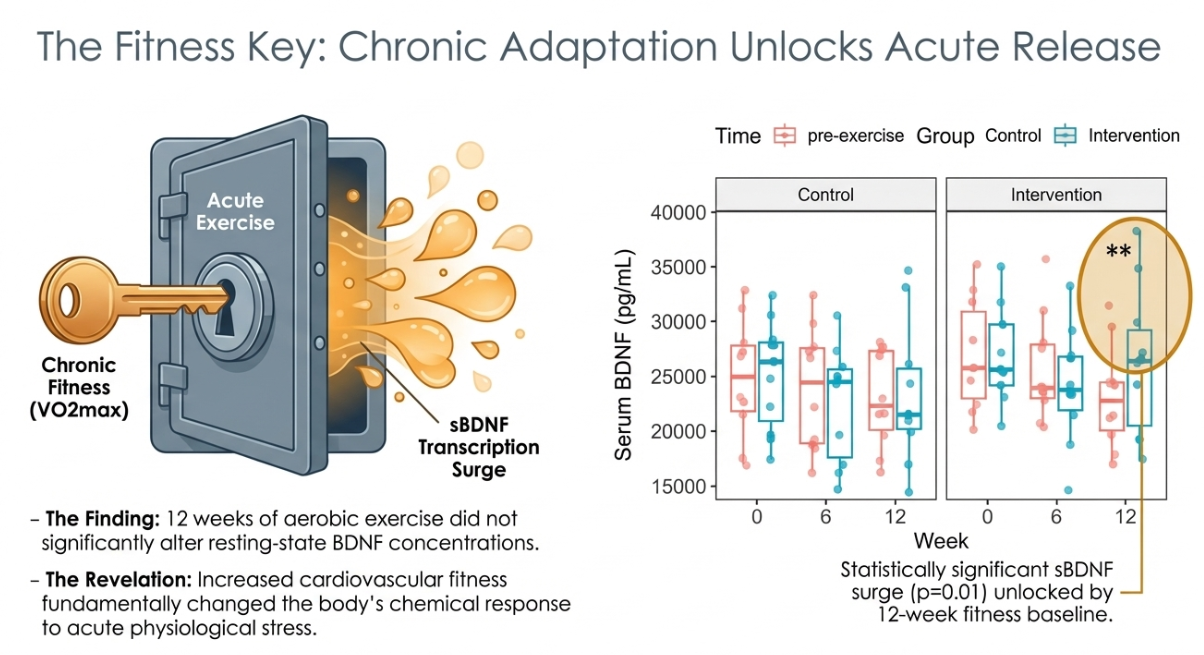
The training worked. The intervention group improved their cardiovascular fitness. But resting BDNF levels did not change. Neither plasma nor serum. That runs against the idea that regular exercise steadily elevates baseline BDNF.
Fitness Changes the BDNF Response
The real change showed up after acute exercise.
By week 12, the trained group showed a strong increase in serum BDNF after the maximal test. The fitter they became, the larger the spike. Plasma BDNF did not show the same response.
Cognitive performance improved as well. After the hard workout, participants responded faster across several tasks. But this effect showed up in both groups and did not track with BDNF levels.
If Not Performance, Then What Is BDNF Doing?
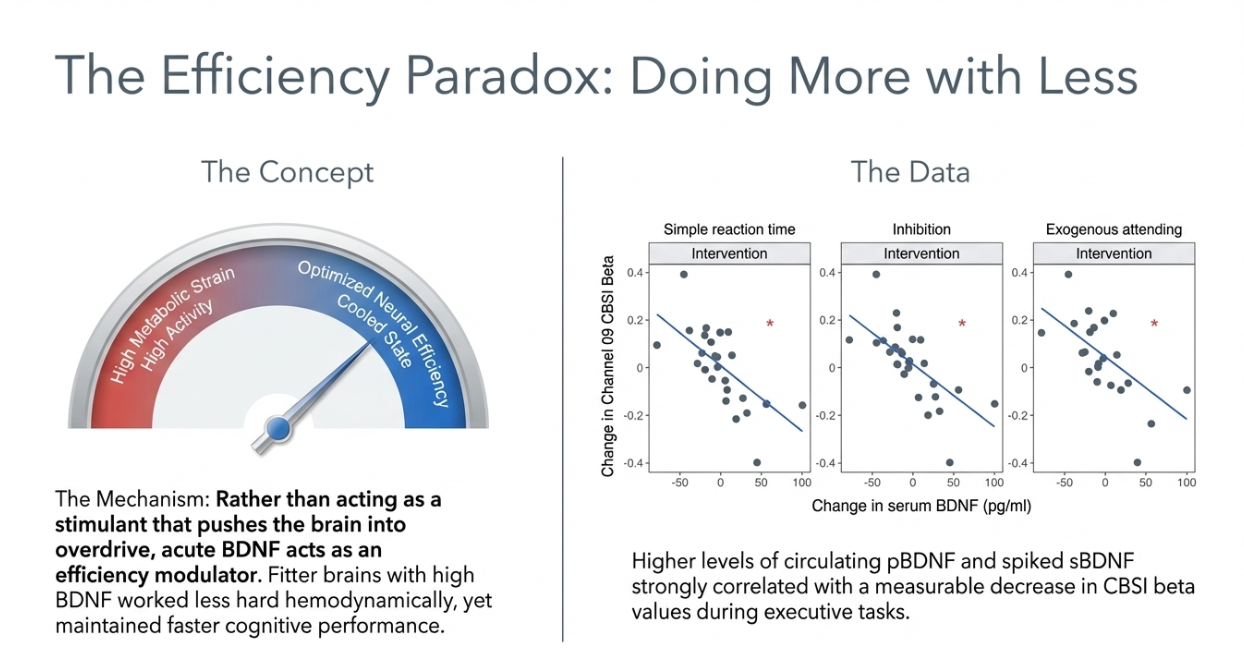
Higher BDNF levels were linked to lower activity in several prefrontal regions during executive function tasks: The frontopolar cortex, the dorsolateral prefrontal cortex, and the orbitofrontal cortex. Performance stayed the same or improved, but the brain was using less energy.
Neural Efficiency: Doing More With Less
This is neural efficiency.
BDNF appears to help the brain do the same work with fewer metabolic resources. That likely reflects better neurovascular coupling, improved glucose delivery, and more efficient synaptic signaling.
Task-Specific Effects in the Brain
This effect was specific. It showed up during tasks like attention shifting and response inhibition. It did not appear during memory tasks. One exception was internally directed attention, which showed increased activity with higher BDNF. That suggests different systems are involved depending on the type of task.
Limitations to Keep in Mind
There are limitations. The sample size was small. The imaging method only captures surface level cortex. Blood was drawn 30 minutes after exercise, which may miss peak BDNF. And the intervention was limited to cycling.
What This Means Going Forward
But the direction is clear.
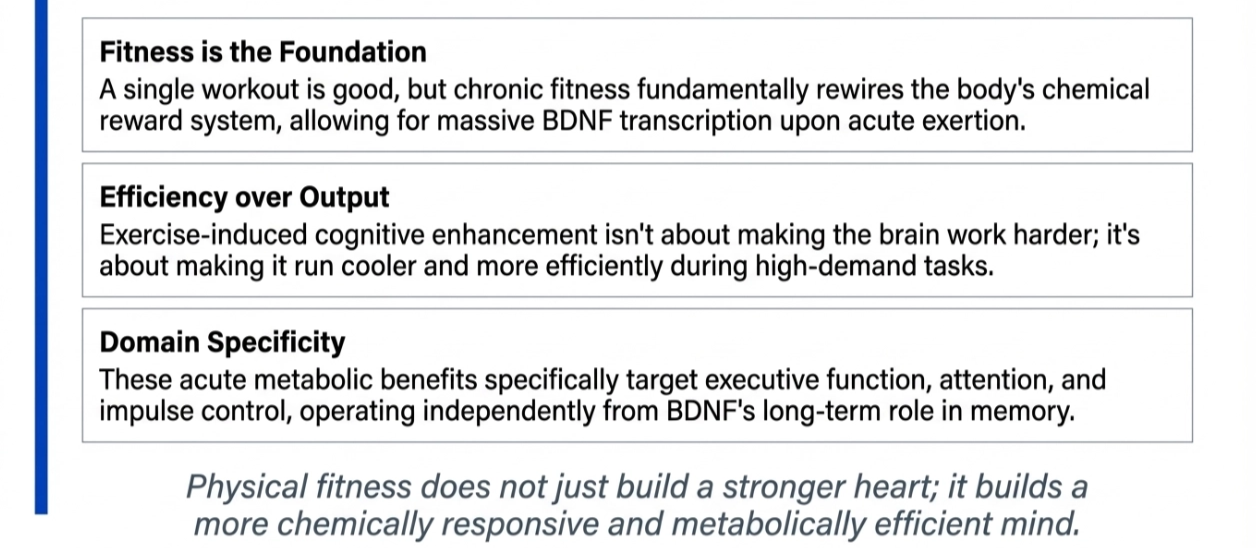
Fitness changes how your body responds to exercise. You do not get the same biochemical signal from a single hard workout if you are untrained. The system has to be built first.
BDNF also seems to act differently than many assume. In the short term, it is not primarily about creating new neurons. It is about making existing circuits more efficient.
And plasma and serum BDNF are not interchangeable. They behave differently and likely serve different roles.
The bigger shift is how this reframes the exercise brain connection.
The benefit is not just feeling sharper after a workout. It is building a brain that can operate with less effort. Less energy for the same output.
Over time, that is what resilience looks like.
Random Trivia & Weird News
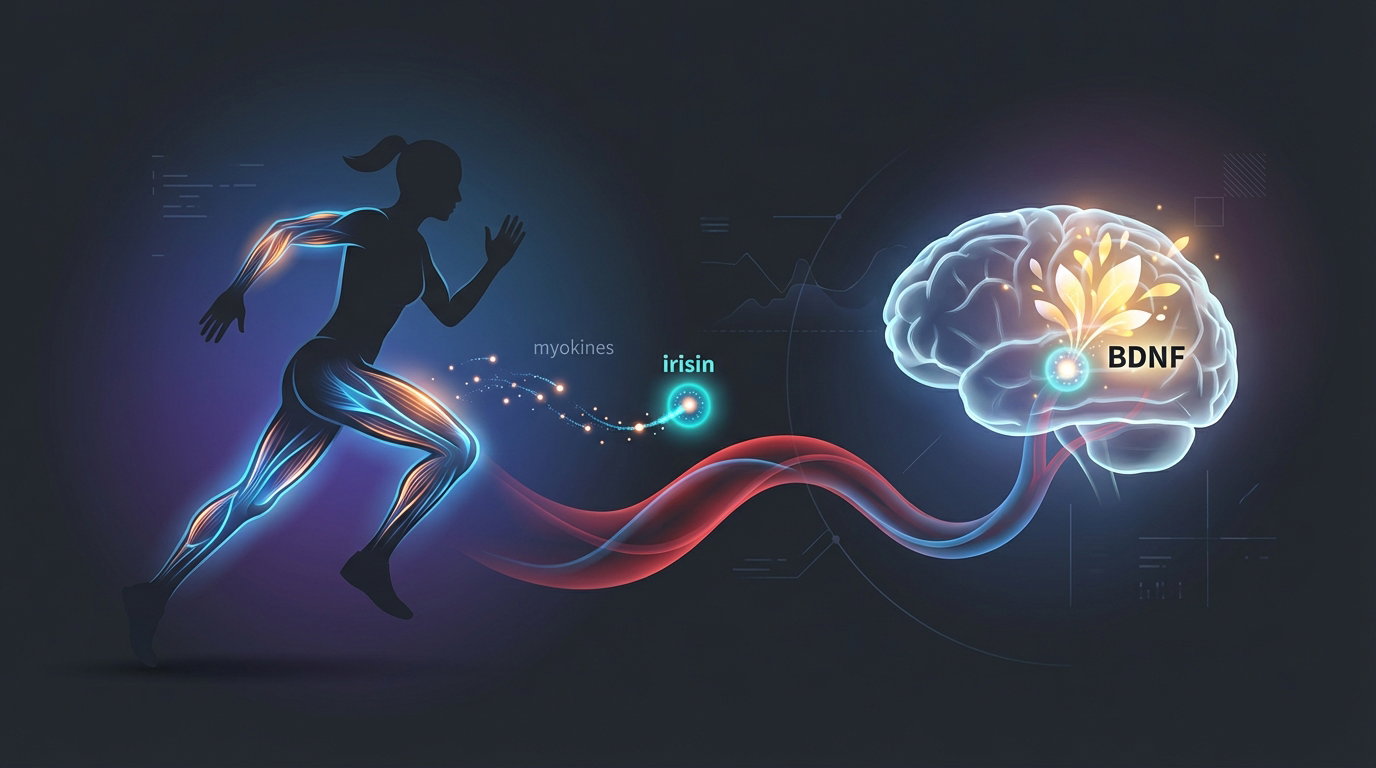
Your Muscles Talk to Your Brain During Exercise
When you exercise, your muscles don't just burn calories—they become endocrine organs, secreting signaling molecules called myokines into the bloodstream. One key myokine is irisin, which travels to the brain and triggers the production of BDNF, effectively creating a biochemical conversation between contracting muscles and neurons. This "muscle-brain axis" helps explain why physical activity has such profound cognitive effects. Interestingly, not all exercise triggers the same myokine release; high-intensity interval training and resistance training appear to produce stronger myokine responses than steady-state cardio, though more research is needed to understand the optimal prescription for brain health.
Podcasts We Loved This Week
- Dr. Marc Breedlove: How Hormones Shape Sexual Orientation & Behavior via Huberman Lab — March 30, 2026
- Dr. Martin Gibala: HIIT vs Moderate Intensity Exercise via The Dr. Gabrielle Lyon Show
Products We Are Enjoying
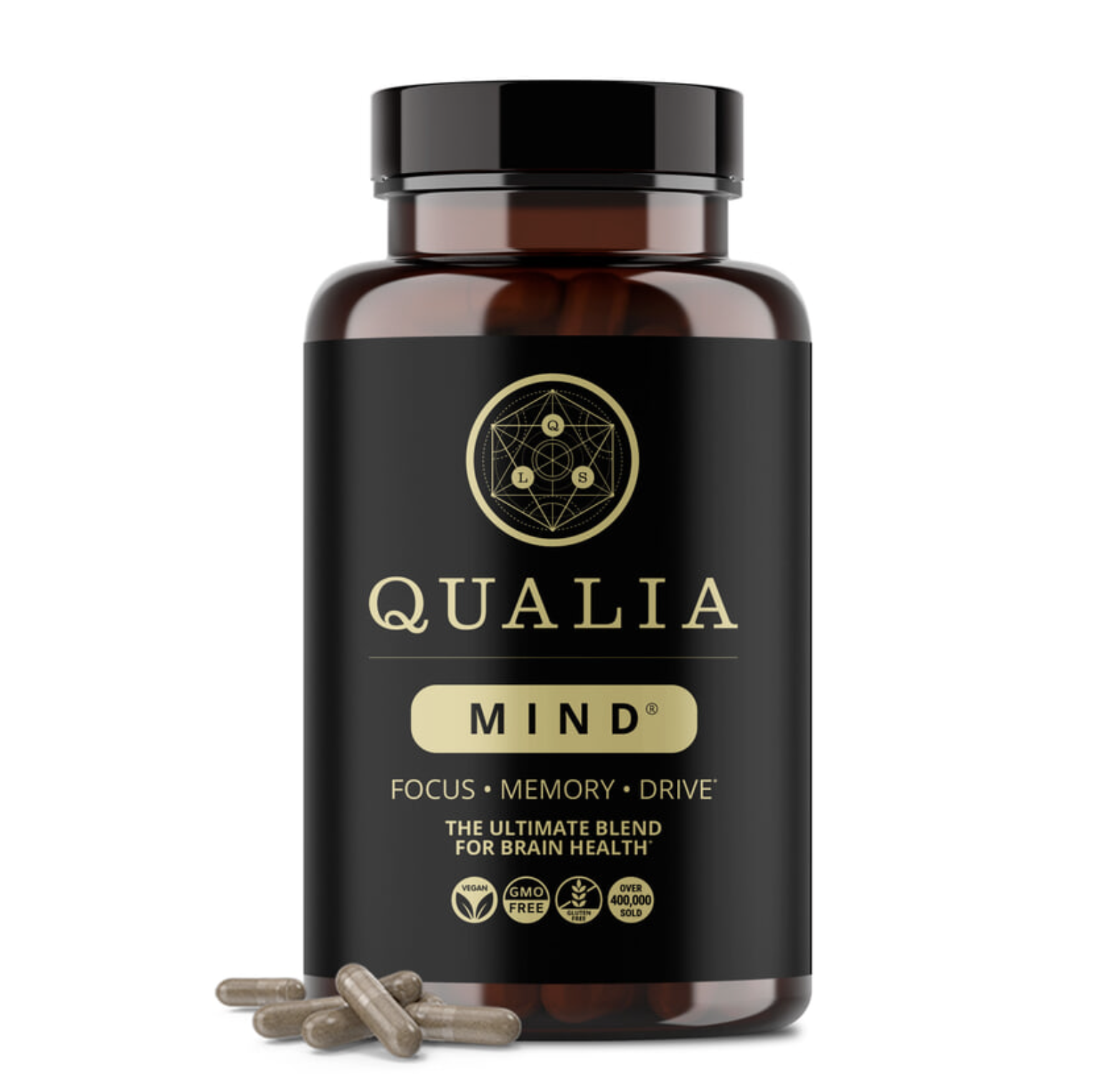
Qualia Mind
Qualia Mind is a comprehensive nootropic designed to support focus, mental clarity, memory, and sustained cognitive performance. It combines over 25 ingredients including vitamins, amino acids, adaptogens, and herbal extracts that target multiple brain systems at once—supporting neurotransmitters, brain energy metabolism, and stress resilience.  Unlike simpler formulas, it takes a systems-based approach, aiming to enhance both immediate mental drive and long-term brain health. 
I’ve been taking this for about a decade, and it’s my go-to nootropic support.
humanOS Catalog Feature of the Week

Is Modern Work Draining Our Attention Spans? Podcast with Gloria Mark
We’ve built a world where attention is always on call. Every tap, ping, and scroll feels trivial in isolation, yet something subtle is shifting beneath the surface. Not in what we know, but in how we think, focus, and recover.
In this conversation, a leading researcher studying real world behavior inside tech workplaces pulls back the curtain on what actually happens when our attention fragments. Using continuous tracking, her work reveals patterns most people never notice, including one striking finding: after a single interruption, it can take over 20 minutes to fully return to a task.
That number alone should give you pause.
This episode explores what those hidden costs might mean for your performance, your stress levels, and your ability to do meaningful work in a world that rarely leaves you alone.
Also, see this very interesting blog from Ginny on the Qualia Life website: What is Brain Rot?
If today's newsletter was worth your time, a Pro membership is what keeps it coming. Only $1.67 per newsletter!
Join here: Become a Member
Wishing your the best,

—