

Newsletter #411
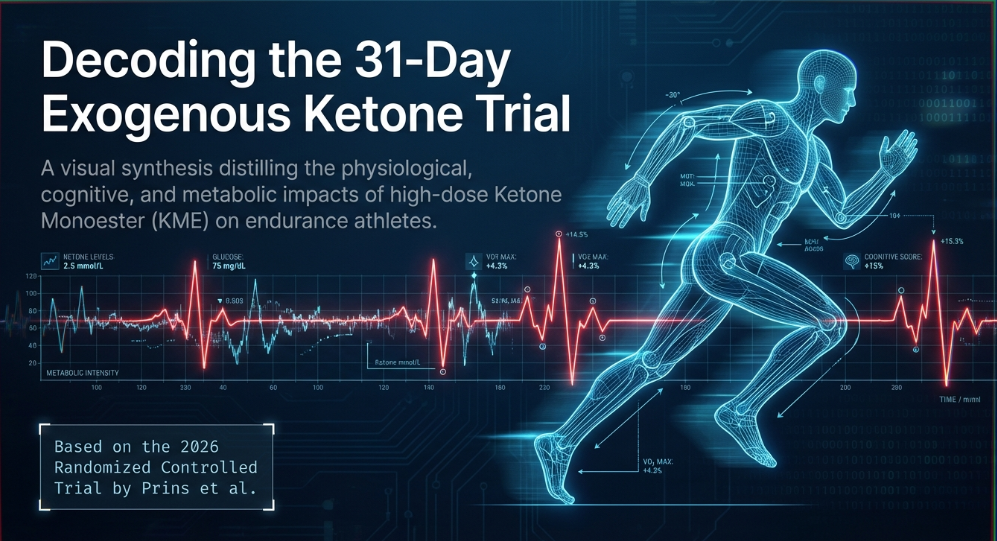
What if you could get some of the brain and metabolic benefits of a ketogenic diet without actually following one? That's the premise behind exogenous ketone supplements, which are drinkable solutions that push your body into a ketosis-like state within minutes of swallowing them. A new randomized controlled trial put this idea to a rigorous 31-day test. The results were surprising so let's take a look.
If these newsletters are a regular part of how you stay informed on health and longevity, consider supporting the work with a Pro membership. $19.99 per quarter — about $1.67 per issue, less than a coffee tip.
Join here: Become a Member
New Feature: Newsletter Summaries ✨
Ketones Without the Diet: What 31 Days of High-Dose Ketone Monoester Supplementation Actually Does to Your Body and Brain
For decades, the ketogenic diet has attracted serious scientific attention — not just as a weight-loss tool, but as a potential way to sharpen the mind, improve endurance, and regulate metabolism. The catch, of course, is that achieving nutritional ketosis requires cutting carbohydrates dramatically and sustaining that restriction over time, which most people find difficult to maintain alongside an active lifestyle. Exogenous ketone supplements — particularly ketone monoesters — emerged as an alternative route: take a drink, and your blood ketone levels spike into the ketosis range within the hour, no dietary overhaul required.
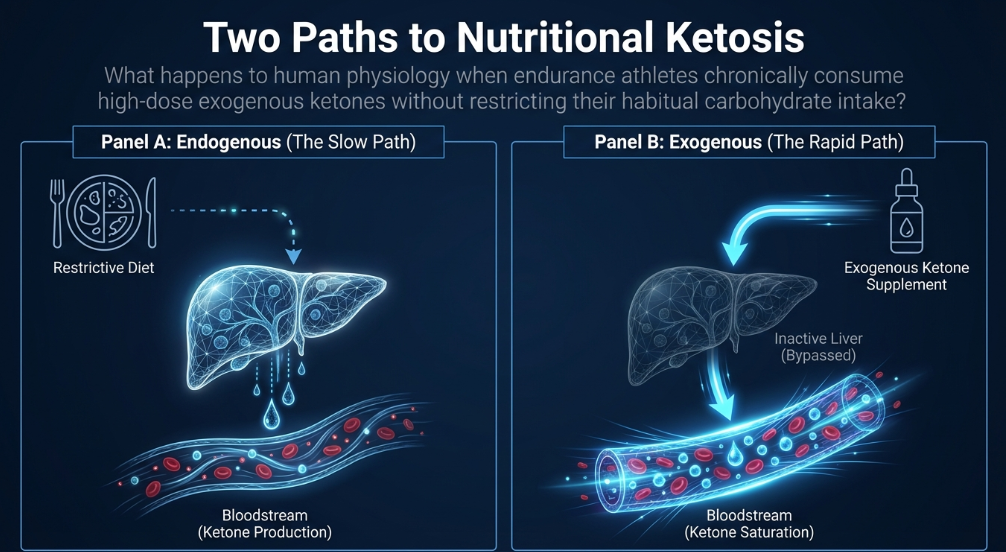
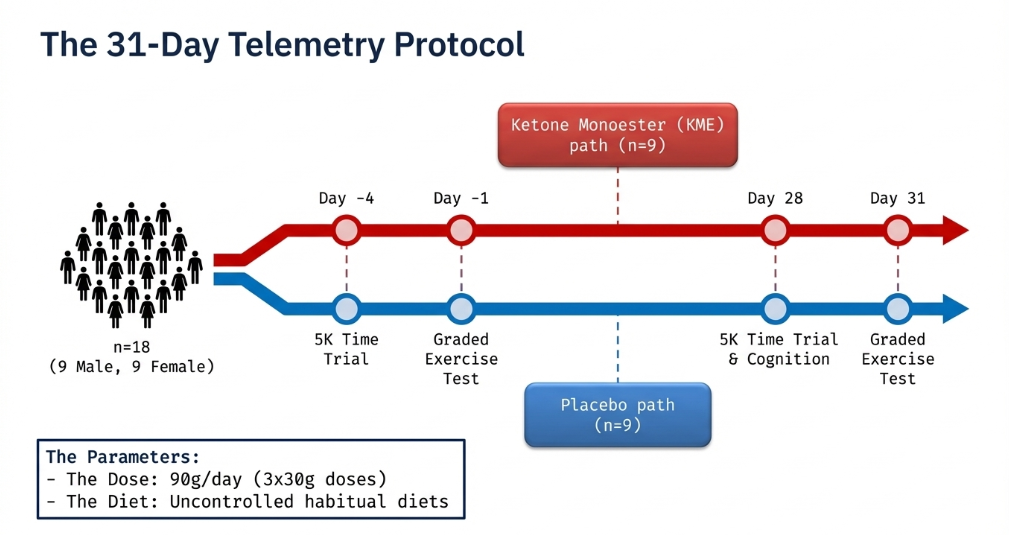
But a key question has remained unanswered: what happens when you do this repeatedly, every single day, for a month? Does the body adapt? Does performance improve? Does the brain sharpen? A team of researchers recently set out to find out, enrolling 18 recreational runners in a 31-day randomized controlled trial. Half consumed a ketone monoester supplement three times daily — 30 grams per dose, 90 grams total per day — after each meal. The other half received an isocaloric, flavor-matched placebo. Everyone maintained their usual diet and training throughout.
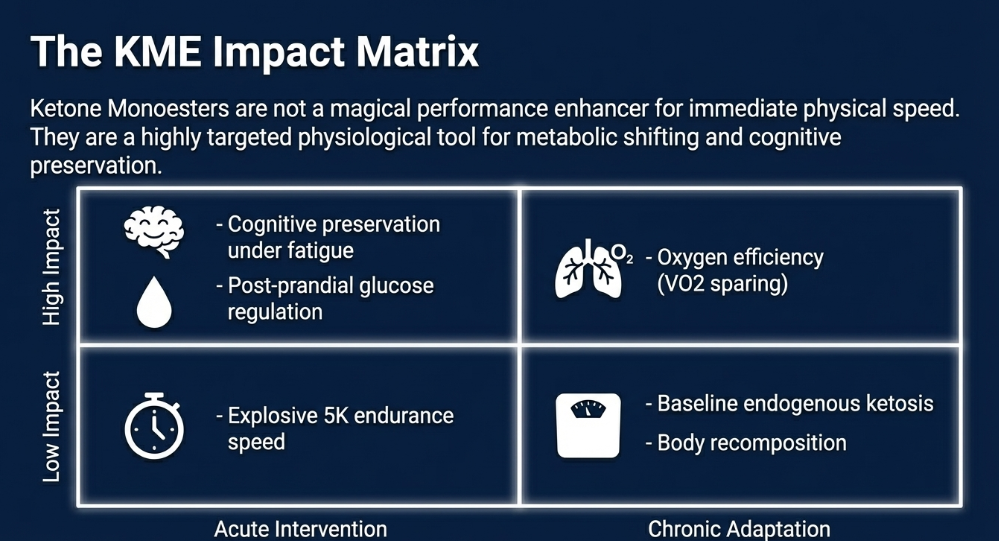
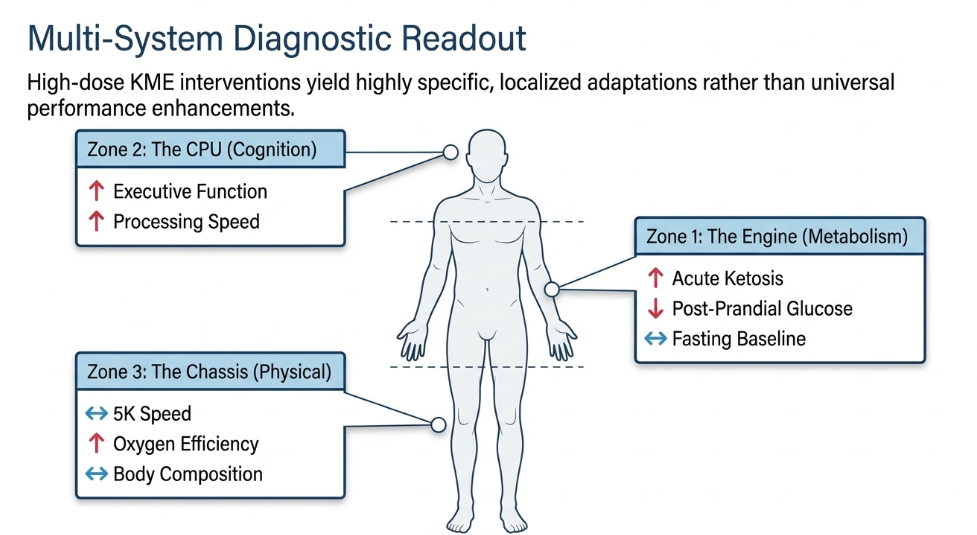
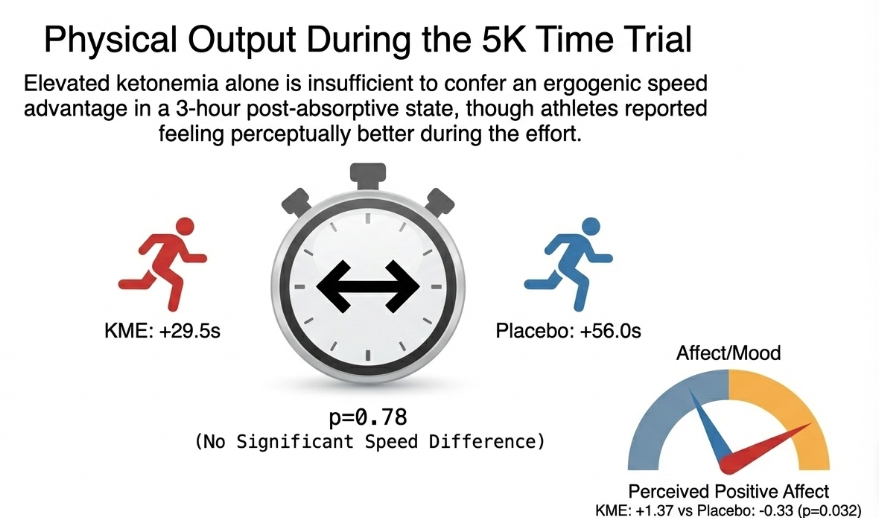
What the ketones actually did — and didn't do The headline finding for competitive runners might be disappointing: after 31 days, 5-kilometer treadmill race times were essentially identical between the two groups. Heart rate, breathing patterns, and overall race performance didn't budge. If you were hoping ketones would shave minutes off your next race, this study doesn't support that.
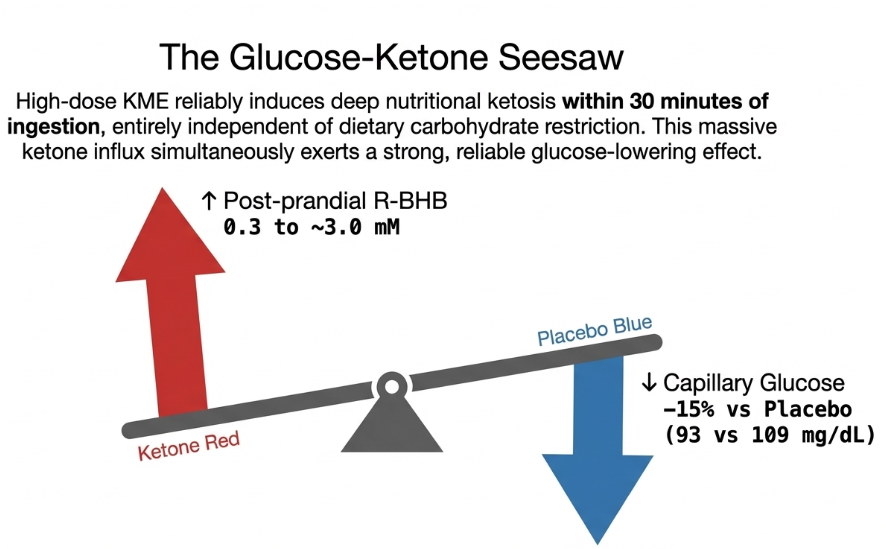
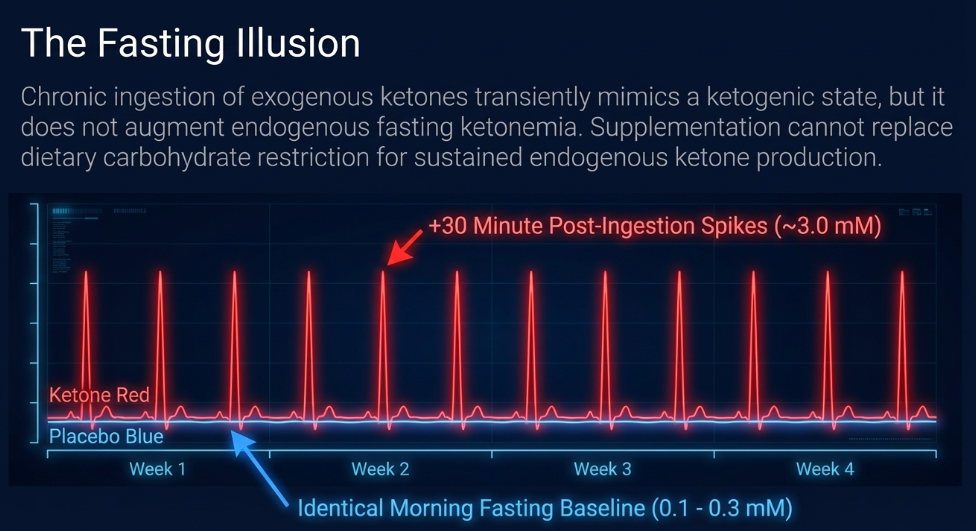
But dig deeper, and the picture gets more interesting. On the metabolic side, every dose reliably pushed blood ketone levels to around 3.0 millimoles per liter — squarely in the nutritional ketosis range — and reduced post-meal blood glucose by roughly 15%. That's a meaningful glycemic effect without any change in diet. Importantly, however, fasting ketone levels never rose over the course of the month. The body didn't learn to produce more ketones on its own. Exogenous ketones, it turns out, are a transient shift, not a permanent metabolic reprogramming.
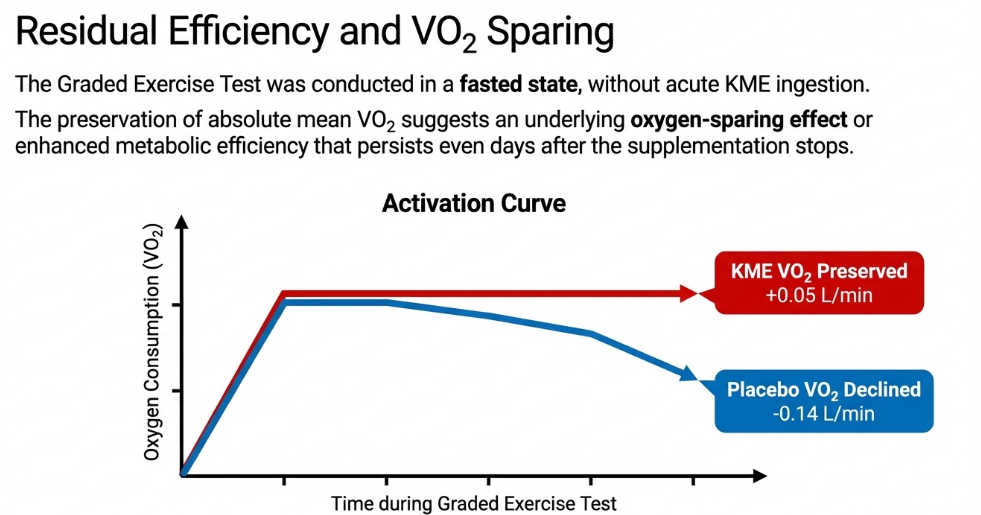
One subtler but potentially significant metabolic finding emerged during a separate exercise test conducted in a fasted state, without any supplement taken that day. In that test, the ketone group maintained their oxygen consumption across exercise intensities, while the placebo group showed a decline. This oxygen-sparing effect — using the same amount of oxygen to do the same work — hints at improved metabolic efficiency, though the mechanisms aren't yet fully understood.
Where ketones may shine: the brain The most striking findings were cognitive. Participants in the ketone group significantly improved their reaction times on two demanding mental tasks — one measuring the ability to suppress automatic responses (the Stroop test), and another measuring the ability to switch fluidly between mental rules. The placebo group, by contrast, declined on both measures over the same period.
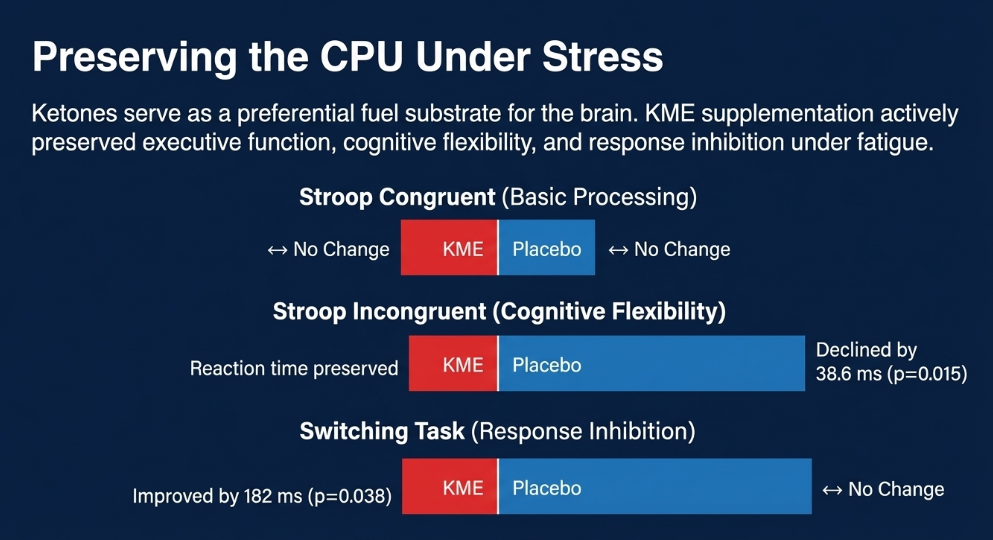
This matters because the brain is an energy-hungry organ, and ketones are a highly efficient fuel for it. When blood ketone levels are elevated, the brain can draw on that supply even when glucose availability fluctuates — a scenario that commonly occurs during sustained exercise or physical stress.
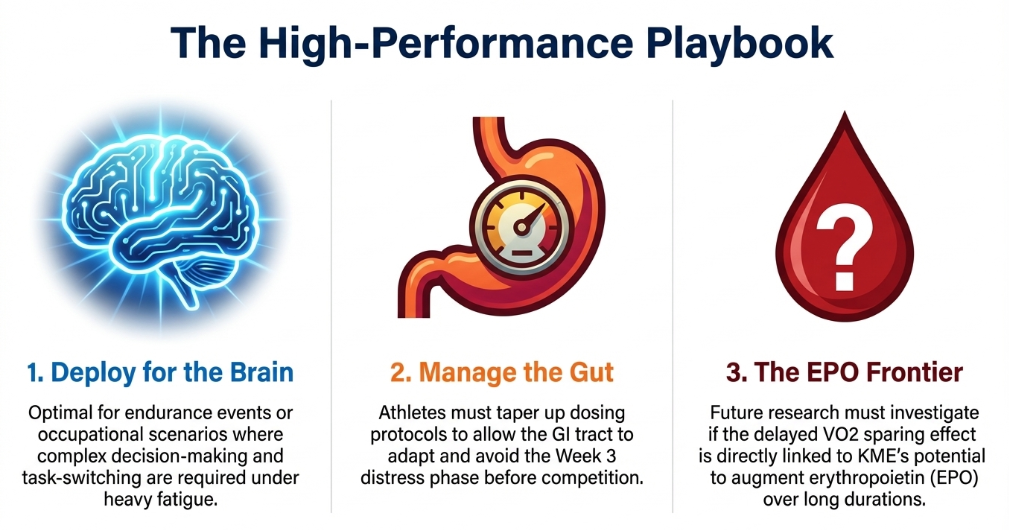
What this means practically The framing of ketones as a pure performance-enhancing drug for endurance may be too narrow. The more precise picture emerging from this research is that exogenous ketones appear to be a cognitive and metabolic tool, particularly suited for situations where mental acuity under physical fatigue matters — think team sports, tactical military operations, or any high-stakes environment where decision-making degrades as the body tires.
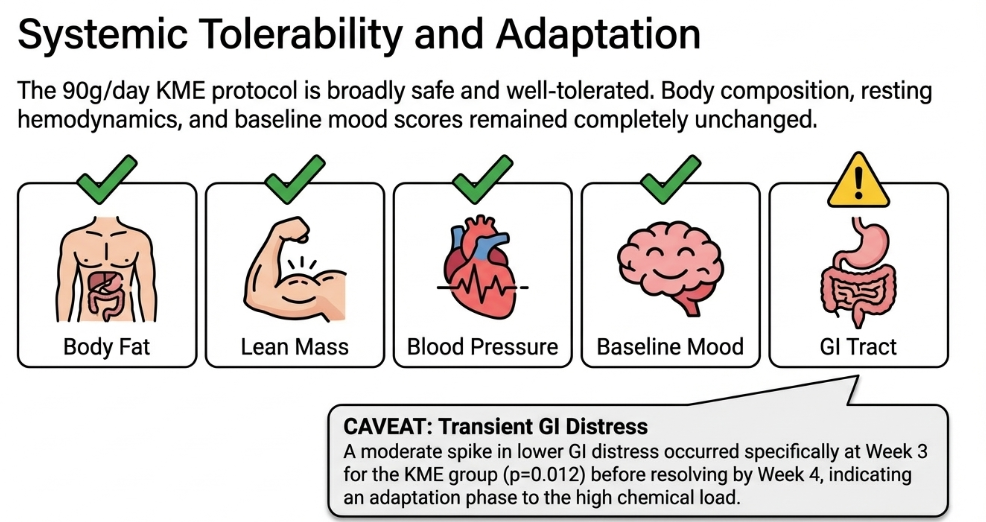
The supplements were well tolerated. Some participants reported mild digestive discomfort around week three, but it resolved by the end of the study. For healthy recreational athletes willing to drink something that tastes roughly like rocket fuel, the safety profile looks reasonable.
The study's limitations are worth keeping in mind: 18 participants is a small sample, the population was recreational rather than elite, and the single-blind design meant participants knew their ketone levels from at-home blood tests. Larger, more rigorous trials are needed.
Still, the core message is clear: exogenous ketones won't make you faster, but they may keep your brain sharper when your body is under stress — and that's a distinctly different, and arguably underappreciated, kind of edge.
Random Trivia & Weird News
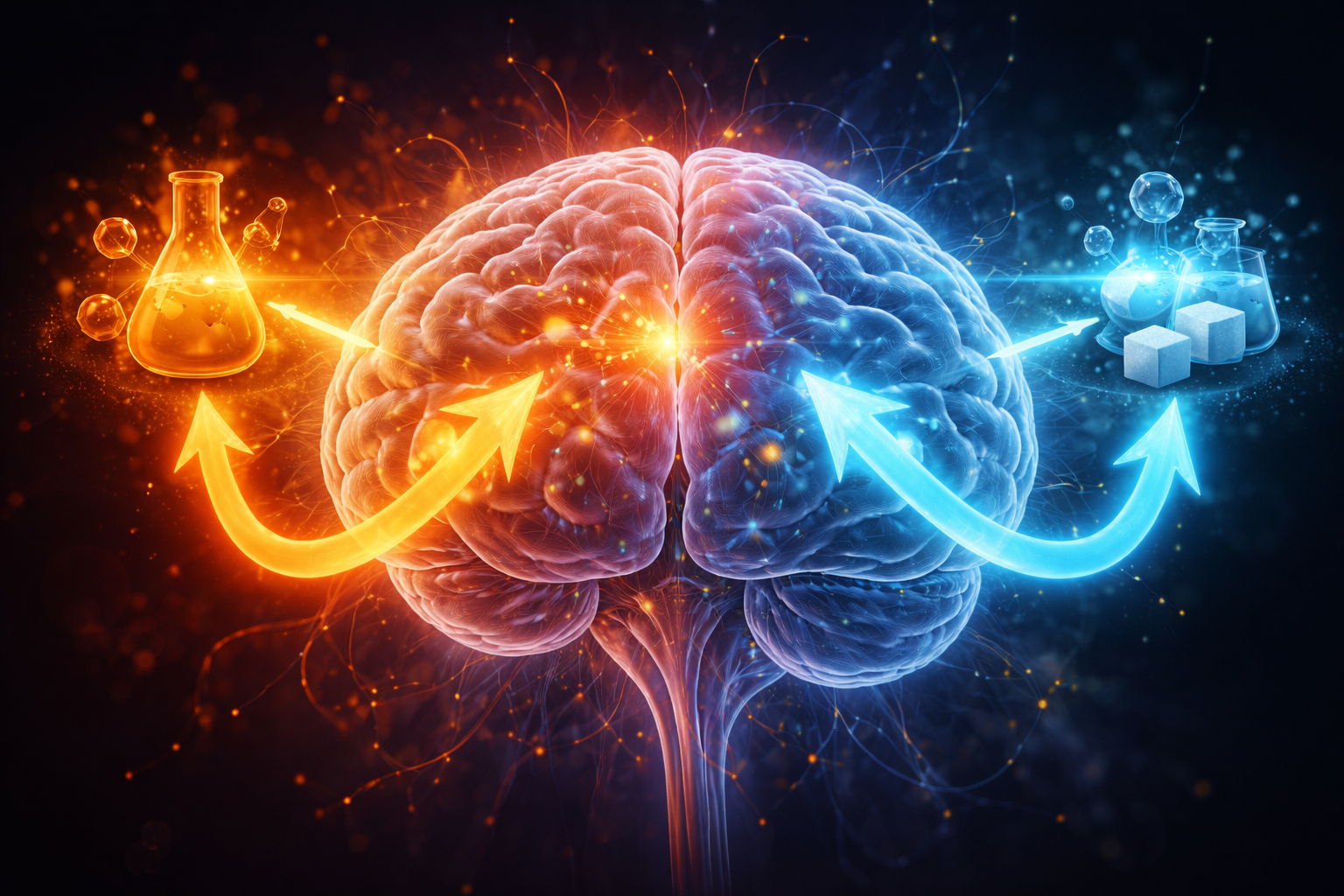
Your Brain Uses Ketones Preferentially When They're Available — Even If Glucose Is Present One of the stranger neurochemical facts about ketones is that the brain doesn't simply choose glucose when both fuels are available — it preferentially oxidizes ketones first. Researchers discovered this in metabolic tracer studies where subjects were given both glucose and ketone infusions simultaneously. The brain appeared to draw on ketones with a kind of metabolic priority, treating glucose as the backup fuel rather than the primary one. It's a finding that has reshaped how some neuroscientists think about brain energy metabolism.
Podcasts We Loved This Week
1. Dr. Tommy Wood and his new book bust the belief that the adult brain is fixed via STEM talk
2. Dr. Richard Davidson: Science-Based Meditation Tools to Improve Your Brain & Health via Huberman Lab(March 16, 2026)
Products We Are Enjoying
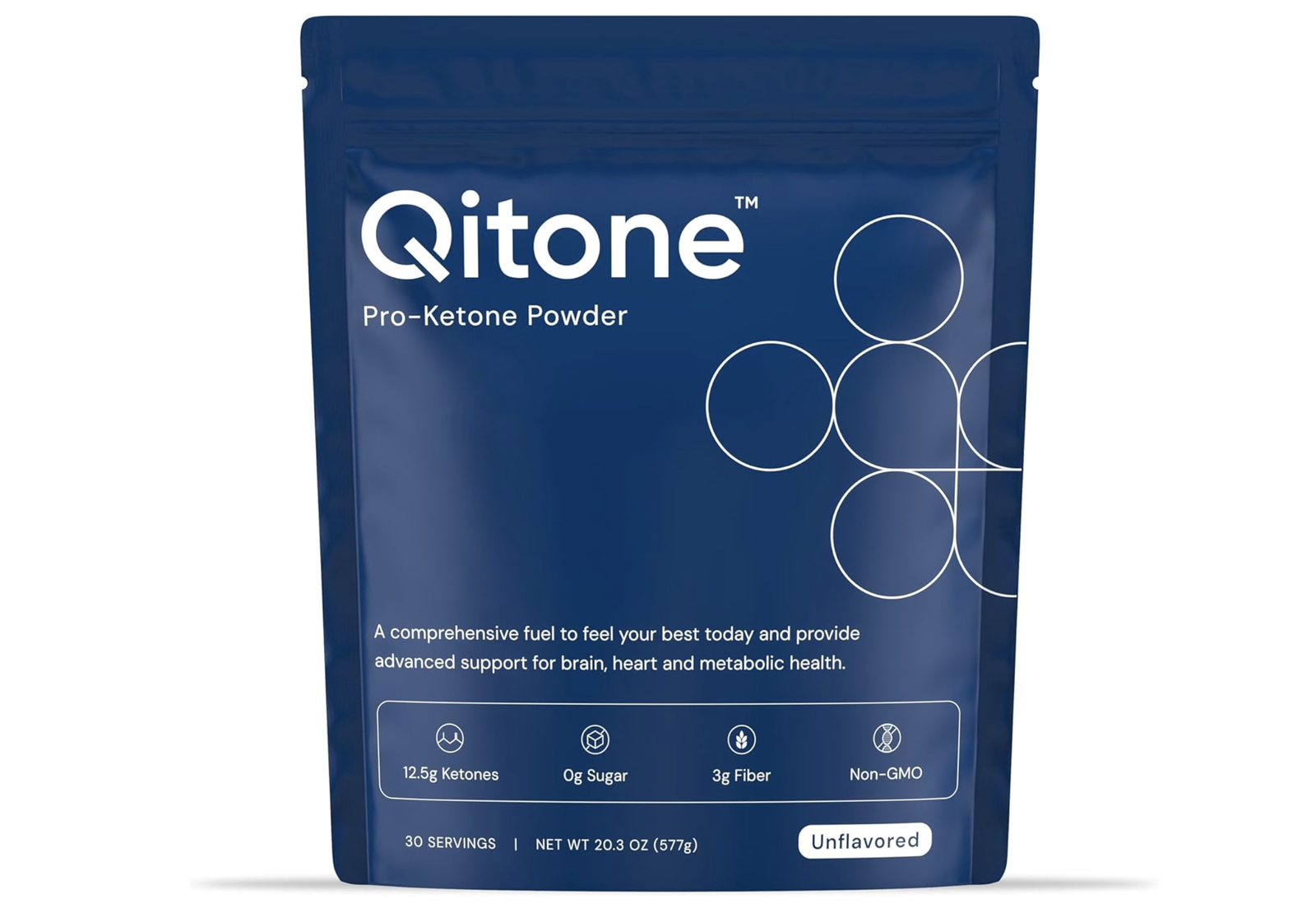
Qitone - Pro-Ketone Powder
This product is a stimulant free ketone ester powder designed to support brain energy, focus, and mental clarity. It works by helping the body produce ketones, an efficient fuel the brain readily uses. The formula delivers a precise dose of a proprietary C8 ketone di ester that mixes easily into drinks, without sugar, artificial ingredients, or taste, supporting sustained cognitive performance without crashes. Please note that this is not the same ketone product utilized in the study above, but I can assure you it tastes much better!
humanOS Catalog Feature of the Week

Is the Ketone beta-Hydroxybutyrate Good for Memory? Podcast with John Newman, MD, PhD
Memory is not just a feature of the brain. It is the foundation of identity. When memory erodes, the self begins to erode with it. This helps explain why dementia is so feared and why progress has been so slow, with Alzheimer’s drugs failing at staggering rates. In this episode, Dr. John Newman explores a different path. He studies ketones not just as fuel, but as signals that shape gene expression, inflammation, and brain aging. The conversation opens a compelling question. What if supporting memory is less about targeting disease and more about shifting the body’s metabolic state?

—