

Newsletter #409
Mental health treatment is facing a crisis of efficacy. Despite decades of pharmaceutical development and therapeutic innovation, existing treatments deliver only modest results. What if the problem is that we're fundamentally misunderstanding the root cause? A bold new theoretical framework suggests that depression, anxiety, and addiction may not be biological malfunctions at all, but rather predictable consequences of forcing Stone Age brains to operate in Digital Age environments. This research challenges the entire foundation of how we think about—and treat—mental illness.
If these newsletters are a regular part of how you stay informed on health and longevity, consider supporting the work with a Pro membership. $19.99 per quarter — about $1.67 per issue, less than a coffee tip.
Join here: Become a Member
New Feature: Newsletter Summaries ✨
Organism-Centric Environment Synchronization: A New Framework for Understanding Mental Health
The numbers are staggering. Approximately 29% of the global population will experience a mental disorder during their lifetime. In the United States, that figure exceeds 50%. In Europe, it's over one-third. Yet despite massive investment—what researchers call a "trillion-dollar brain drain"—our most advanced treatments for depression, anxiety, and other mental disorders deliver only modest improvements.
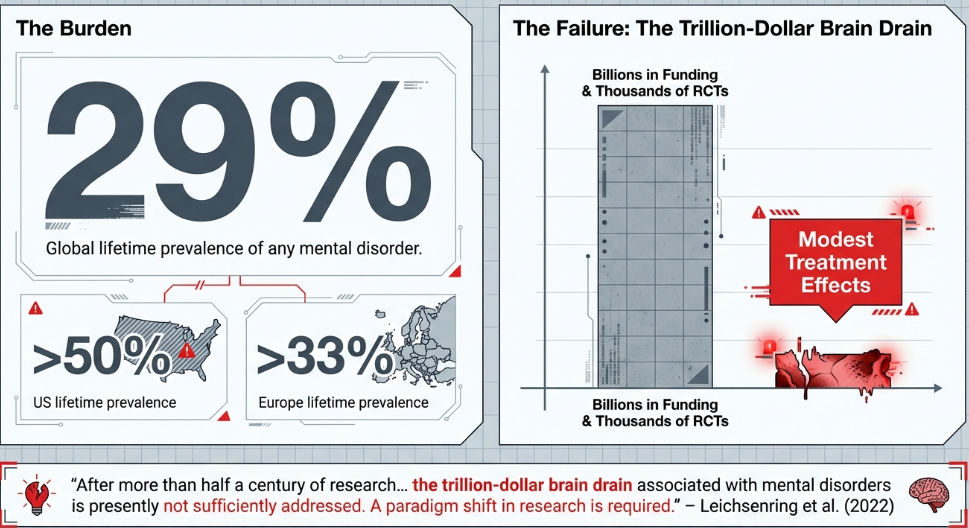
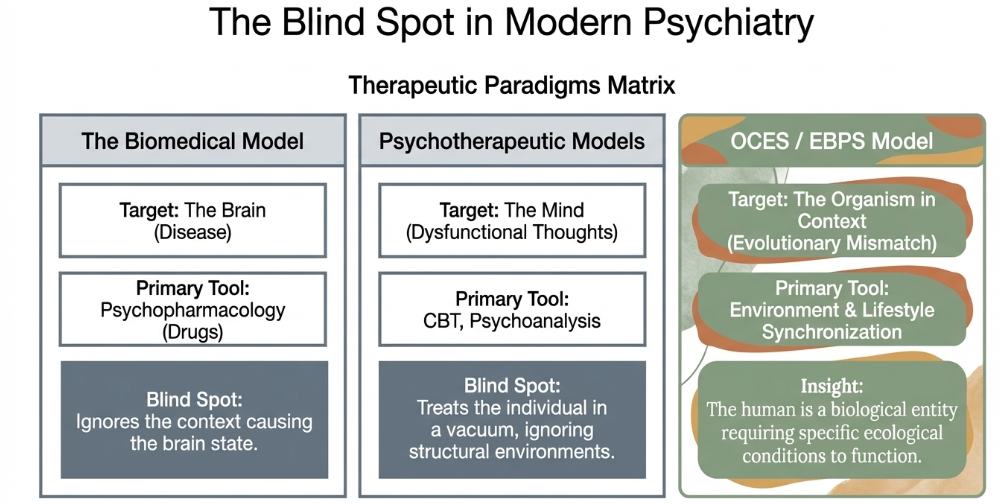
This profound disconnect motivated researchers to ask a radical question: What if we've been thinking about mental illness all wrong? The problem, according to this theoretical framework, isn't just that our treatments are inadequate. It's that our entire conceptual model is flawed. The dominant biomedical approach treats mental disorders as brain diseases to be corrected with pharmaceuticals. Psychotherapeutic approaches focus on fixing dysfunctional thoughts and behaviors. Both view the problem as residing within the individual—a broken brain or faulty thinking that needs repair. But both models share a critical blind spot: they ignore the environment.
The Evolutionary Mismatch Hypothesis
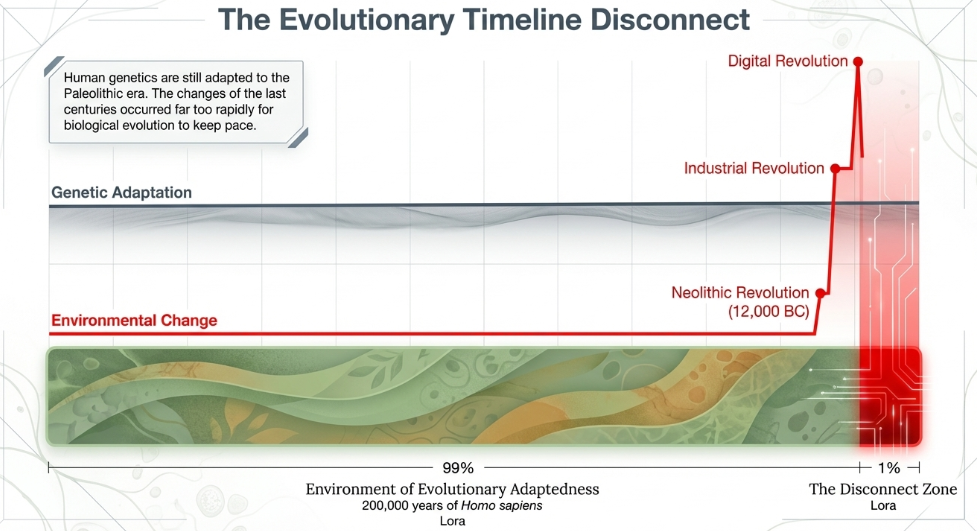
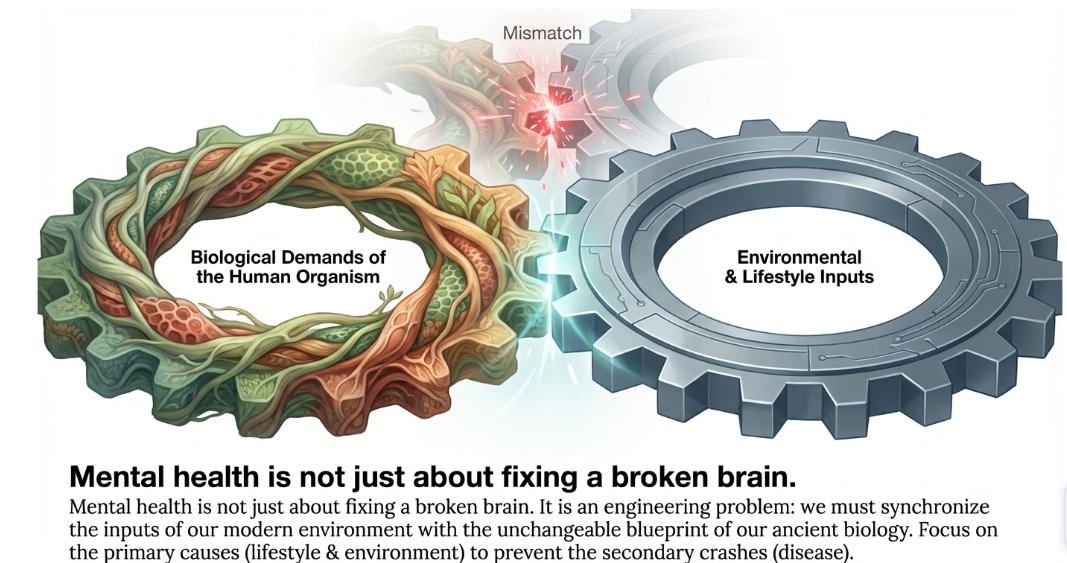
The human genome was shaped primarily during the Paleolithic era—a period spanning roughly 2.5 million years. During this time, our ancestors lived as hunter-gatherers in small, tight-knit groups. They were physically active throughout the day, spent extensive time outdoors, maintained strong social bonds, and experienced natural light-dark cycles that regulated their circadian rhythms. Then, in the cosmic blink of an eye, everything changed. The Neolithic Revolution introduced agriculture roughly 10,000 years ago. The Industrial Revolution transformed society just 250 years ago. The Digital Revolution began merely decades ago. Human genetics simply cannot adapt this quickly. This creates what evolutionary biologists call a "mismatch"—a profound disconnect between the environment our biology expects and the environment we actually inhabit. Our bodies and brains are running Paleolithic software in a Digital Age operating system, and the incompatibility is making us sick.
Side note: I presented on this similar idea in my TEDx talk titled, How to Optimize Light for Health.
The OCES Framework
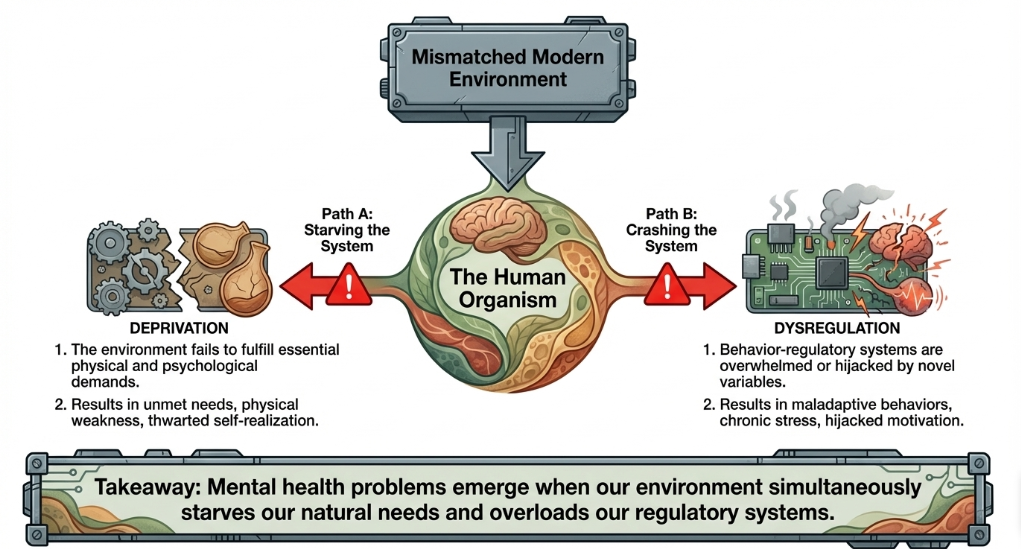
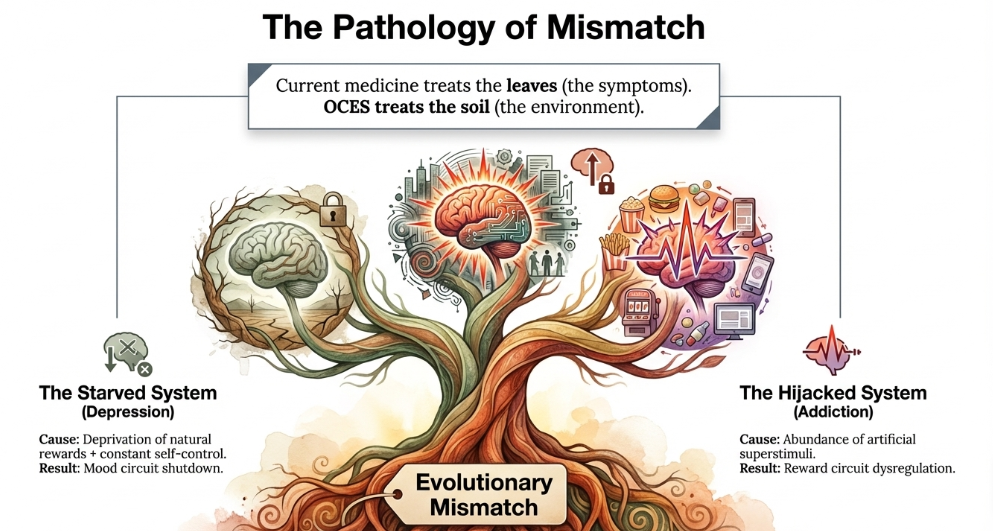
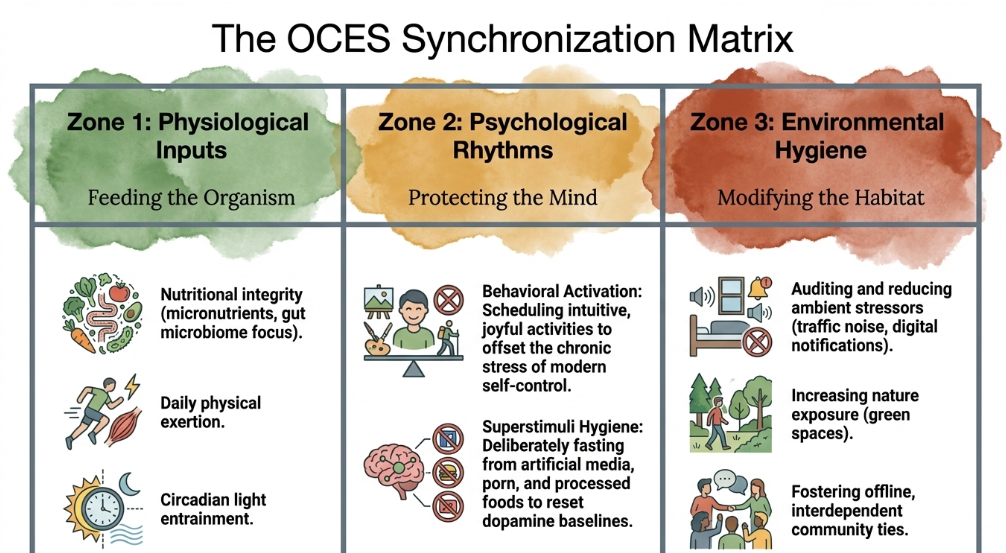
The researchers developed a new model called Organism-Centric Environment Synchronization (OCES). Rather than viewing humans as isolated individuals with broken brains, OCES conceptualizes people as biological organisms whose mental health is profoundly shaped by environmental factors. The framework identifies two primary pathways through which environmental mismatch damages mental health: deprivation and dysregulation.
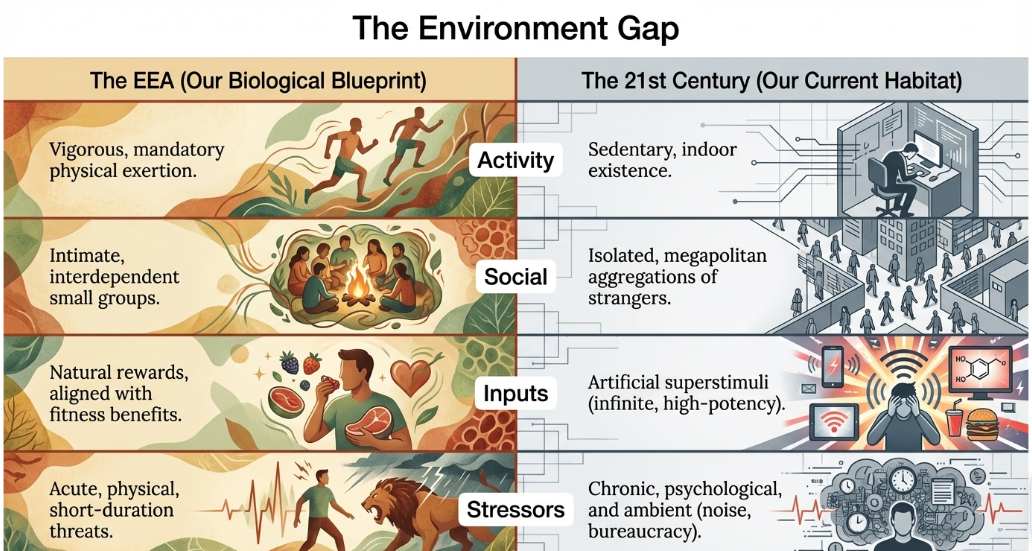
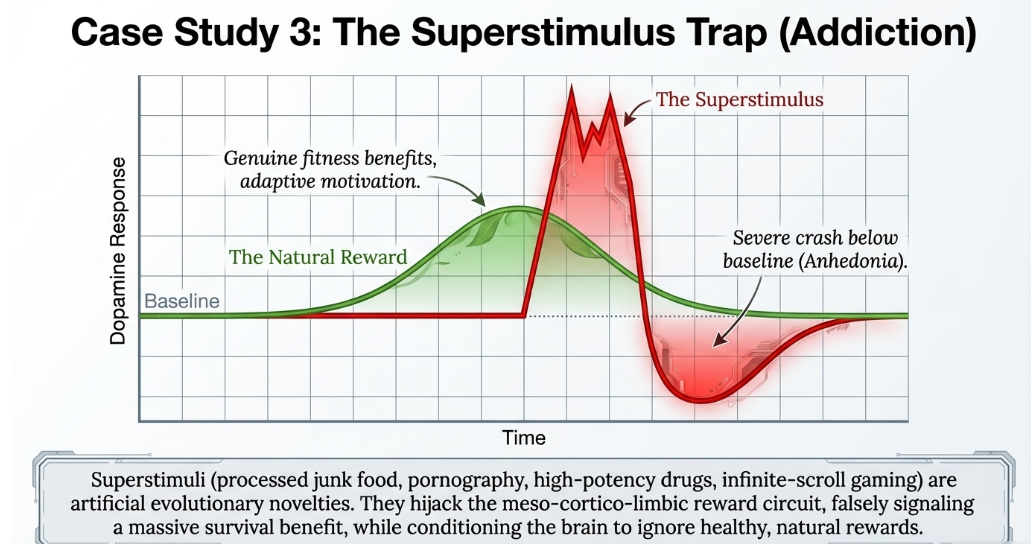
Deprivation occurs when the modern environment fails to provide what our biology fundamentally needs. We're deprived of physical movement, natural light, deep social connection, and engagement in meaningful activities. These aren't lifestyle luxuries—they're biological necessities that our reward systems evolved to seek out. Dysregulation happens when modern stressors overwhelm our natural regulatory systems. Chronic stress, social isolation, constant digital stimulation, and exposure to "superstimuli"—artificially intensified rewards like junk food, pornography, video games, and social media—hijack the brain's reward circuitry in ways that natural stimuli never could.
Mapping Disorders to Mismatch
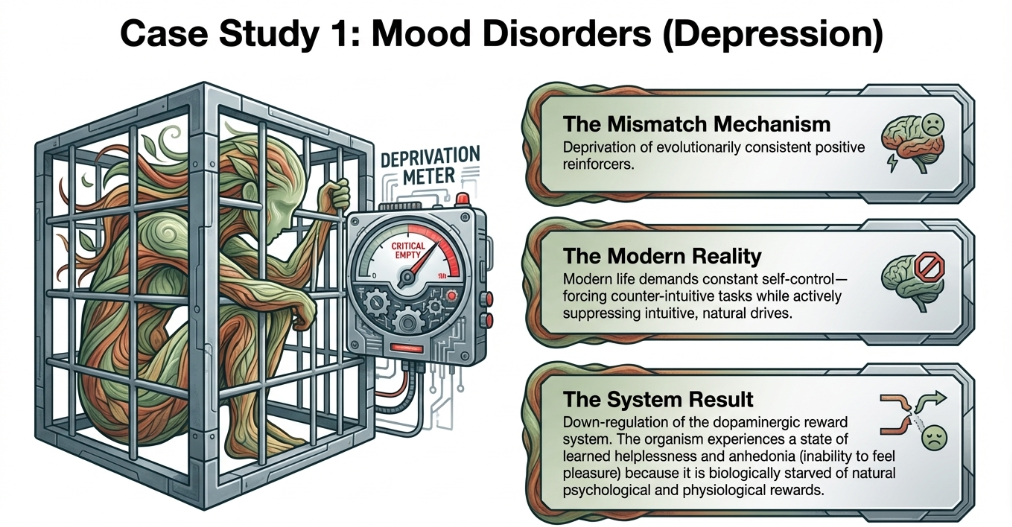
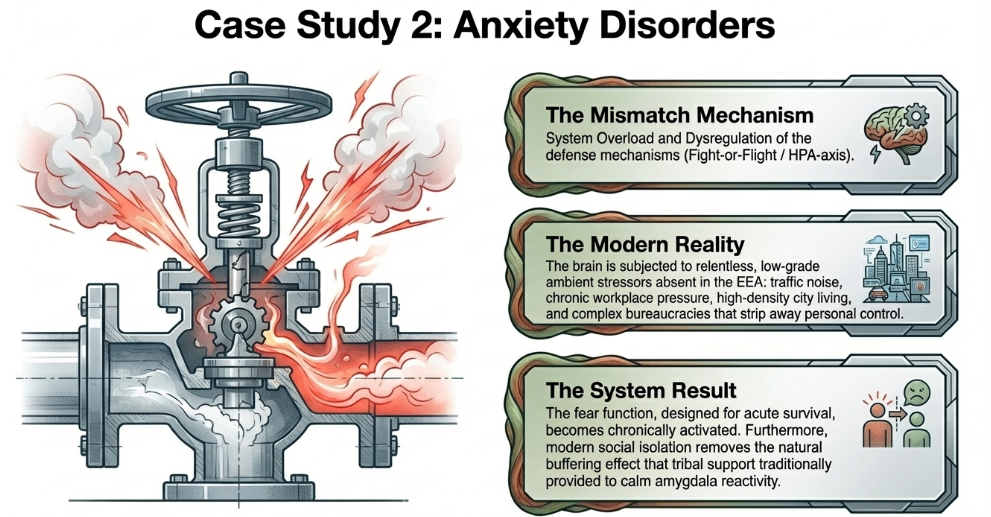
The framework maps specific mental disorders to these pathways with remarkable clarity. Depression, in this view, results from deprivation. When life lacks the naturally rewarding activities our brains evolved to seek—physical challenge, social cooperation, novel experiences—the brain's dopaminergic motivational system downregulates. We develop learned helplessness not because our brains are chemically imbalanced, but because our environments are experientially impoverished. Anxiety disorders stem from dysregulation of our natural threat-response systems. The fight-or-flight response evolved for acute physical dangers—predators, rival groups, natural hazards. But modern life presents chronic, abstract stressors: financial insecurity, social status anxiety, information overload. Our nervous systems never get a chance to reset, leaving us in a state of perpetual vigilance. Addiction represents perhaps the clearest example of superstimuli hijacking. Natural rewards—social connection, physical achievement, sexual intimacy—provided moderate dopamine hits that reinforced evolutionarily adaptive behaviors. Modern superstimuli deliver vastly amplified rewards with no fitness benefit whatsoever. The reward system, overwhelmed by artificial intensity, becomes desensitized to natural pleasures.
What Actually Works
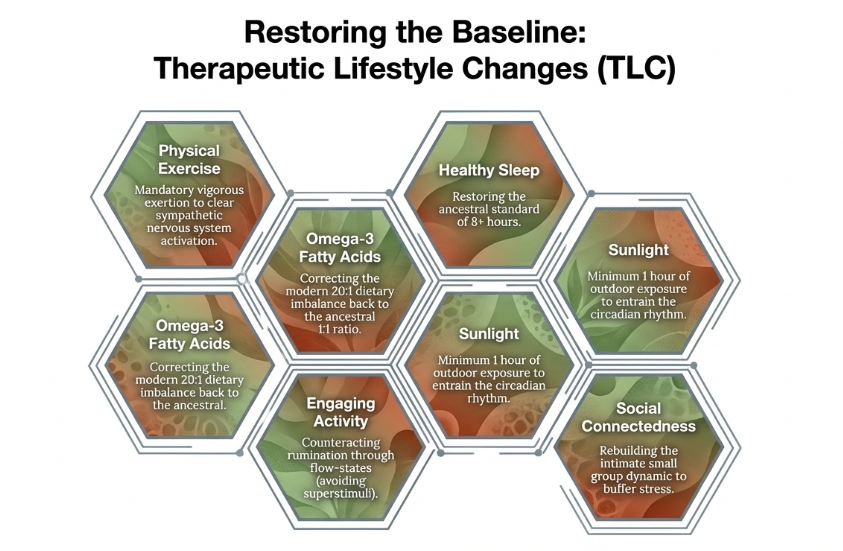
The implications are profound. If mental disorders arise primarily from environmental mismatch, then effective treatment must focus on realigning our lifestyles with our biology. The researchers highlight several evidence-based interventions that do exactly this: regular physical exercise, adequate sleep (at least 8 hours), omega-3 supplementation, sunlight exposure for circadian regulation, engaging activities that prevent rumination, and fostering genuine social connection. These aren't complementary lifestyle suggestions—they're primary therapeutic interventions. Crucially, the framework also emphasizes reducing exposure to superstimuli and reclaiming the ability to experience natural, intuitive joy without constant self-control demands. Modern life requires immense restraint—resisting junk food, managing digital distractions, suppressing natural impulses to fit social norms. This chronic self-regulation is mentally exhausting and may itself contribute to disorders.
Important Limitations
The researchers are transparent about their framework's limitations. First, many environmental problems require structural, societal solutions. Ambient urban stressors—traffic noise, air pollution, lack of green space—significantly impact mental health but can't be addressed through individual lifestyle changes alone. Second, this framework focuses primarily on mood disorders, anxiety, and addiction. Its application to psychotic disorders, OCD, or neurodevelopmental conditions like ADHD remains unexplored and likely more complex. Finally, the framework doesn't render traditional treatments useless. Medications and psychotherapy remain valuable for managing acute symptoms and structural aspects of disorders, much like treating Type II diabetes symptoms even while addressing root dietary causes.
A Paradigm Shift
This research calls for nothing less than a paradigm shift in how we understand and treat mental illness. Rather than viewing disorders as individual defects requiring pharmaceutical correction, OCES suggests we must synchronize our environments and lifestyles with our evolutionary biology. The message is both challenging and hopeful: our current mental health crisis may not reflect an epidemic of broken brains, but rather an epidemic of broken environments. And unlike our genetics, our environments are something we can actually change.
Random Trivia & Weird News

Hunter-Gatherers Rarely Get Depressed
Anthropological studies of contemporary hunter-gatherer societies reveal remarkably low rates of depression and anxiety disorders compared to industrialized nations. The Hadza people of Tanzania, who maintain a largely traditional lifestyle, show virtually no clinical depression despite lacking modern medicine or therapy. Their days involve 4-6 hours of moderate physical activity, strong kinship bonds, egalitarian social structures, and minimal chronic stressors. Researchers note their sleep patterns align perfectly with natural circadian rhythms, and their diet—free of processed foods—provides abundant omega-3 fatty acids. While romanticizing pre-industrial life ignores real hardships, these populations offer living evidence that human brains can thrive when environmental conditions match evolutionary expectations. The contrast is striking and scientifically valuable.
Podcasts We Loved This Week
- Dr. Rhonda Patrick & Brady Holmer: One Minute of Vigorous Exercise May Be Worth Up to Ten Minutes of Moderate Cardio via FoundMyFitness
- Dr. Alex Marson: Avoiding, Treating & Curing Cancer With the Immune System via Huberman Lab
Products We Are Enjoying
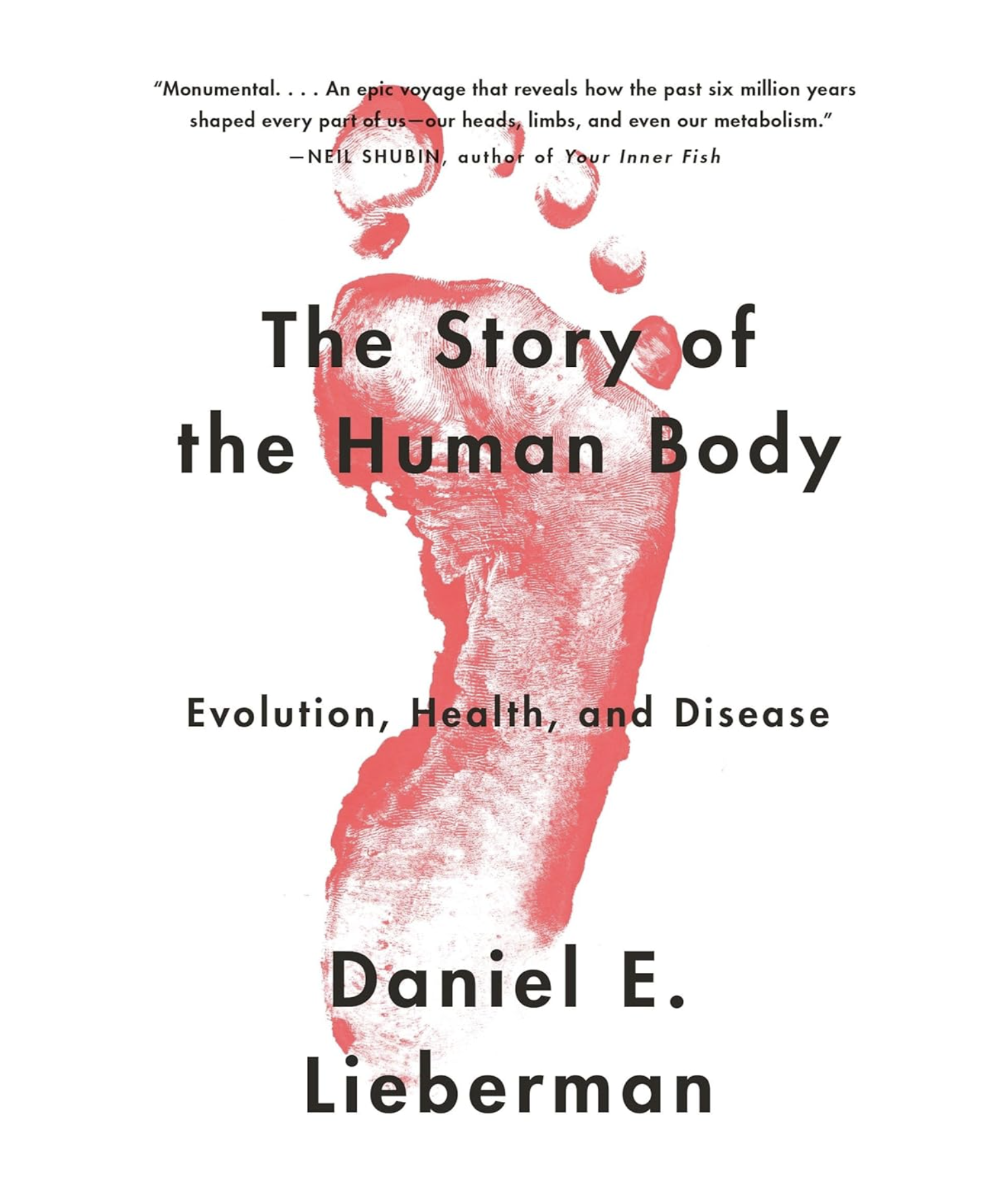
The Story of the Human Body - Daniel Lieberman
“Fascinating.... A readable introduction to the whole field and great on the making of our physicality.”—Nature
From Amazon: In this book, Daniel E. Lieberman illuminates the major transformations that contributed to key adaptations to the body: the rise of bipedalism; the shift to a non-fruit-based diet; the advent of hunting and gathering; and how cultural changes like the Agricultural and Industrial Revolutions have impacted us physically. He shows how the increasing disparity between the jumble of adaptations in our Stone Age bodies and advancements in the modern world is occasioning a paradox: greater longevity but increased chronic disease. And finally—provocatively—he advocates the use of evolutionary information to help nudge, push, and sometimes even compel us to create a more salubrious environment and pursue better lifestyles.
humanOS Catalog Feature of the Week

Mini Course - The Paleo Diet
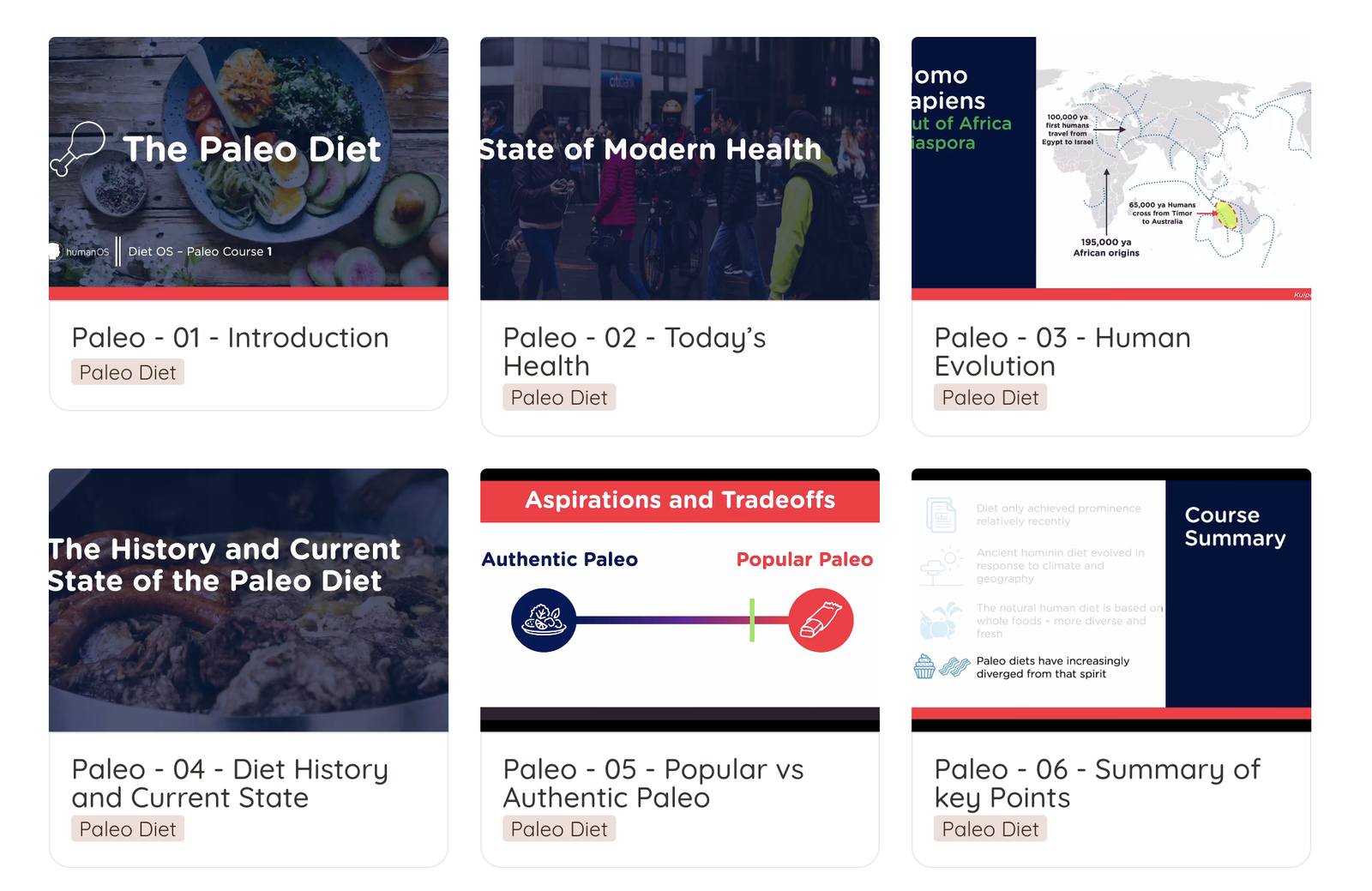
In this efficient six-lesson course, you will learn about the most credible aspects of the Paleo Diet and how to consider adopting something like it in your life.
To access this
- Log in to humanOS.
- Find mini courses in the left navigation.
- Find the Paleo Diet in the course list.
Wishing you the best,

—