

Newsletter #400
Exercise is almost universally sold as a longevity drug—but what if how you move matters as much as how much you move? A sweeping new analysis of elite athletes suggests that some sports quietly add years to life, while others may do the opposite. The study forces a rethink of the “more is better” mindset and raises a sharper question: what kind of physical stress actually helps the body age well?
Also, this is our 400th newsletter, so before we move on, I'd like to take a moment to celebrate!

If these newsletters are a regular part of how you stay informed on health and longevity, consider supporting the work with a Pro membership. $19.99 per quarter — about $1.67 per issue, less than a coffee tip.
Join here: Become a Member
New Feature: Newsletter Summaries ✨
Sport and Longevity: An Observational Study of International Athletes
For decades, research has shown that physically active people live longer than sedentary ones. But most of that evidence treats exercise as a single category—steps versus no steps, active versus inactive. This new study, published in GeroScience, zooms out across history and geography to ask a more precise question: do different sports leave different long-term biological fingerprints on the body?
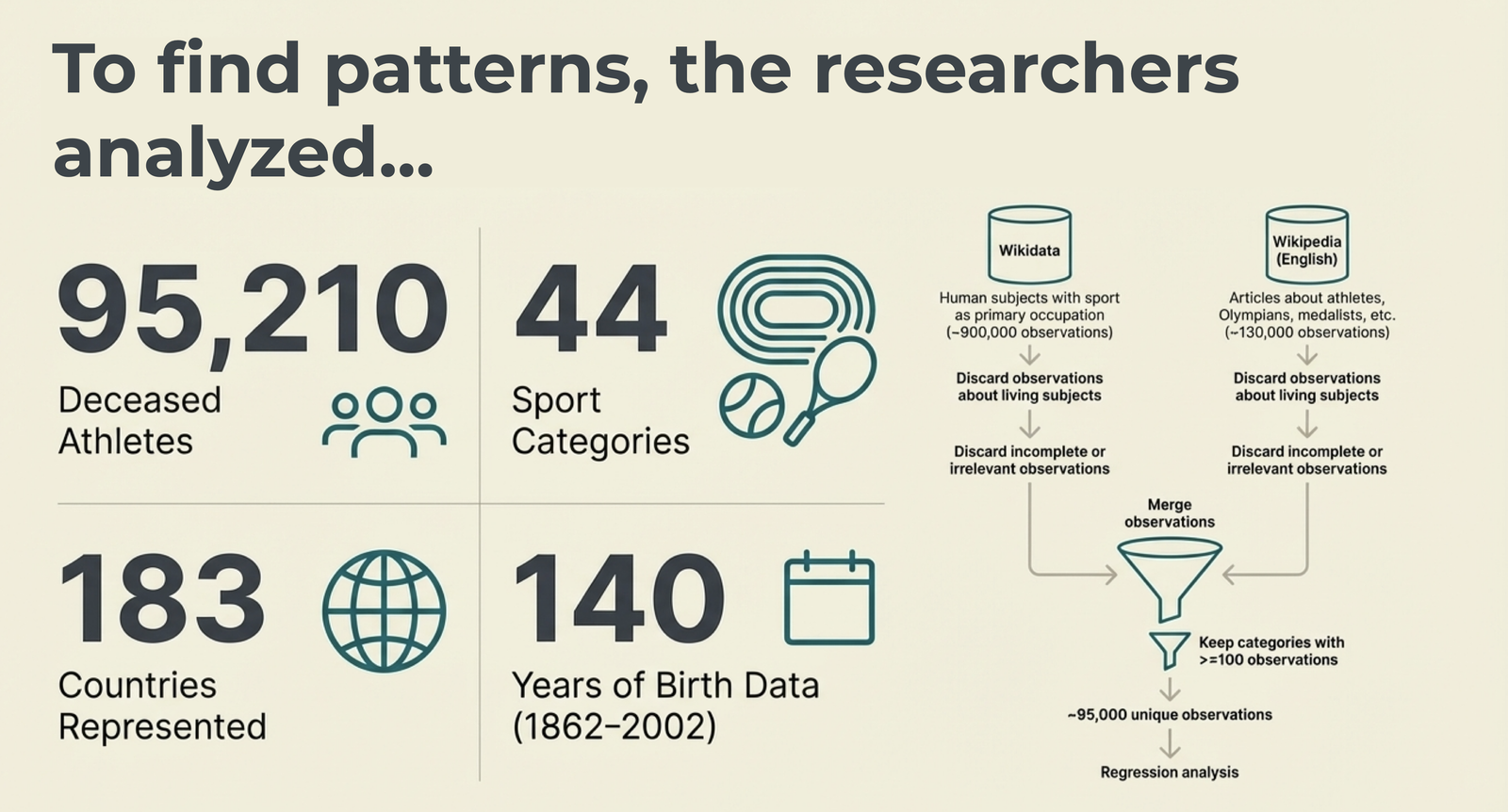
To answer it, researchers analyzed the lives of more than 95,000 former elite athletes from 183 countries, spanning births from the 19th century through the early 2000s. Using publicly available biographical data, they compared how long athletes lived relative to the average person of the same sex, country, and era. The goal wasn’t to crown the “healthiest” sport, but to understand how repeated exposure to specific physical demands shapes aging over a lifetime.
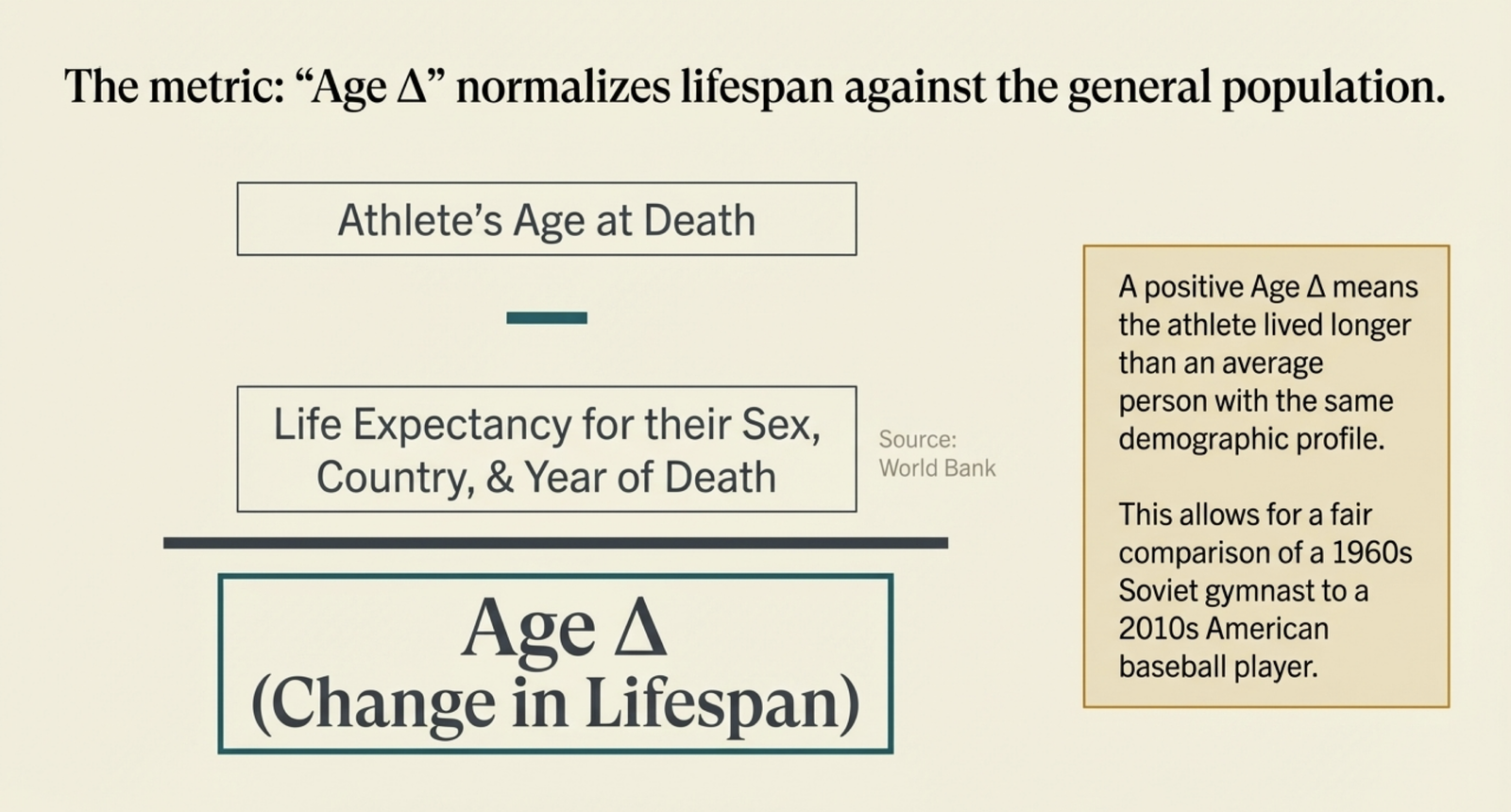
The researchers used a simple but powerful metric called “Age Delta”—the number of years an athlete lived above or below expected life expectancy. Positive values meant longer lives than average; negative values meant shorter ones. This allowed fair comparisons across different countries and historical periods, where baseline life expectancy varied dramatically.
What emerged was not a simple story of athletes versus non-athletes, but a pattern tied closely to training balance.
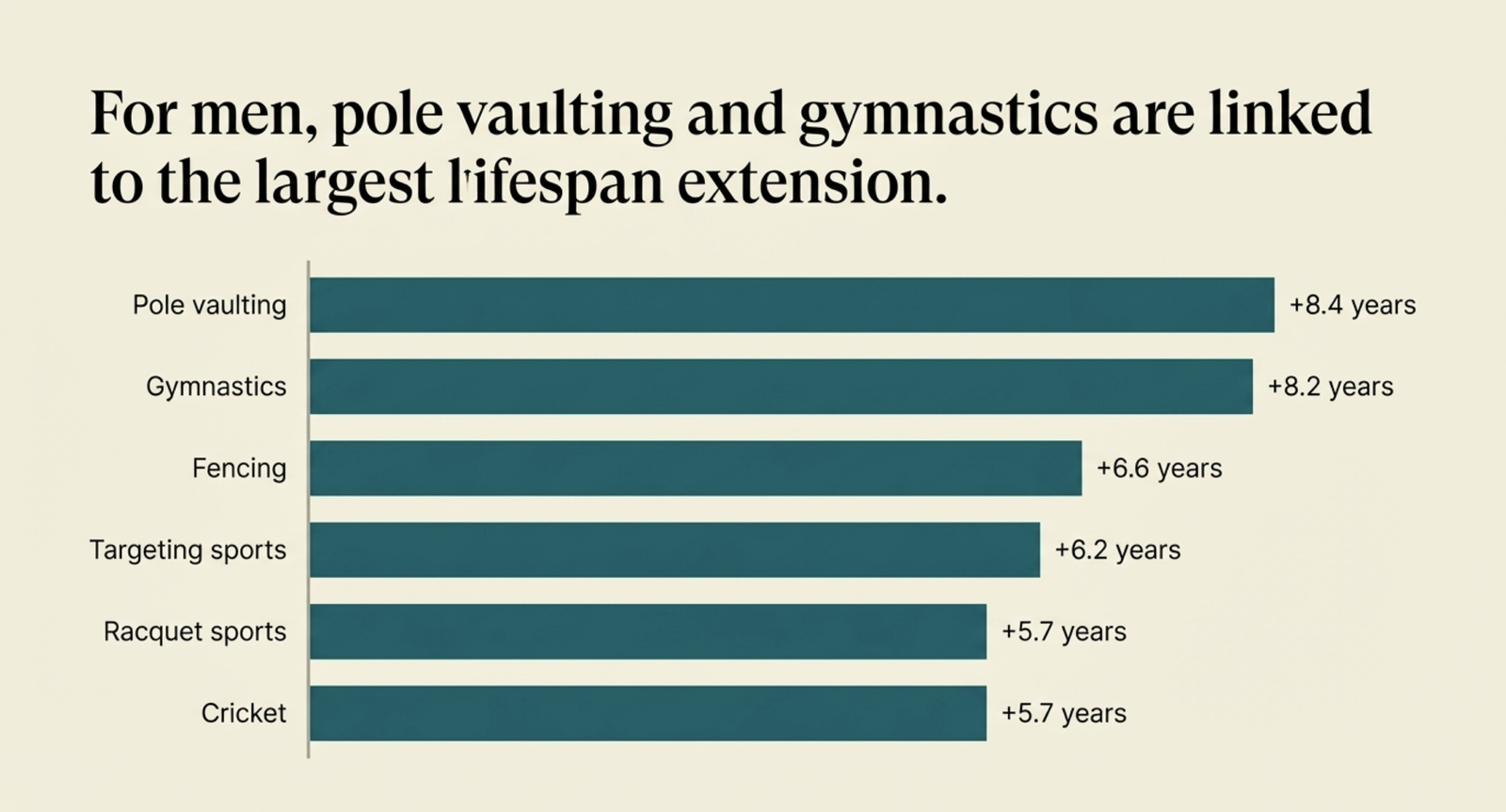
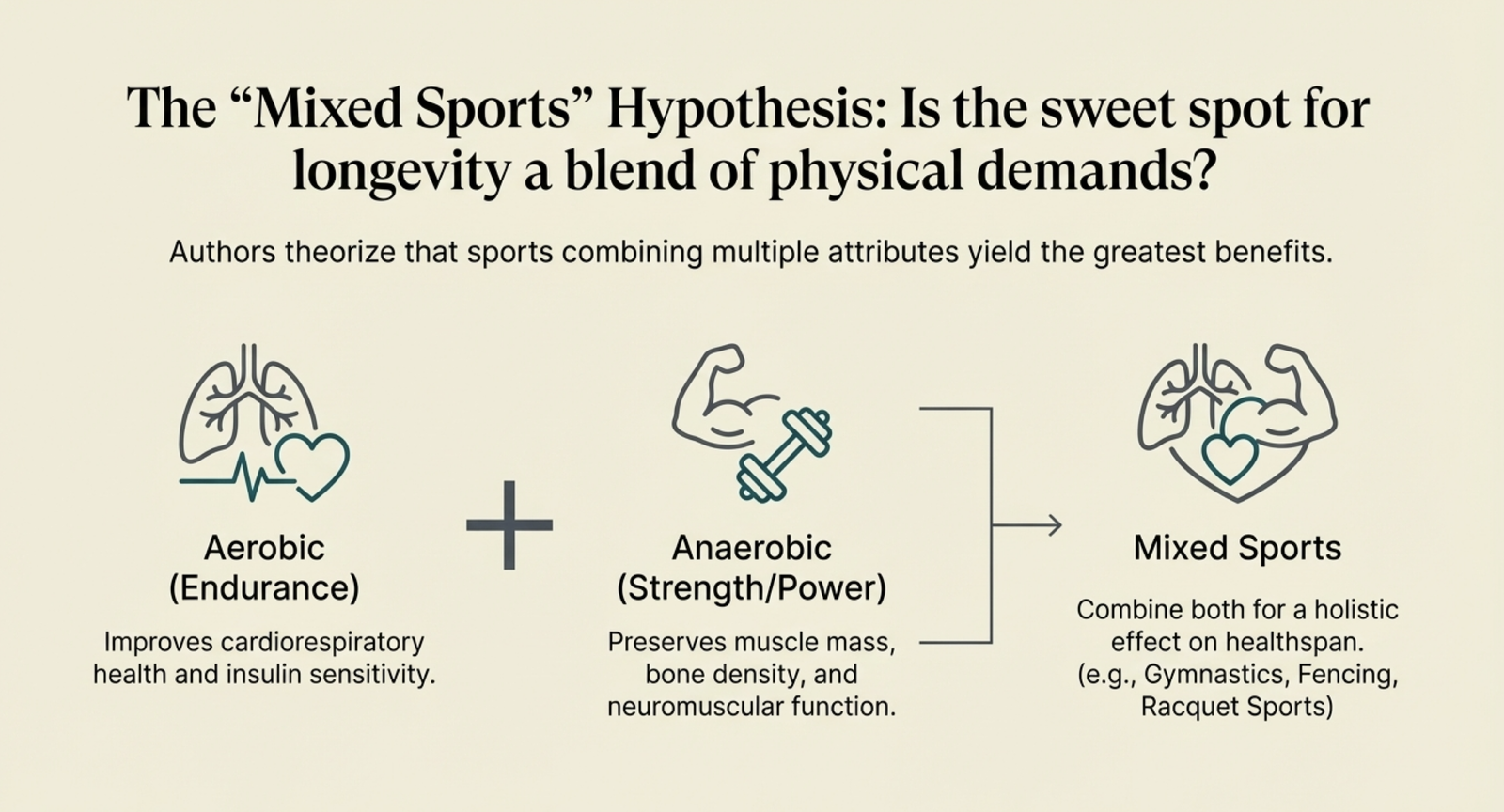
Among men, the strongest longevity benefits appeared in sports that mix strength, power, coordination, and endurance. Gymnastics and pole vaulting stood out, with lifespan extensions of more than eight years. Racquet sports, rowing, and cricket also showed consistent advantages. These activities demand repeated bursts of force, sustained cardiovascular effort, and high levels of motor control—a combination that appears to preserve muscle, bone, and heart health simultaneously.
In contrast, many popular or high-intensity sports showed little benefit. Soccer, basketball, boxing, and wrestling landed close to neutral. Meanwhile, some disciplines were associated with clear lifespan reductions. Sumo wrestling showed the most dramatic decline, nearly ten years below expected lifespan, likely reflecting extreme body mass, metabolic strain, and injury burden. Martial arts, mountaineering, and volleyball also showed negative associations, possibly due to chronic joint trauma and accumulated injuries.
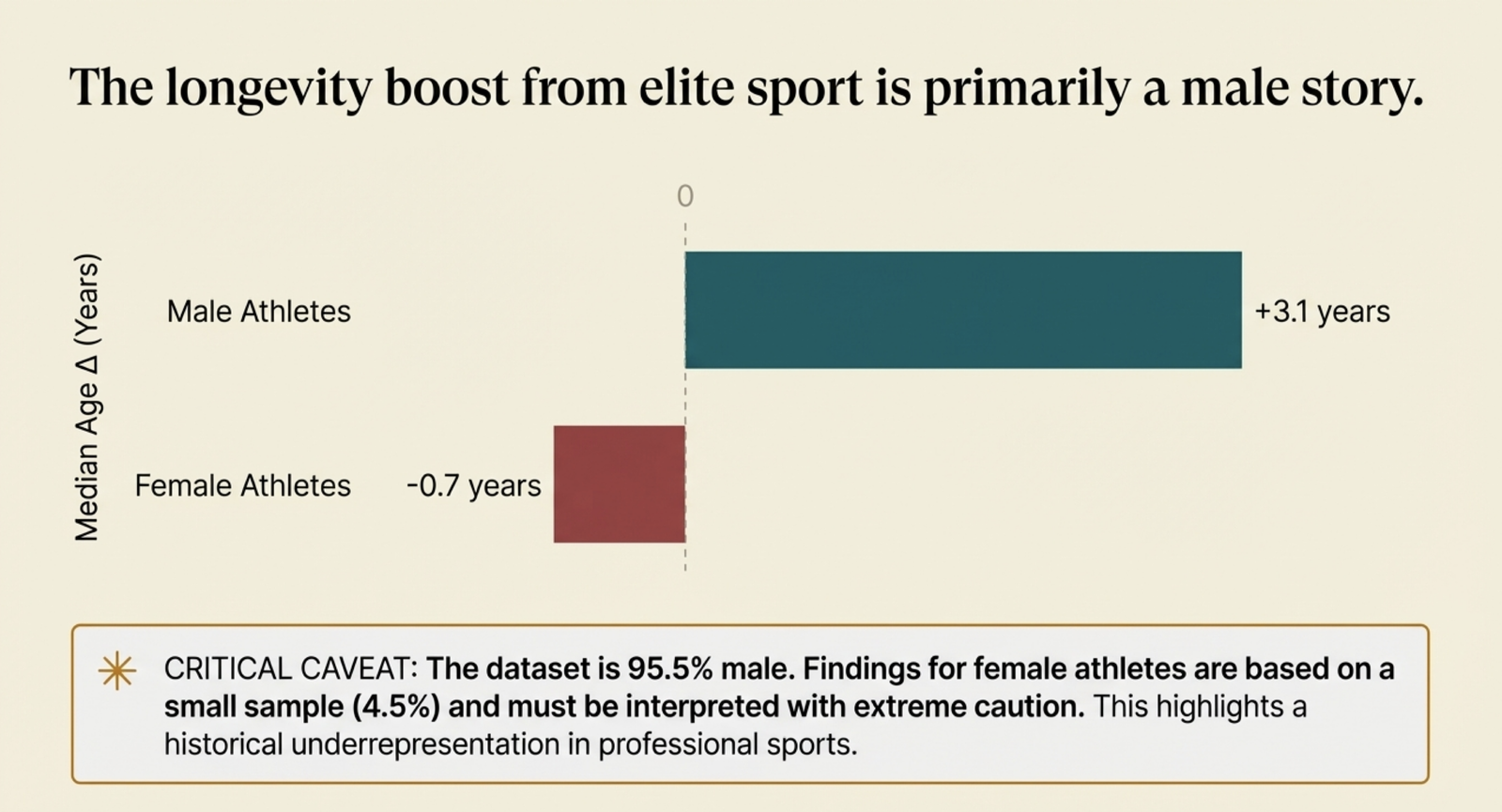
The picture for women was more complicated—and more sobering. Overall, elite sports participation was associated with smaller benefits or even reduced lifespan compared to the general female population. Only golf and racquet sports showed modest gains. Most other categories, including team sports, leaned negative.
The authors propose several explanations. Women already live longer than men, which may limit how much extra longevity elite training can add. Behavioral changes—like reduced smoking or drinking—may also play a bigger role for male athletes, amplifying their relative gains. There is also speculation that chronic exposure to intense training stress and altered hormone environments may carry different long-term costs for women, though this remains an open question.
Also consider:
- Reporting Bias: Data is heavily skewed toward athletes from Europe and North America.
- Confounding Factors: The model does not account for variations in life expectancy caused by ethnicity or socioeconomic status.
- Critical Data Gap: The experience of female athletes remains critically understudied, preventing firm conclusions for this group.
(But see below for the comment on racquet sports in women in the ‘Weird News’ section)
Importantly, the study does not argue that elite sport is harmful in general. It highlights trade-offs. Training that emphasizes only endurance, only power, or repeated physical collisions may push certain systems hard while neglecting others. Over decades, that imbalance may quietly erode resilience.
The clearest takeaway is not about becoming an elite athlete, but about how to train. Activities that layer strength, aerobic fitness, coordination, and injury management appear to age the body more gracefully than those that overload a single dimension. Longevity, the data suggest, favors versatility over extremes.
Random Trivia & Weird News

Racquet Sports Consistently Rank High for Longevity
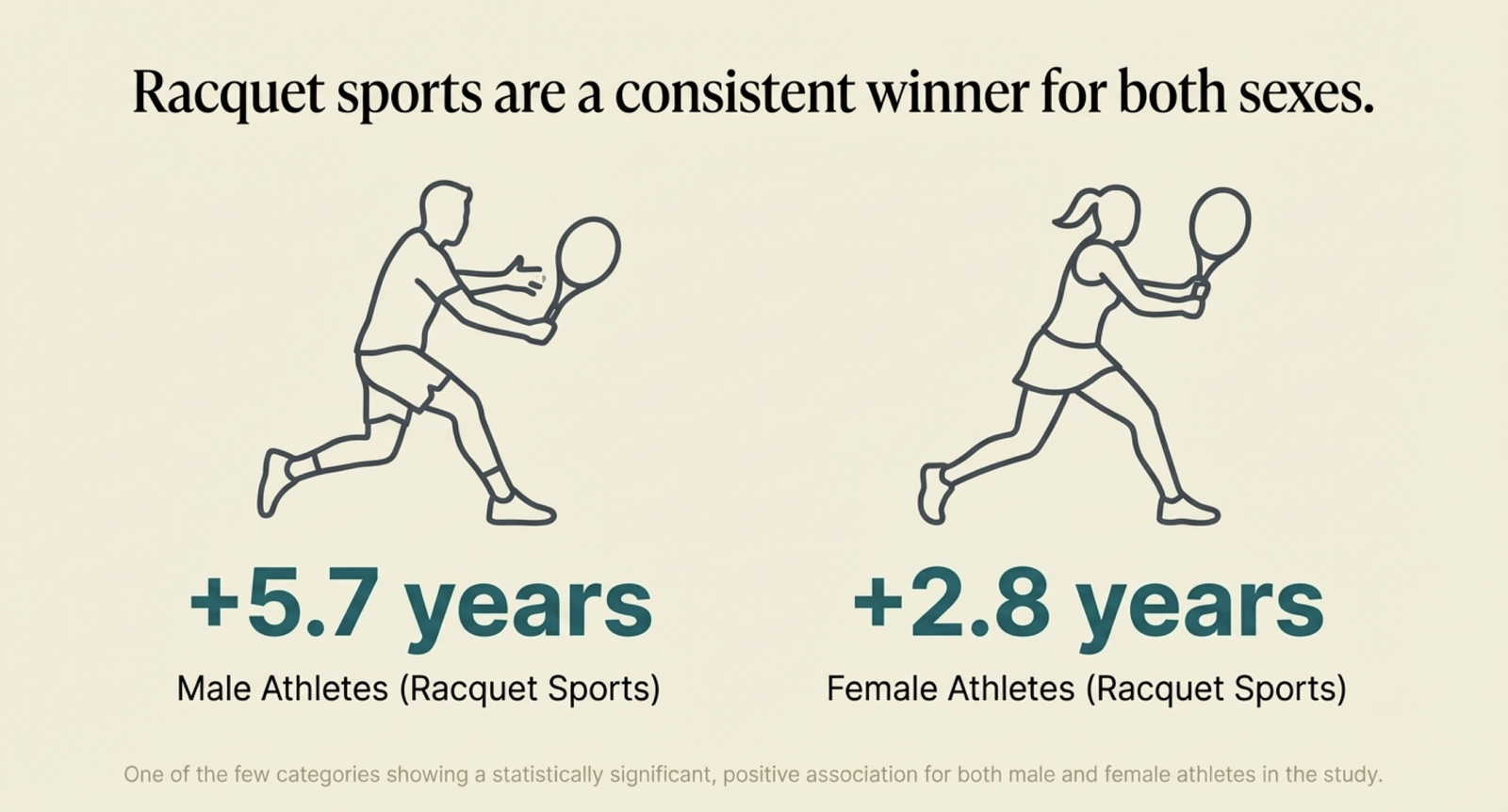
Multiple population studies—not just athlete analyses—find that tennis, badminton, and squash players live longer than walkers or runners. Researchers suspect rapid bursts, coordination, and social engagement all contribute. In the study discussed above, racquet sports were among the most beneficial activities for longevity and distinguished by their ability to provide statistically significant lifespan extensions for both male and female athletes. For male athletes, participation in racquet sports was associated with a lifespan extension of 5.7 years compared to the general population. For female athletes, racquet sports were a rare bright spot for women in this dataset. They were associated with a lifespan extension of 2.8 years.
Podcasts We Loved This Week
- Abbie Smith-Ryan, Ph.D.: Women’s Health and Performance via The Peter Attia Drive
- Vijay Yadav: Taurine on Health and Lifespan via humanOS Radio
Products We Are Enjoying
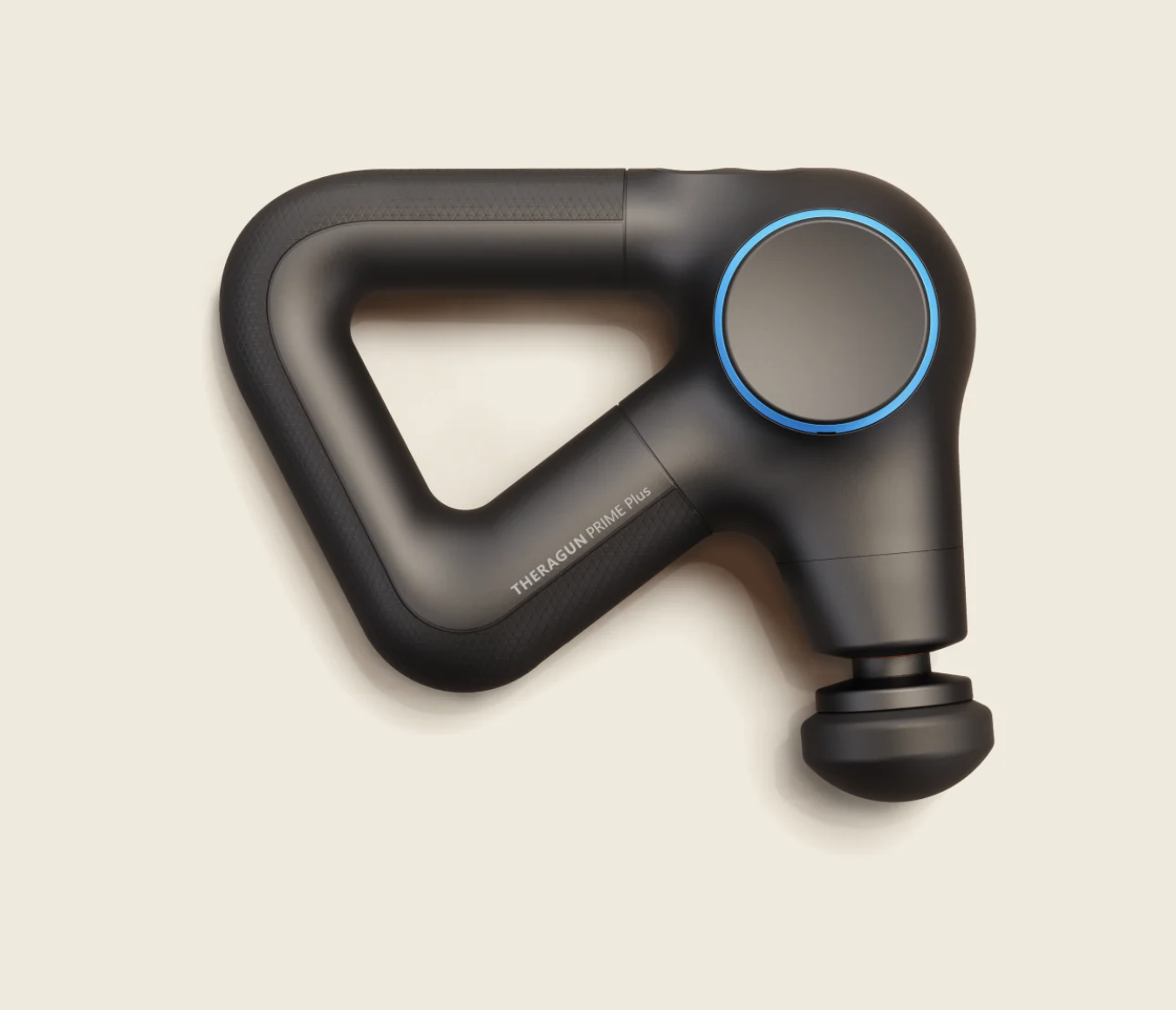
Theragun Prime Plus
The Theragun Prime Plus is designed to make deep muscle recovery both customizable and effective, combining percussive therapy with targeted heat. With five speed settings and three heat levels, it allows users to dial in exactly the intensity and warmth their body needs, whether for post-workout recovery or daily maintenance. The system is expandable, supporting add-on attachments like Cold Plus, Vibration Plus, and Thumb Plus for more specialized treatments.
Physical therapy experts highlight the synergy of heat and percussion as a powerful way to increase blood flow, reduce muscle tension, and accelerate recovery. That promise held up in real use. After using the Prime Plus twice daily for a week, I noticed a clear difference: less soreness, faster recovery, and the ability to practice yoga multiple days in a row without the usual setbacks (i.e., soreness). Compared to other massage guns I’ve owned, this one feels meaningfully stronger and more effective. The improvement was convincing enough that I purchased one myself—and I recommend it without hesitation.
humanOS Catalog Feature of the Week
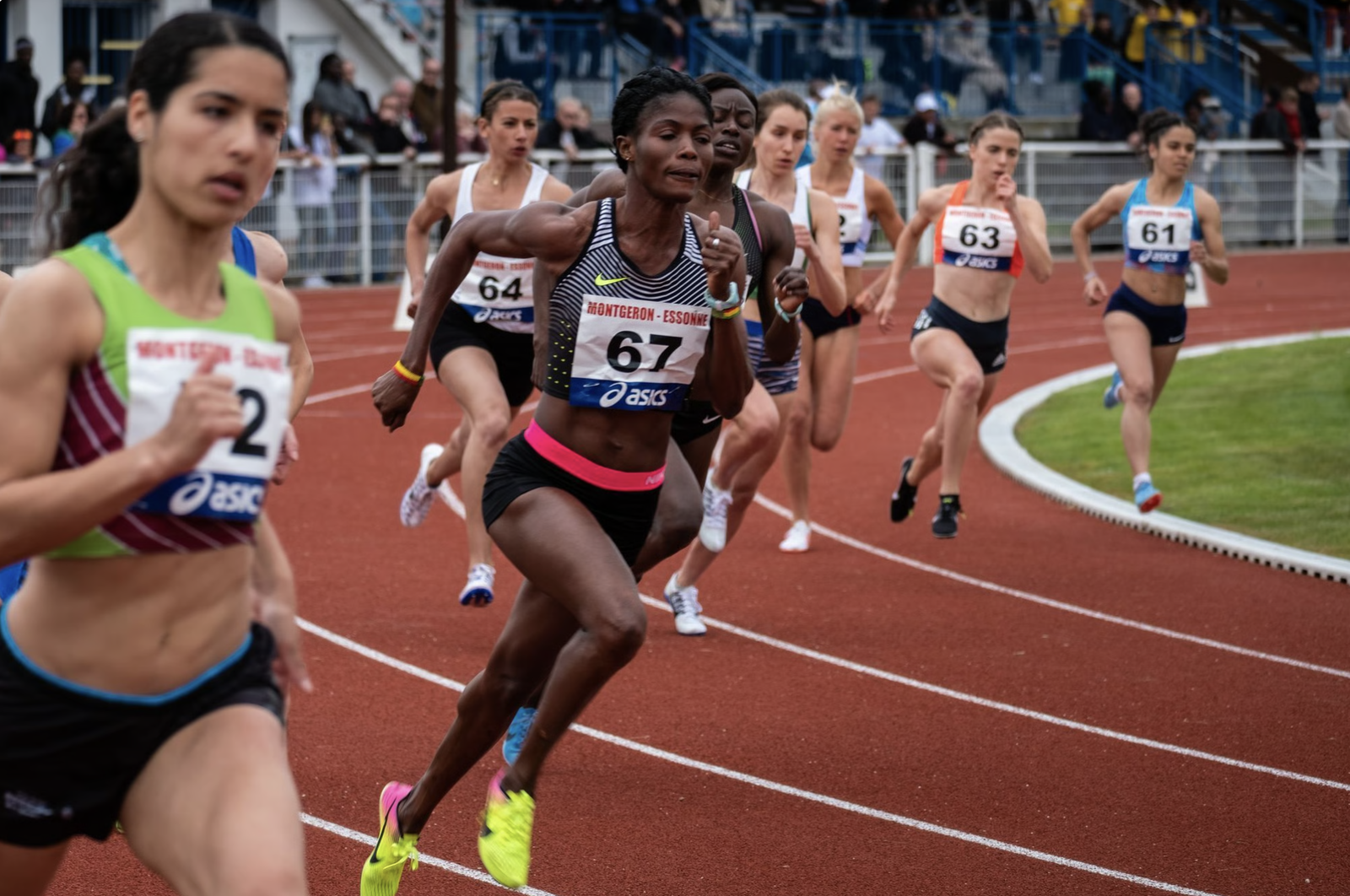
Ergogenic Aids to Enhance Sports Performance. Podcast with Jeff Rothschild
The sports supplement market is booming—but are these products helping you adapt, or quietly holding you back? While caffeine and other popular aids can boost performance in a single workout, their long-term effects on endurance training are far less clear. Could something that makes training feel easier today actually blunt your progress tomorrow? In this episode, we dig into how supplements interact with training stress, cellular signaling, and adaptation over time. With expert insight from sports nutrition researcher Jeff Rothschild MS, PhD, this conversation challenges common assumptions and asks a critical question: are your supplements supporting the bigger picture of long-term performance—or undermining it?
Wishing you the best,

—