

Newsletter #394
This Week’s Research Highlights
For most people, anxiety feels like something that happens on the surface—tight shoulders, a racing mind, restless nights. But deep inside the brain, another story unfolds. It is not just the experienced emotions or repetitive thoughts, but in the ebb and flow of molecules that keep brain cells alive, flexible, and communicating. According to this study, choline, found in eggs, is playing a key role in anxiety. Let’s look closer to see what’s happening. Hat tip to Tommy Wood, MD, PhD - a neuroscientist, athlete, and friend for sharing this article with me.
Also, you’ll notice that our product of the week just happens to be his amazing new book, the Stimulated Mind. I’ll say more about it below.
🎁 We just so happen to have a free gift for you. No strings attached. Would you like a free copy of Tommy’s book? You don’t even need to pay shipping. Just fill out this short form here and the first 100 people fill it out get a free copy shipped to their house for free:
New Feature: Newsletter Summaries ✨
Reduction In Cortical Choline-Containing Compounds In Anxiety Disorders
A recent meta-analysis, the first of its kind, brought this hidden story into focus. Researchers combined data from many studies that used a specialized brain-imaging technique called proton magnetic resonance spectroscopy, or 1H-MRS. Instead of taking pictures of the brain’s structure, this method reads its chemistry, letting scientists measure how certain key molecules are behaving. When they pulled together all the available data on anxiety disorders—generalized anxiety, social anxiety, and panic disorder—they found something striking: people with these conditions consistently had lower levels of choline-containing compounds, known collectively as choline-containing compounds, in their prefrontal cortex and across the wider cortex.
This discovery matters because choline-containing compounds sits at the crossroads of some of the brain’s most fundamental processes. In healthy brains, it reflects a vibrant cycle of breaking down and rebuilding the membranes that surround brain cells. These membranes are not static walls; they are more like the bustling roofs and fences of a city that are constantly repaired, replaced, and reinforced. Choline compounds supply the materials for this ongoing remodeling. When choline-containing compounds is lower than expected, it suggests that something has shifted in this construction cycle.
There are a few ways this shift can occur, and each one tells a slightly different version of the same story.
One involves the supply line. Choline enters the brain mostly from the bloodstream, carried in on special molecules that can cross the blood–brain barrier. You can imagine choline arriving in the brain like crates of building materials delivered at a guarded city gate. The gate admits certain types of packages—especially those containing omega-3 fats—while another gate quietly exports unneeded free choline back out. If the brain is using more choline inside its walls but the flow of materials from the bloodstream doesn’t keep up, choline-containing compounds levels inside the city begin to drop. This is not a far-fetched idea: most adults consume less choline in their diet than recommended, and large population studies show that people with lower blood choline tend to report more anxiety.
Daily Choline Recommendations and Population Intake
The Adequate Intake (AI) for choline varies by sex and life stage:
- Adult men (19+ years): 550 mg/day
- Adult women (19+ years): 425 mg/day
- Pregnant women: 450 mg/day
- Lactating women: 550 mg/day
Unfortunately, most people fall short of these targets. Population studies consistently show that the majority of adults in the United States and other countries consume less choline than recommended:
- Only ~10% of the U.S. population meets the AI (Adequate Intake) for choline
- Mean intake among adults typically ranges from 260-340 mg/day—well below recommended levels
- Women of childbearing age are particularly at risk, with many consuming less than 300 mg/day
Top dietary sources of choline include:
- Eggs (147 mg per large egg)
- Beef liver (356 mg per 3 oz serving)
- Chicken breast (72 mg per 3 oz serving)
- Fish like salmon and cod (56-71 mg per 3 oz serving)
- Cruciferous vegetables like Brussels sprouts and broccoli (31-63 mg per cup)
Another branch of the story takes place inside the brain’s own supply warehouses. Choline doesn’t only build membranes—it also donates methyl groups in a process called methylation, which helps regulate gene activity. When the brain is under chronic stress or heightened arousal, it leans heavily on these methylation reactions. This heavy use can pull choline away from membrane cycles. In a city analogy, imagine construction materials being diverted from building repairs into an emergency program that rewrites instruction manuals. Over time, shortages develop.
That brings us to the character who may drive much of this plot: noradrenaline, an arousal molecule in the brain. Anxiety disorders almost always involve chronically elevated arousal, and noradrenaline quietly influences choline-related chemistry in several ways. It stimulates cells that build myelin, creating a higher demand for choline. It encourages neurons to run methylation reactions that consume choline without producing new choline in return. It even pushes supporting cells to shift their energy use, a metabolic change that has been documented in panic disorder. Through these channels, noradrenaline acts like an overzealous city official who keeps announcing new development projects without checking whether the supply chain can handle them.
This connection becomes even more convincing when we look at conditions unrelated to anxiety but marked by high noradrenergic or thyroid-driven arousal. People with hyperthyroidism, for instance, show lowered choline-containing compounds across several brain regions, whereas those with low thyroid hormone show the opposite pattern. Highly active athletes, who live in a state of recurring arousal surges, also tend to have lower choline-containing compounds. The brain seems to react to chronic arousal with a particular metabolic signature—and that signature now appears to include reduced choline-containing compounds.
The meta-analysis also looked at N-acetylaspartate (NAA), a molecule associated with neuronal health. Here the picture was softer: NAA was generally normal in the prefrontal cortex but showed a small decrease across the cortex once statistical outliers were removed. Compared with the robust choline-containing compounds finding, NAA’s story was more muted and less consistent. Other metabolites—like creatine and GABA—did not show reliable differences.
What makes the choline-containing compounds result especially compelling is its consistency. It appeared across anxiety disorders, across brain regions, across different study designs, and remained even when researchers removed outliers or looked only at unmedicated participants. It also grew stronger when the analysis included only studies with higher measurement quality. These patterns suggest that the reduction is real and meaningful, not a quirk of methodology.
If low choline-containing compounds partly reflects a shortage of choline entering the brain, and if this shortage contributes to anxiety or slows recovery, then restoring that supply might help. Animal studies show that choline supplementation can reduce anxious behavior and enhance learning. Human studies in aging populations show memory benefits from higher dietary choline. Omega-3 fatty acids—long known for their effects on mood and inflammation—carry choline into the brain as part of the same molecular packages that cross the blood–brain barrier. People who experience anxiety often respond especially well to omega-3 supplements, a result thats now ever more understandable.
Researchers have not yet tested choline supplementation directly in anxiety disorders, but the trail of evidence suggests that this may be a promising frontier. The next steps, the authors argue, are studies that combine 1H-MRS measurements with controlled supplementation to see whether restoring choline-containing compounds levels can ease symptoms.
For now, the new meta-analysis leaves us with a clearer picture. Anxiety is not just a psychological experience; it is also a metabolic state. Its chemistry tells a story of a brain working hard under chronic pressure, reshaping its priorities, stretching its supplies, and sometimes running lean in ways that matter for how we feel. Understanding this story brings us closer to treatments that not only calm the mind, but also restore balance in the cellular city within. Now go have some eggs.
Random Trivia & Weird News
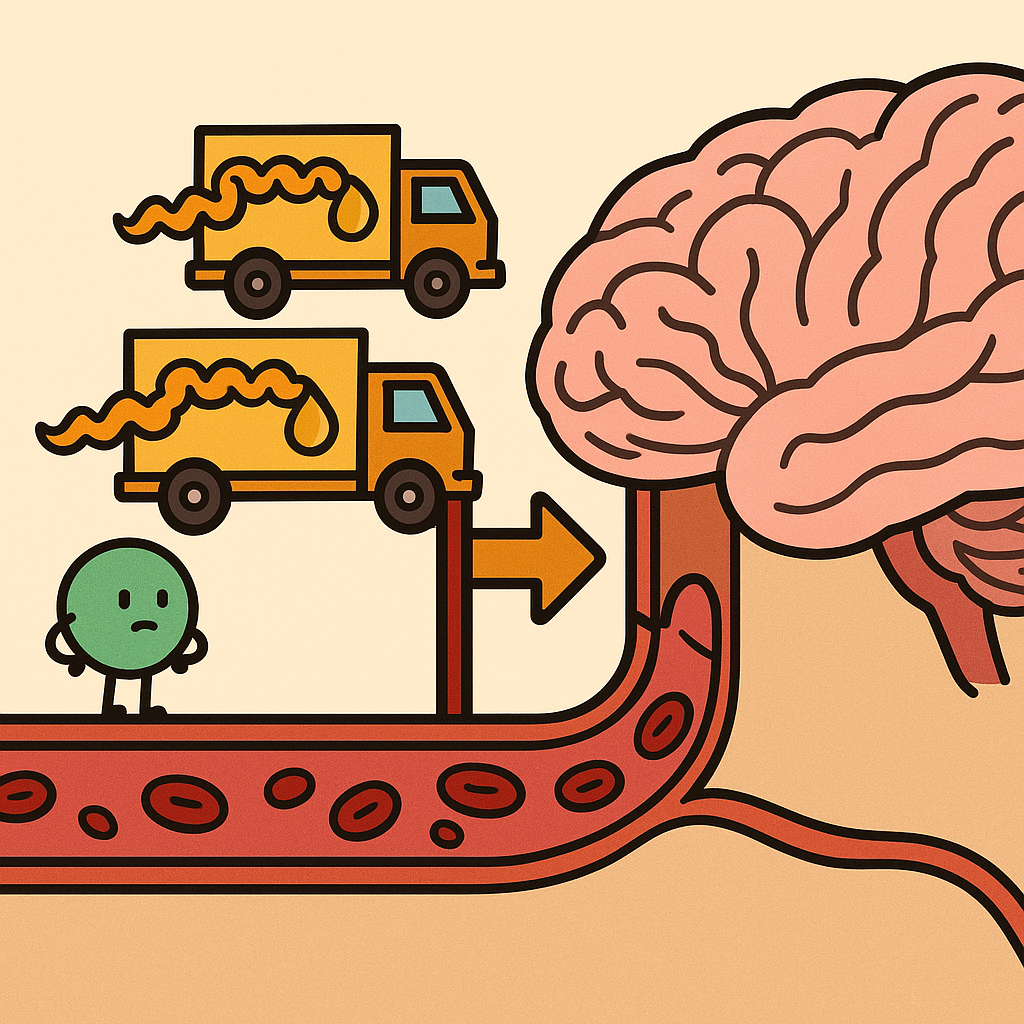
In the traffic of the bloodstream, choline waits on the curb like a traveler without a ticket. It can’t enter the brain on its own—the gatekeepers at the blood–brain barrier won’t let just anyone through. But then the omega-3 carriers arrive and act like delivery trucks. Choline climbs aboard, tucked into a lysophosphatidylcholine seat, and the truck glides past the barrier and into the brain. Inside the brain, the cargo doors swing open, choline hops out, and makes its way to the job sites where its needed helping to repair membranes, fuel signaling, and according to the study above, keep the brain free from anxiety.
Podcasts We Loved This Week
- Dr. Andrea Stocco: Hacking the Brain: TMS, Brain-to-Brain Communication, and Predicting Your Cognitive Future via Better Brain Fitness (with Josh Turknett, MD, and Tommy Wood, MD, PhD).
- Dr. Tommy Wood: Dr. Tommy Wood's Exciting Announcement via Better Brain Fitness
(learn more about Tommy’s new book and what it’s all about)
Products We Are Enjoying
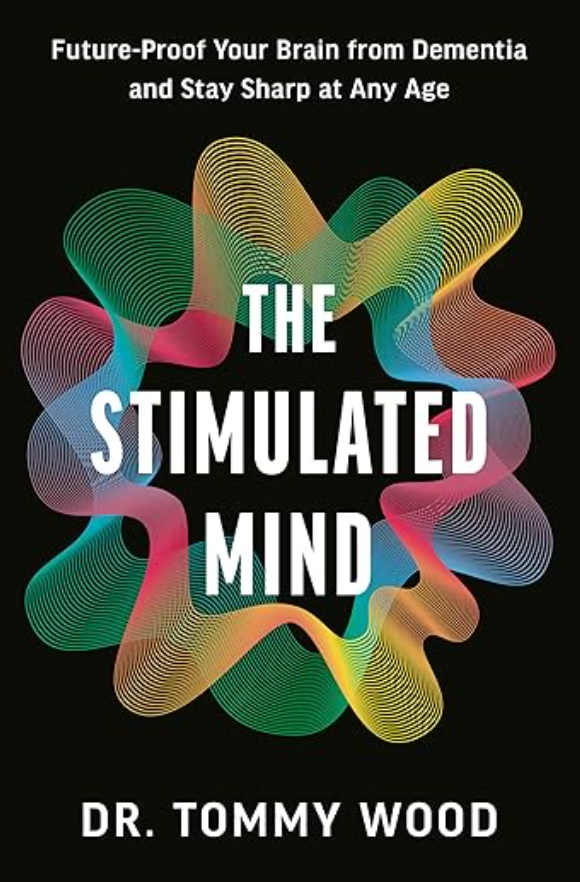
The Stimulated Mind argues that cognitive decline is not inevitable. Dr. Tommy Wood—neuroscientist and Formula 1 performance coach—explains that the brain can improve with age when given the right inputs. Rather than relying on supplements or extreme routines, he emphasizes everyday, controllable factors: diet, sleep, movement, social connection, and stress resilience. These form his “3-S” model—Stimulation, Sleep, and Nutrient Supply—which together build mental “headroom,” or reserve capacity that protects against dementia and Alzheimer’s. Drawing on scientific research and real-world coaching experience, Wood provides a practical roadmap for lifelong cognitive strength and sharper thinking at any age. I’ve had the good fortune to be able to read the book, and support (as a friend) Tommy along the writing process. This information is serious gold. Get your pre-ordered copy today!
humanOS Catalog Feature of the Week
Daily Performance - Introduction
This course is a part of a five-course program called the Daily Performance Program. In the program, we show you ways in which various aspects of lifestyle boost within-day mental performance. Now, if you could increase your cognitive performance and productivity by making relatively simple adjustments to how you approach your day and night, would you do so? Of course, the answer to that question is an emphatic yes because that can seriously effect the quality of our day to day experience.
In this course, we address some of the unique challenges associated with modern work, like digital distractions. For instance, did you know that research shows that it takes on average almost a half hour to return to something that you were working on after being distracted, even if the distractor was something that only took like a minute of your time, like an email or text message? 🤦 That kind of thing consumes a ton of our time and mental energy, and in turn may lead to more stress, which takes an insidious toll on your long-term health. We also lay out how critical daily environmental and lifestyle inputs affect various dimensions of cognition - probably more than you realize. Fortunately, all of these are modifiable, at least to some extent. To learn more, check out the course, and the entire Daily Performance Program.

—