

Newsletter #393
This Week’s Research Highlights
If you’ve ever worked a night shift, you probably know the feeling: it’s 2 a.m., you’re tired and suddenly a salty snack sounds unusually appealing. This isn’t just a quirk of night-shift culture — science shows that staying awake when the body expects to be asleep can meaningfully alter appetite, food preferences, and metabolic health. In fact, late-evening eating during night work has been linked to everything from shifts in body composition to poorer glucose tolerance to increased cardiovascular strain. I’m especially interested in this topic because it’s where I did my PhD work, and the senior author on this paper, Christian Benedict, was someone I cited frequently in my dissertation. even though I'm not working in that particular field now, I still follow his work and get alerts when his papers come out. So, let’s see what this new paper has to say.
New Feature: Newsletter Summaries ✨
Menstrual Cycle and Prior Sleep Shape Women’s Responses to Savory Snacks During a Mock Night Shift
What actually drives these nighttime cravings? And why do some people seem especially drawn to certain foods during overnight work?
This new laboratory study set out to explore two physiological factors that may help answer these questions: hormonal status across the menstrual cycle and how much sleep a person gets before starting a night shift. Both have already been shown to influence food appeal. Higher progesterone levels — which rise during the luteal phase of the menstrual cycle — are associated with increased appetite and stronger responses to tempting foods. Similarly, getting less than the recommended seven hours of sleep can heighten the appeal of calorie-dense, highly palatable snacks. Benedict and his colleagues wanted to see how these two factors play out during a simulated night shift, a context in which food choices are known to shift in ways that may affect long-term health.
To do this, the researchers brought reproductive-aged women into a controlled laboratory environment and had them complete a full simulated night shift. Throughout the night, they measured markers of sympathetic arousal using eye-tracking pupillometry and collected detailed ratings of how palatable and “wanted” they found various savory snacks, including potato chips. They were especially interested in whether a higher progesterone-to-estradiol (P/E) ratio or shorter prior sleep would increase both the liking and the wanting of these foods.
What they found paints a nuanced picture of how hormonal rhythms and sleep interact with appetite during nocturnal wakefulness.
First, women with higher progesterone to estrogen ratios — typically those in the luteal phase — were more likely to find savory snacks appealing during the night shift. This lines up neatly with previous research suggesting that food becomes more enticing after ovulation, when progesterone peaks. The takeaway here is that menstrual-cycle phase isn’t just relevant for mood or energy levels; it may also influence what foods feel especially tempting when working through the night.
Second, prior sleep played a surprisingly specific role. Women who slept fewer than seven hours before the simulated shift rated potato chips as increasingly palatable as the night wore on. By 4 a.m., these participants found the snacks more appealing than they had earlier in the evening. This fits with a broader body of work showing that insufficient sleep ramps up the reward value of certain foods. Side note: This is similar to what I found in my thesis work in both men and women.
But here’s where things get interesting: even though the potato chips tasted more appealing to the sleep-restricted group, their desire to actually choose or eat those snacks — their “wanting” — decreased sharply by the end of the shift, dropping to roughly half of what it had been at 9 p.m. and 2 a.m. In other words, palatability went up, but wanting dropped.
This apparent contradiction isn’t as strange as it sounds. Prior studies suggest that sleepiness can compete with or even override other motivational drives. By the tail end of a night shift, physiological fatigue may dampen the motivation to seek out salty, potato chips snacks, even if they seem especially tasty in the moment. This pattern was most pronounced among women who had slept less than seven hours before the shift.
Taken together, these findings suggest that nighttime appetite is shaped simultaneously by where someone is in their menstrual cycle and by how much sleep they’ve gotten beforehand. For real-world night-shift workers, these patterns may help explain why cravings can feel unpredictable — and why certain snacks seem irresistible at one time of night but unappealing at another.
They also point toward practical strategies. Ensuring at least seven hours of sleep before a night shift may help regulate food appeal and prevent the heightened palatability that can lead to poor snack choices. Workplaces might also consider offering healthier savory options — such as roasted nuts or chickpea snacks — that align with the natural increase in appeal for salty foods during the luteal phase but avoid the pitfalls of heavily processed choices like potato chips.
Looking ahead, future studies could broaden the lens by including male participants, assessing preferences for sweet foods (which activate different neural pathways than savory ones), accounting for personal taste preferences, and tracking daytime eating habits prior to the night shift. Each of these factors could help clarify how sleep, hormones, and prior food intake interact to influence appetite and decision-making during overnight work.
For now, one message is clear: our bodies don’t leave their hormonal rhythms or sleep needs behind just because we’re awake at night — and these factors meaningfully shape what we crave when the rest of the world is asleep.
Random Trivia & Weird News
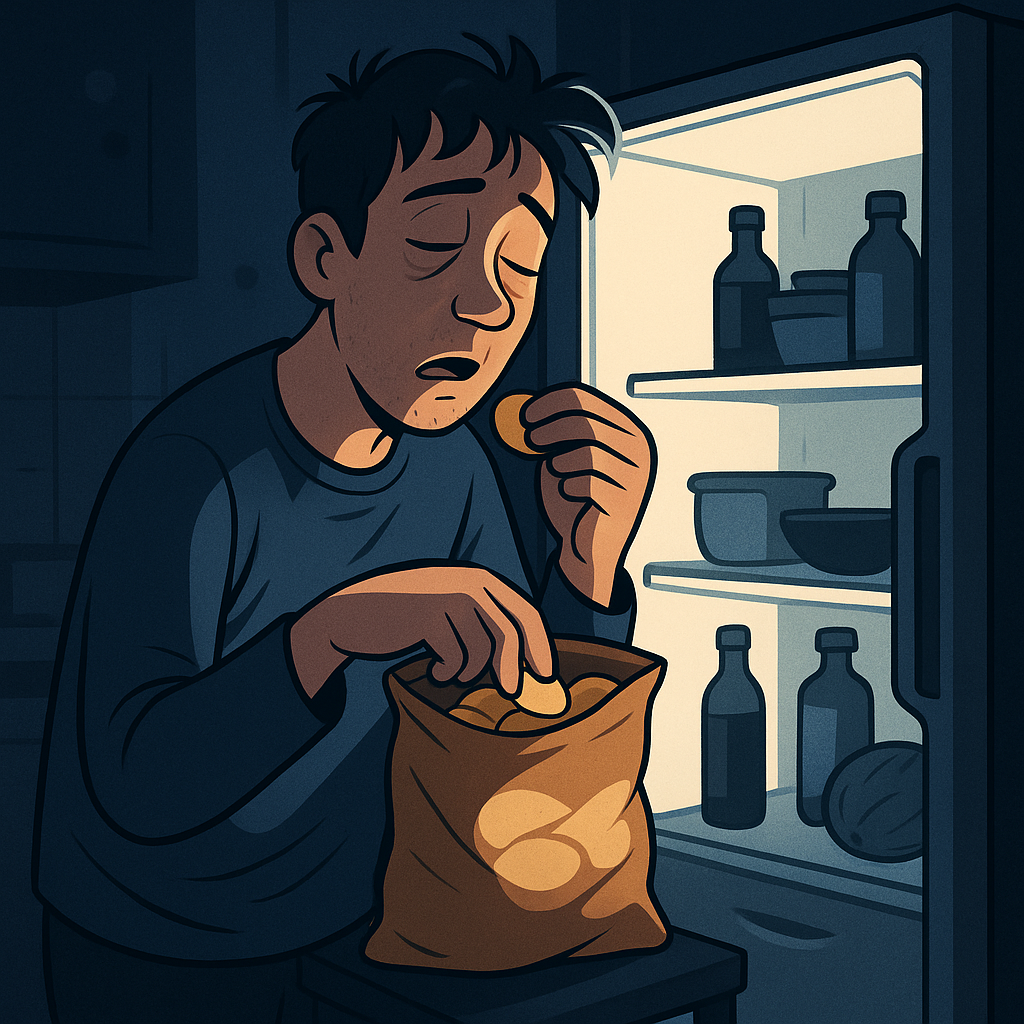
Some people experience a rare condition called nocturnal sleep-related eating disorder, or NSRED, in which they raid the kitchen while sound asleep. Instead of simple sleepwalking, these individuals prepare and eat food with no awareness and no memory the next morning. Case reports describe people assembling full sandwiches, heating leftovers, frying bacon, or polishing off entire jars of peanut butter while technically unconscious. The behavior is often discovered only through missing food, messy countertops, or confused housemates — turning the refrigerator into an unwitting accomplice in a nightly mystery.
Podcasts We Loved This Week
- Mark Fox: How PEMF Therapy Boosts Sleep, Energy & Performance via High Performance Longevity
- Marina Walther-Antonio: The microbiome's role in women's health and cancer via STEM Talk
Products We Are Enjoying
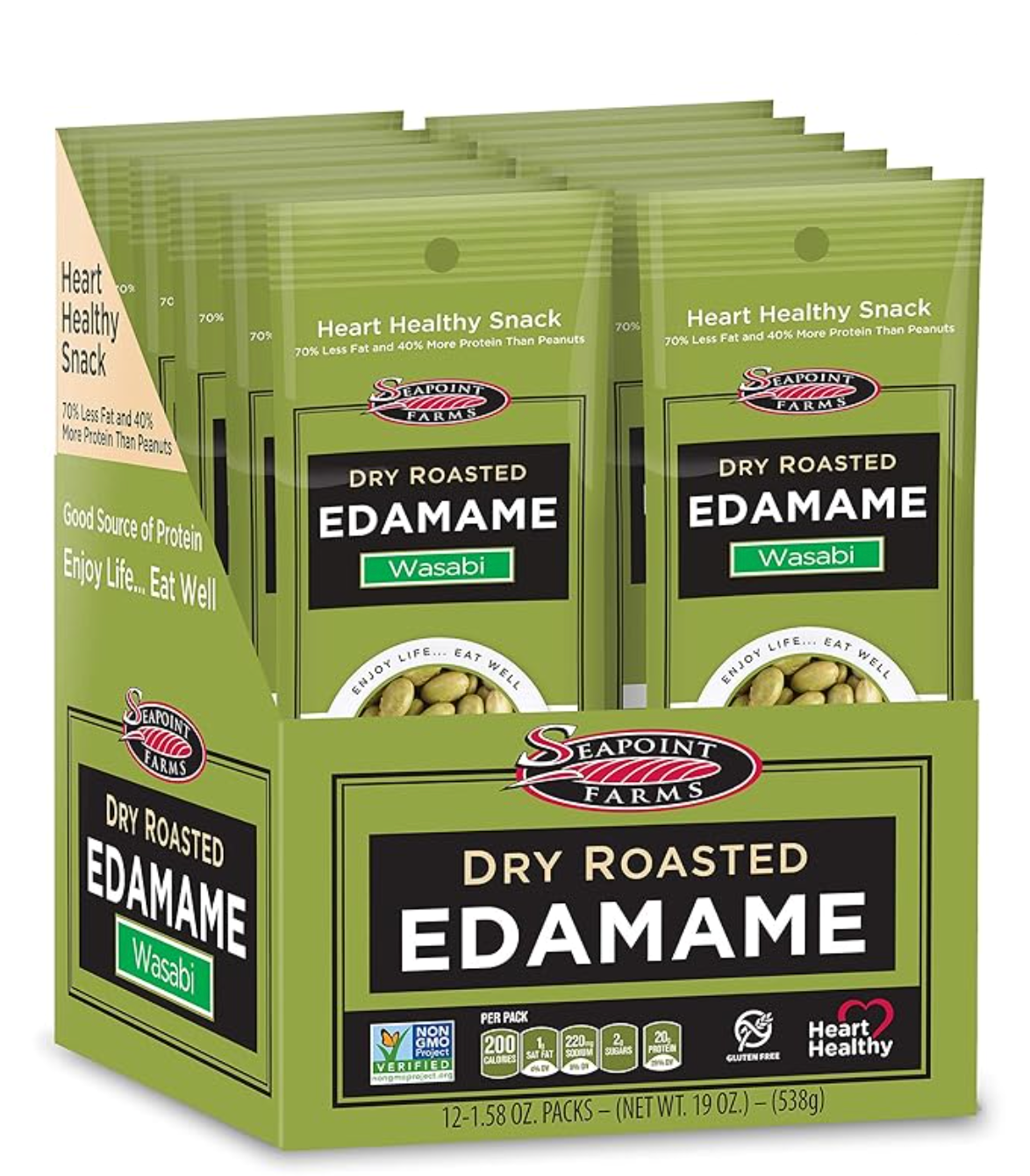
Seapoint Farms Dry Roasted Wasabi Edamame
Dry roasted wasabi edamame delivers 20g of plant protein per serving and is vegan, gluten-free, low-calorie, and non-GMO. Made with just four ingredients, it offers a spicy crunch, heart-healthy nutrition, and on-the-go convenience. Enjoy it straight from the pack or as a high-protein topper for salads and trail mixes. If you’re going to have a late night snack, these are solid.
humanOS Catalog Feature of the Week
Thanks for reading, and we will see y'all next week!

—