Newsletter #392
This Week’s Research Highlights
Most of us spend more time sitting than we’d like to admit. Long workdays, hours of studying, endless commutes, or just unwinding in front of a screen all add up to an astonishing amount of TOB - time on butt. Young adults now average around six hours of sitting each day, and the health consequences stretch far beyond stiff backs and tight hips. Even short bouts of uninterrupted sitting begin to impair the health of our arteries, subtly raising long-term cardiovascular risk. But what if something as simple—and frankly enjoyable—as a cocoa drink could protect the body from some of these effects? A new study set out to test exactly that question.
New Feature: Newsletter Summaries ✨
Dietary flavanols preserve upper- and lower-limb endothelial function during sitting in high- and low-fit young healthy males
The research team behind this study wanted to know whether cocoa flavanols—the plant compounds found in cocoa, tea, berries, and certain fruits—could prevent the drop in vascular function that typically occurs when we sit still for long stretches. Their curiosity was grounded in a much larger public health issue: sedentary behavior has become so widespread that it now contributes to higher mortality rates and costs hundreds of millions of pounds each year in healthcare expenses in the UK alone. Although we often assume that being physically fit protects us from the harm of sitting, previous studies have shown mixed results. And while activity breaks like short walks clearly help, nutritional strategies have barely been explored. The idea that something you consume before sitting could act as a kind of vascular shield is not only scientifically interesting—it’s extremely practical.
To test their question, researchers conducted a rigorous, double-blinded, placebo-controlled, cross-over experiment involving forty young, healthy men. Half were classified as “high-fit” and half as “low-fit,” based on cardiorespiratory measurements. Each participant completed two sessions.
- Session 1: They drank a high-flavanol cocoa beverage containing 695 mg of total flavanols, including a substantial dose of the flavanol (−)-epicatechin.
- Session 2: In the other, they consumed a low-flavanol cocoa drink with virtually no epicatechin.
After drinking their assigned beverage, participants sat for two uninterrupted hours while the researchers monitored the health of their arteries—particularly the superficial femoral artery in the leg and the brachial artery in the arm—using flow-mediated dilatation, a common way to measure how well arteries respond to increased blood flow.
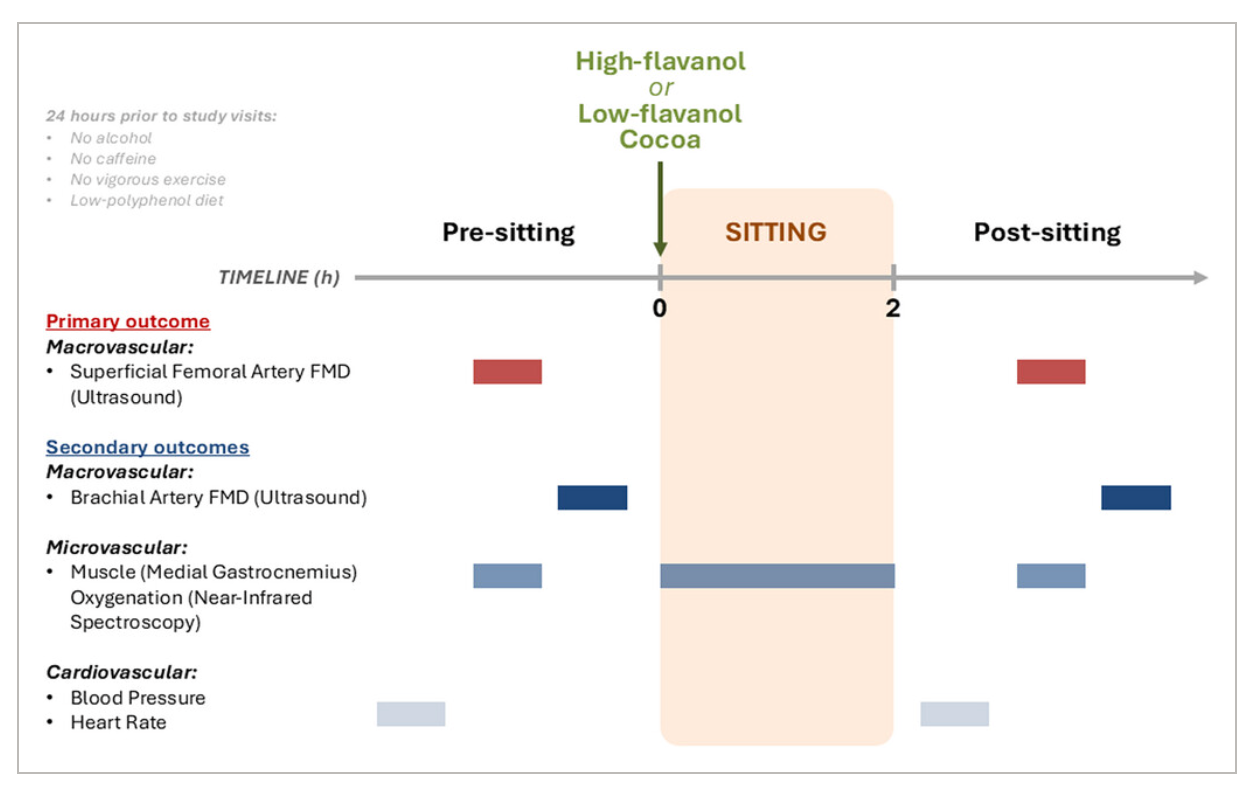
What the researchers found was unexpectedly encouraging. In the low-flavanol condition, participants experienced the typical sitting-related decline in arterial function. Their endothelial function—the ability of the artery to relax and respond to blood flow—dropped by about one percent in the leg and a smaller amount in the arm. On paper, these numbers may seem small, but in cardiovascular research, even tiny drops in flow-mediated dilatation are meaningful and linked to long-term disease risk. Yet, after drinking the high-flavanol cocoa, these declines essentially vanished. The participants’ arteries maintained their ability to function normally despite the two hours of stillness. This protective effect appeared in both limbs and was consistent across the entire group.
One of the most intriguing parts of the story is that cardiorespiratory fitness offered no protection. The high-fit individuals did not fare any better than the low-fit participants when they consumed the placebo drink. Their arteries still showed the same level of impairment from sitting, and the cocoa flavanols benefited them just as much as their less fit peers. This finding challenges the common belief that being fit automatically safeguards someone from the harms of sitting. Even a person who trains regularly may experience the same acute vascular consequences of a long flight or a day spent working at a laptop.
Another important twist is how the flavanols achieved their protective effect. Sitting typically reduces the blood flow and shear stress that help keep arteries healthy. Activity breaks, like walking, work mainly by restoring this blood flow. But in this study, cocoa flavanols preserved endothelial function even though blood flow and shear rate still dropped during sitting. That means the cocoa wasn’t simply preventing the physical consequences of inactivity; it was strengthening the arteries’ internal biology, likely by boosting nitric oxide availability—a molecule essential for helping arteries relax. In other words, flavanols seem to help the artery stay responsive even when the usual mechanical signals are reduced.
Not every part of the vascular system responded the same way. The smaller blood vessels deeper in the muscles—the microvasculature—still showed clear declines in oxygenation and recovery after sitting, regardless of what the participants drank. Similarly, diastolic blood pressure rose by several millimeters of mercury during the two-hour sitting period, and cocoa provided no acute protection there either. The researchers note that longer-term flavanol intake might be necessary to influence blood pressure and microvascular function, which often respond differently than the larger conduit arteries.
Taken together, the findings offer an accessible strategy for everyday life. Because eating and sitting so often happen together—think grabbing a snack before class or sipping a drink on a long drive—nutritional choices could become an easy way for people to support their arterial health when movement isn’t possible. Dark cocoa, berries, grapes, and green tea all contain similar flavanols and could be used strategically before known periods of prolonged sitting.
This doesn’t mean that flavanols replace movement; nothing can. Regular activity breaks remain the most effective way to restore blood flow and reduce the broader metabolic impacts of being sedentary. But the study suggests that flavanols can work alongside those strategies, offering an additional layer of protection for people whose schedules or environments make it difficult to get up frequently.
In short, if sitting acts like a temporary “rust” forming inside your major arteries, cocoa flavanols appear to operate like a fast-acting internal polish, helping the vessel lining stay resilient even when blood flow slows. They don’t fix every issue, but they do seem to preserve one of the most important aspects of vascular health. For anyone who spends long days at a desk—or in a car, or on a plane—this research offers a small but genuinely meaningful piece of good news: sometimes, a simple cup of cocoa can do more for your arteries than you’d expect.
Random Trivia & Weird News
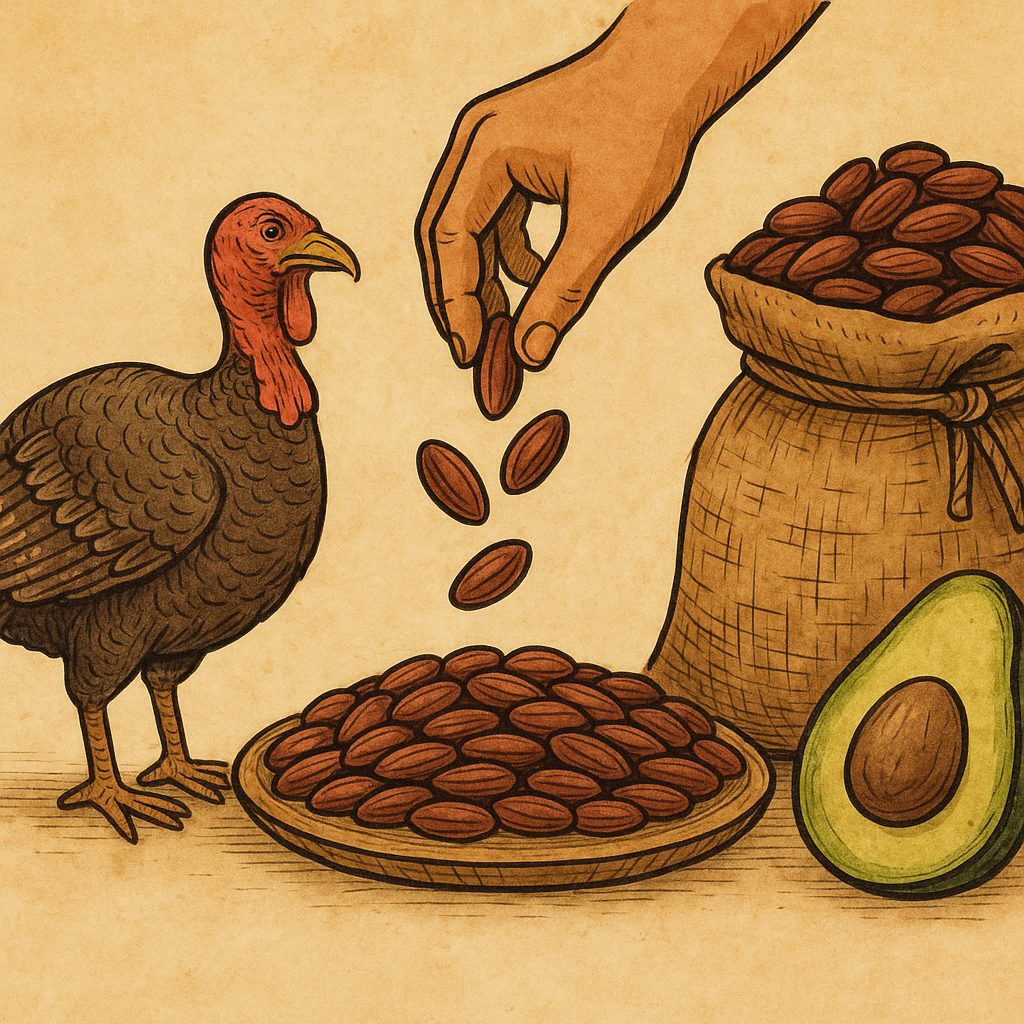
In ancient Mesoamerica, cacao beans weren’t just food, they were literal money. Markets ran on a bean-based economy where prices were wonderfully specific: a turkey might cost 100 cacao beans, while an avocado went for just three. Traders carried bags of cacao like pocket change, though the currency came with one obvious problem: it was delicious. Temptation aside, cacao was stable, portable, and widely valued, making it one of history’s strangest—and tastiest—forms of cash.
Podcasts We Loved This Week
- Barry Halliwell, Distinguished Professor: Antioxidants, Free Radicals, and Oxidative Stress: Sense and Nonsense via Reason & Wellbeing with Greg Potter, MS, PhD.
- Tommy Wood, MD, PhD and Josh Turknett, MD: Are Microplastics Causing Dementia? via Better Brain Fitness
Products We Are Enjoying
CocoaVia Cocoa Powder
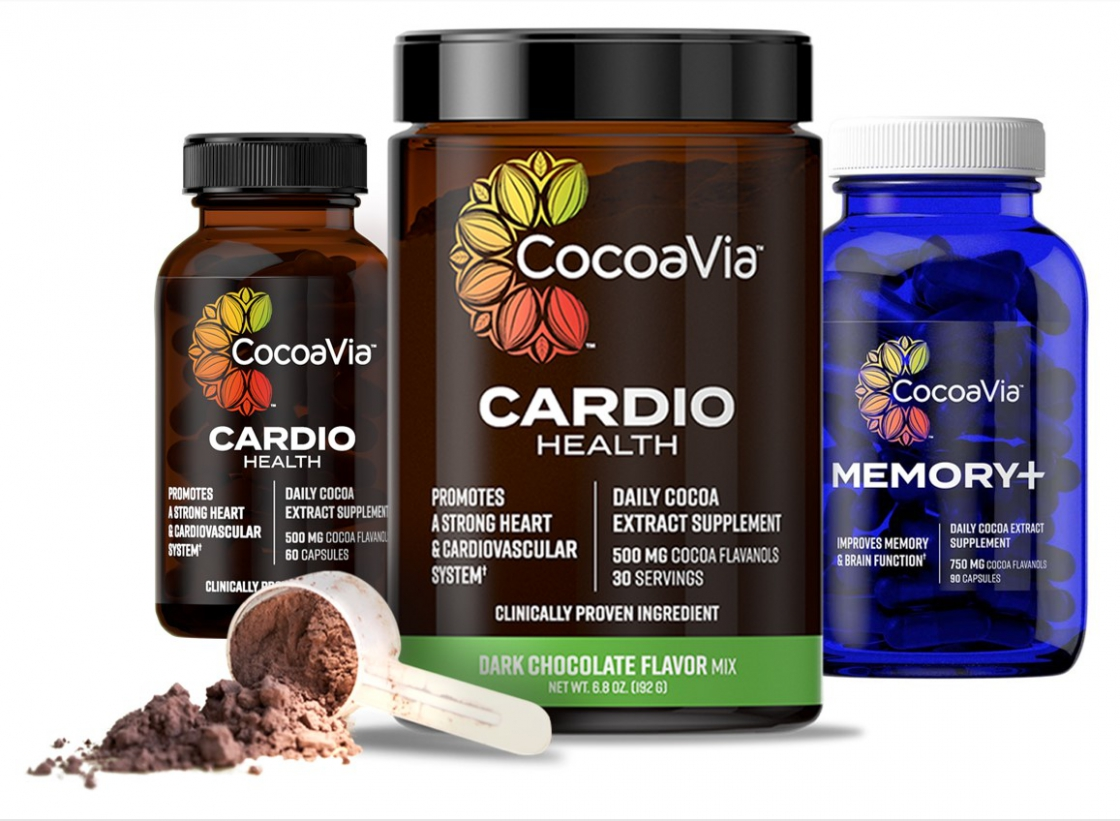
If you specifically want to reap the vascular benefits of cocoa flavanols, unfortunately your typical chocolate bar probably isn’t going to do the job. For health-conscious consumers, CocoaVia is probably your best bet, as it is frequently used in trials testing the effects of cocoa on endothelial function and other health-related parameters. (In fact, CocoaVia was the supplement used in the study described above.)
Each scoop of this powder packs 500 mg of cocoa flavanols with only 10 calories. They also offer capsules if you prefer, but the powder is a little more cost-effective, and it’s not hard to use. I’ve added it to coffee successfully, and it also mixes well into smoothies and oatmeal. It also tastes surprisingly good, considering how concentrated it is - very rich chocolatey flavor and not too bitter.
humanOS Catalog Feature of the Week
Optimizing Nutrition with Smoothies
Most people struggle to eat enough fruits and vegetables to see real health benefits, let alone hit the doses used in scientific studies. Smoothies can change that. By blending whole foods, you can unlock higher levels of key nutrients and phytochemicals, often in amounts you’d never eat at a meal, and without losing critical fiber or plant compounds.
This course shows you how to make smoothies that don’t just match a typical healthy diet — they can surpass it.
To Access:
- Log in to humanOS.
- See Mini-Courses in navigation on the left-hand side
- Scroll down to Smoothies