

Newsletter #390
This Week’s Research Highlights
Every fall, flu season arrives like clockwork. But, each year, its a little different than the last. This season, health agencies are already reporting earlier activity and a fast-moving H3N2 strain, which tends to cause more severe illness in adults. Vaccination remains the an important defense strategy, but it’s not the only way to protect ourselves. Certain natural compounds can meaningfully prime your immune system to be on alert before exposure ever happens. One of the most studied is beta-glucans—a unique class of fibers that can train your immune cells to respond faster and more effectively when pathogens show up. Let’s explore beta glucans further.
New Feature: Newsletter Summaries ✨
What Exactly Are Beta-Glucans?
Beta-glucans are long chains of glucose molecules connected through beta-glycosidic bonds. These bonds determine their three-dimensional structure and biological activity. Unlike starch or simple sugars, the human digestive system does not break beta-glucans down into glucose. They remain intact as they pass through the gut, which allows them to interact directly with immune cells.
Beta-glucans occur naturally in the cell walls of fungi, yeasts, and cereal grains. Yeast and mushroom beta-glucans contain primarily beta-(1,3) and beta-(1,6) linkages, which are known to have the strongest immunomodulatory effects. Cereal beta-glucans, found in oats and barley, are mainly beta-(1,3) and beta-(1,4) linkages and are better known for benefits on cholesterol and blood glucose regulation.
These molecules are recognized by pattern recognition receptors on immune cells such as dectin-1 and complement receptor 3. This interaction does not directly trigger inflammation. Instead, it trains immune cells to respond more effectively when a real pathogen appears.
Where They Come From (and How Much We Actually Get)
Daily intake of beta-glucans varies widely depending on diet. In populations that regularly consume oats, barley, or mushrooms, intake can reach three to six grams per day. Traditional diets in parts of Asia and Northern Europe often fall within this range. In contrast, a typical Western diet provides less than one gram per day. Many people get only a few hundred milligrams, which is below the level associated with measurable immune effects.
Food sources alone can be enough to support cardiovascular and metabolic health, but higher amounts are usually needed to influence immune function. Clinical studies on immune support often use purified yeast or mushroom beta-glucans at doses between 250 milligrams and one gram per day. Some trials use even higher amounts for short periods during cold and flu season.
Supplemental beta-glucans can be taken as powders or capsules. Purified yeast beta-glucans, which contain a high proportion of beta-(1,3) and beta-(1,6) linkages, are the most commonly studied for immune priming. Mushroom extracts can also be used, though their concentration is more variable.
How Beta-Glucans Prime—Not Push—Your Immune System
Many immune-boosting claims sound appealing but often overlook an important distinction. The immune system works best when it is well regulated, not overstimulated. Beta-glucans help prepare immune cells to act quickly and appropriately, rather than forcing them into action.
When beta-glucans are recognized by receptors such as dectin-1 and complement receptor 3, they activate signaling pathways that enhance the readiness of innate immune cells. Macrophages, dendritic cells, and natural killer cells increase their capacity to detect and respond to pathogens, but they do not release high levels of inflammatory cytokines in the absence of a real threat. This process is sometimes called trained immunity.
This kind of priming is different from pushing the immune system into a pro-inflammatory state. Continuous stimulation can contribute to autoimmune problems by making the immune system attack healthy tissues. Priming, by contrast, increases the sensitivity and coordination of the response only when pathogens are present. The effect is a faster and more effective first wave of defense without unnecessary inflammation.
A Surprising Ally: Boosting Vaccine Effectiveness
Beta-glucans do not replace vaccines, but they can make them work better. Several studies have shown that when people take beta-glucans before and after vaccination, they develop a stronger and more durable immune response. This effect is linked to the way beta-glucans train the innate immune system, which acts as the body’s early warning network and helps shape the adaptive immune response that vaccines rely on.
Innate immune cells such as dendritic cells and macrophages become more responsive after exposure to beta-glucans. This improves their ability to present antigens to T and B cells during vaccination. When this handoff is more efficient, antibody production often increases and memory cell formation can be enhanced.
Clinical trials have shown higher antibody titers after influenza vaccination in participants who received yeast-derived beta-glucans. Some studies also suggest improved protection against respiratory infections in the weeks following vaccination. These effects appear to be most pronounced when supplementation begins several days before vaccination and continues for about two to four weeks.
This strategy does not overstimulate the immune system. Instead, it raises the baseline readiness of innate immune cells so that the body mounts a more coordinated and effective response to the vaccine.
A Simple Daily Strategy for Stronger Defenses
The research is clear. Beta-glucans work best when they are present in the system before exposure, not after you get sick. The goal is to keep your innate immune system alert so it can respond rapidly when pathogens appear. A practical way to do this is to combine food sources with a daily supplement that provides a consistent amount of immune-active beta-glucans.
Foods like shiitake, maitake, and reishi mushrooms are rich in beta-(1,3) and beta-(1,6) linkages, the same structural forms that interact with immune receptors such as dectin-1. Whole oats and barley provide additional beta-glucans, which support gut and metabolic health. These foods can be incorporated daily through oatmeal, soups, or sautéed mushrooms.
For added immune support, a supplement such as Immune Health Basics delivers 250 milligrams of highly purified beta 1,3/1,6 glucan extracted from Saccharomyces cerevisiae. Clinical studies show that this specific structure can enhance immune readiness without overstimulation. Taken once a day with or without food, it provides a steady background signal that primes immune cells to respond effectively when challenged.
This combination of whole-food sources and a daily supplement can help keep your defenses sharp through flu season and beyond.
Most people in Western countries consume less than one gram per day, which is lower than the amount shown to influence immunity. Clinical research suggests 250 milligrams to one gram daily of purified yeast beta-glucans can enhance immune readiness.
Beta-glucans work by priming the immune system, not overstimulating it. They train innate immune cells to respond more efficiently to pathogens, lowering risk without triggering unnecessary inflammation. Studies also show they can boost the effectiveness of vaccines, increasing antibody levels and protection when taken before and after vaccination.
A simple daily strategy is to eat beta-glucan–rich foods such as oats, barley, shiitake, or maitake mushrooms and take a supplement like Immune Health Basics, which provides 250 milligrams of purified yeast beta-glucan. This combination helps maintain immune alertness through flu season and beyond.
Random Trivia & Weird News

🍦 The Secret Seaweed in Your Ice Cream
That silky smooth texture in your favorite pint isn’t just dairy magic. It’s algae. Carrageenan, a polysaccharide pulled from red seaweed, is what keeps ice cream creamy and chocolate milk from separating. This molecular jelly works like a microscopic sponge, trapping water and fat so everything stays perfectly blended. The science goes way back too. People in Ireland were boiling seaweed for pudding centuries before modern food science gave it a name. So next time you’re eating ice cream, remember—you’re enjoying dessert with a side of seaweed chemistry.
Podcasts We Loved This Week
- Dan Pardi, MS, PhD - #232 NAD+, Energy & Longevity: How to Restore Cellular Power Naturally via High Performance Longevity
- Andrew Huberman, PhD - The Science of Gratitude & How to Build a Gratitude Practice - The Huberman Lab Podcast
Products We Are Enjoying
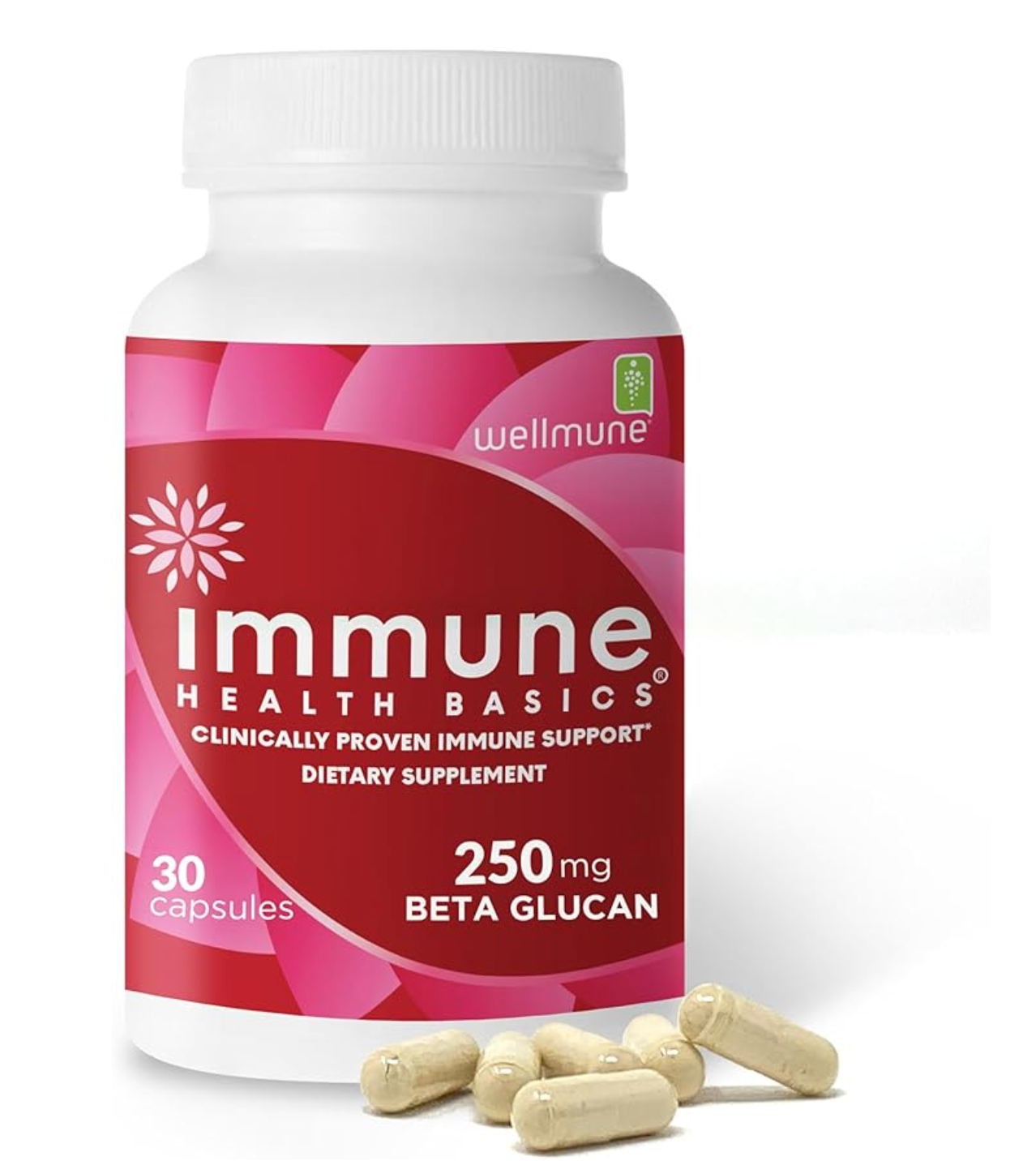
Wellmune - Immune Health Basics
Immune Health Basics provides a highly purified beta 1,3/1,6 glucan extracted from Saccharomyces cerevisiae using a proprietary process that enhances absorption and immune support. It is the only yeast beta-glucan of its kind backed by human clinical studies showing immune benefits. Research demonstrates that purity and structure directly influence biological activity, and this formulation reflects those findings. The supplement is safe for daily use, does not overstimulate the immune system, and is Non-GMO, gluten-free, vegan, and additive-free. Each capsule delivers 250 mg of beta-glucan, providing a 30-day supply at the recommended dose of one capsule daily.
humanOS Catalog Feature of the Week

The Gut Microbiome and Immunity. Podcast with Dr. Lucy Mailing
Your gut does a lot more than digest food. Inside it lives an entire ecosystem that quietly shapes your health. It helps control how your body responds to infections, how your immune system works, and even how your brain functions.
In this episode of humanOS Radio, I sit down with Dr. Lucy Mailing, a researcher with a PhD in Nutritional Sciences who studies how the gut microbiome affects immunity. We talk about why so much of your immune system lives in your gut, how microbes train it to respond smarter, and how things like fiber, antibiotics, and aging shape this relationship.
This is a fascinating conversation about how your gut and immune system work together — and what you can do to keep that system strong.
👉 Listen to the episode here to learn how to support your gut and build more resilient defenses.
Wishing you the best,

—