

Newsletter #389
This Week’s Research Highlights
Magnesium is a nutrient that’s been getting more attention recently and for good reason. It’s essential for hundreds of biological processes, yet many aren’t meeting the recommended guidelines for dietary intake. The study highlighted below offers a compelling reason why we may want to get even more that the current recommended levels.
New Feature: Newsletter Summaries ✨
Magnesium Intake and Brain Structure
In this study, a team of researchers from the Australian National University analyzed data from more than 6,000 adults in midlife to see how dietary magnesium intake relates to brain health. They drew on detailed dietary assessments collected over several years and combined these with structural brain imaging to look at both brain volume and white matter lesions—two important markers of brain aging.
What makes this study especially valuable is its scale and approach. Rather than relying on a single dietary snapshot, the researchers tracked magnesium intake trajectories over time. They then linked these patterns to MRI-derived measures of gray matter, white matter, and hippocampal volume, as well as white matter lesion burden. This kind of trajectory analysis provides a more dynamic view of how long-term dietary patterns relate to brain structure, giving us a clearer sense of whether magnesium might help protect the brain as we age.
A Closer Look at Magnesium “Trajectories”
Instead of just asking how much magnesium people were eating at one time, the researchers grouped individuals into three categories based on how their magnesium intake changed over the study period:
- Normal-stable: moderate intake that stayed about the same
- High-decreasing: high intake at the start that declined over time
- Low-increasing: low intake at the start that rose over time
One surprising finding was that the high-decreasing group actually had larger brain volumes than the normal-stable group, even though their intake went down. One interpretation is that their high baseline magnesium intake might reflect long-term dietary habits going back years or even decades. Since many brain changes unfold slowly, it’s possible that this longer-term exposure matters more than short-term changes in intake. This fits with what we know from neuropathology: processes that drive cognitive decline and dementia often begin during midlife—or earlier.
How Much Magnesium Matters
The magnitude of the effect was also meaningful. Compared to someone with an average magnesium intake of around 350 mg per day, someone consuming at least 550 mg daily was predicted to have about 0.2% more gray matter and 0.46% more right hippocampal volume. In a population with an average age of 55, that’s roughly equivalent to having a brain that looks a year “younger” in those regions.
Higher magnesium intake has already been associated with a 37% reduced future risk of dementia in other studies. Animal research backs this up, showing that magnesium supplementation can reduce synaptic loss, amyloid plaque buildup, and cognitive decline in Alzheimer’s models. The current findings add human neuroimaging data to this picture and suggest that dietary magnesium might offer protective effects long before any symptoms appear.
Not Through Blood Pressure
There are several plausible mechanisms. Initially, the researchers thought magnesium might influence brain health by lowering blood pressure, since high blood pressure is a well-known risk factor for brain atrophy and white matter lesions. But the study didn’t find evidence to support that pathway. Magnesium intake was only weakly related to pulse pressure and not to other blood pressure measures. This suggests that other mechanisms—like inflammation and oxidative stress—are likely more relevant here.
Why Magnesium Might Help Protect the Brain
Low magnesium has been shown to activate microglia and increase the production of inflammatory molecules like IL-1β, IL-6, and TNF. By contrast, magnesium supplementation has been shown to have anti-inflammatory effects and to promote neurogenesis, particularly in the hippocampus. Over decades, this anti-inflammatory action could reduce brain tissue loss and slow cognitive decline.
Magnesium also plays a role in regulating oxidative stress and blocking the toxic effects of excessive NMDA receptor activity, which can damage neurons. These mechanisms fit with what we know about how neurodegenerative diseases, including Alzheimer’s, develop.
Sex Differences and the Role of Menopause
Another important finding was that magnesium’s neuroprotective effects were stronger in women, particularly post-menopausal women. The cross-sectional associations between magnesium and brain volumes and white matter lesions were present in both sexes, but the trajectory effects—where intake patterns over time predicted brain outcomes—only reached statistical significance in women.
Why might this be? It’s not because of differences in magnesium intake, since men actually had slightly higher intake overall. One explanation may be related to hormonal changes. Magnesium interacts with estrogen metabolism and has been shown to influence inflammation and cardio-metabolic risk factors. Interestingly, the study found stronger magnesium-brain associations in post-menopausal women, which might reflect the fact that inflammation tends to increase with age and menopause, making magnesium’s anti-inflammatory effects more impactful in this group.
This aligns with previous research showing lower levels of inflammatory markers in post-menopausal women with higher magnesium intake. In short, magnesium may help counteract some of the inflammatory acceleration that comes with menopause.
Strengths, Limitations, Takeaways
This was a large, well-powered study that repeatedly measured magnesium intake over time and carefully controlled for many confounding factors. It’s also the first to use brain imaging to examine how magnesium intake relates to brain structure in a general, healthy population.
As for limitation, magnesium intake was estimated using food frequency questionnaires, which can introduce noise. And even with extensive statistical adjustments, the researchers can’t fully rule out other factors that influence brain health. Still, the results are strong and align well with earlier lab and epidemiological findings.
Most of our magnesium comes from everyday foods like leafy greens, nuts, seeds, legumes, and whole grains. Since many people fall short of recommended intakes, dietary improvements can certainly help us get more essential nutrients like magnesium, and protect the brain over time.
Participants were grouped into three magnesium “trajectories” over time: normal-stable, high-decreasing, and low-increasing. Those with higher or long-term magnesium intake showed larger brain volumes and fewer WMLs, suggesting a neuroprotective effect. Notably, people in the top intake quartile (~550 mg/day) had gray matter and hippocampal volumes corresponding to about a year less typical brain aging compared to average intake (~350 mg/day).
The effect was stronger in women, particularly after menopause, pointing to inflammation as a likely mechanism. While magnesium didn’t influence blood pressure, its anti-inflammatory and antioxidant roles may help preserve brain structure and lower dementia risk.
Random Trivia & Weird News
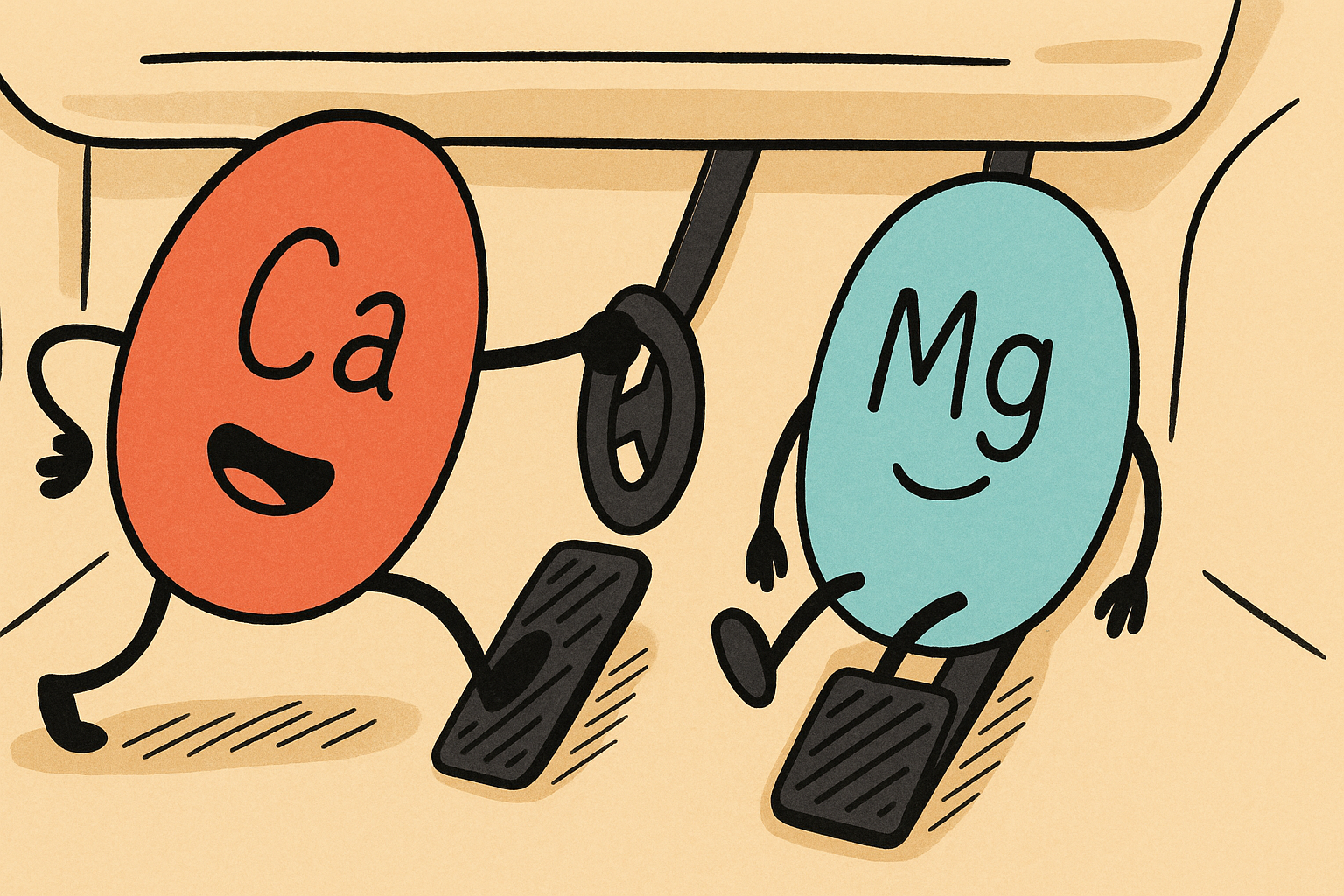
You’re carrying around about 25 grams of magnesium right now—roughly half of it is locked inside your bones, helping keep them strong. But magnesium isn’t just structural. It also plays a crucial role in how your muscles work. Think of calcium as the gas pedal that makes muscles contract, and magnesium as the brake that lets them relax. Without enough magnesium, your muscles can stay tense, cramp, or twitch. Also, see newsletter #322 on magnesium's effects on muscle soreness from exercise.
Podcasts We Loved This Week
- Distinguished Professor, Barry Halliwell - Antioxidants, Free Radicals, and Oxidative Stress: Sense and Nonsense via Reason & Well-being
- Dr. Greg Kelly - All Things Magnesium via Collective Insights Podcast
Products We Are Enjoying
Qualia Magnesium+
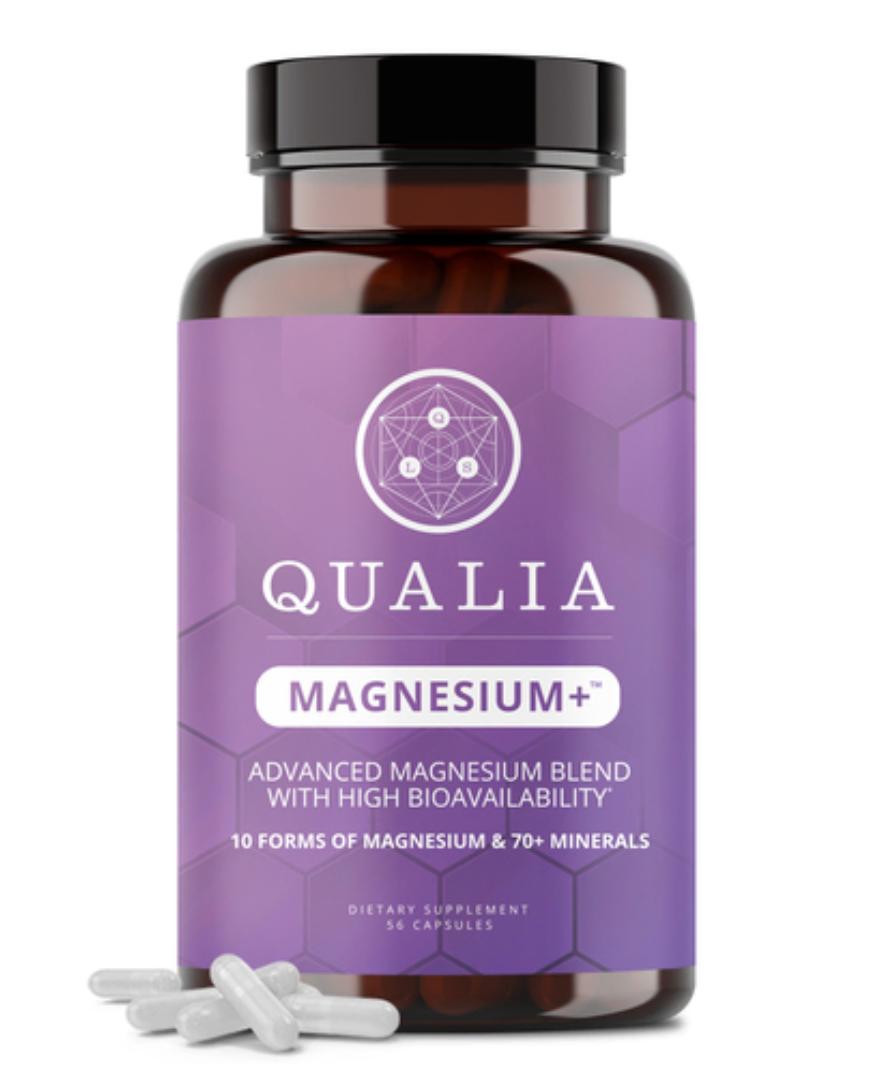
Qualia Magnesium+ is a comprehensive magnesium supplement designed for fast, effective support of brain, body, and recovery. It combines 10 complementary forms of magnesium with over 70 minerals and trace minerals to enhance absorption, retention, and utilization. This unique formula supports heart, brain, and bone health, as well as sleep quality, metabolism, and healthy aging. Magnesium Acetyl Taurate promotes calm and sharper cognition, Magnesium Creatine Chelate aids exercise recovery, and Magnesium Bisglycinate may supports deeper, more restorative sleep.
humanOS Catalog Feature of the Week
Lesson 04 - Metabolism and Brain Health
This piece focuses on how what we eat shapes the brain as we age. It explores research linking adherence to a Mediterranean diet with a dramatically lower risk of Alzheimer’s disease and mild cognitive impairment. Over a 16-year study, individuals who followed this pattern showed significantly better cognitive outcomes compared to those who didn’t. Beyond disease prevention, the evidence suggests the Mediterranean diet may also help preserve brain volume. As brain shrinkage is a hallmark of aging that often impairs memory and learning, this finding is striking. In imaging studies, older adults who maintained this way of eating retained more brain tissue over time than their peers with less healthy diets. These effects occurred independently of weight loss or physical activity, indicating the diet itself plays a key role. Taken together, the research points to dietary choices as a powerful lever for sustaining brain structure, function, and resilience across the lifespan.
Wishing you the best,

—