

Newsletter #388
This Week’s Research Highlights
On September 18th, 2019 I published an interview with Professor Pankaj Kapahi, PhD., from the Buck Institute on Aging. In that interview, he discussed the underappreciated impact of advanced glycation end-products (AGEs) on the aging process. Think of sugars and their byproducts sticking to proteins and gumming up cell machinery. One culprit, methylglyoxal, or MGO, forms quickly during glycolysis and then reacts to create advanced glycation end products such as MG-H1. Higher levels show up in obesity and diabetes, and many labs have now linked that chemistry with faster aging.
A few years later, in September 22nd, 2022, Kapahi joined me again for another podcast on a new neutraceutical product he created called GLYLO, which stands for GLYcation LOwering supplement. In that show, Kapahi describes screening over 800 different compounds to identify the ones that have the largest impact on methylglyoxal reduction. The top five compounds were brought together at the effective doses to create this product.
Today’s newsletter is dedicated to a new report on GLYLO that just came out on October 28, 2025 in the prestigious journal, Cell Reports. Let's explore what this new research found.
New Feature: Newsletter Summaries ✨
Can lowering the AGE burden with GLYLO promote better metabolic health and longer life?
To test these areas, the researchers used a strain of mice that tends to eats a lot, gains weight rapidly, and carries a heavy glycation load. After treatment, circulating MGO and MG-H1 dropped meaningfully. That outcome lines up with earlier work in worms and hints that this glycation-lowering cocktail can hit targets that single compounds failed to control. The mechanism appears twofold: less MGO production from glycolysis and stronger cellular detox systems that clear what still forms.
Lower glycation only tells part of the story. Gly-Low also trimmed appetite. Mice ate fewer calories yet kept muscle in proportion to body size, a rare combination in diet studies. Because these types of animals overeat, that shift alone would improve many readouts. Still, benefits did not stop with that model. Young, middle-aged, and old wild-type mice also showed healthier profiles on Gly-Low, which points to broader utility beyond a specific mutation or extreme overeating.
How might hunger fall while metabolic health rises?
The authors connect dots through brain pathways that regulate feeding. Data suggest dampening of the ghrelin system, which normally nudges you toward food, and activation of mTOR signals in the hypothalamus that push in the opposite direction. That pairing could reduce meal drive while supporting a more youthful metabolic program. The team feels confident about mTOR activation, though other findings - like checks of translation rates and ribosome production - need research to assess the magnitude.
At this point, anyone who follows longevity research will ask about calorie restriction. Cutting calories by willpower or careful programs often extends healthspan across species. Some of Gly-Low’s gains likely come from eating less. Yet the pattern here differs in a crucial way. When started late in life, classic restriction often fails to extend lifespan, and big cohorts in rats and mice back that up. In contrast, starting Gly-Low at 24 months, roughly a senior stage for mice, produced both median and maximum lifespan gains. Food intake still fell, by roughly 13 to 30 percent depending on group, yet the late-life timing stands out. That contrast hints at distinct levers: hypothalamic signaling changes that direct whole-body physiology, not simply fewer calories consumed.
Transcriptional analysis of the hypothalamus adds another clue. Many age-shifted genes moved back toward youthful settings with Gly-Low. That pattern fits a model where glycation byproducts feed into brain circuits that control appetite, insulin sensitivity, and downstream tissues. Reduce MGO and MG-H1, lighten that signaling burden, and the system settles into a calmer, healthier rhythm. Several independent observations support the link. In worms, MG-H1 boosted feeding; in mice, proteins modified by MGO drove insulin resistance, weight gain, and shorter lifespan; in people, agents that enhance glyoxalase activity, a detox pathway for MGO, lowered weight and improved insulin sensitivity. Gly-Low weaves those threads into a single package.
What’s Potentially Most Interesting Here
Long-term restriction often feels unrealistic outside lab settings. A tool that nudges intake downward while directly blocking a chemical pathway tied to diabetic complications could provide a more humane route to similar outcomes. Additionally, direct tissue protection against glycation matters for eyes, kidneys, nerves, and vessels that typically suffer during diabetes.
Every study has limitations, and this one is no different. One of the big ones is that this study only tested male mice and, of course, we know that hormonal changes across female aging could modulate responses to Glylo differently. So, that work remains. Finally, Gly-Low blends several compounds, and the precise contribution of each component to glucose handling, ghrelin signals, and aging outcomes still requires head-to-head tests.
The Full Picture
A candidate therapy that tackles glycation stress at multiple steps, lowers hunger signals, and reduces intake without clear muscle loss, and delivers lifespan benefits, even when started late, is what appears to be what Kapahi has develop in Glylo. At least that is what we see in a specific type of mouse. Mechanistic arrows point to both lower MGO formation and stronger cleanup, paired with a hypothalamic program that resembles a younger state. Calorie restriction still holds a special place in aging research, yet Gly-Low offers a practical path that people might actually sustain.
Mouse biology differs from human biology in ways that matter, and safety, dose, and long-term outcomes need careful human trials. Still, the concept makes sense: limit a reactive byproduct that accumulates during high-sugar metabolism and watch downstream systems settle. If future studies confirm similar patterns in people, glycation-lowering strategies could join the short list of approaches that help with weight control, insulin sensitivity, and aging-linked complications, without asking for iron will at every meal.
A new study in Cell Reports (Oct 2025) shows that GLYLO lowers circulating MGO and MG-H1 in obesity-prone mice, cuts appetite without reducing muscle mass, and improves metabolic markers across ages. The effect seems to come from both lowering glycation stress and calming brain circuits that drive hunger. Remarkably, starting GLYLO late in life extended both median and maximum lifespan, something traditional calorie restriction rarely achieves.
Random Trivia & Weird News

Your Skin Can Brown Like Bread 🍞
Ever wondered why bread crust turns golden in the oven? That’s the Maillard reaction—sugar bonding to proteins and “baking” them. The same chemistry happens inside you. Over time, sugar molecules latch onto your collagen, forming stiff, browned crosslinks that make skin less elastic and speed up visible aging. This internal “caramelization” is called glycation. In fact, skincare giant Beiersdorf recently announced a serum designed to block sugar-induced collagen damage. Turns out, glowing skin isn’t just about sunscreen—it might also be about sugar control.
Podcasts We Loved This Week
- Dr. Ben Rein. Why Your Brain Needs Friends via Better Brain Fitness
- Dr. Dan Pardi. Friendship: A Term Representing Many Types of Relationships via the humanOS Blog
Okay, this second one is a blog, not a podcast, but I’m going with the friendship topic!
Products We Like
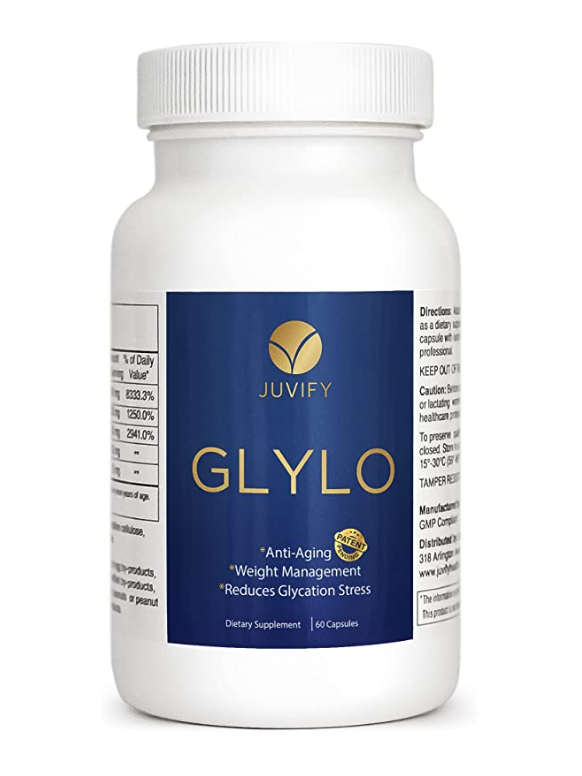
GLYLO
Another key driver of the aging process is accumulation of advanced glycation end products (aptly known as AGEs). Pankaj Kapahi from the Buck Institute spent years screening for compounds that could reduce glycation, and the result was this product. Interestingly, his testing also found that GLYLO caused rodents to eat less and subsequently lose weight. If you struggle with your appetite, or just want to increase lifespan and healthspan by blocking AGEs, this is worth a shot.
humanOS Catalog Feature of the Week

Stress & Resilience
This week, we’d like to highlight our course on Stress and Resilience, from our Daily Performance Program. Stress is a state of mental strain resulting from demanding circumstances. But, stress is not merely in your head — it is a real phenomenon with measurable biological effects.
Nevertheless, it’s worth noting that stress isn’t a wholly bad thing. We now know that we actually need a certain amount of stress in order to be healthy and perform at our best, and indeed specific types of stressors (like exercise or polyphenols) appear to have health-promoting effects.
In this course, we break down the different forms of stress, talk about how stress affects cognition, and identify physical stressors that are essential to health. And since psychological stress isn’t entirely avoidable, we also address stress reduction and building resilience, and how to integrate these strategies into your daily life.
Wishing you the best,

—