Newsletter #381
This Week’s Topic Highlights
Your mouth may have more to do with your brain—and your future health—than you think. In this issue, we look at surprising connections between oral care, cognitive decline, and even new frontiers in repairing teeth and pharmaceuticals. Plus, find an oral health test from Bristle Oral Health.
New Feature: Newsletter Summaries ✨
Chew on This: Oral Health Tied to Lower Dementia Risk
A new study from the Korean Longitudinal Study of Aging adds weight to the growing link between oral health and brain health. Researchers followed adults over four years and found that those with chewing difficulties had about a 50% higher risk of developing mild cognitive impairment or dementia compared to those who could chew well. Oral health was measured using the Geriatric Oral Health Assessment Index (GOHAI), and each one-point improvement on this scale was linked to a 2% reduction in dementia risk. Interestingly, the association was stronger in men than in women.
Why might chewing matter for the brain? Chewing stimulates blood flow to the brain and helps maintain hippocampal function, a region essential for memory. Poor oral health can also let bacteria enter the bloodstream, triggering inflammation that may worsen cognitive decline.
This is the first large longitudinal study to connect chewing ability, oral health scores, and dementia risk. The findings suggest that something as basic as maintaining good oral hygiene and preserving chewing ability could be part of dementia prevention strategies.
Brushing for the Brain: The Oral Health and Dementia Connection
A new umbrella review brings together evidence from multiple systematic reviews to explore the link between oral health and cognitive decline in people with dementia and Alzheimer’s disease. The overall picture is clear: people with dementia generally have poorer oral health, and this decline seems to worsen over time. Periodontal disease, tooth loss, and chronic oral infections all appear to raise dementia risk, largely through inflammation and systemic effects that impact the brain.
The review highlights different perspectives from prior studies. Some focus on inflammatory pathways. Others examine periodontal disease as a statistical risk factor. A few suggest that maintaining good oral hygiene may actually help preserve cognitive function. Still, the evidence is not consistent. Variations in study design, populations, and definitions of oral health make it difficult to draw firm conclusions. Another challenge is causality. Does poor oral health accelerate cognitive decline, or does dementia make it harder to care for teeth? Likely, both dynamics are involved.
What is certain is that oral health matters in dementia care. Supporting dental hygiene, even with simple measures like caregiver-assisted brushing, could improve both quality of life and possibly brain health.
Keratin - A Natural Way to Regrow Tooth Enamel?
Researchers are moving closer to solving one of dentistry’s biggest challenges: regenerating lost tooth enamel. A new study shows that keratin, the structural protein found in hair, skin, and wool, can repair enamel and even stop early tooth decay. When applied to damaged teeth, keratin forms a dense mineral layer that seals off exposed nerve channels, reducing sensitivity while protecting against further damage.
The approach is both practical and versatile. Keratin could be incorporated into toothpaste for daily protection, or used in a more concentrated gel applied by dentists, similar to nail varnish. In experiments, keratin extracted from wool created a crystal-like scaffold on the tooth surface. This scaffold mimicked natural enamel, attracting calcium and phosphate from saliva and gradually building a protective enamel-like coating.
If these results translate well in humans, keratin-based treatments could reach the public in just two to three years. Unlike traditional fillings or synthetic coatings, this approach does not just patch the problem but promotes regeneration, bringing dentistry a step closer to true enamel repair.
This breakthrough suggests the future of oral care may lie in using the body’s own building blocks to restore and strengthen teeth.
Lighthouse Shines $49M Light on Alzheimer’s–Oral Health Link
US biotech Lighthouse Pharmaceuticals has received a $49.2 million grant from the National Institute on Aging to fund a Phase 2 trial of its Alzheimer’s therapy, LHP588. The treatment targets Porphyromonas gingivalis (P. gingivalis), a bacterium best known for causing gum disease but increasingly linked to Alzheimer’s and other systemic conditions.
Researchers believe chronic infection lets P. gingivalis and its toxic enzymes—gingipains—enter the brain, where they fuel inflammation, oxidative stress, and neuronal injury. These processes can worsen hallmark Alzheimer’s features like amyloid plaques and tau tangles. LHP588, a brain-penetrant gingipain inhibitor, is designed to block this destructive activity, reducing both bacterial virulence and load.
Earlier work with a related compound, atuzaginstat, showed benefit in a subset of Alzheimer’s patients carrying the bacterium. LHP588 has already cleared Phase 1 safety tests without major concerns.
The new trial, SPRING, will enroll 300 patients with mild to moderate Alzheimer’s who test positive for P. gingivalis. By selecting only infected individuals, Lighthouse is pursuing a precision-medicine strategy similar to approaches in HIV- or Lyme-related dementias. If successful, this could establish a new microbial target in the fight against Alzheimer’s.
The connection goes deeper: certain oral bacteria may directly drive neurodegeneration. Porphyromonas gingivalis, a pathogen behind chronic gum disease, has been found in the brains of Alzheimer’s patients, where its toxic enzymes can trigger inflammation and neuronal injury. This has sparked therapeutic interest—most recently a $49.2 million NIH grant to Lighthouse Pharmaceuticals to test LHP588, a brain-penetrant inhibitor designed to block the bacterium’s destructive activity.
Meanwhile, dental science is advancing repair strategies. Researchers recently showed keratin, the protein in hair and skin, can regenerate enamel and protect against decay, pointing toward keratin-based toothpaste or gels within a few years.
Random Trivia & Weird News
Oral Microbiome Zoo
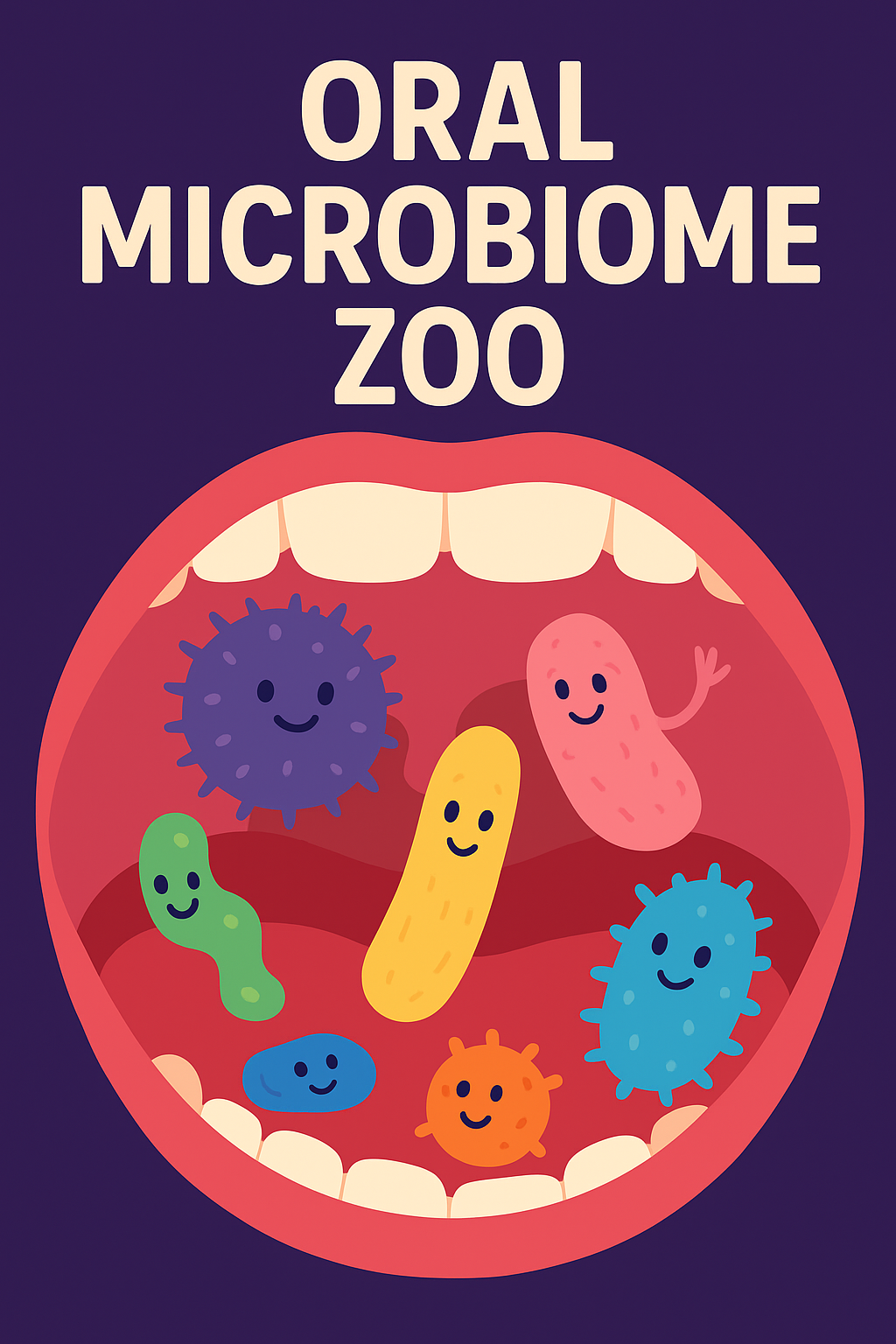
Your mouth is not just for talking and eating. It is home to an entire ecosystem. Scientists have identified more than 700 species of bacteria living in the oral cavity, making it one of the most diverse microbiomes in the body. Most of these microbes are harmless and many are actually beneficial, helping with digestion and keeping harmful species in check. When the balance shifts due to poor oral hygiene, diet, or illness, the microbiome can fuel gum disease, bad breath, and even systemic inflammation that affects overall health.
Podcasts We Loved This Week
- Andrew Huberman, PhD: How to Improve Oral Health & Its Critical Role in Brain & Body Health via Huberman Lab
- Dr. Staci Whitman: How to Improve Your Teeth & Oral Microbiome for Brain & Body Health via Huberman Lab
Products We Are Enjoying
Bristle Oral Health Test
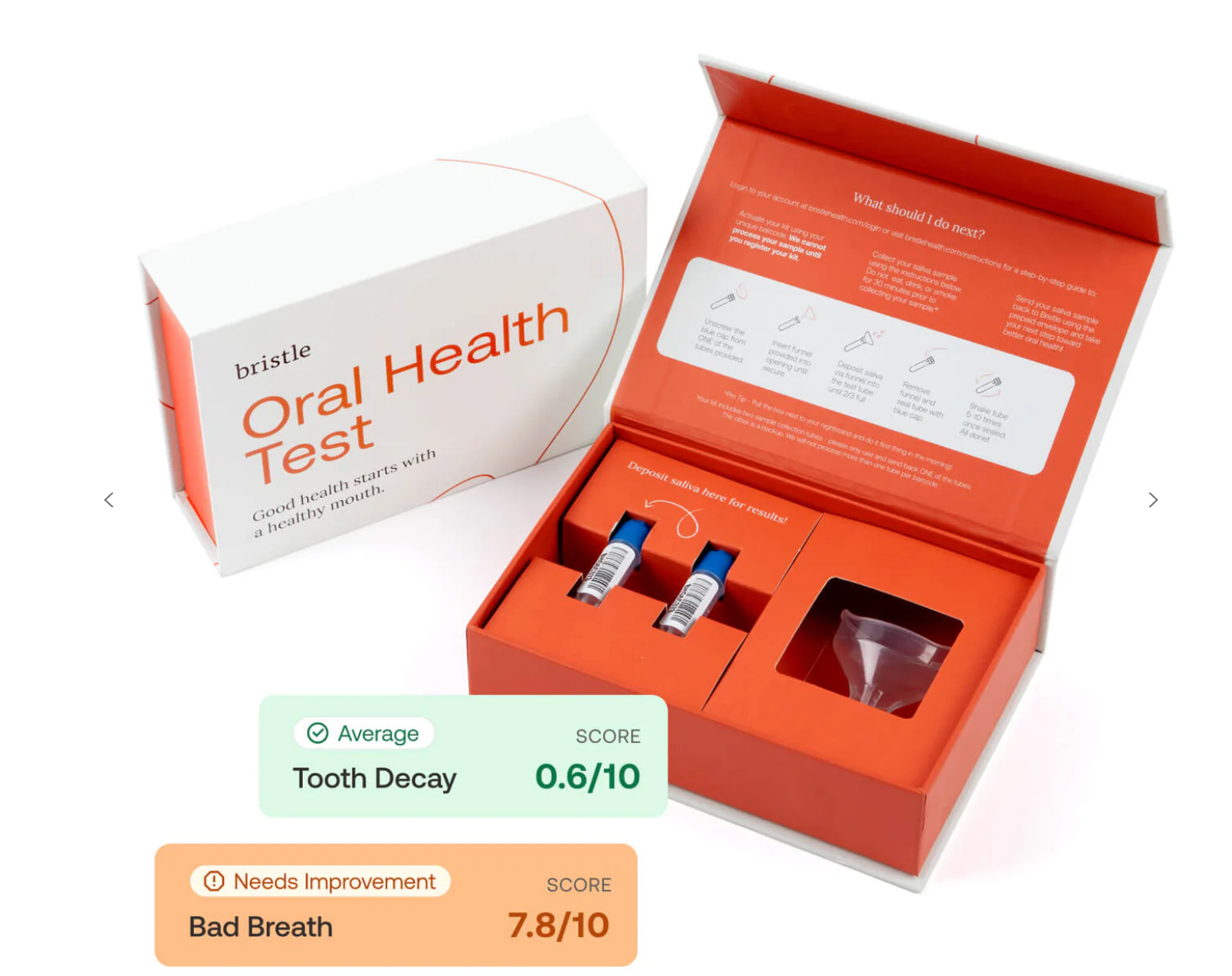
The Bristle Oral Health Test takes a science-based approach to improving oral health by analyzing your oral microbiome. Instead of masking issues like bad breath or gum disease, it identifies the root bacterial imbalances and delivers a personalized action plan. Recommendations include products, diet, and oral care habits tailored to your specific results—far more useful than one-size-fits-all advice. Beyond oral hygiene, the test highlights how oral bacteria influence overall wellness, from heart and immune health to digestion, offering a comprehensive path to better health.
humanOS Catalog Feature of the Week

Female Sports Nutrition
While general sports nutrition principles apply to everyone, understanding female-specific factors can be the difference between good results and great ones.
Our course breaks down the science of female sports nutrition into practical, actionable strategies. You'll learn:
- How to harness hormonal fluctuations for optimal training timing
- Evidence-based approaches to energy intake and body composition
- Critical micronutrients that female athletes often miss
- Smart hydration strategies for female physiology
- Prevention and management of female athlete triad
- Practical tips for training around the menstrual cycle
This course is great not just for female athletes who are looking to optimize their own performance, but also coaches who work with women and girls, as well as trainers who aspire to better serve their female clients.
Wishing you the best,