Newsletter #376
This newsletter will will focus on mitochondria. These organelles have fascinated me for years now. It's an area where the more you learn about them, the more you realize how important they are to our health and longevity. Their origin story is extremely cool too, so be sure to check out our section below about random trivia and weird news.
But why focus on them this week? Because a story about a 90-year-old physicist really grabbed my attention. He’s volunteering as the first human to undergo mitochondrial transplantation in hopes of reversing aspects of aging, and it could revolutionize healthspan potential for humans. He’s a brave man and we wish him well, not only for him, but for humanity.
A 90-year-old physicist volunteers for a bold anti-aging experiment using lab-grown mitochondria
John Cramer, a 90-year-old emeritus physics professor, is becoming the first person to undergo mitochondrial transplantation for age reversal. The experimental therapy by Mitrix Bio uses mitochondria grown in bioreactors for the purpose of restoring youthful cellular energy. Cramer is certainly taking a risk her but he sees this as a calculated risk. This type of therapy, he feels, is safer than epigenetic reprogramming and potentially powerful enough to extend healthspan well beyond today’s record limits. The initiative, supported by scientists from Stanford, UCLA, and Northwell Health, is seeking five more “early adopters” over age 55 to join this pioneering effort. While not yet a formal clinical trial, the project reflects a growing trend in longevity: highly informed citizen scientists are driving innovation from the front lines, not just waiting for it.
The older we get, the worse our mitochondria function, and that might be, in part, what aging is
Mitochondria, the energy-producing structures inside our cells, decline in both function and quality as we age. This dysfunction is linked to hallmarks of aging, including impaired oxidative phosphorylation (the cell’s energy system), increased oxidative stress, and faulty mitochondrial maintenance. It also contributes to major age-related diseases like neurodegeneration, heart disease, diabetes, and cancer.
One long-standing theory, the free radical theory of aging, proposes that mitochondria generate reactive oxygen species (ROS) that damage themselves over time. This mechanism, therefore, is functioning as an internal aging clock. More recent research backs this up. With age, mitochondria accumulate mutations in their own DNA (mtDNA), and these mutations have been linked to accelerated aging in animal models.
Another critical piece is mitochondrial dynamics—how mitochondria constantly undergo fusion and fission to maintain their size, number, and energy output. When this dynamic balance breaks down, cells lose energy, build up damage, and become more vulnerable to disease. While we don’t yet know exactly how or why mitochondrial dynamics falter with age, or whether they can be rebalanced, these processes are emerging as potential targets to slow aging and improve healthspan. Aging may in part be a mitochondrial problem. So if we can’t simply replace them, like John Cramer and Matrix Bio is trying to do, perhaps we can fix the ones we have in more much dramatic ways that we can today.
Targeting mitochondria to calm inflammation without halting healing
The mitochondrial complexes are protein machines in the inner mitochondrial membrane. They are instrumental in making cellular energy, or ATP. This process of energy creation is called oxidative phosphorylation, and involves five of these machine complexes in the chain.
Interestingly, both inhibiting and enhancing mitochondrial complexes can have therapeutic effects. For example, red light targets Complex IV, boosting energy production by displacing nitric oxide (which competes with oxygen) and improving electron transfer efficiency, which ultimately increases ATP output. That’s good!
On the other hand, a compound that blocks Complex I can increase cellular stress signals, but remember, sometimes a little stress is actually a good thing. And that is the point of this paper.
This study introduces two mitochondrial Complex I inhibitors—leramistat and MBS2133—that reduce inflammation without blocking healthy tissue repair. They work by limiting energy-demanding cell changes, like immune cells turning aggressive, while sparing the cells needed for regeneration.
Unlike older drugs that often shut down repair pathways, these compounds strike a balance: calming inflammatory overdrive while supporting proper healing in bone and lung models. Leramistat, notably, showed no major toxicity in preclinical testing, suggesting that this very well could become a safer way to modulate mitochondrial function for therapeutic benefit.
Why mitochondria? Because as we age, their function and quality decline, contributing to everything from fatigue to chronic disease. Damage to mitochondrial DNA, disruptions in energy production, and breakdowns in their constant cycle of fusion and fission are all tied to age-related degeneration. Fixing this machinery—or replacing it—could fundamentally change how we age.
And there’s more. New research shows that modulating mitochondrial activity can tame inflammation without blocking healing. Two experimental drugs, leramistat and MBS2133, inhibit mitochondrial Complex I to reduce inflammatory overdrive while preserving tissue repair. It’s a fine-tuned approach, and potentially a safer path forward.
Altogether, the story of radical mitochondrial intervention is no longer just theoretical. It’s now actually entering the clinic. Will any of these ideas become a true game changer? Time will tell.
Random Trivia & Weird News
Mitochondria: The Alien Inside You

Roughly 2 billion years ago, a single freak event changed life forever: a hungry archaeon tried to digest a bacterium—and failed. Instead, the bacterium set up shop inside its host, forming a long-term partnership. That bacterium became the mitochondrion. This bizarre merger, called endosymbiosis, may be the only time in Earth’s history that one complex cell swallowed another and made it work. It’s the reason you exist, why animals evolved, and why your cells have power plants. In short, mitochondria aren’t just the powerhouse of the cell—they’re ancient aliens squatting in your body.
Podcasts We Loved This Week
- Doug Wallace: Mitochondria, our human origins and the possibility of mitochondria-targeted therapies. via STEM Talk
- Derek Thompson: Fertility Needs a Scientific Revolution. via Plain English.
Products We Are Enjoying
Qualia Mitochondria+
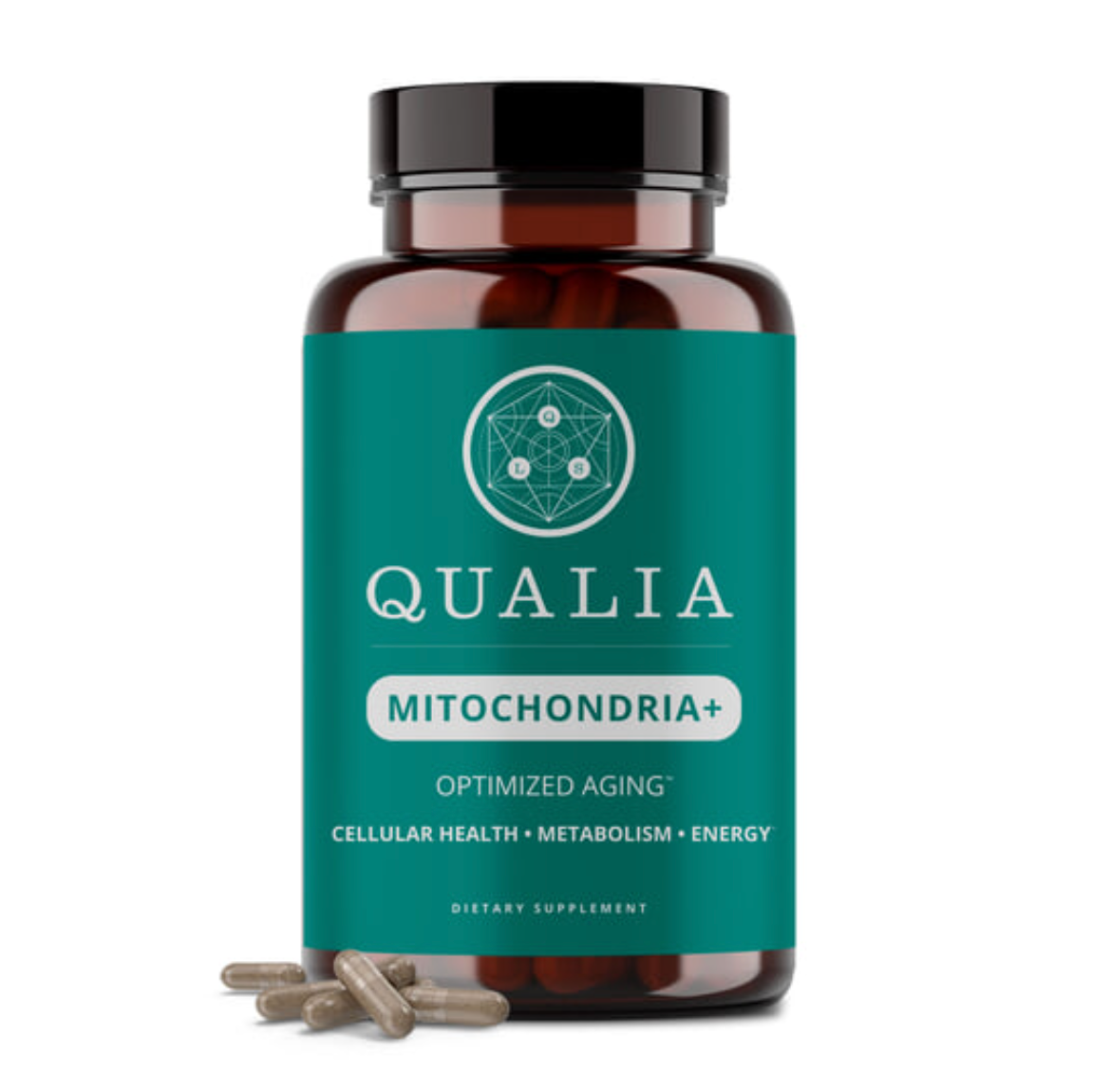
Your mitochondria do more than power your cells, they drive everything from your energy levels to how well you age. When mitochondrial function declines, so does vitality. The good news is, these microscopic engines can be supported through smart lifestyle choices and targeted nutrients.
Qualia Mitochondria+ contains 34-ingredient aimed at synergistically helping optimize mitochondrial function, NAD+ pathways, and AMPK signaling, all of which are core systems for cellular energy, metabolism, and resilience. I don’t notice a big boost in energy but I’m not surprised by that. It’s not like caffeine, i’ts working behind the scenes. What I have noticed is quicker recovery from workouts. That’s something I have been monitoring closely for years, so I was tuned into to this area of my physiology already when I noticed the beneficial change after I started taking this product.
humanOS Catalog Feature of the Week

The How-to Guide to Smart Daily Light
Your body doesn’t just need sleep — it needs the right light at the right time.
This guide walks you through how to optimize your light exposure across the full 24-hour cycle to support sleep, energy, mood, metabolism, and more.
Inside, you'll learn:
- How just 10 minutes of morning sunlight improves sleep that night
- Why standard indoor lighting is too dim during the day — and too bright at night
- How to use “virtual darkness” (like blue-blocking glasses) to wind down in the evening
- The physiological roles of UV, red, and near-infrared light
- How to tune indoor lights, screens, and even hotel rooms to support your body clock
If you want better circadian alignment and deeper sleep, this is your blueprint.
To Access:
- Log in to humanOS.
- See How-to Guides in navigation on the left-hand side
- Click Smart Daily Light
Also, you can search “smart daily light” in the search field after you’ve logged in.
Wishing you the best,