Newsletter #374
Can Nighttime Workouts Boost Next-Day Learning?
This Week’s Research Highlight
Intense exercise at night is supposed to wreck your sleep. Or so we are told.
And on paper, this seems like a logical assumption.
High-intensity exercise triggers a cascade of physiological arousal: elevated heart rate, surging stress hormones, and soaring core temperature. Hardly ideal conditions for winding down.
So, it’s no wonder this idea has been embedded in sleep hygiene advice for decades.
But what if it’s not true …or at least, not entirely?
A recent meta-analysis reviewed 15 experimental studies on high-intensity evening exercise performed relatively close to bedtime. The researchers hypothesized, quite reasonably, that these workouts would disrupt nighttime sleep, compared to no exercise.
But contrary to their hypothesis, sleep wasn’t adversely affected — as long as the workout ended at least one hour before bedtime. In fact, performing an intense exercise session two hours before bedtime made participants fall asleep faster and increased their sleep duration.
This finding flips the conventional script: evening HIIT might not harm your sleep at all. In some cases, it might even help.
A new study takes that idea a step further — asking whether a dose of high-intensity exercise in the evening could prime your brain to learn more effectively the next day.
Inside the Experiment
To test how physical activity at night affects the brain’s capacity to learn, German researchers brought in 40 healthy young adults, and ran them through a crossover design, meaning every participant did all three conditions. So, no guesswork about group differences, no hoping that the randomization gods got it right. Each person was their own control.
Over several weeks, each participant came to the lab on three separate evenings.
On each visit, they followed one of three routines:
- Control: Watch a mellow nature documentary for an hour.
- Moderate Exercise: Pedal a stationary bike for 60 minutes at a steady pace.
- High-Intensity Intervals: Three 3-minute cycling sprints at 90% of max effort, separated with 2-min rest intervals of easy spinning. Total bike time was only 20 minutes. So, time efficient but brutal.
All sessions started around four hours before each person’s usual bedtime. After the assigned activity, they showered, strapped on a wrist sleep tracker, and went home. This was designed to mimic real life; basically enough structure to catch an effect but not enough to disrupt their routine.
The next morning, about 30 minutes after waking, participants took a memory test. They were shown a series of loosely related word pairs, like “mirror–glass” or “tree–bark,” then had to recall the missing word when prompted. So this wasn't testing their recall of previously learned facts — it was about encoding new ones. They also repeated the test 24 hours later to see if any cognitive boost stuck.
By the end of the study, each person had completed the full cycle: zero exercise, moderate exercise, high-intensity intervals — each followed by a night of sleep and a morning memory test. That provided the researchers with a clean look at how different types of evening activity affected learning the next day, stripped of individual noise.
What They Found
On the surface, the raw numbers didn’t exactly scream breakthrough.
In the first pass — the standard t-tests laid out in the preregistration — neither HIIT nor moderate exercise showed a statistically significant boost in memory performance compared to the control night. That might’ve been the end of the story.
But the researchers didn’t stop there. They turned to a more powerful analysis: a generalized linear mixed model. It’s a better tool for this kind of dataset, one that accounts for repeated measures and subtle differences between individual word pairs. With that sharper lens, a pattern emerged.
After a night following high-intensity interval training, participants recalled more word pairs the next morning than they did after a sedentary evening. The effect wasn’t huge, but it was consistent, and it held up again at the 24-hour follow-up. The moderate exercise condition, meanwhile, didn’t show any meaningful difference from control.
When the researchers zoomed in on which words were recalled, they found the benefit was concentrated in the first half of the list — the words participants saw earliest in the task. That’s worth noting, because it hints at a shift in the brain’s initial encoding capacity. We’ll get back to that shortly.
They also split participants into high and low performers, based on how they did in the control condition. The gain from HIIT was strongly driven by the low performers. For those who already had strong recall, the intervention didn’t do that much. But for weaker learners, intense evening exercise gave them a measurable leg up, both immediately and after 24 hours.
So what exactly was happening after the high intensity exercise sessions to create this benefit?
The Role of Slow-Wave Sleep
We think of sleep as an opportunity for the brain to rest. But more than that, sleep gives your brain a chance to reset.
All day long, we’re constantly absorbing information. At the cellular level, each new input leaves a trace, strengthening the synapses that carry it. But these modifications add up fast. By the end of the day, the system is noisy and overloaded. If nothing clears the clutter, the brain’s capacity to take in new information — i.e., to encode fresh memories — starts to break down.
This, perhaps more than anything, is where sleep supports cognition: not only by preserving past memories, but by restoring the capacity to form new ones.
And here, quality of sleep might matter even more than quantity. For instance, one large analysis found no meaningful difference in memory performance between people who were partially sleep deprived versus those who were subjected to total sleep loss. In other words, getting a few hours of sleep may be just as disruptive for learning as getting none at all!
How is this possible? Because sleep isn't a single uniform process. It's a delicately orchestrated sequence of stages, each of which play different roles in memory. And when sleep is cut short, the deepest stages are often the first to suffer.
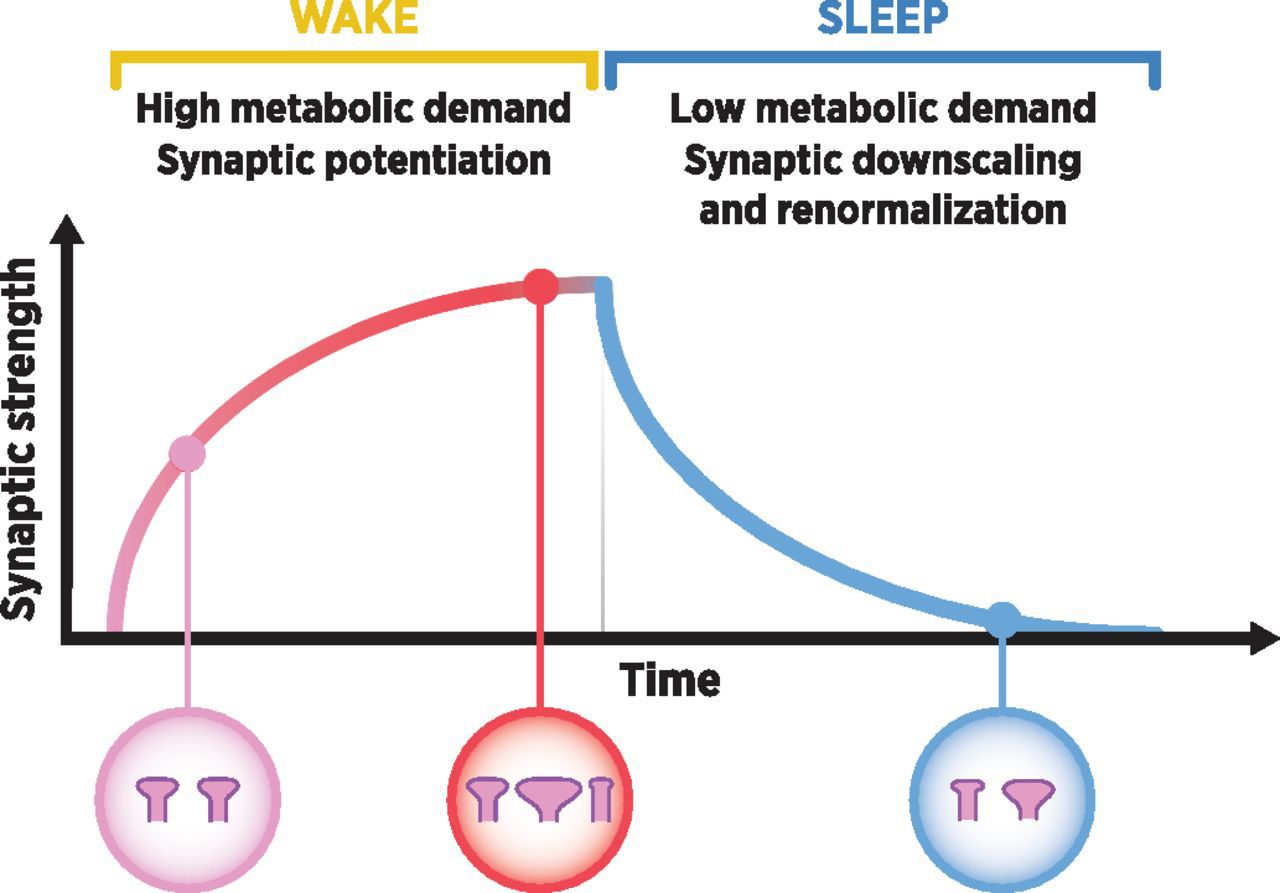
Illustration of the synaptic homeostasis hypothesis. From Rantamäki & Kohtala, 2020
And that brings us to slow-wave sleep (SWS). This is the brain’s true cleanup window. During this phase, weak or redundant connections get pruned, while stronger and more meaningful ones are reinforced. According to the synaptic homeostasis hypothesis, slow-wave sleep restores signal-to-noise balance across neural circuits, and clears room in the brain for a new round of learning the next day.
This framework helps make sense of one of the more subtle findings from the exercise study: the memory benefit from high-intensity training wasn’t spread evenly across the word list. It was concentrated in the first half — the word pairs shown earliest. That suggests the brain’s initial encoding capacity had improved. Not alertness, not test-taking stamina, not recall speed. Just a better ability to absorb new information right out of the gate.
Now, this study didn’t measure brain waves — it used wrist-worn trackers (actigraphy), which estimate sleep duration but can’t see what’s happening inside the brain. So while total sleep time looked the same across conditions, any shift in slow-wave sleep would’ve gone unnoticed.
So that raises the next question: why might exercise — especially high-intensity intervals — alter sleep architecture?
Heat, Effort, and Deeper Sleep
Here’s where exercise enters the picture — not as a direct brain booster, but rather as a physiological stressor that pushes the body to recalibrate.
During high-intensity workouts, metabolic activity surges, core temperature climbs, and the brain kicks into thermoregulatory overdrive. That heat load doesn’t simply dissipate when the workout ends. It needs to be managed, and sleep seems to play a crucial role in that process.
One way the brain may respond is by deepening slow-wave sleep. In fact, hard physical exertion is one of the few reliable triggers for boosting this deepest stage of sleep.
A Japanese crossover trial backs this up: after repeated exercise sessions, participants spent 33% more time in slow-wave sleep, increasing from ~82 minutes to ~110 minutes. This was accompanied by elevated core body temperature, as well as a higher distal-to-proximal skin temperature gradient (a marker of heat dissipation during sleep). Importantly, the more heat the body shed during the night, the more slow-wave activity the brain produced.
In short: more thermal strain generally means more deep sleep. And with it, perhaps, a stronger overnight reset of neural circuits.
Again, the HIIT study we’ve been discussing didn’t directly measure sleep stages, so we can’t say for certain whether increased SWS played a role. But based on what we know about how slow-wave sleep is regulated — and how thermoregulatory stress tends to nudge it upward — it’s a biologically plausible link. Especially given one telling detail: moderate-intensity exercise, which carries a lower thermal and metabolic load, failed to produce the same cognitive benefit.
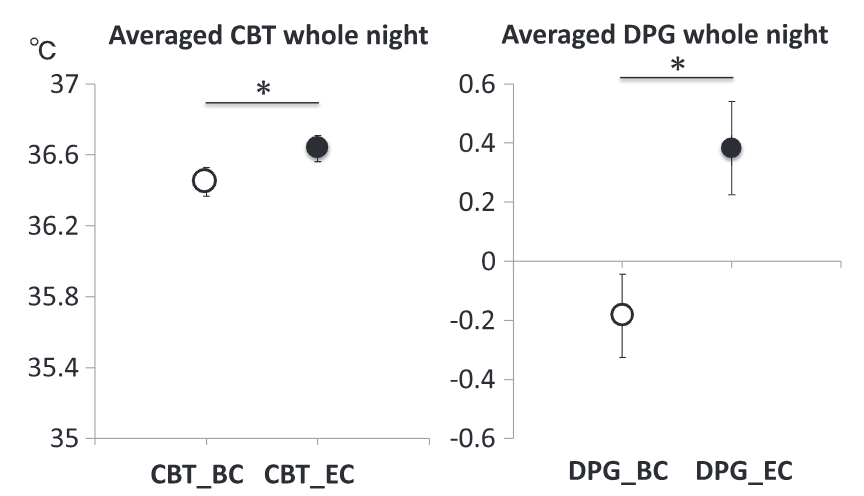
Average core body temperature (CBT) and distal-to-proximal skin temperature gradient (DPG) across the entire sleep period, comparing baseline (BC; open circles) and post-exercise (EC; filled circles) conditions. Asterisks indicate statistically significant differences (*P < 0.05). From Aritake-Okada et al, 2019.
What it Means (and Doesn’t)
The takeaway isn’t that HIIT is some miracle memory hack. But it may offer a modest benefit — especially for people who aren’t already performing at their cognitive peak.
The effect here wasn’t massive. In fact, it only became statistically significant when the researchers used a more advanced analysis than they’d initially planned. That doesn’t discredit the finding; the mixed-model approach is well-suited for repeated-measures designs. Still, it shifts the result from slam-dunk to exploratory.
Even then, the effect size was modest. The log-odds coefficient (b = 0.27) reflects a small improvement, maybe a few extra words remembered. Not nothing, but this isn’t a finding that’s going to reshape educational policy anytime soon.
Still, the pattern held: gains showed up at multiple timepoints and were strongest in lower performers — those with the most to gain. That’s promising.
Even better: there was no downside. Evening HIIT didn’t shorten sleep, dull alertness, or trigger rebound effects. Instead, it deliverd a small cognitive boost with no obvious cost.
Is this a breakthrough? Maybe not. But it’s a low-risk, potentially useful lever for people looking to boost learning without pharmaceutical interventions or elaborate biohacks.

Random Trivia & Weird News
🐬 Dolphins sleep with half of their brain awake.
To stay alert in the ocean, dolphins engage in unihemispheric slow-wave sleep — meaning that they shut down one brain hemisphere at a time while the other keeps watch. This lets marine mammals like dolphins breathe, swim, and scan for predators… all while technically half-asleep.
And yet, their memory does not seem to suffer. Indeed, one dolphin recognized the signature whistle of a former tankmate after twenty years of separation — the longest lasting non-human social memory ever recorded.
Podcasts We Loved This Week
- Danny Lennon & Alan Flanagan: Did big sugar hijack the food pyramid? Were low-fat diets a scam that damaged our health? Via Sigma Nutrition Radio.
- Nicholas Christakis: You share your gut microbiome with your friends. Via Science Friday.
Products We Like
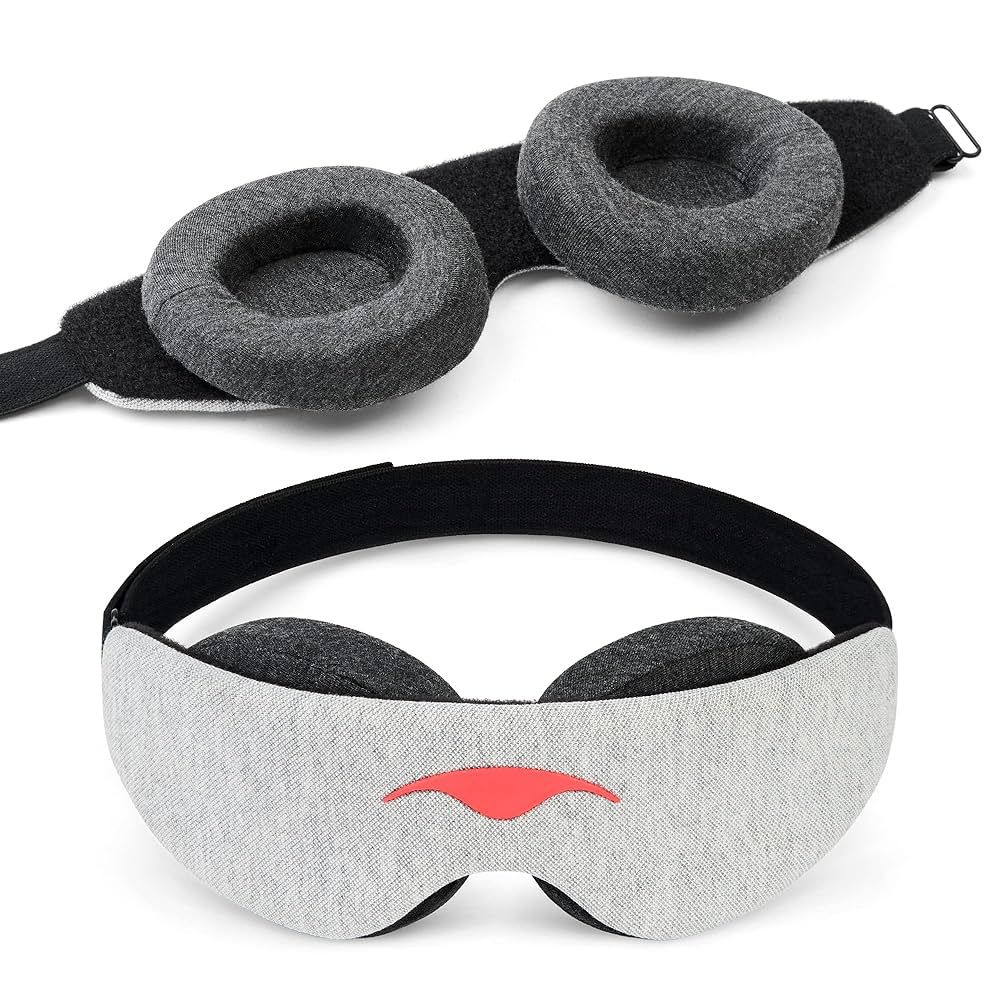
Manta Sleep Mask
If you’re trying evening HIIT to boost memory, here’s a simple way to stack the benefits: wear a sleep mask. Research suggests that blocking light at night may enhance slow-wave sleep — and in turn, improve memory encoding.
In one trial, people who wore blackout masks performed better on word-pair memory tasks the next day. EEG data showed that the subjects got the same amount of sleep regardless of whether they wore the mask, but improvements in cognition were associated with time spent in slow-wave sleep.
I am a fan of the Manta Sleep Mask because 1) it actually stays on my face, 2) it blocks light completely, and 3) it doesn’t squish my eyeballs. Highly recommended.
humanOS Catalog Feature of the Week
Introduction to Daily Performance
Our Daily Performance Program helps you upgrade how you think, feel, and perform — by adjusting things you do every day.
You’ll learn:
- Why sleep beats caffeine for thinking speed (and how to leverage both wisely)
- How your work environment quietly drains or fuels your focus
- Why mental energy is finite, and how to manage it like a precious resource
- How simple inputs — light, movement, stress, and timing — affect executive function, decision-making, and productivity
To access this content:
- Log in to humanOS
- See Programs & Collections in navigation on the left-hand side
- Scroll to Daily Performance Introduction
Wishing you the best,