
Newsletter #373
How Outdoor Exercise Boosts Brainpower
This Week’s Research Highlight
For decades, scientists believed the brain was practically hardwired by adulthood.
But beginning in the 1960s, a series of landmark rodent studies flipped that assumption on its head.
Mice that were given access to running wheels not only got fitter, they literally grew new brain cells. They scored higher on memory tests as well. These were some of the first real clues that physical exercise could remodel the brain, an idea that is now foundational in neuroscience.
At the same time, Marian Diamond at UC Berkeley began probing the influence of the environment on the brain. Her lab demonstrated that rodents raised in enriched settings — filled with toys, mazes, and companions to interact with — developed thicker cortices and denser neural connections than those raised in standard cages. The brain, it turned out, wasn’t just shaped by genes or physical exertion, but was also deeply responsive to context.
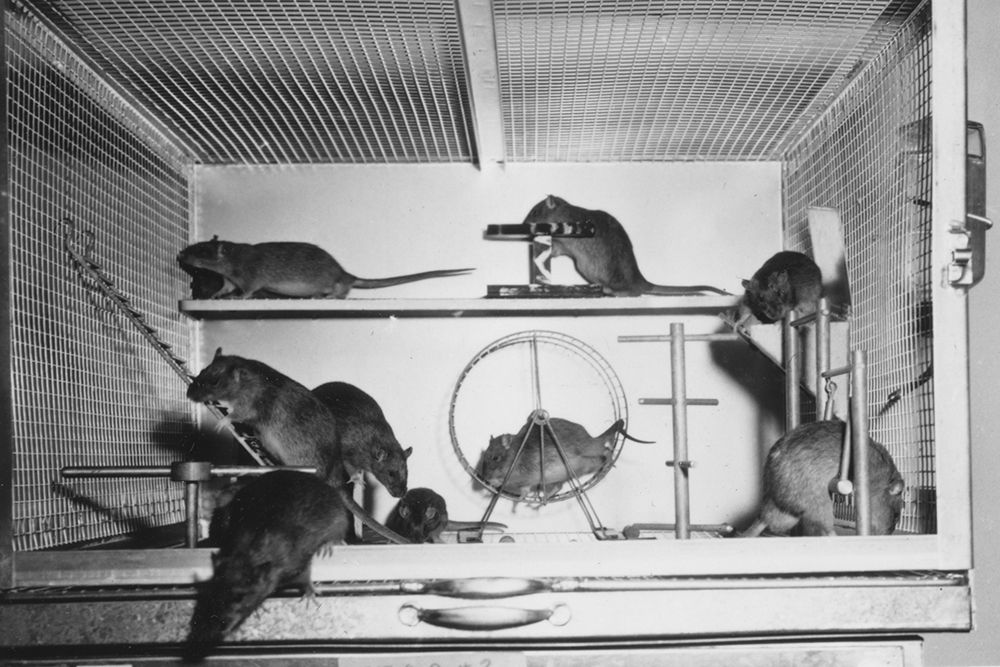
Luxury rat condos, circa 1964.
This insight has some intriguing implications for human cognition.
If both physical activity and environment shape the brain, what happens when you combine them? In other words, could the setting in which we exercise make a measurable difference?
A new study from researchers at Nottingham Trent University was devised to test this very question.
.
Inside the Experiment
To find out whether where you move shapes how your brain responds, researchers stripped the question down to its bare essentials.
The study enrolled 45 children, ages 11 to 13, recruited from two secondary schools in the English Midlands. Each child completed the exact same workout twice — once inside a school gym, and once outside in the open air. The sessions were spaced a week apart and conducted during regular PE. But this was no ordinary gym class. It was a rigorously controlled intervention.
The physical activity was built around basketball, chosen because the sport checked all the right boxes: dynamic, easy to standardize, and familiar to students. The same drills could be run inside or out, which allowed researchers to replicate the experience across settings.
Each session followed an identical script:
- A 5-minute warm-up with light movement and stretches
- Two 5-minute skill circuits: dribbling relays and tag-style agility games
- A 10-minute small-sided match
- A 5-minute cooldown
Everything was matched down to the inch and the minute: the court size, the groupings, the equipment, even the instructor. The only variable that changed was the context:whether the children were surrounded by cinderblock or wide open sky.
Yet the real test came after the games ended.
To measure what was happening in the brain, the researchers used a battery of three cognitive tasks, each targeting a different domain of mental performance:
- Inhibitory control, or the ability to resist automatic impulses and stay on track
- Working memory, which holds information briefly so you can use it in real time
- Selective attention, or the ability to stay focused amid distraction
Each child completed the test battery three times: before the activity, immediately after, and 45 minutes later.
Importantly, because each child did both sessions — indoors and out — they served as their own control. Which meant the researchers weren’t comparing different kids. They were comparing the same brain, in two different settings.
So, did swapping four walls for fresh air make a measurable difference in mental performance?
Sure enough, across all three cognitive tests, performance improved more after outdoor physical activity than after the indoor session.
Let’s take a closer look at what happened, and why it matters.
Inhibitory Control: Filtering Interference, Staying Focused
Inhibitory control is your brain’s braking system. It helps you pause before reacting, filter distractions, and stay on-task when your instincts are pulling you the other way. Without it, focus crumbles and impulse wins.
To measure this, researchers used the Stroop test, a classic tool in cognitive science. You probably remember this one if you ever took a psych class!
Here’s how it works: The word “green” appears on screen, but it’s written in red ink. Your job is to say the color, not the word.
The problem? Your brain automatically wants to read! That reflex is strong, and overriding it takes mental effort. You can feel the internal tug-of-war as you hesitate. That split second of friction is what the Stroop test captures. And it gets tougher as the task becomes more complex.
After the outdoor basketball session, kids got meaningfully better at this. On the complex version of the Stroop test, their reaction times improved by 94 milliseconds. Indoors, the improvement was just 20 milliseconds. That’s a nearly five-fold advantage in speed after being outdoors.
Along with getting faster, they also made fewer errors: After outdoor activity, accuracy improved by 2.0%, while the gain was a mere 0.1% when they exercised inside.
This matters beyond the lab. Inhibitory control plays out constantly: ignoring a buzzing phone during homework, resisting the urge to blurt something out in class, staying focused on a reading passage instead of jumping ahead.
Strengthening that brake obviously helps block distractions, but it also sets the stage for sharper attention. Once the brain can quiet the noise, it becomes easier to lock on to the right signals.
Selective Attention: Sharper Signals, Less Noise
Attention is more than just noticing things. It is about filtering. Good attention means locking onto the right signal while tuning out everything else. In real life, that might mean focusing on a teacher’s voice while classmates whisper nearby, or staying locked on a soccer ball with a crowd shouting in the background.
To measure this, researchers used the Flanker task, a fast-paced test of selective attention.
Here’s how it works: A row of arrows appears on the screen, like this: →→→→→ or →→←→→
Your job is to identify the direction of the middle arrow, as quickly and accurately as possible. The catch? The arrows on either side may point the same way (congruent) or a different way (incongruent), creating cognitive interference. It’s like trying to follow one conversation at a noisy party. Your brain has to tune in to the voice in front of you and ignore the cacophony around it.
So, how did the outdoor vs indoor sessions affect focus?
On the congruent trials, where distraction is low, kids were 44 milliseconds faster after outdoor activity, and just 14 milliseconds faster after indoor activity.
But the real difference emerged under pressure. On the incongruent trials — where distraction peaks — accuracy dropped by 3% after indoor activity. After outdoor basketball, it held steady. Not a single percentage point lost.
In the classroom, this kind of selective attention is foundational. It helps kids stay engaged on multi-step instructions, follow a thread of logic while ignoring irrelevant details, or resist getting derailed by distractions.
And once the right signal gets through, that’s where working memory kicks in — holding it, juggling it, and putting it to use.
Working Memory: The Brain’s Sticky Note
Working memory is the brain’s mental scratchpad. It’s what lets you hold and manipulate information in the moment — like remembering a phone number just long enough to dial it, or keeping track of the last step you completed in a math problem.
Unlike long-term memory (which stores facts and experiences), working memory is short-lived and fragile. It juggles what you’re actively thinking about, and it plays a critical role in learning, reading comprehension, and problem-solving.
To test it, the researchers used something called the Sternberg paradigm.
Here’s how it works: Kids were shown a short list of numbers — say, 3, 7, 2 — and then, a moment later, a single number flashes on screen. Was that number in the original list?
It sounds simple enough, but the mental demand ramps up fast as the list gets longer! The child has to hold the whole sequence in mind, scan through it mentally, and deliver an answer — all within a second or two.
And the researchers weren’t just interested in whether the answers were right, they were measuring how quickly each answer came.
So, what happened after exercise?
When kids played basketball outside, they were consistently quicker at recognizing what was — and wasn’t — on the list. On the 1-item test, where kids only had to recall a single number, response times improved slightly outdoors, but slowed by 73 milliseconds indoors, nearly a tenth of a second.
On the more demanding 3-item test, which required holding and scanning a short sequence, kids were 34 milliseconds faster outdoors, and 14 milliseconds slower indoors.
That’s a crucial detail. The more pressure placed on working memory, the bigger the difference that the environment seemed to make. And these effects persisted 45 minutes later. Outdoor movement gave kids a lasting mental edge, while indoor activity showed no sustained benefit.
Why Might Outdoors Work Better?
First, let’s rule out the obvious: it wasn’t that the kids worked harder outside.
Each child wore a chest strap with GPS and heart rate monitoring, allowing researchers to track both movement (like distance and sprints) and physiological effort (like cardiovascular strain). The data showed that exercise intensity and duration were matched across settings, with no significant differences in physical workload.
The leading explanation from the researchers is a concept derived from environmental psychology, known as Attention Restoration Theory. The core idea is simple: natural settings function like a cognitive recovery zone.
Unlike the noisy, high-demand environments we usually inhabit, nature holds our attention softly without effort or urgency. That kind of effortless engagement may give the brain’s overworked control systems a rare chance to reset.
This is especially relevant to modern life, where we lean heavily on directed attention — a limited cognitive resource that helps us stay focused, ignore distractions, and switch between tasks. When that resource gets depleted, performance suffers.
But we can replenish these reserves through a brief spell in nature — or even a simulated one. For example, one neuroimaging study found that just viewing green urban scenes activated the posterior cingulate cortex, a brain hub tied to both attention and stress regulation. The more greenery in the scene, the more activity in this region, and in turn the greater the reported drop in stress two weeks later.
There is another possible explanation, which was not directly tested in this study, but could also help explain the cognitive edge seen outdoors.
Could Air Quality Be a Hidden Factor?
In our collective imagination, air pollution is an outdoor problem. We picture traffic jams, smokestacks, and industrial skylines. But in reality, indoor air is often more polluted than the air outside. Indeed, the EPA estimates that indoor air can contain 2 to 5 times more pollutants than outdoor air, and schools are no exception to say the least. And that matters, because mounting evidence shows that even small changes in indoor air quality can affect how well we think.
In fact, one of the most compelling real-world tests of indoor air quality took place across dozens of classrooms in California. After the largest gas leak in U.S. history, a utility company installed air filters in every school building within a five-mile radius — including classrooms, gyms, and offices. Schools just beyond that boundary received no intervention, creating a natural experiment with a clear before-and-after contrast.
The results were pretty shocking: students in filtered schools saw a 0.20 standard deviation increase in test scores, which is equivalent to several months of extra learning. The gains persisted into the following year.
But here’s the kicker: air testing at the time revealed no hazardous pollutants inside the schools. In other words, the filters weren’t removing toxic gas from the leak. Instead, they were clearing out ordinary indoor contaminants like fine dust, CO₂, and VOCs. And that was enough to boost academic performance.
When Dirty Air Blunts the Benefits of Exercise
Compromised air quality does more than impair thinking. It may specifically blunt the brain benefits of physical activity itself.
Several large-scale studies suggest that air pollution exposure interferes with how exercise affects the brain. In a UK cohort of 8,600 middle-aged adults, vigorous physical activity was linked to larger gray matter volume and fewer white matter lesions, both of which are hallmarks of brain health. But in people exposed to higher levels of air pollution, those benefits vanished.
How come? The underlying mechanism might involve BDNF (brain-derived neurotrophic factor), a key molecule in learning and memory, which is reliably boosted by acute bouts of exercise. In one controlled study, cyclists rode their bikes on two separate occasions — once while immersed in traffic pollution, and then again in a clean, filtered room. Only the clean-air ride boosted levels of BDNF. Polluted air appeared to, in effect, abolish the brain’s adaptive response to physical activity.
Now, the researchers for our featured study didn’t measure the air quality, either inside the gyms or in the surrounding area. But if removing the walls improved ventilation and cleared indoor pollutants — even modestly — it may well have helped unlock the full cognitive benefits of exercise.
And of course, that possibility extends far beyond middle school basketball.
Remember that the adult brain remains remarkably plastic — still capable of responding to both physical activity and the environment throughout life. So while while this study focused on children, the underlying mechanisms could apply to all of us.
Whether you're cramming for an exam, powering through a long workday, or simply trying to stay mentally sharp, where you exercise could be the game-changer that you’re looking for.

Random Trivia & Weird News
🎼 Beethoven’s genius may have ultimately been silenced by lead poisoning.
A 2024 forensic study confirmed sky-high lead levels in two authenticated locks of Beethoven’s hair — up to 95 times above normal. That translates to an estimated blood level of around 70 µg/dL.
For context, the CDC considers anything above 3.5 µg/dL to be elevated, and levels over 40 µg/dL meet the threshold for clinical lead poisoning. Beethoven’s exposure was 20 times the reference value, which falls squarely in the range of severe toxicity.
These levels almost certainly contributed to the chronic ailments that haunted him throughout his life, including — most tragically — the progressive deafness that cut him off from the world of sound. And yet, he kept composing, producing some of his most transcendent works even as silence closed in.

A preserved lock of Beethoven’s hair, housed at the Ira F. Brilliant Center for Beethoven Studies, San José State University. Image via Wikimedia Commons

Podcasts We Loved This Week
- Josh Turknett & Tommy Wood: Why does sleep quality decline as we age (and what can we do about it)? Via Better Brain Fitness.
- David Kessler: How do GLP-1 drugs override our biology? Via Science Friday.
Products We Like

BalanceFrom Foam Plyo Jumping Exercise Box
Jumping is one of the most potent ways to train both body and brain — boosting power, coordination, and neuroplasticity.
This soft foam plyometric box is our go-to for home use. It’s stable, shin-friendly, and cleverly designed with three heights in one (just rotate to switch). Perfect for jumps, step-ups, and other explosive moves.
humanOS Catalog Feature of the Week

How-to Guide to Indoor Air Quality
Indoor air often harbors more than outdoor air. And since we spend 90% of our lives inside, that invisible exposure adds up. Even low-level pollutants like VOCs and carbon dioxide can dull your focus, memory, and decision-making.
Our How-to Guide to Indoor Air Quality walks you through:
- The most common pollutants in homes and offices (that you can’t see or smell)
- How to identify and reduce sources of VOCs, combustion byproducts, and mold
- What kind of air filters actually work—and which ones to avoid
Whether you want to help your kids perform better in school, or aspire to optimize your own cognition, this guide has you covered.
To access this content:
- Log in to humanOS
- See How-To Guides in navigation on the left-hand side
- Scroll to Indoor Air Quality
Wishing you the best,